

Climate fiduciaries: part I – the climate prisoner’s dilemma
This article explores how climate change is reshaping fiduciary duty for pension funds, through court cases, legal analysis, and the concept of systemic risk. It introduces the “climate prisoner’s dilemma,” arguing that climate-aware investment may be shifting from discretionary to obligatory for long-term fiduciaries.

AUTHORS

Disclaimer: This article is republished with permission from the author. The article was originally published on Net Zero Investor’s website and can be found here. Any views expressed in this article are those of the original author and do not necessarily reflect the views of Altiorem.
Do pension funds have a fiduciary duty to make climate-aware investment decisions? Some members are prepared to take the question to court. In this three-part series, NZI investigates the pieces of the climate fiduciary puzzle
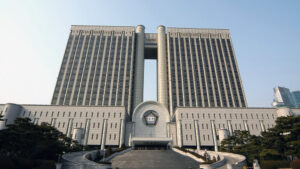
Seoul Central District Court, South Korea – the site of a landmark case involving Korea’s National Pension Service
It’s been nearly two years since three residents of the South Korean city of Sacheon took the world’s third largest pension scheme to court.
The three members of Korea’s National Pension Service filed a complaint against its top brass for investments in coal power plants – two of which were located near their homes. They argued this breached NPS’ fiduciary duty towards them and the 32 other members who joined their cause. A South Korean court dismissed their claims, but a precedent was set.
In 2025, climate-related investments by the Canada Pension Plan Investment Board and three of New York City’s public pension schemes were challenged by members, albeit for opposing reasons. Fossil fuel divestment and investment decisions are both having their day in court.
Fiduciary duty is evolving and climate change is the reason why. In this three-part series, Net Zero Investor digs deeper into the changing relationship between climate-driven investment and fiduciary duty. The first piece of the puzzle tackles the climate prisoner’s dilemma
Prisoner’s dilemma
Consider the hypothetical case of a country with three pension funds. One of which, invests in new unabated fossil fuel assets.
Scientific logic dictates that in the years that follow, physical risks become apparent for all three. Think flooding, heatwaves and droughts – all more frequent and intense than before. Since climate change is systemic by nature, investments by one fund have consequences for the other two. For fiduciaries, this presents a prisoner’s dilemma.
“It is in all investors’ individual and collective interest to mitigate the substantial financial and system-level risk resulting from climate change and nature loss. But so long as some continue to invest in unabated high emission activities, others have less incentive to stop”, reads a new report from the Net Zero Lawyers Alliance (NZLA).
There is one way out, the authors reckon. If fiduciary duty were to extend to systemic factors such as climate risk, the dilemma is reduced. Maurits Dolmans, a senior counsel at Cleary Gottlieb Steen & Hamilton LLP and co-author of the NZLA report says the argument has merit.
“The fiduciary duty of a pension fund should extend to system level climate risk because investments in new unabated high-emission projects have portfolio-wide impacts across the fund”, Dolmans, speaking in his individual capacity, told Net Zero Investor.
“Substantial climate risks and tipping points are likely to arise as a result, during the lifetime of beneficiaries currently contributing”, he explains.
The NZLA report goes further. Mounting evidence of climate risk eroding portfolio value, the authors contend, implies not only a fiduciary discretion to not invest in new unabated fossil fuels but also the obligation to do so. After all, ‘do no harm’ is already part of the fiduciary playbook.
Universal owners
On their part, asset owners have engaged with systemic externalities for some time now. Universal ownership, they call it. A 2024 note from UK’s Universities Superannuation Scheme for instance, defends its identity as a universal owner.
“We’re a long-term, responsible investor with a legal duty to invest in the best financial interests of our members and beneficiaries, so we can pay pensions long into the future. Given our scale, being a universal owner is part of who we are”, the note reads.
Late last year, Swedish pension fund AP7 released a report with a similar message – as universal owners, large pension funds cannot diversify their way out of systemic risks.
Winds of change
Even if pension funds are embracing systems level thinking, putting that into practice is a fairly complex task. For one, it needs legal clarification on when and how climate fiduciaries are expected to act.
“Some uncertainty remains over the extent to which material climate and sustainability risks can, or should, be addressed by trustees. In practice, there is some divergence in the way trustees interpret these duties despite their ‘permissive’ scope, in our view”, explains Oscar Warwick Thompson, head of policy and regulatory affairs at the UK Sustainable Investment and Finance Association (UKSIF).
UKSIF has been advocating for policymakers to clarify this new terrain of fiduciary duty.
Back in 2024, the UK’s Financial Markets Law Committee (FMLC) published a landmark report to that effect. The FMLC concluded that climate change was financially material and increasingly relevant to a trustee’s fiduciary duty.
“The FMLC report recognises climate risk not only as a financial risk, meaning that trustees have an obligation to minimise these but also as a systemic risk that is now apparent and material”, notes Dolmans.
The UK has since re-launched the Pensions Commission to explore the question of adequacy in pension schemes and a reformed Pension Schemes Bill is making its way through Parliament. A new conversation over fiducairy duty is underway.
UKSIF’s view is that the Commission must extend its focus to climate-related fiduciary duty, building on the FMLC’s conclusions.
“When considering areas that the government’s upcoming statutory guidance could cover, we feel the FMLC report offers a very useful starting point”, says UKSIF’s Thompson.
“This makes a strong case for trustees to actively consider climate change – and potentially wider sustainability issues – as relevant ‘financial factors’ in investment decision-making”, he adds.
There exists, in theory and in practice, some space for the letter of the law to support the spirit of the market. In 2026 – as consultations in the UK unfold – their results will set the tone. Climate-driven fiduciary duty might just be an idea whose time has come.
Relevant library resources

Pension fund trustees and fiduciary duties: Decision-making in the context of sustainability and the subject of climate change

Climate change: Legal implications for Canadian pension plan fiduciaries and policy-makers

Pensions in a changing climate
Briefing paper: The fiduciary duty case for climate justice


