

Life, Climate Volatility, and What Comes After the Final No: Part 1 - LIFE
Written by Ken Coulson, a former global finance executive turned sustainability strategist, this first article in a three-part series explores humanity’s origins as a cosmic accident. It reframes Earth’s natural systems as a fragile inheritance under threat, urging a shift from extraction to stewardship through a unifying cosmic perspective on climate, responsibility, and systemic change.

AUTHORS

Disclaimer: This article is republished with permission from the author. The article was originally published on LinkedIn and can be found here. Any views expressed in this article are those of the original author and do not necessarily reflect the views of Altiorem.
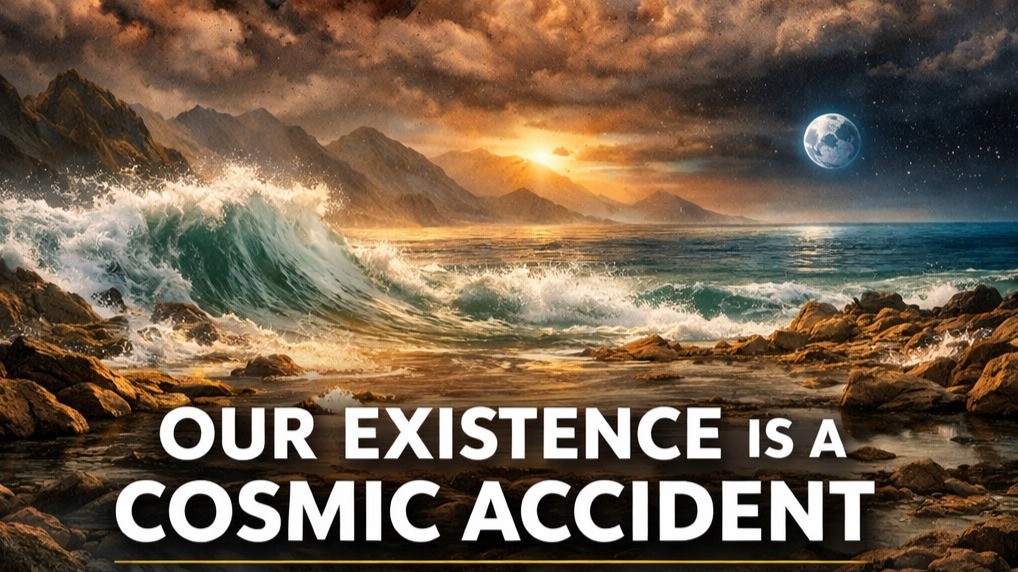
Our Existence is a Cosmic Accident. What Will We Do With This Astonishing Gift?
Before we grapple with the crises of our time—climate, inequality, waste—we must understand the story of our improbable origin. It is a tale not of destiny, but of spectacular cosmic violence that forged the very conditions for life. This perspective isn’t just awe-inspiring; it is the essential foundation for understanding the profound responsibility we now hold.
The Great Inheritance: A Collision That Made Us
Close your eyes for a moment and picture it. Our solar system, a violent, swirling disc of rock and debris. And then, the Great Impact. A planet, roughly the size of Mars—scientists call it Theia—came screaming across the void and slammed into the young, molten Earth.
The cataclysm was unimaginable. It wasn’t an explosion; it was a merger… a cosmic car crash that vaporized rock, melted continents, and hurled a colossal cloud of debris into orbit.
And from that furious, chaotic cloud of destruction, something beautiful began to form. It coalesced, cooled, and began to shine in the newborn sky. The Moon. Our Moon.
This colossal impact was our first great inheritance. It gave our planet its spin and tilted it on its axis. That 23.5-degree lean gave us the gift of seasons—the rhythmic dance of summer, fall, winter, and spring.
Next, the moon’s immense gravitational pull seized our young oceans, creating a monstrous, global tide. A tidal bulge miles high, racing around the globe every few hours. This wasn’t the gentle lapping of waves we know today; it was a planetary-scale blender, churning the primordial seas with terrifying, relentless energy.
And in those churning seas, something was stirring. The first building blocks of life—amino acids, nucleotides—were being mixed like never before. The Moon’s furious tides stirred that “prebiotic soup.” It sloshed those molecules together on hot rocks and in tidal pools, again and again and again, for millions of years. It provided the energy, the motion, the catalyst, quite literally helping to stir the very pot of life itself.
The 3.8-Billion-Year Cradle
This chance, accidental collision set the stage for everything. It gave us time—the 24-hour day. It gave us rhythm—the seasons. And it gave us the dynamic, fertile environment where life could not just emerge, but where it could be mixed, tested, and evolved.
Billions of years of evolution later, we arrived. We emerged into a world of relative equilibrium, a perfect, intricate cradle built over eons. As the seminal book Natural Capitalism reminds us, we inherited “a 3.8-billion-year store of natural capital.” Every breath of clean air, every drop of fresh water, every inch of fertile soil is a direct gift from that ancient, violent, creative history.
And that book issues the stark warning that defines our century: “At present rates of use and degradation, there will be little left by the end of the next century.”
Let that sink in.
We are the products of the greatest cosmic accident, the beneficiaries of a billion-year inheritance of stability and abundance. And in the blink of a geological eye—a mere two hundred years of industrial activity—we are on track to spend it all.
The Cosmic Perspective and Our Duty
This is why we must start with LIFE. It grounds the climate conversation not in graphs of CO2 ppm, but in the epic saga of our existence. It frames our environmental crises not as political issues, but as a profound failure of stewardship over a miraculous inheritance.
The astronomer Carl Sagan, reflecting on the “Pale Blue Dot” image of Earth from the edge of the solar system, championed this “cosmic perspective.” He argued that seeing our world as a lonely, fragile speck in the void should humble us, unite us, and instill a deep duty to protect our only home.
When we internalize that our existence hinges on a series of fragile, perfect balances—forged by a random impact—the question of our time becomes visceral and urgent. It is the question I posed in my recent talk: “What do we do when we realize we are breaking the very cradle that made us?”
The good news is that this perspective doesn’t lead to despair, but to clarity and purpose. It reveals that our existential crises—climate volatility, resource depletion, inequality—are not separate. They are symptoms of the same disease: a societal operating system that fails to value its foundational capital.
Understanding our cosmic origin story changes the emotional calculus. This isn’t about saving an abstract “planet.” It’s about honoring the gift. It’s about proving ourselves worthy of the astonishing accident that led to us.
Sagan’s call to action was direct: “Do something. You are by accident of fate alive at an absolutely critical moment in the history of our planet.”
The “something” starts with embracing this cosmic perspective. From that vantage point, the path forward becomes clear. We must transition from being consumers of our inheritance to its stewards, from exploiters of a stable system to builders of a resilient one.
In Part 2, we will translate this perspective into a new framework for action by examining the core problem not as “warming,” but as “Climate Volatility,” and we’ll explore the powerful tools we can borrow from other fields to manage this ultimate risk.
Relevant library resources
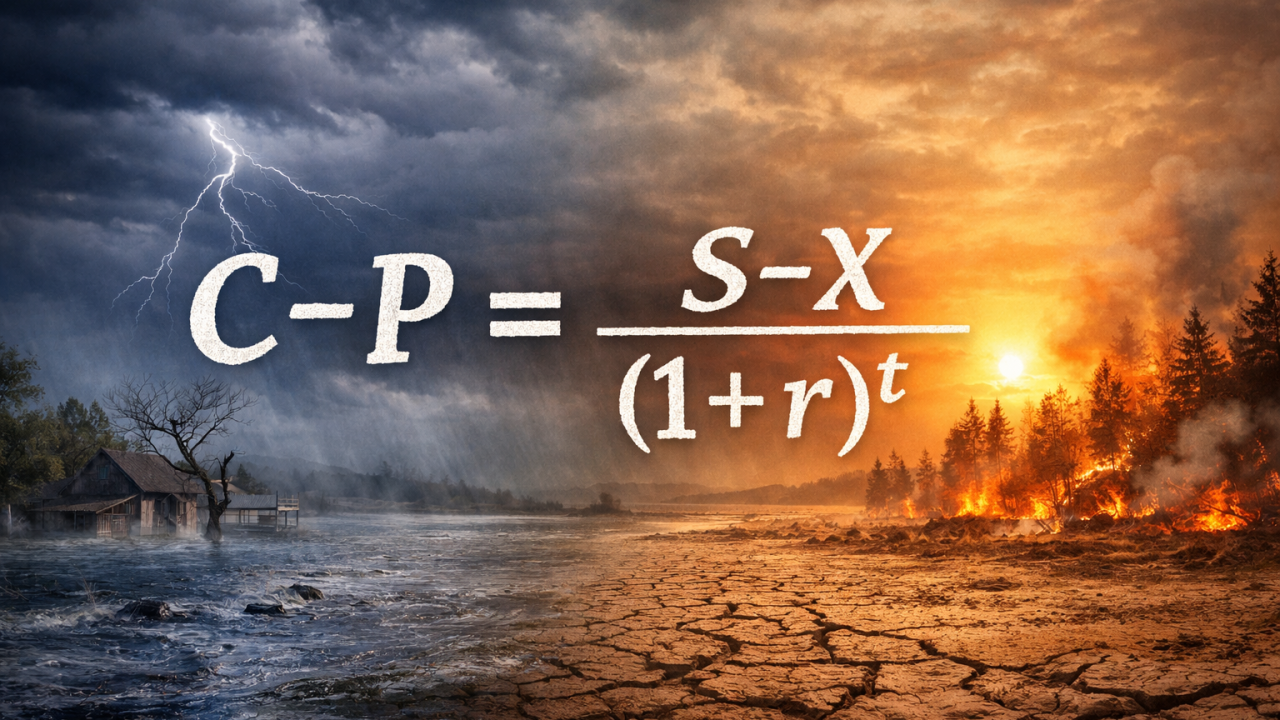
Life, Climate Volatility, and What Comes After the Final No: Part 2—CLIMATE VOLATILITY
Life, Climate Volatility, and What Comes After the Final No: Part 3—AFTER THE FINAL NO.

The race of our lives revisited
Recalibrating feedback loops: Guidance for asset owners and institutional investors assessing the influence of system-level investing


