
Library | ESG issues
Fossil Fuel Industry
The fossil fuel industry includes coal, crude oil, and natural gas, which are carbon-intensive energy sources formed from ancient organic material. Their extraction and use are major contributors to greenhouse gas emissions, environmental destruction, and climate change. In the finance industry, fossil fuels present both risks and opportunities, as investors assess regulatory challenges, transition risks, stranded asset potential, and shifting market demand while also exploring opportunities in cleaner energy alternatives and low-carbon transition strategies.
Refine
110 results
REFINE
SHOW: 16


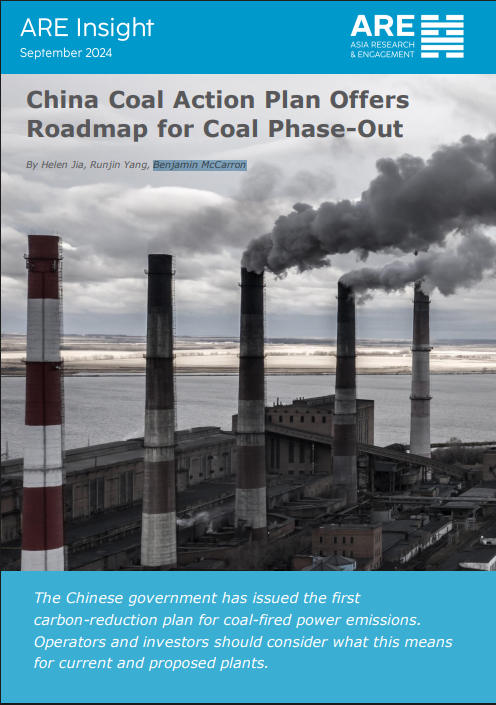
China coal action plan offers roadmap for coal phase-out
The report analyses China’s first quantitative coal power decarbonisation plan, outlining emissions-reduction targets to 2027 via co-firing and carbon capture. It finds retrofitted coal increasingly uncompetitive versus renewables with storage, raising risks for new coal investments and strengthening the case for no-new-coal commitments.
The (mis)use of scenarios in fossil fuel and industry climate disclosures
The report analyses climate disclosures by investor-owned carbon majors, finding widespread misuse of climate scenarios to claim Paris alignment. Common issues include outdated scenarios, opaque assumptions and misleading aggregation, which obscure transition risks and may misinform investor decision-making.
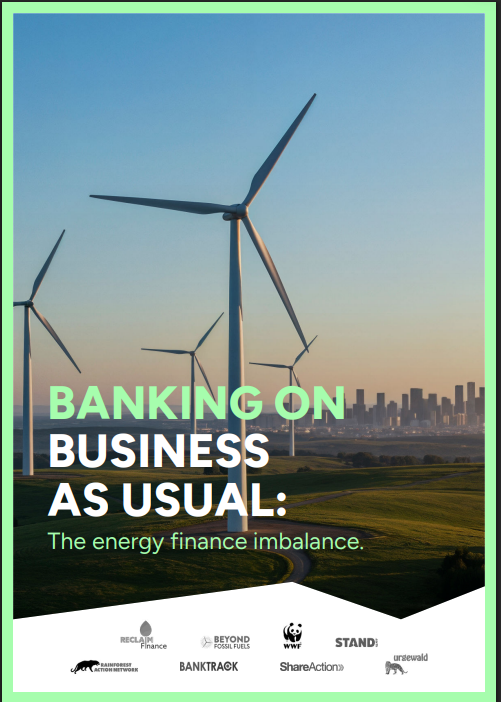
Banking on business as usual: The energy finance imbalance
The report assesses energy financing by 65 major banks (2021–2024), finding fossil fuel finance more than double sustainable power supply. The energy supply financing ratio stagnates around 0.42:1, far below net-zero benchmarks, with regional disparities and weak translation of climate commitments into financing shifts.
Green industrial policy’s unfinished business: A publicly managed fossil fuel wind-down
The report argues that green industrial policy must actively manage a fossil fuel wind-down. It contends that renewables expansion alone is insufficient, calling for public planning, regulation, and ownership to ensure equitable decarbonisation and prevent fossil fuel liabilities shifting to the public.

Green finance was supposed to contribute solutions to climate change. So far, it’s fallen well short
The article argues that while climate disclosure and green finance initiatives have expanded since Mark Carney’s “tragedy of the horizon” speech, they have failed to shift capital at the scale required to address climate and nature risks. It contends that deeper structural reforms to financial valuation, incentives and capital allocation are needed to move beyond managing symptoms toward financing real-world solutions.
Maximising Australia’s green growth: Leveraging trade and aid policy to drive Australia’s green exports agenda
The report assesses risks to Australia’s fossil fuel exports and outlines how aligned trade, aid and climate finance policies can build demand for green exports. It proposes sustainable growth partnerships in the Indo-Pacific to secure markets, attract investment and support regional decarbonisation.
Escalation: The destructive force of Australia's fossil fuel exports on our climate
The report finds Australia’s fossil fuel exports significantly escalate global warming and domestic climate risks. It highlights missing policy restrictions, growing harms to people and systems, and urges an orderly, cooperative and just phase-out with regulatory reforms and international engagement.
Sustainable Finance Roundup November 2025: Transition Turning Points and Rising Accountability
This month’s sustainable-finance roundup highlights faster transition momentum, rising physical risks and a tightening focus on accountability. COP30 reinforced expectations for stronger 2035 targets, while national actions underscored diverging paths toward decarbonisation. Markets continued shifting toward clean energy and resilience, and new science made climate harms more visible. With regulatory scrutiny and litigation increasing, transition credibility and real-economy resilience are becoming core drivers of financial risk and investment decisions.

The investor climate policy engagement paradox
The article explores the paradox in which institutional investors focus heavily on climate-risk disclosure, an area of comfort and perceived legitimacy, while underinvesting in real-economy climate policy that could meaningfully reduce systemic risk. It argues that meaningful climate action requires shifting from technocratic “managing tons” approaches toward politically challenging asset revaluation and more robust policy engagement.
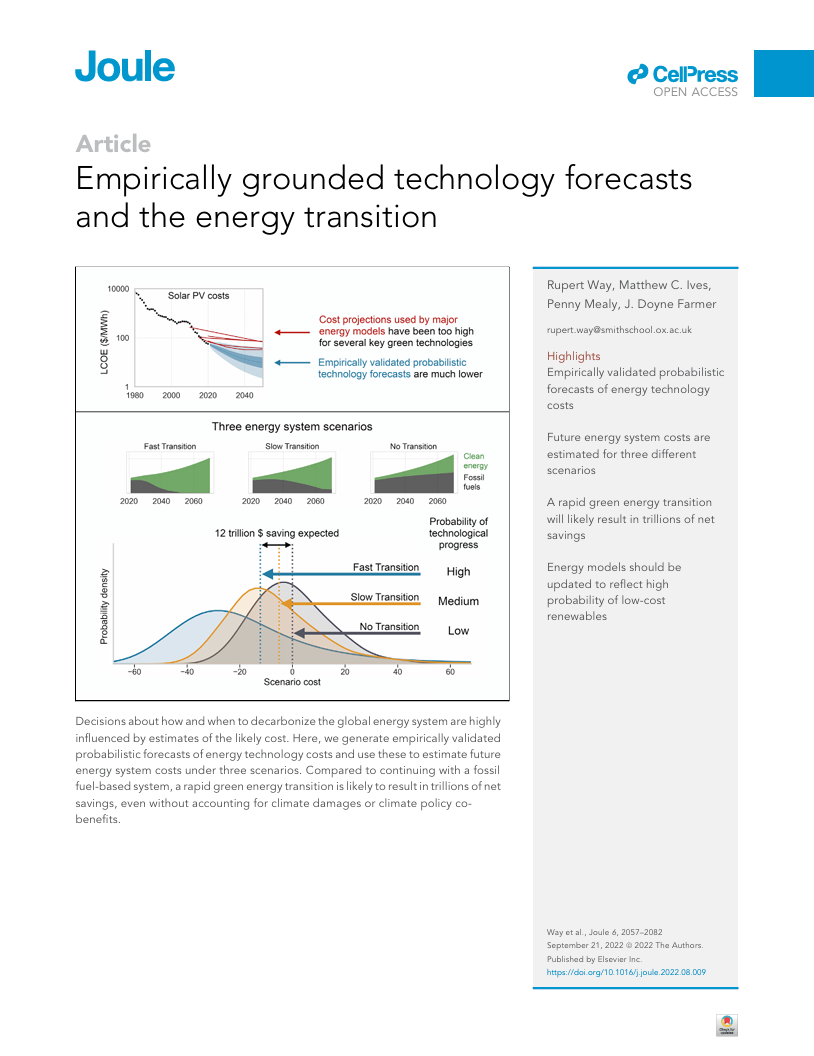
Empirically grounded technology forecasts and the energy transition
This report uses empirically validated probabilistic forecasting to assess future energy technology costs. It finds that rapid deployment of solar, wind, batteries, and electrolyser technologies is likely to lower overall system costs and deliver substantial net savings compared with continued reliance on fossil fuels.
Making our way: Adaptive capacity and climate transition in Australia’s regional economies
Australia’s fossil-fuel-exposed regions are assessed across seven dimensions of adaptive capacity, showing common weaknesses in economic diversity, social capital and service access. The report outlines region-specific strengths and proposes tailored, place-based transition planning to support diversification and community resilience through the net zero shift.

On YouTube, a Shift from Denying Science to Dismissing Solutions
This article dives into an analysis of over 12,000 YouTube videos and finds that while outright climate-change denial is dropping, content undermining climate solutions and trust in scientists is rising sharply. It also highlights concerns over YouTube’s ad policies, which still allow monetisation alongside videos that downplay impacts or spread misleading claims about climate policy.
World energy investment series
This benchmark series by the International Energy Agency provides annual analysis of global energy investment trends across fuels, electricity, efficiency, and technology. It tracks capital flows, financing patterns, and policy influences, offering a consistent reference on how investments shape the energy system’s evolution and transition.
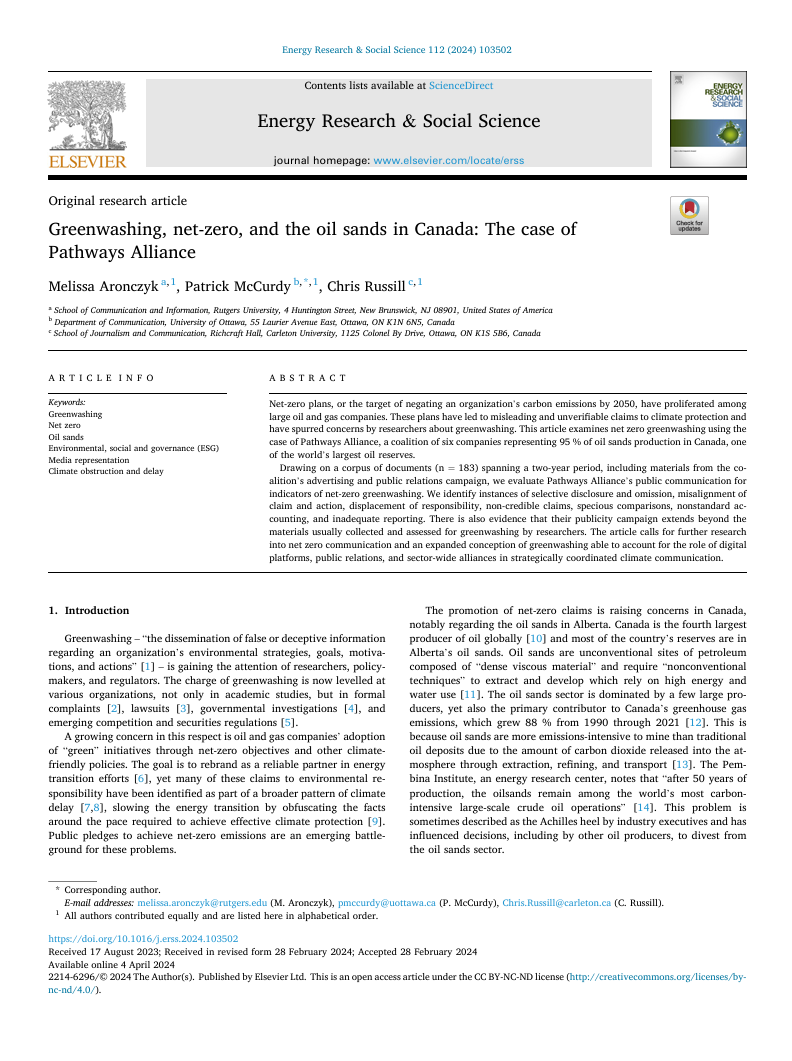
Greenwashing, net-zero, and the oil sands in Canada: The case of Pathways Alliance
This article analyses how Canada’s Pathways Alliance representing 95 % of oil sands output frames its net-zero commitments. Reviewing 183 public communications, it finds widespread indicators of greenwashing, including selective disclosure, unverifiable claims, and poor accountability. The study urges broader scrutiny of coordinated industry communication across digital and public relations platforms.

Sustainable Finance Roundup October 2025: Carbon Markets, Targets, and the Cost of Resilience
This month’s sustainability roundup traces a rapidly evolving landscape in climate finance and accountability, spotlighting the weaknesses exposed by Hurricane Melissa’s disaster-risk finance system alongside new policy frameworks now reshaping sustainable investment. It highlights how vulnerable nations continue to bear the costs of climate impacts, how regulatory reforms such as Australia’s 2035 emissions target and global disclosure regimes are embedding accountability, and how renewed scrutiny of carbon markets is driving the search for credible, incentive-based pathways to real decarbonisation.

Sustainable Finance Roundup September 2025: Policy, Markets, and Momentum
This month’s sustainability roundup covers Australia’s new 2035 emissions target, ASIC’s final climate disclosure guidance, and Fortescue’s revised transition plan. It also examines global developments, from ISSB reporting updates and TNFD nature disclosures to Woodside’s gas extension, rising physical climate risks, and evolving ESG policy debates shaping corporate and investor responses.


