

Building the Next Generation of Impact Finance
How Anandini Agrawal, a student at Ashoka University, co-founded India’s first student-led impact finance initiative, established the International Network of Students in Impact Finance (INSIF), and built RISE Capital, Asia’s first undergraduate-led impact investment fund.

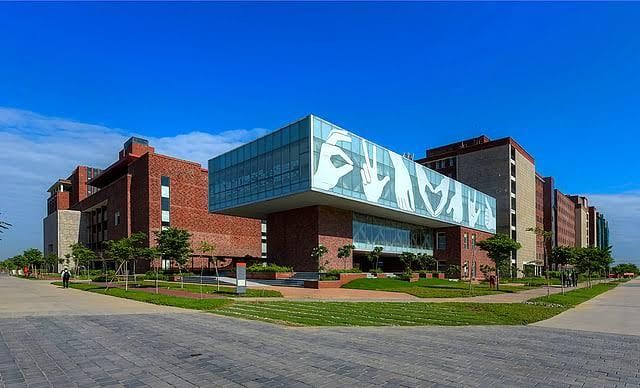
Guest contribution. Written for Altiorem by Anandini Agrawal, a third-year Economics and Finance student at Ashoka University, President of the Ashoka Impact Finance Club and co-founder of the International Network of Students in Impact Finance (INSIF) and RISE Capital. Published with the author’s permission, November 2026.
The views expressed are the author’s and do not necessarily reflect those of Altiorem. The related library resources at the end were added by Altiorem.

For more than two decades, India has been among the world’s most active markets for impact investment. In 2025 alone, impact-driven enterprises in the country raised $5.29 billion in equity. Yet for most of that period, the students who will one day staff its funds, advise its enterprises and measure its outcomes have stood at a considerable distance from it.
Anandini Agrawal is a third-year Economics and Finance student at Ashoka University and President of the Ashoka Impact Finance Club, which she co-founded with two fellow students as the first student-led initiative in impact finance in India. With Krrish Goel, she went on to co-found INSIF, the International Network of Students in Impact Finance, which has grown from a single campus into a network reaching more than 25 universities across eight countries. INSIF houses RISE Capital, Asia’s first undergraduate impact investment fund.
What connects all three is a single conviction that students, given the right structure, can supply the bandwidth early-stage impact investors so often lack, and in doing so become the professionals the field needs.
Origins
My route into impact finance found its direction in Professor Kartik Desai’s course on Impact Investing, ESG and Climate at Ashoka University. His teaching treated the allocation of capital as a question of consequence as much as of return. The principle at its heart has shaped my work ever since. Capital carries no intention of its own; the people who own and allocate it do. Every investment decision leaves a mark on society and on nature, and those who decide where money flows around the world hold real power to change it for the better. Directed with intent, capital becomes a means to an end, and a way of making sure that everyone gets a shot.
An internship at Alsisar Impact then took that thinking into the field. Alsisar invests through a region-based model across the Himalayan belt and India’s other frontier regions, backing enterprises owned and led by the communities they serve, in a country where more than 92% of foreign direct investment is concentrated in just five states. Its portfolio spans Acres of Ice, whose automated ice reservoirs in Ladakh capture stream water through the winter and return it to the fields as the spring crop requires. It extends to Local All Natural Soda, which has built a premium craft beverage brand on indigenous fruits like pomelo sourced from smallholder farmers across Mizoram, and to Agapi Sikkim, a skincare company grounded in Himalayan ingredients that trains indigenous women in its production and became the first women-led startup in Sikkim to secure foreign direct investment.

Two lessons stayed with me. Much of India’s most investable impact work lies well beyond the markets investors routinely cover. And identifying, understanding and properly assessing that work demands a depth of attention that few investment teams have the bandwidth to sustain. Both observations shaped the work I went on to build at Ashoka.
The Gap
The constraint, I recognised, was never capital. Impact investing in India dates to the early 2000s and has since matured into one of the field’s most consequential markets. In the 2010s, every impact dollar drew two from commercial investors, at returns of around 30%.
The constraint lay instead in the institutions surrounding that capital. Across the United States and Europe, universities have built much of the field’s intellectual architecture. At Columbia, the Sustainable Investing Research Initiative at SIPA has become a leading centre for research on blended finance. Oxford University pairs the longest-running executive programme in impact investing with the Oxford Sustainable Finance Group and the Government Outcomes Lab, whose data initiative has catalogued 300 impact bonds. At Cambridge, the Institute for Sustainability Leadership convenes the Investment Leaders Group, whose members manage more than $9 trillion. Collectively, these institutions set the standards by which the field holds itself to account, produce the data behind them, and train the talent that carries both into practice.
India has yet to build an equivalent. The work of developing its impact ecosystem has fallen largely to practitioners, with universities engaging only intermittently. I saw in that absence an opening for a university to take up the mantle, and in Ashoka’s interdisciplinary model, a natural place from which to begin.
The Ashoka Impact Finance Club
Together with two fellow students, I co-founded the Ashoka Impact Finance Club, the first student-led initiative in impact finance in India, which I lead as President. The club rests on three commitments: building awareness of impact finance as a discipline in its own right, one still too often conflated with development economics or corporate social responsibility; giving students reliable information on how impact capital is actually raised, structured, deployed and measured; and creating direct exposure to the work itself.
Exposure came first, and it took several forms. The club’s Advisory Projects department undertakes pro bono impact consulting engagements for buy-side and sell-side firms, trusts and NGOs, close to ten to date, each placing students at the centre of live strategic and impact questions facing the organisations they advise. It connects students directly with pioneering impact investors, and through its Recruitment Hub, it opens exclusive internships at impact funds. Together, these form a complete pathway into the field, from understanding impact finance, to practising it, to working in it.
INSIF
The model soon attracted demand well beyond Ashoka, first from universities across India and then from institutions abroad, and today extends to more than 25 universities across eight countries. To give that demand structure, I co-founded the International Network of Students in Impact Finance (INSIF) with Krrish Goel, a fellow Ashoka student. INSIF is a global network in which every chapter operates within its own ecosystem, so that a chapter in Australia engages with Australian investors, enterprises and policy. What binds the chapters together is the INSIF Standard, a common curriculum developed with impact investing pioneers, alongside shared research and a network through which students can learn from markets far removed from their own.
RISE Capital
At the centre of INSIF sits RISE Capital, Asia’s first undergraduate impact investment fund, through which students gain direct exposure to deal scouting and deal evaluation. Its model responds to a structural tension in early-stage investing. Venture capital is shaped by adverse selection: the strongest founders are frequently secured early by the largest funds, leaving smaller funds to find opportunities through proactive, thesis-driven outbound sourcing. A fund focused narrowly on gaming or media can realistically aim to map every relevant startup in the country. An impact fund seldom can. Theses built around climate encompass a vast number of early-stage companies, inbound volume quickly becomes overwhelming, and much of the initial triage defaults to intuition. The conventional remedy, a thinly resourced network of regional scouts, has its limits.
What RISE offers investors is bandwidth. Working alongside established impact funds, its analysts surface companies that might otherwise go unseen, screen substantial volumes of deal flow through secondary research, pitch deck reviews and initial founder conversations, and deliver a qualified pipeline. RISE does not select deals on a fund’s behalf. It extends the fund’s reach and sharpens its focus, so that partner time is reserved for the companies most likely to warrant it. For students, it amounts to an apprenticeship in the craft of investing: constructing the case for a company and having it rigorously tested.
AI carries that bandwidth further. RISE’s AI-integrated landscaping and data systems, built on proprietary data, map sectors, structure information on private companies and carry out initial screening across large volumes of deal material. RISE applies them under a responsible AI approach, in which the systems serve purely as decision-support tools and human oversight is maintained at every stage. They do not score founders, rank companies or generate investment recommendations. Investment judgement, and accountability for it, rests with analysts who have reviewed the work, engaged directly with founders and can defend their view before an investment committee.
Looking Ahead
INSIF is growing as a network of local ecosystems, each rooted in its own market and bound by a shared standard. Australia illustrates why that structure matters. Its public impact investment market has grown nearly eightfold since 2020 to more than $157 billion, and the need for people equipped to understand, structure and evaluate that capital is rising in step.
Partner with INSIF
INSIF partners with universities, impact investors and organisations worldwide that are committed to building the next generation of impact finance talent, and is actively expanding its chapter network. Students interested in establishing an INSIF chapter at their university, and institutions interested in a partnership, can reach me at anandini.agrawal25@gmail.com.
Related resources from the Altiorem library
Six items from the library that pick up the threads of this piece. Benchmark series are marked: they are recurring data sets a reader can use, not one-off reports.
- Benchmark seriesGIIN state of the market series (Global Impact Investing Network (GIIN), 2025)
The annual benchmark of how much impact capital is in the market, who manages it and how it performs – the global context for the $5.29 billion raised by Indian impact enterprises in 2025. - ResearchImpact investing decision-making: Insights on financial performance (Global Impact Investing Network (GIIN), 2021)
Evidence on the returns impact investments have earned across private debt, private equity and real assets – the counterpart to the piece’s observation that capital was never the constraint. - ResearchTime to accelerate: Capital mobilisation for the SDGs in emerging markets (Global Steering Group for Impact Investment, 2023)
A progress report on moving capital into emerging markets, including the institutional architecture that the piece argues India has yet to build. - ResearchThe missing middles: Segmenting enterprises to better understand their financial needs (Collaborative for Frontier Finance, 2018)
Why small and growing businesses in frontier markets are underserved by conventional investors, and what they need instead – the gap Alsisar Impact and RISE Capital are built to address. - ResearchArtificial intelligence and human rights investor toolkit (Responsible Investment Association Australasia (RIAA), 2024)
Guidance for investors on using and overseeing AI responsibly, relevant to RISE Capital’s decision-support-only approach to its landscaping and screening systems. - Benchmark seriesBenchmarking impact: Australian impact investor insights, activity and performance series (Impact Investing Australia and UNSW Centre for Social Impact, 2025)
The Australian benchmark behind the growth the piece describes in its closing section. Australia only.


