

The Other Half of the Transition: Why Livestock Deserves as Much Attention as Energy
This article highlights the major climate impact of livestock and explains why the absence of clear roadmaps, metrics, and financing strategies has left the sector far behind the energy transition. It proposes policy reforms, mitigation hierarchies, and justice-centered pathways to unlock effective and equitable change.


Disclaimer: This article is republished with permission from the original publication. The article was originally published on the Columbia Center on Sustainable Investment (CCSI) website and can be found here. Any views expressed in this article are those of the original author and do not necessarily reflect the views of Altiorem.
When people think of climate solutions, images of solar panels, wind turbines, and electric vehicles usually come to mind – and for good reason. In 2022 alone, global investments in clean energy technologies – including renewables, grid infrastructure, storage, and electrification – exceeded $1.7 trillion (IEA, 2023). Between 2018 and 2022, these sectors accounted for 94% of total mitigation finance, propelled by strong policy support, market-ready technologies, and clear industrial strategies that have reduced risk and scaled deployment (IEA, 2023; CPI, Naran, 2024).
Part of the energy sector’s success in capturing investment and attention lies in its clear decarbonization objective, backed by the Paris Agreement and global assessments such as IEA’s Global Energy Transitions (IEA, 2021). Its centralized structure, coordinated by governments and utilities, has enabled rapid scaling, particularly because renewable technologies can be integrated into existing grids with little disruption to consumers’ daily lives (IEA, 2017). This structure has allowed for coordinated action, clear policy levers, and measurable outcomes. Moreover, renewable energy projects are generally investable assets with predictable returns, making them highly attractive to financial markets (UNDP, 2025)
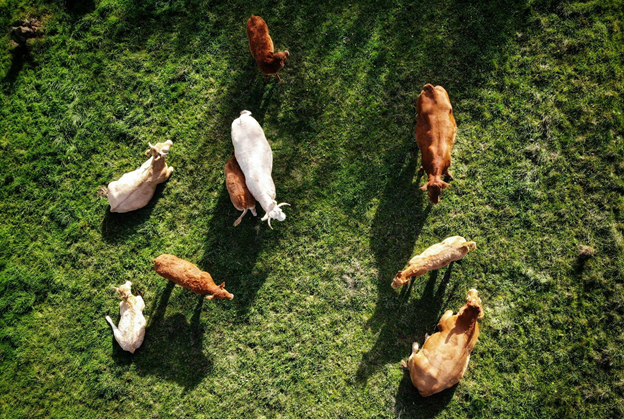
However, while energy transformation is essential, an equally critical piece of the climate puzzle remains significantly underfunded: global food systems, particularly the livestock sector. Livestock production is responsible for roughly 14.5% of global greenhouse gas emissions, yet it receives only a fraction of climate finance, despite offering an enormous untapped potential for mitigation (FAO, 2017).
Unlike the energy sector, the livestock sector presents a more complex challenge. Its production is highly decentralized and it is both culturally embedded and politically sensitive. It encompasses everything from smallholder farmers and informal markets to multinational corporations. Despite these complexities, a transformation of the livestock sector is possible, but it requires a robust transition plan accompanied by a strong institutional and financing framework.
Understanding the Environmental Impact of the Livestock Sector
Within the Agriculture, Forestry, and Other Land Use (AFOLU) sector, livestock production is among the most emissions-intensive activities. Its environmental footprint spans methane from enteric fermentation, nitrous oxide from manure and feed production, and carbon dioxide from land-use change. In fact, the expansion of agricultural land for livestock and animal feed alone contributes to roughly 9% of total anthropogenic emissions (Drawdown, 2020). Methane, while short-lived, is especially potent – 28 times more powerful than carbon dioxide over a 100-year period and 86 times more potent over 20-years, and livestock is the single largest source (Climate and Clean Air Coalition).
The urgency to address livestock is only growing amid accelerating deforestation, biodiversity loss, and water stress. These pressures are set to intensify as global demand for meat is projected to rise by 50% in the coming decades, driven by population and income growth in developing low- and middle-income countries. Without intervention, livestock-driven emissions alone may make it impossible to limit warming below 2°C, even with aggressive fossil fuel reductions (Hayek, Miller, 2021).
Despite livestock’s outsized role in driving climate change, it remains significantly underfunded and largely overlooked in international climate plans including Nationally Determined Contributions (NDCs) under the Paris Agreement (WWF, 2022). Unlike the energy sector, there is no clear global roadmap, cohesive policy framework, and no dedicated financing strategy for livestock decarbonization. While calls to increase public and private investment are gaining momentum, two critical considerations are often overlooked. First, we cannot finance what we do not clearly define. A successful transformation requires a shared vision of what transformation looks like – identifying which technologies and practices need to change, and in what way, i.e., a sectoral pathway. To mobilize meaningful investment, the livestock sector needs robust, justice-centered transformation pathways across policy, technology, and finance. These pathways are essential for identifying what types of interventions are needed, where, and by whom while also addressing historical responsibility, uneven capacities, and differential impacts. Second, not all investments are created equal nor should they be financed in the same way. Some are best suited for public funding, others for private capital, and many fall along a spectrum in between. Determining the appropriate financing mechanism depends on the type of investment, its risk return profile, and broader social and environmental benefits.
Unlocking Solutions
Learning from the energy transition, a set of strategic actions can support the transformation of the livestock sector:
- Establish a livestock mitigation hierarchy to guide policy, technology development, and financing:
A clear context-relevant mitigation hierarchy is needed. This means prioritizing strategies that avoid, reduce, or minimize emissions before resorting to compensatory measures like offsets. In the livestock sector, the adoption of a mitigation hierarchy means recognizing both biological – such as intrinsic, diffuse emissions from ruminants and manure that cannot be fully eliminated – and cultural constraints, including dietary preferences and livelihood dependence on livestock. Key interventions include developing and scaling technologies to make new protein sources available and affordable for consumers, improving animal health, adopting innovative feed additives, enhancing manure management, and deploying efficient breeding practices.. Mapping this hierarchy to financial instruments will help determine where public, private, and blended finance are most appropriate and impactful.
- Create enabling and coherent policy frameworks:
Transformative change requires coordinated policy reform that reshapes both production and consumption. Public subsidies must shift away from high-emitting livestock systems toward low-emitting alternatives such as plant-based proteins, precision fermentation, and regenerative agriculture (World Bank, 2023). Regulatory frameworks should address methane mitigation, land use change, and animal welfare. At the same time, trade, food, and climate policies must be aligned to reduce perverse incentives and promote ecological and nutritional resilience. For example, Latin America and the Caribbean (LAC) aims to leverage this sector’s growing potential for climate mitigation and resilience through a recently established roadmap analyzing investment risks and preferences, financial and policy solutions, and different scenario modelling to figure out the best capital and investor mix (Kirchherr et al., 2025). This kind of climate finance roadmap can be a starting point for scaling sustainable investment.
- Set clear and multidimensional metrics to track progress:
Exclusively tracking the CO2-equivalent emissions per kilogram of meat or dairy can obscure the full climate impact of livestock. This narrow metric fails to account for absolute emissions, the highly potent effects of short-lived climate pollutants like methane, and land-use opportunity costs. Instead, the sector needs robust, multidimensional metrics – such as emissions per gram of protein to account for nutritional value, and emissions per hectare to reflect land-use implications. These improved indicators can inform better policy, investment, and consumer-decisions by revealing the trade-offs between climate, nutrition, and land (Hayek, Miller, 2021).
- Ensure an inclusive and just transition:
Global strategies must reflect regional realities. In many low-and-middle income countries, livestock is integral to food security, livelihoods, and cultural identity. Transition pathways must be tailored to these contexts, rather than imposing one-size-fits-all models designed for the Global North (HLPE, 2020). Smallholder producers, pastoralists, and Indigenous communities must be co-authors of the solution. Strategies should prioritize protecting livelihoods, ensure nutritional security, and enable access to transition finance and technical assistance. The goal is not to eliminate meat but to foster sustainable, culturally appropriate livestock systems that serve both people and the planet.
- Invest in systems-wide transformation, not just technological fixes:
The agrifood system receives only 2.4% of total climate mitigation finance, and livestock receives only a fraction, despite being a major driver of emissions and environmental degradation (World Bank Group, 2024; LD4D, 2024). Most of this investment focuses on supply-side innovations like feed additives or productivity improvements, but these alone are insufficient. A systems-wide transformation requires integrated approaches that include both supply and demand. Demand-side interventions such as reducing red meat consumption, minimizing food waste, and promoting alternative proteins are essential. This requires investments in consumer education, public awareness campaigns to inform dietary choices, food environments that enable sustainable choices, and policies that support an equitable transition for producers and consumers alike. Without parallel efforts to reshape demand, supply-side improvements will not reach their full potential, and the food systems will remain a missed opportunity for climate action.
- Context-specific and sensitive policies that reflect diverse ecosystems, economies, and cultures
- Cross-sector institutional coordination, linking livestock with energy, land use, waste strategies, etc., and understanding the sector in a wider transition towards a low-carbon future.
The good news is that we are not starting from scratch. As emphasized by the FAO and others, livestock emissions can be reduced significantly through improved breeding, better animal health, manure management, and reduced food waste (FAO, 2023). However, these solutions need more than technical roll-out; they require:
- A shared, long-term vision of what transformation in the livestock sector looks like, and how it can contribute to the transformation towards regenerative food systems;
- Consistent investment across both the demand and supply sides, aligned with the principles of the mitigation hierarchy;
Conclusion
Just as energy policies align grids, vehicles, and storage, livestock policies must integrate feed systems, land use, trade, and nutrition. Without a roadmap and coordinated governance, efforts risk fragmentation and misallocation of funds toward ineffective or unjust solutions.
If we are serious about a just and equitable future, we need to broaden the scope of our climate ambition. That means making the livestock transition just as investable, trackable, and actionable as the energy transition – with dedicated institutional frameworks, financing plans, and inclusive policy solutions.
This blog is only the beginning. We’re exploring how existing institutions and initiatives – like the Columbia Center on Sustainable Investment (CCSI) – can contribute to designing frameworks, financing strategies, and investment models that work for both people and the planet. But we can’t do this alone.
We welcome your thoughts, questions, and feedback. Let’s work together to build a more balanced, equitable, and climate-resilient future – one that doesn’t leave food behind.
Relevant library resources
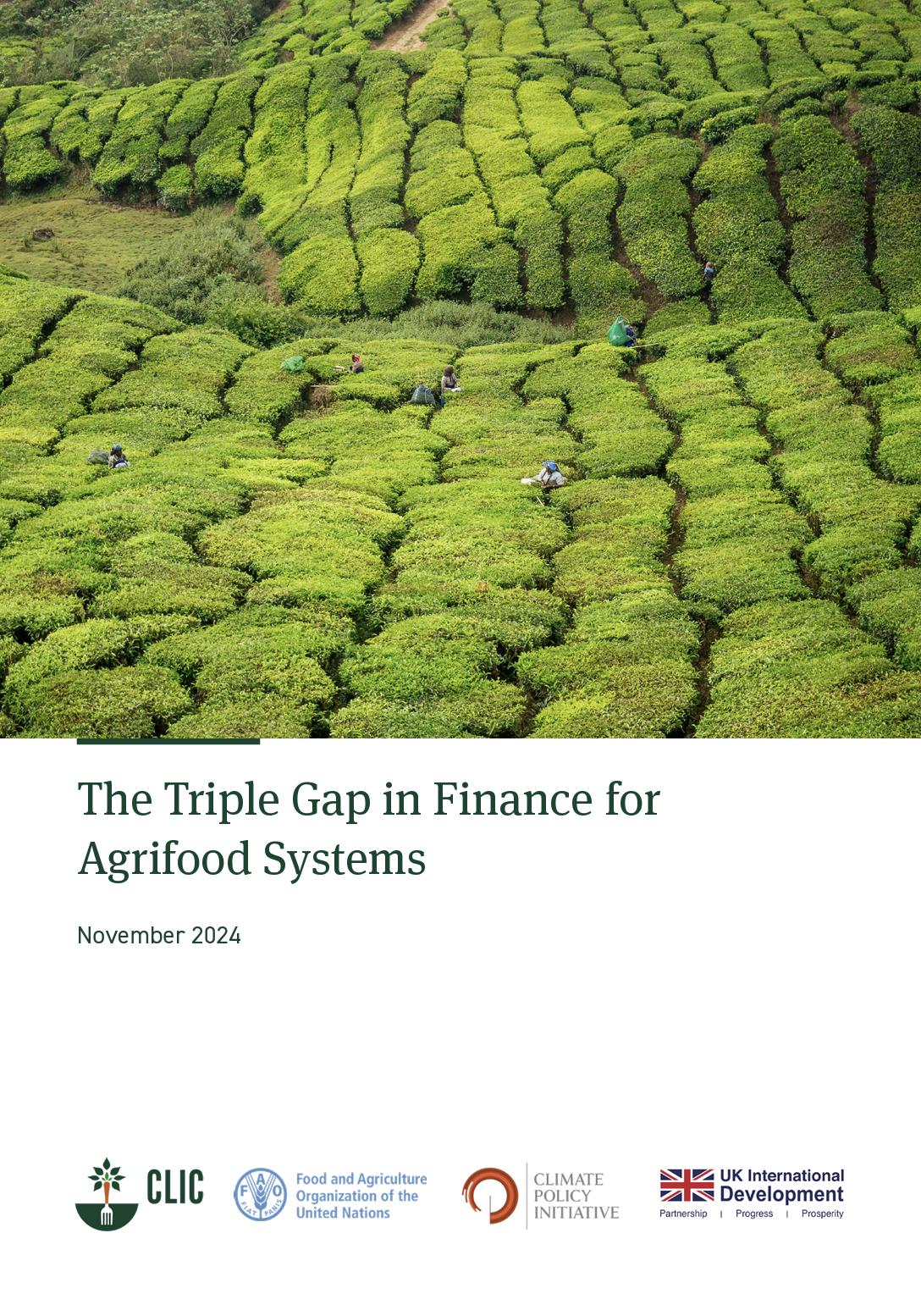
The triple gap in finance for agrifood systems

Farming our way out of the climate crisis

Agriculture sector climate change scenarios and adaptation roadmap
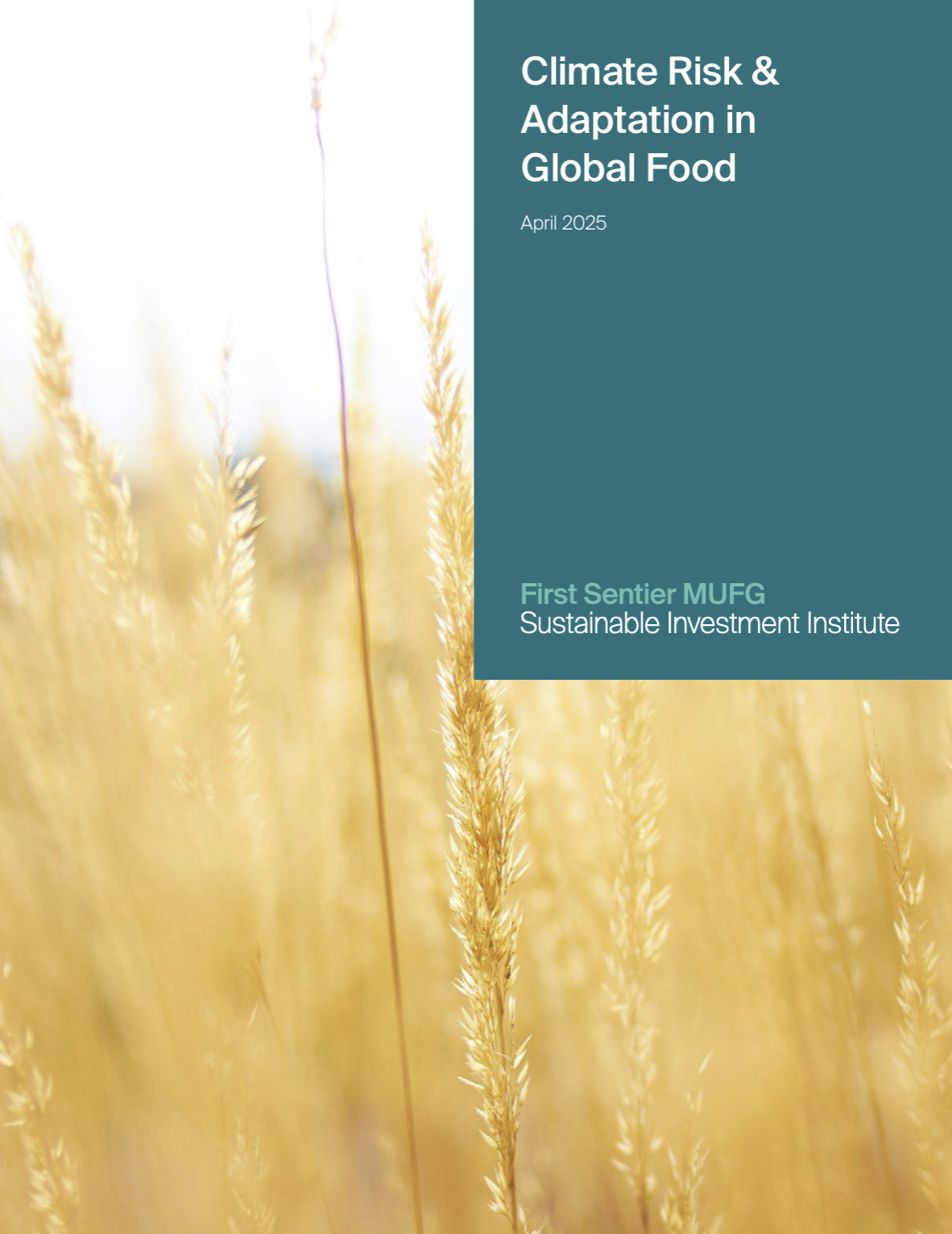
Climate risk and adaptation in global food

Opportunities for methane mitigation in agriculture: Technological, economic, and regulatory considerations


