
Library | ESG issues
Climate Change
Climate change, driven by human-induced greenhouse gas (GHG) emissions, is increasing global temperatures and extreme weather events. Major GHGs like carbon dioxide and methane primarily come from burning fossil fuels, deforestation, and agriculture. Key sectors contributing to emissions include energy, industry, transport, buildings, and land use, making mitigation and adaptation essential for environmental and economic stability.
Team Altiorem recommends

Refine
976 results
REFINE
SHOW: 16


Interfaith Center on Corporate Responsibility (ICCR)
The Interfaith Center on Corporate Responsibility (ICCR) is a coalition of faith-based investors advocating for sustainable and ethical business practices. ICCR engages companies on issues such as climate change, human rights, and corporate governance. They aim to promote long-term social and environmental sustainability in corporate conduct.

Sabin Center for Climate Change Law
Columbia Climate School's Sabin Center for Climate Change Law (SCCCL) conducts research and develops innovative legal techniques to address climate change. The centre focuses on climate litigation, renewable energy, and environmental justice. It provides resources, events, and publications to support climate law and policy advancements.

The Authenticity Advantage
This benchmark report highlights the link between authentic sustainability and improved business outcomes in Australian organisations. The report introduces the Authenticity Index™, measuring commitments, culture, and communication, demonstrating that high-scoring businesses experience better talent acquisition, productivity, retention, innovation, resilience, and profitability.

Financial crimes and land conversion: Uncovering risk for financial institutions
This report outlines the risks financial institutions face due to land conversion and related financial crimes. It emphasises the convergence of land conversion with crimes like money laundering and corruption, highlighting the need for robust due diligence and risk assessment. It introduces an Environmental Crimes Financial Toolkit to aid institutions in mitigating these risks.

Is CSRD working for financial institutions? A look into how CSRD is being rolled out across the financial sector
The Corporate Sustainability Reporting Directive (CSRD), an ambitious EU regulation, demands increased transparency from financial institutions (FIs). Challenges include lack of sector-specific guidance and data collection difficulties. Despite the focus on reporting, FIs must use CSRD strategically to align financing with sustainability goals and ensure long-term compliance.

Banking on climate chaos: Fossil fuel finance series
The "Banking on Climate Chaos" benchmark report examines global banks' financing of fossil fuel companies, highlighting trends and policy shifts impacting climate goals. This series offers critical insights into financial institutions' roles in supporting fossil fuel expansion and their climate commitments.

Canopy Planet
Canopy Planet is a non-profit organisation dedicated to protecting forests, species, and climate. With a focus on sustainable sourcing practices, it collaborates with companies to develop solutions that reduce deforestation and promote conservation. Canopy's work spans various industries, including fashion, packaging, and publishing.
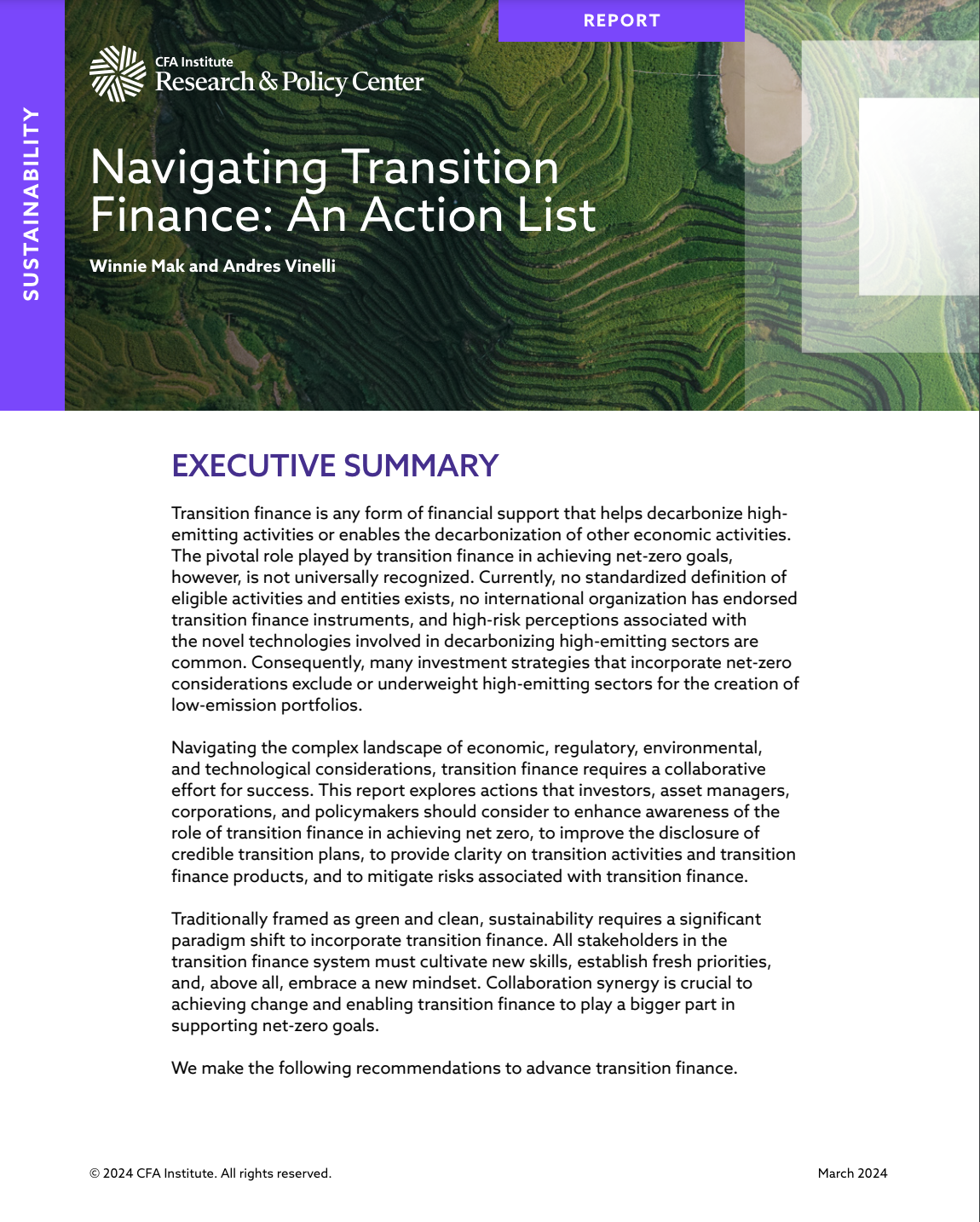
Navigating transition finance: An action list
This report explores how transition finance can help decarbonise high-emitting activities and other economic sectors. It offers recommendations to improve awareness, clarify transition activities and finance products, and mitigate associated risks. Collaborative efforts are needed to navigate the complex economic, regulatory, environmental, and technological landscape.

Great expectations: Is engagement living up to its promise?
This report examines whether engagement activities deliver impactful sustainability outcomes, comparing systemic and company-specific engagement. It encourages investors to align engagement goals with investment views, distinguishes escalation mechanisms for equity and debt investors, and emphasises financial materiality for achievable, value-enhancing outcomes. Investors are reminded of their fiduciary responsibility to clients and stakeholders.
World Economic Forum's global risks report series
The Global Risks Report is a long-running report series published by the World Economic Forum that examines emerging global risks across environmental, social, economic, geopolitical and technological domains. It provides a forward-looking assessment to support risk awareness, strategic planning and decision-making by finance professionals and policymakers.

Social and Human Capital Protocol
This protocol sets out principles for valuing human and social capital, helping businesses to measure the value of community relationships and employee talent. The goal is to help businesses make truly sustainable decisions; however, this is a nascent field requiring more detailed data, and tailored techniques, to ensure more accurate results.

Greenpeace
Greenpeace International is an environmental NGO advocating for global environmental protection and sustainability. With a focus on climate change, deforestation, overfishing, and other ecological issues, it engages in activism, research, and lobbying to drive positive change. Greenpeace campaigns for renewable energy, biodiversity preservation, and the mitigation of environmental damage worldwide.

Nature positive economies: Progress, lessons and next frontiers
The report titled explores a six-year global partnership aimed at embedding natural capital into economic decision-making. It highlights key lessons, including the need for systemic change, collaboration across sectors, and nature-based solutions to build resilient, sustainable economies. The report provides case studies and frameworks to guide future efforts towards nature-positive economies.
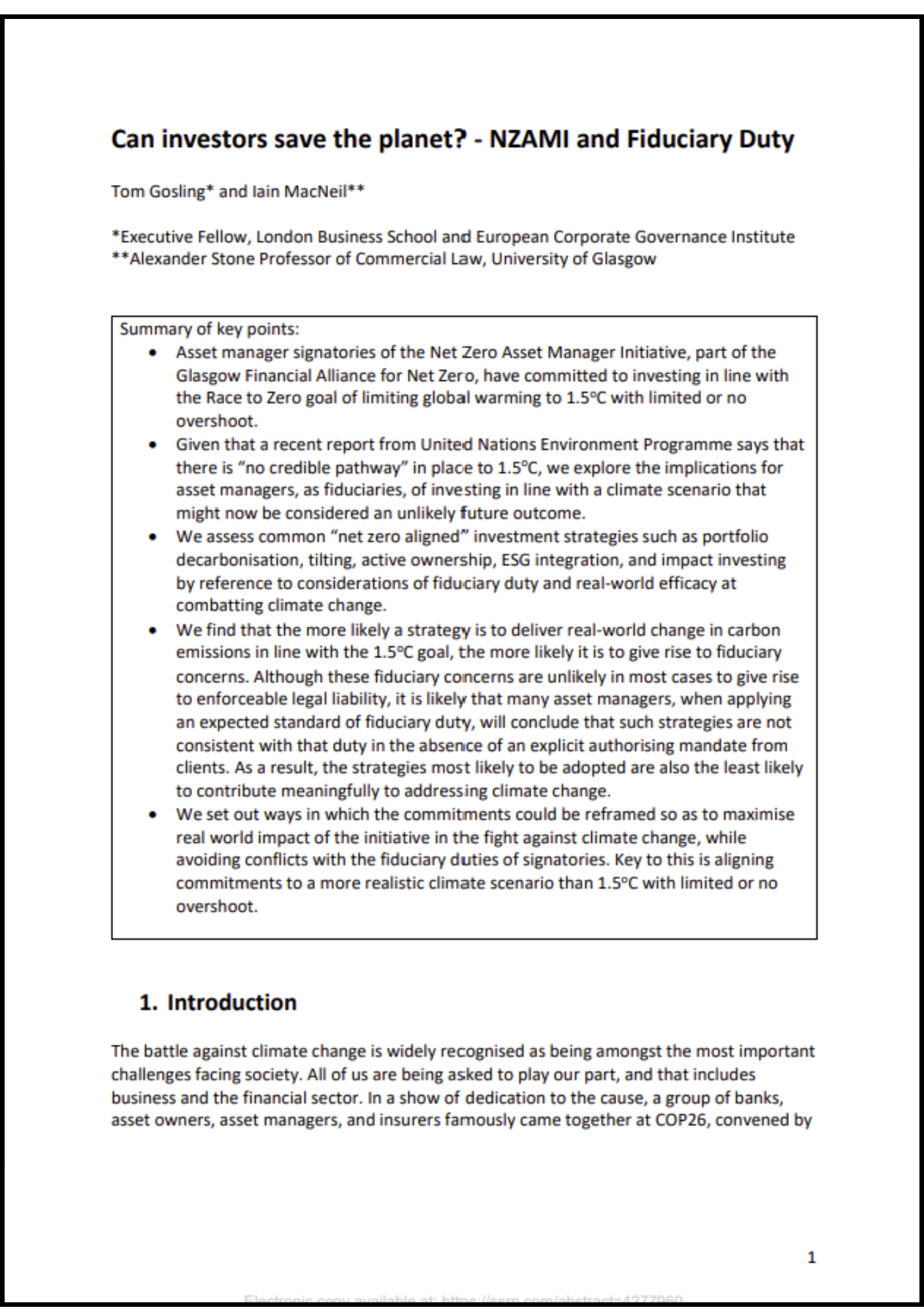
Can investors save the planet? - NZAMI and fiduciary duty
The report evaluates asset managers' strategies aligning with the Race to Zero goal of limiting global warming while considering the possibility of a different climate scenario. It finds impactful environmental approaches might pose fiduciary challenges. Authors propose revising commitments to enhance climate impact while upholding fiduciary duties.

Catalytic capital: A key to aligning infrastructure investments with climate mitigation in emerging markets
This report provides a roadmap for directing more institutional capital toward climate infrastructure financing in emerging markets. It identifies the importance of using catalytic capital and outlines four themes crucial to its effective use: targeting, speed, support, and analysis. The report offers recommendations for how to address climate challenges through targeted catalytic interventions.

The rising tide of greenwashing: Navigating ‘greenwashing’ risks in climate change targets and sustainability credentials
The report highlights the risks and challenges associated with businesses misrepresenting their sustainability credentials or strategies. The document elaborates on the subject with the help of multiple examples and practical guidelines to reduce legal and reputational exposure to businesses and corporations.


