
Library | ESG issues
Climate Change
Climate change, driven by human-induced greenhouse gas (GHG) emissions, is increasing global temperatures and extreme weather events. Major GHGs like carbon dioxide and methane primarily come from burning fossil fuels, deforestation, and agriculture. Key sectors contributing to emissions include energy, industry, transport, buildings, and land use, making mitigation and adaptation essential for environmental and economic stability.

Refine
1170 results
REFINE
SHOW: 16


Transition Acceleration Framework (TAF)
TAF is a forward-looking analytical framework by Rhodium Group that evaluates where climate investment and policy will accelerate decarbonisation.
Guidance on integrating deforestation into net zero strategies
This IIGCC guidance supports institutional investors in integrating deforestation, land conversion, and associated human rights risks into net zero strategies. Aligned with the Net Zero Investment Framework 2.0, it provides practical, asset class-specific action points across listed equity, sovereign bonds, real estate, and private equity and debt.
Using scenario analysis for future resilience: Top tips for pension fund chairs and trustees
This guide from Accounting for Sustainability supports pension fund chairs and trustees to move beyond simplified climate scenario analysis. It outlines the limitations of current models, provides practical examples from USS, NBIM and APG, and offers six actionable tips to embed scenario insights into strategic decision making.
Carbon tariffs, emissions leakage, and production relocation
This paper examines whether carbon tariffs prevent emissions leakage from firm relocation in a North-South duopoly model. It finds that carbon tariffs combined with export rebates form the optimal carbon tax regime, preventing leakage when the northern firm's emissions intensity exceeds fifty percent of the southern firm's, and can benefit both countries.
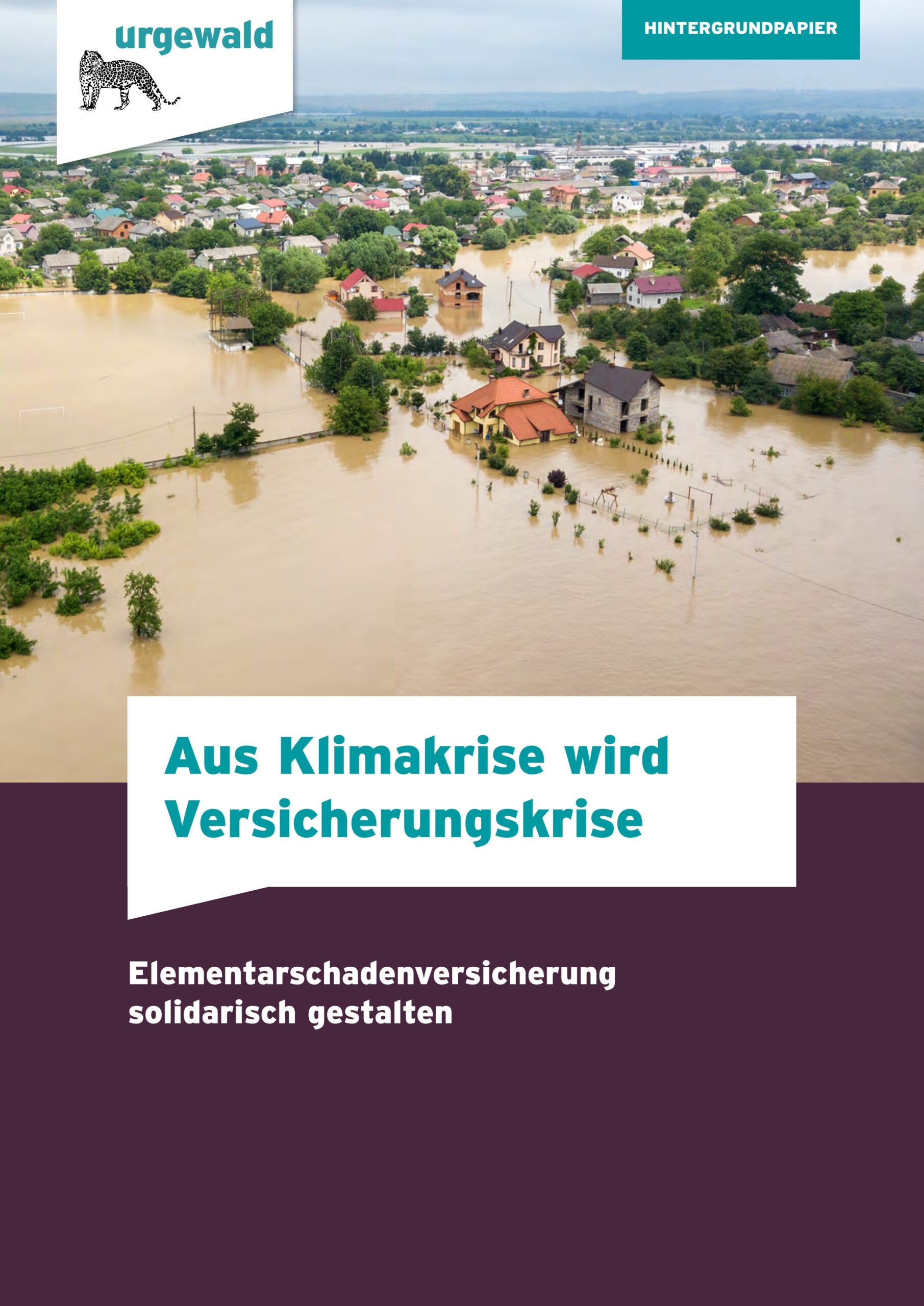
From climate crisis to insurance crisis: Designing solidarity-based natural disaster insurance
This report examines rising climate-related insurance losses and Germany's lack of comprehensive natural disaster coverage, with only 57% of residential buildings insured against such risks. It analyses international public-private insurance models — particularly France's CatNat system — and recommends a solidarity-based approach alongside measures to hold the fossil fuel industry financially accountable.
EDHEC Climate Institute Resource Hub
EDHEC Climate Institute is a climate finance research resource that provides research, analytical tools and data on climate-related financial risks, transition pathways and climate policy. It supports finance professionals with evidence-based insights for investment analysis, risk assessment and decision-making on climate-related issues.
Project Preparation Support Database (PPSD)
Searchable database of project preparation facilities and climate-focused incubators helping developers and investors access support for bankable climate projects.
Widening the lens: Scaling climate adaptation and resilience through sustainable finance
This report examines climate adaptation and resilience in sustainable finance, highlighting a significant financing gap in emerging markets and limited formal allocation in labelled debt markets. It argues for a broader lens that recognises resilience outcomes already embedded in policy-driven investments, using Ecuador's sovereign housing framework as a case study.
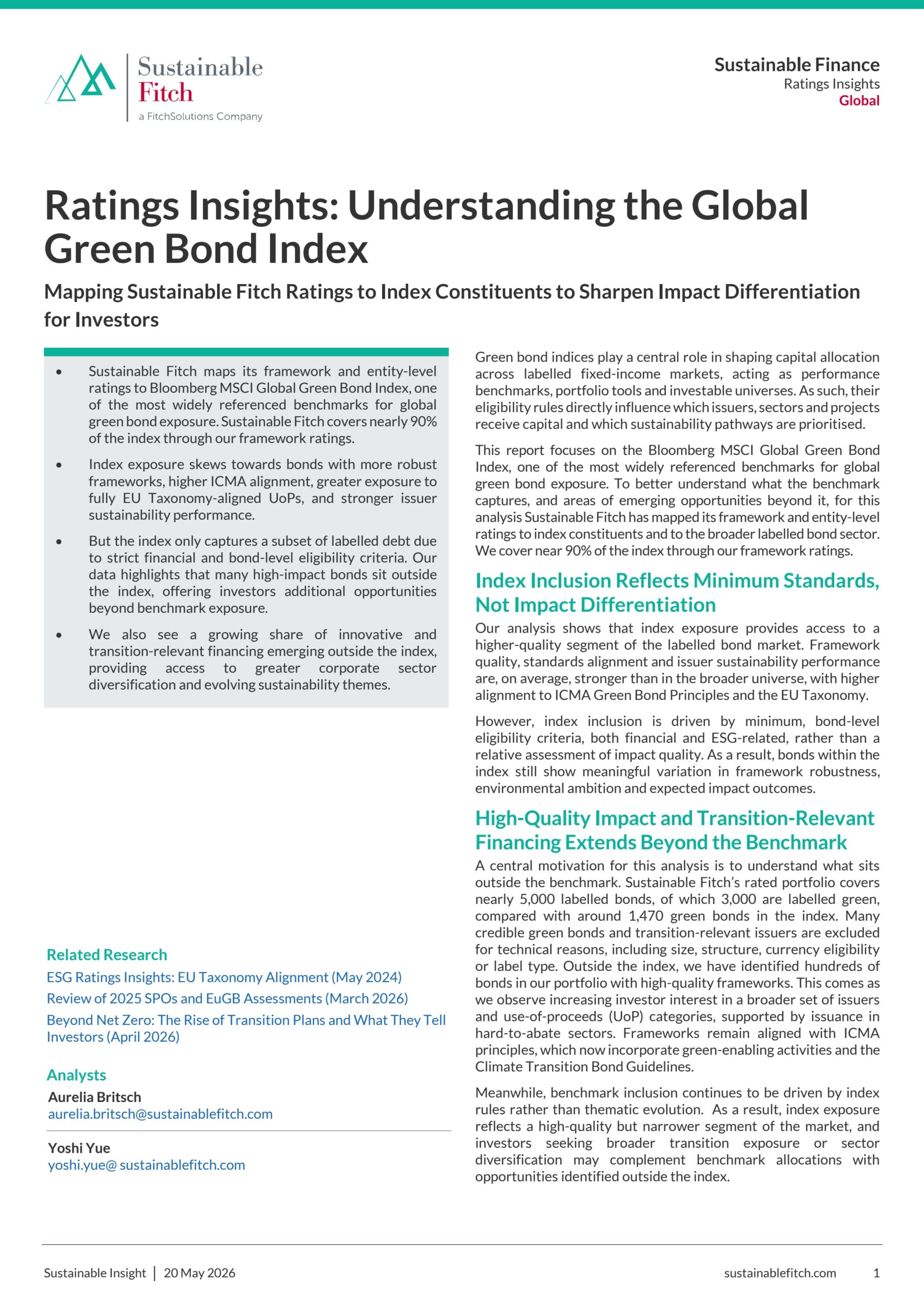
Ratings insights: Understanding the global green bond index
Sustainable Fitch maps its framework and entity-level ratings to the Bloomberg MSCI Global Green Bond Index, covering 88% of index bonds. While index constituents show stronger framework quality and ICMA alignment than the broader market, many high-quality and transition-relevant bonds sit outside the benchmark due to financial eligibility constraints.
Navigating towards water resilience: An introductory guide for central bankers, financial supervisors and regulators
This WWF Greening Financial Regulation Initiative guide introduces central banks, financial supervisors and regulators to the financial risks posed by the global water crisis. It covers physical, transition and systemic risks, emerging responses from the financial sector, available assessment tools, and policy recommendations for integrating water risks into supervisory frameworks.
The ICJ's advisory opinion on climate change
This edited volume analyses the ICJ's July 2025 advisory opinion on climate change obligations, examining its legal framework, due diligence standards, human rights implications, and statehood findings. Contributing authors also assess the opinion's notable silences on historical responsibility, military emissions, and differentiated obligations.
Credible climate financing and fossil fuel phase-out commitments are possible but remain marginal amongst major financial institutions
WBA's analysis of 400 major financial institutions finds that transition planning is emerging but capital allocation to low-carbon solutions and fossil fuel phase-out commitments remain marginal. Only two institutions demonstrate robust fossil-fuel restrictions, and low-carbon activities account for an average of just 2.7% of total financed activities globally.
DAX-AEX Futureproof Index Report
The DAX-AEX Futureproof Index Report is a benchmark series that ranks DAX and AEX-listed companies using an Integrated Value framework combining financial, social, and ecological value. It produces a Futureproofing Ratio to assess long-term corporate value creation and transition risk across sectors and economies.
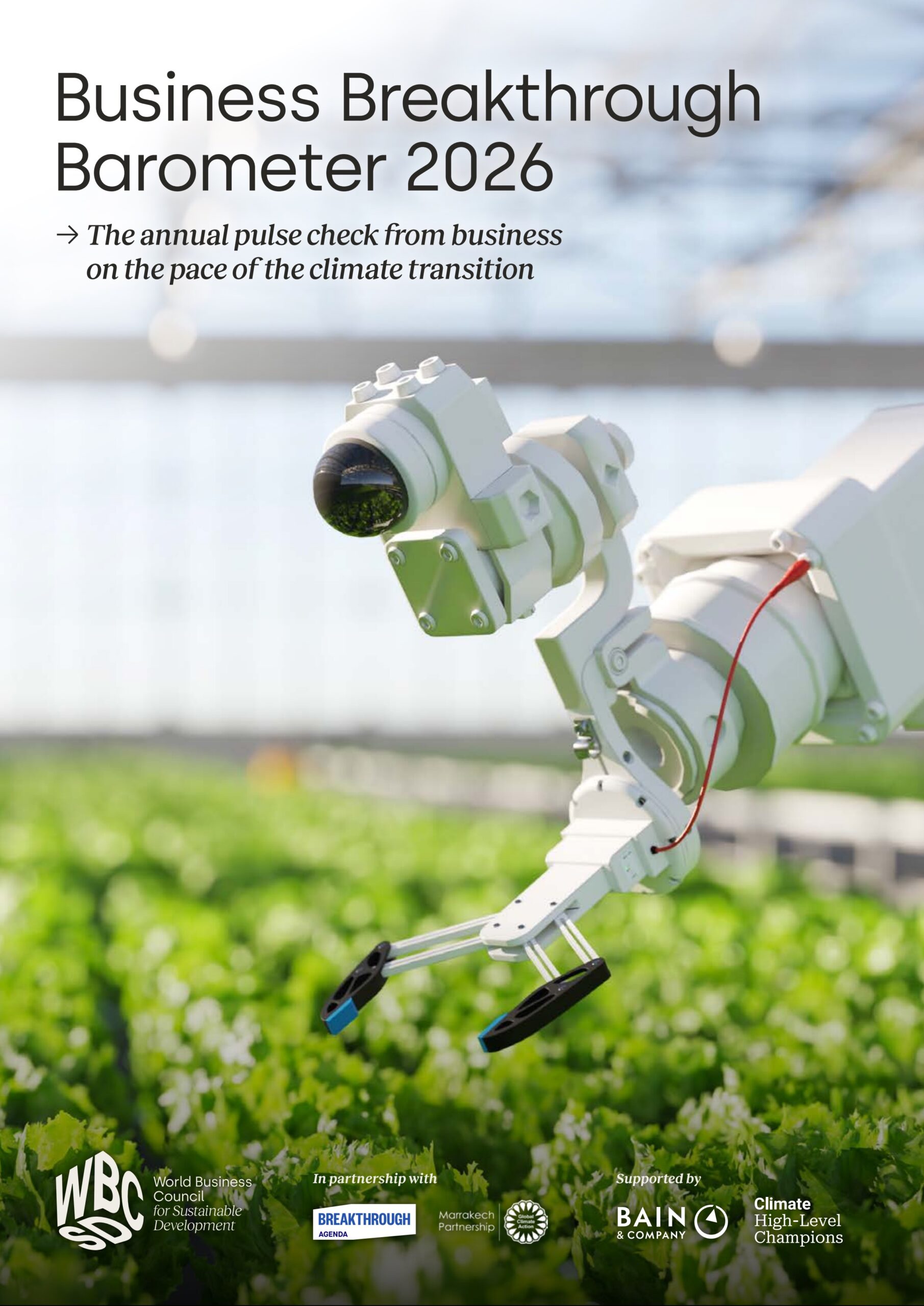
Business breakthrough barometer 2026: The annual pulse check from business on the pace of the climate transition
The Business Breakthrough Barometer 2026 surveys over 500 companies on the climate transition, finding 92% expect sustainability to deliver competitive advantage. While investment momentum holds, 68% of leaders see rising risks of a disorderly transition, urging predictable policy strengthening from governments to unlock private capital.
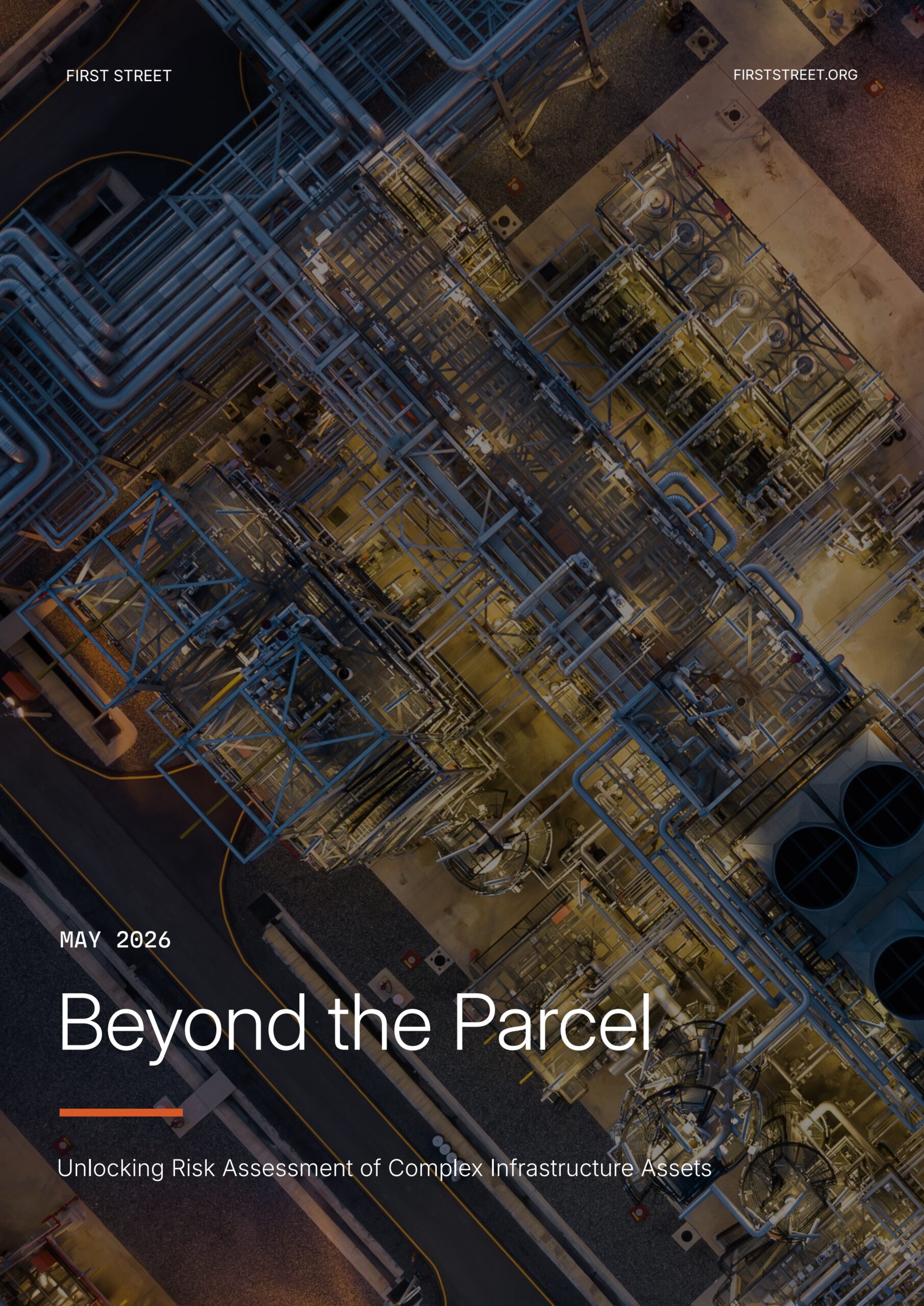
Beyond the parcel: Unlocking risk assessment of complex infrastructure assets
This First Street report applies climate risk modelling to five infrastructure asset types — airports, residential developments, rail networks, transmission lines, and toll roads — demonstrating how localised physical hazards translate into material revenue losses and operational downtime, and why traditional parcel-based risk tools are inadequate for complex infrastructure.
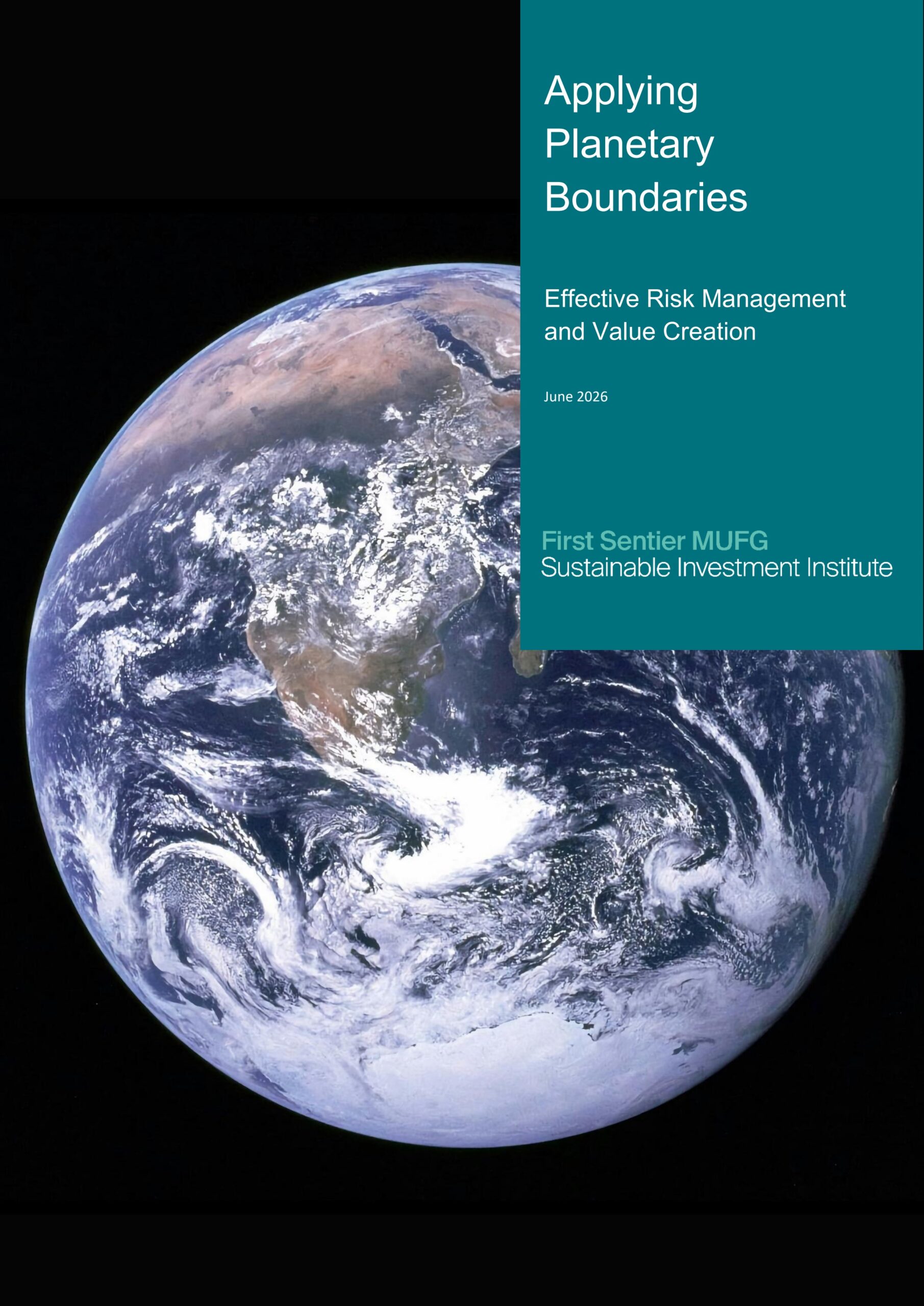
Applying planetary boundaries: Effective risk management and value creation
This report examines how the Planetary Boundaries Framework translates nine critical global processes into material risks and value creation opportunities for investors and corporates. Seven of nine boundaries have already been breached. Tools, frameworks, and an investor engagement plan are outlined to support Earth-system-aligned capital allocation and long-term value creation.


