
Library | ESG issues
Environmental
The environmental pillar in ESG (environmental, social, and governance) assesses an organisation’s impact on the planet. It includes issues such as climate change, biodiversity, waste management and water management. Strong environmental practices help businesses reduce risks, comply with regulations, and drive long-term sustainability.
Refine
1899 results
REFINE
SHOW: 16


Tracking methane action in the dairy and coffee sector
This benchmark series evaluates the progress of leading dairy and coffee companies in addressing methane emissions. It assesses corporate targets, disclosure practices, and reduction strategies within the food sector. The research provides a comparative analysis of industry performance against global climate commitments to encourage transparency and accountability.

Tropical deforestation outlook: How market trends could impact the Amazon, the Congo Basin, and Southeast Asia-Oceania
This report evaluates market drivers of tropical deforestation across the Amazon, Congo Basin, and Southeast Asia. It analyses impacts from transition minerals, food systems, and fast-turnover products. The document outlines transition pathways and provides policy recommendations to address global trade and consumer demand trends through 2035.

Tiny plastics big problem: The hidden risks of plastic pouches for baby food
Greenpeace research identifies significant microplastic contamination in Danone and Nestlé baby food pouches. The report highlights the rapid market shift towards flexible plastic packaging, outstripping regulatory protections. It recommends a 75% reduction in plastic production by 2040 and urges manufacturers to prioritise non-toxic, reusable alternatives to protect infant health.
Global sustainable investment review series
This benchmark series provides a factual mapping of the state of responsible and sustainable investment across major global financial markets. Produced biennially, it offers regional insights and policy recommendations to help finance professionals navigate evolving regulatory frameworks, standardised methodologies, and the transition to a net-zero economy through international cooperation.
ICMA's guidance handbooks series
This guidance series provides a comprehensive set of questions and answers regarding the application of the Green Bond Principles, Social Bond Principles, Sustainability Bond Guidelines, and Sustainability-Linked Bond Principles. It serves as a benchmark series for the sustainable bond market, promoting transparency and standardisation across various financial debt instruments.
Corporate Health Check 2026: The annual state of Earth-positive business action
The CDP 2026 Corporate Health Check, produced with Oliver Wyman, demonstrates that environmental leadership aligns with financial performance. While a 15% leadership cohort achieves 4% annual emission reductions, a major gap persists in adaptation finance. The report identifies four key levers for building resilience and capturing emerging commercial opportunities.
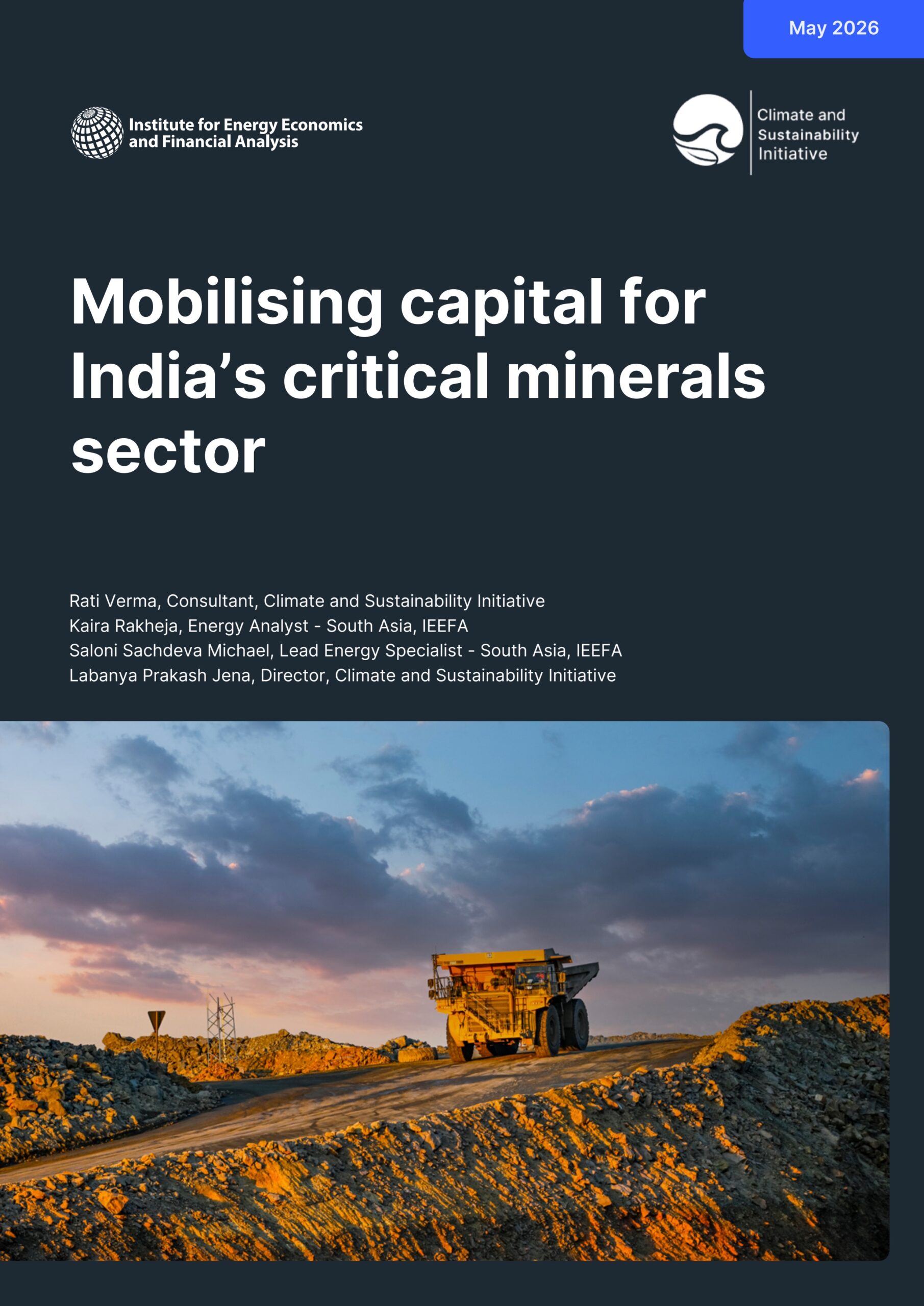
Mobilising capital for India’s critical minerals sector
This report examines financing challenges in India's critical minerals sector across upstream, midstream, and recycling segments. It evaluates the National Critical Mineral Mission's role in addressing capital gaps and suggests de-risking projects to ensure commercial viability and support India’s energy transition goals through strategic policy and international partnerships.
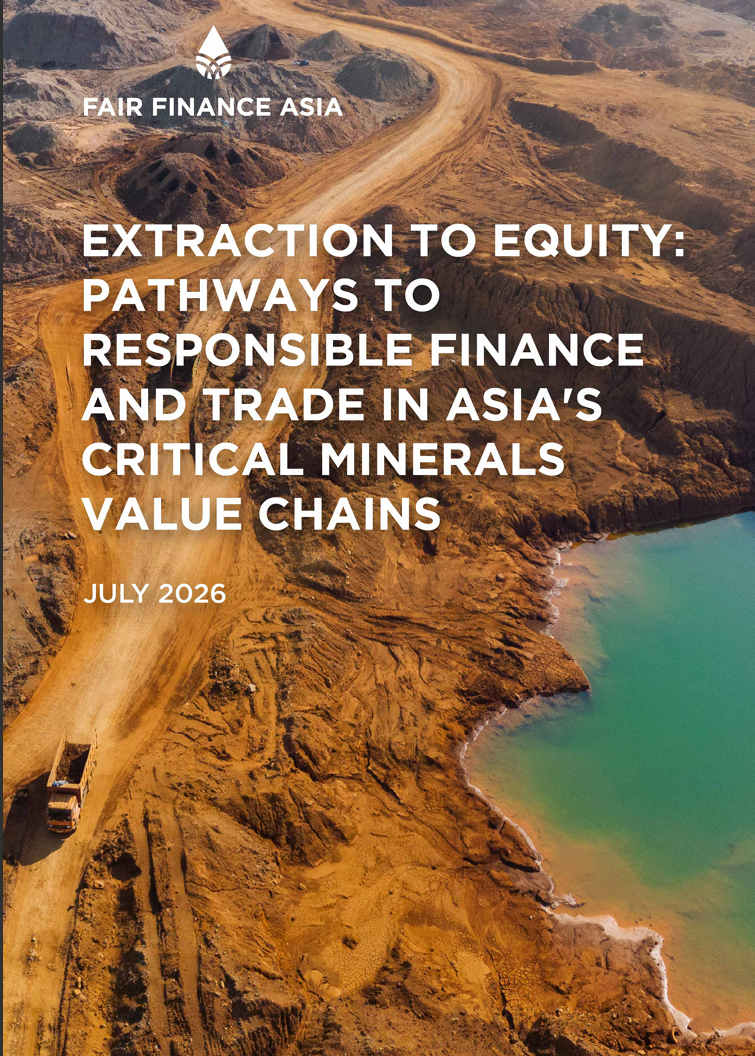
Extraction to equity: Responsible finance and trade for critical minerals in Asia
The report examines critical mineral value chains across selected ASEAN countries, highlighting downstream processing ambitions alongside environmental, human rights and governance risks. It finds trade agreements lack adequate sustainability safeguards and recommends stronger due diligence, impact assessments, benefit-sharing, local value addition, transparency and sustainable finance taxonomies.
Regenerative agriculture: Moving from ambition to credibility
This report evaluates regenerative agriculture commitments across 78 global agri-food companies. While disclosures have increased, quantified targets have declined to 28%. Significant gaps remain in financial support for farmers and pesticide reduction targets, with the pork and poultry sectors largely overlooked in transition planning.
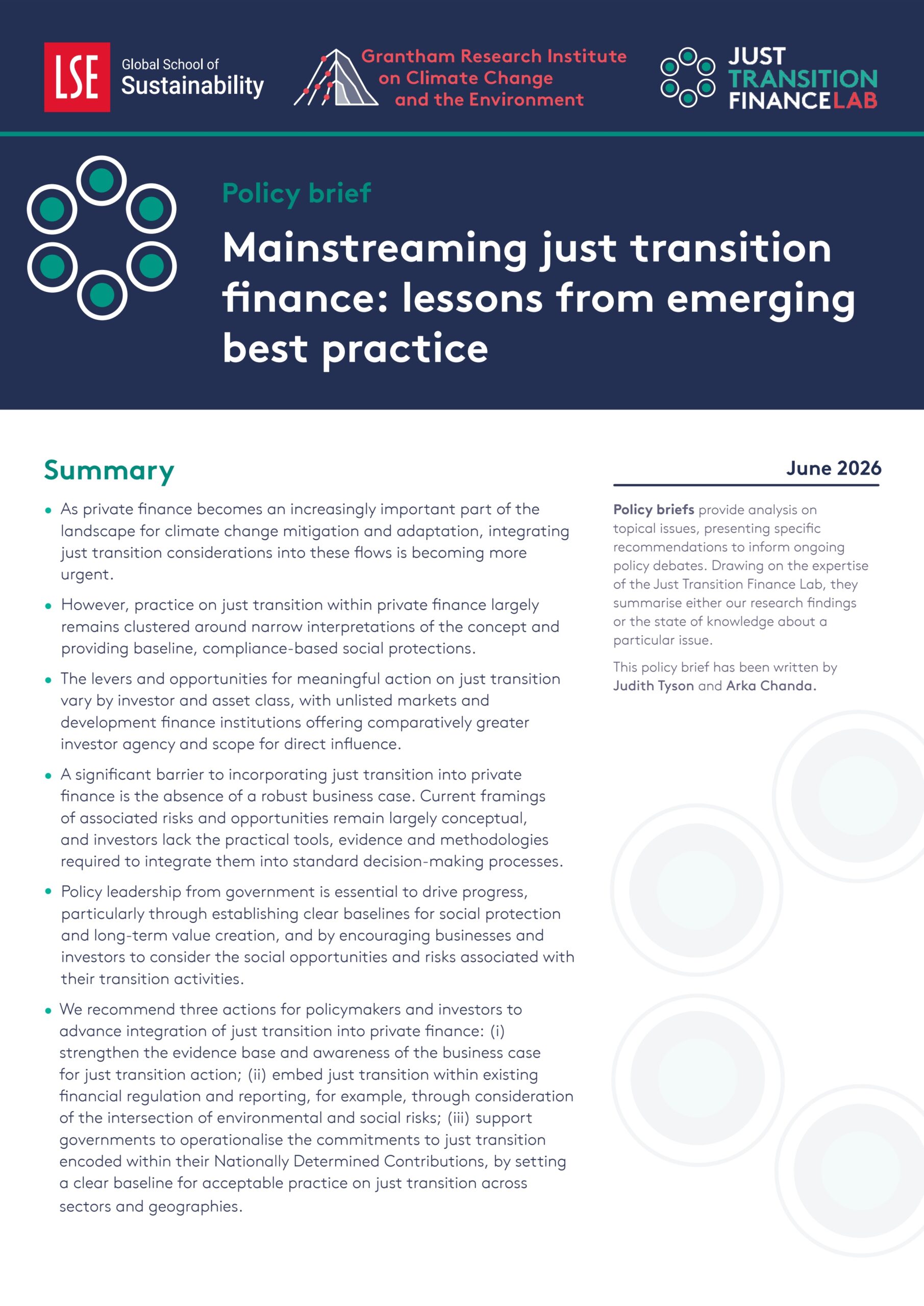
Mainstreaming just transition finance: Lessons from emerging best practice
This report examines the integration of just transition principles into private finance. It highlights structural barriers, including the lack of robust business cases and quantifiable evidence. Recommendations include embedding just transition into existing regulatory frameworks, strengthening the evidence base for commercial benefits, and aligning private incentives with national commitments.
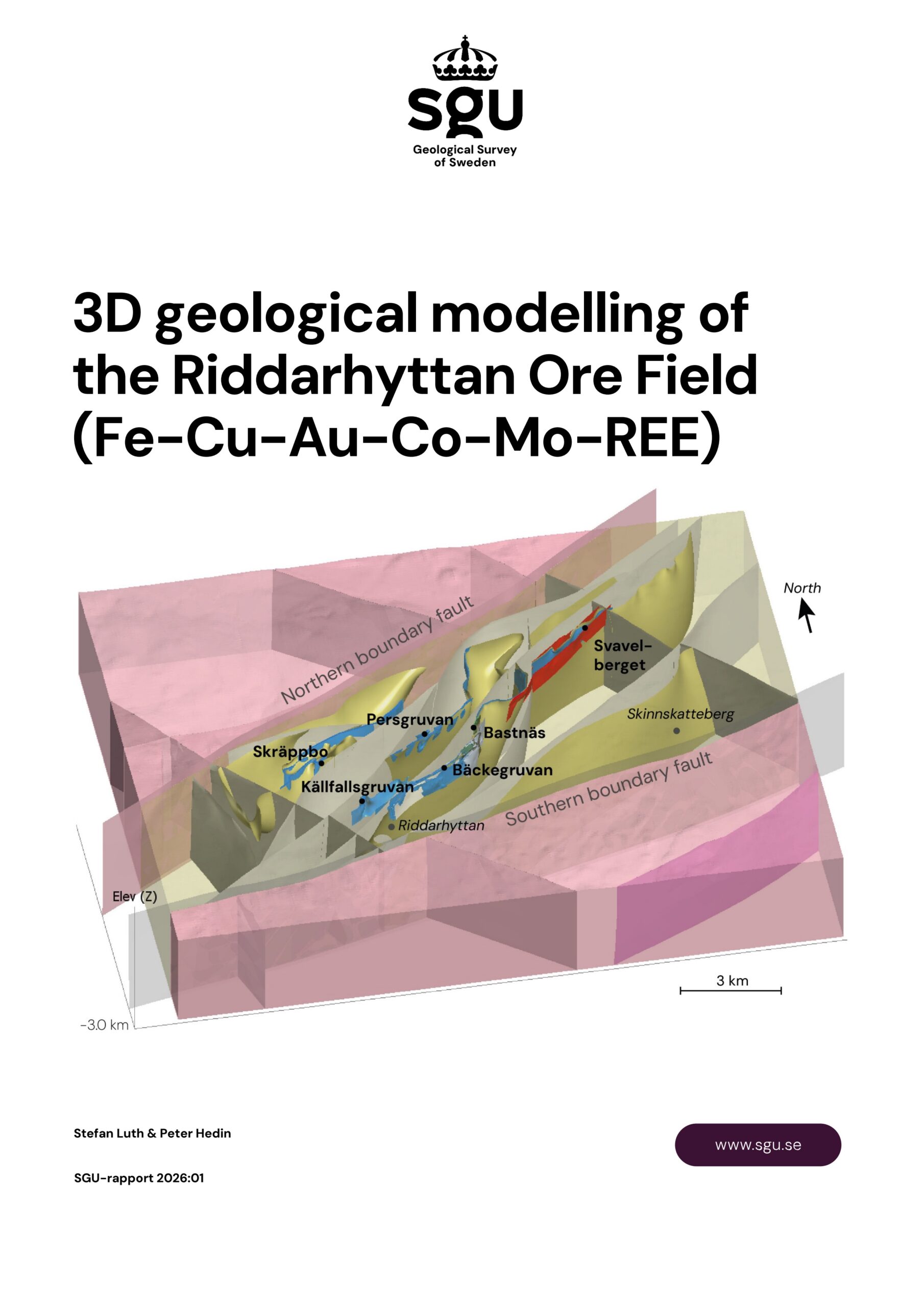
3D geological modelling of the Riddarhyttan Ore Field (Fe-Cu-Au-Co-Mo-REE)
This report details 3D geological modelling of the Riddarhyttan Ore Field, identifying significant iron, copper, and rare earth element mineralisations. Characterising complex deformation patterns, the research suggests orebodies extend below historical mining depths, indicating high potential for future resource extraction within the western Bergslagen region.
Assessing climate finance quality in practice: Lessons from six cases
This research report analyses six case studies to determine what constitutes high-quality public climate finance. It introduces a two-pronged framework assessing design, delivery, and results. Findings emphasise context-specific calibration, the importance of building enabling environments, and identifying data gaps that hinder systematic reporting across public climate finance providers.
Just Nature: How finance can support a just transition at the interface of action on climate and biodiversity
This report examines how the financial sector can facilitate a just transition within nature-based systems. It outlines priorities for sustainable agriculture, deforestation, nature-based solutions, and ocean restoration. The authors provide strategic recommendations for integrating human rights and social inclusion into climate and biodiversity actions to achieve a net-zero economy.
Gaining ground: State of private investment in nature 2026
This report analyses the growth of private investment in nature between 2016 and 2025, documenting a fivefold increase in annual capital deployment to $14 billion. It highlights the shift towards institutional-grade natural capital and recommends clearer policy drivers and standardised metrics to unlock investment and bridge the $700 billion finance gap.
The price and distributional impact of flood risk disclosure: Evidence from US housing platforms
This research quantifies the impact of property-level flood risk disclosure on US housing prices and demographics. Homes labelled with 'extreme' risk saw a 3.3% price discount. Disclosure caused significant resorting, with lower-income, older, and FHA-financed buyers increasingly purchasing high-risk properties primarily due to reduced transaction prices.
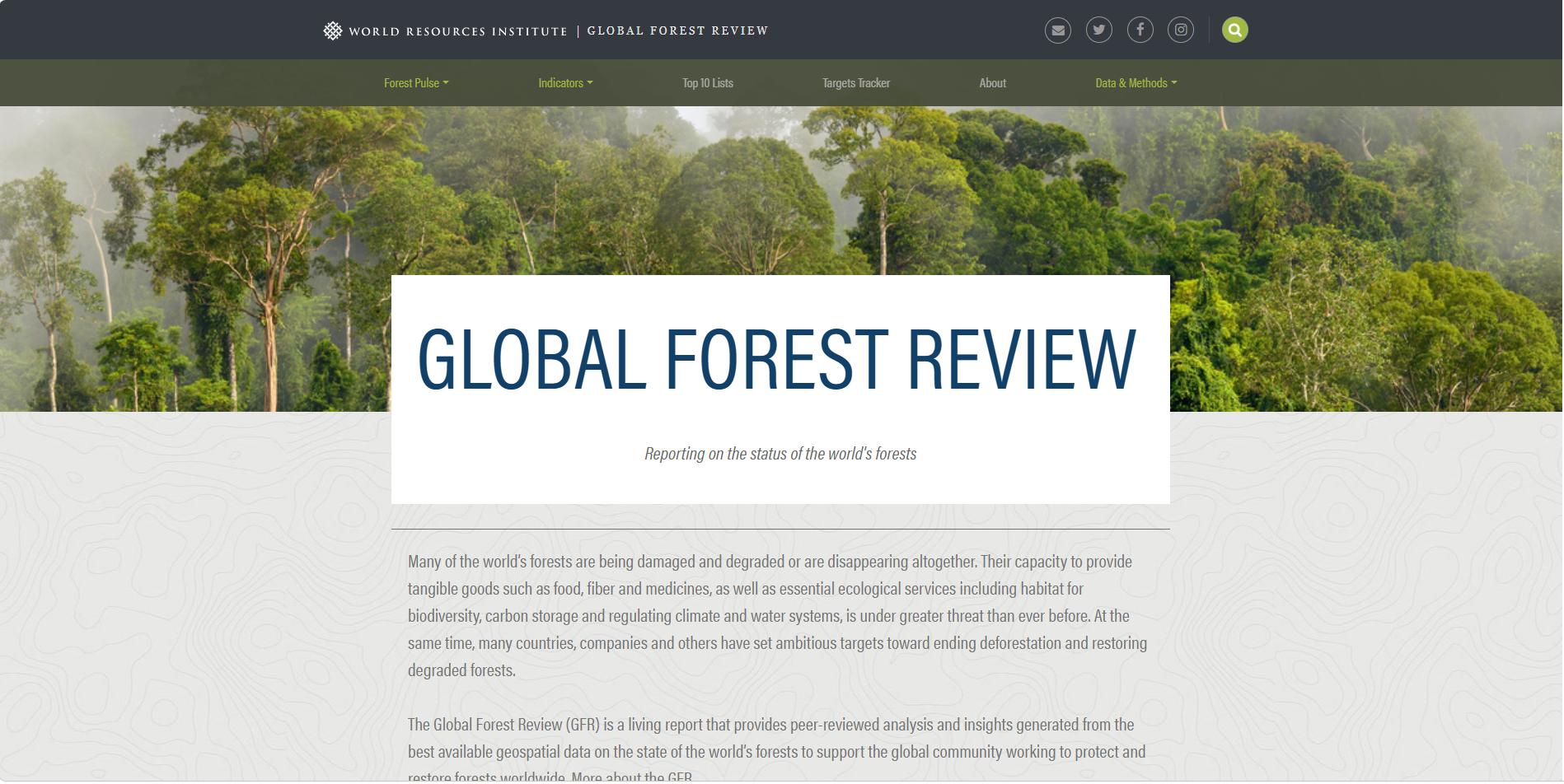
Global Forest Review
The Global Forest Review is an online resource by the World Resources Institute providing annual data on global forest loss, deforestation drivers, and carbon stocks. It helps finance professionals assess environmental risks and track supply chain exposure to deforestation-linked commodities.


