
Library | ESG issues
Environmental
The environmental pillar in ESG (environmental, social, and governance) assesses an organisation’s impact on the planet. It includes issues such as climate change, biodiversity, waste management and water management. Strong environmental practices help businesses reduce risks, comply with regulations, and drive long-term sustainability.
Refine
1899 results
REFINE
SHOW: 16


Best practice transition plans for listed equity asset managers
Most listed equity managers now have a target. Fewer have a plan that shows how it will be met. By January 2024, 264 Net Zero Asset Managers signatories had had their targets reviewed. Method is no longer the hard part.
Disaster resilience scorecard for cities: Addendum for extreme heat risk management
An addendum to the Disaster Resilience Scorecard for Cities, this tool helps local governments assess and strengthen extreme heat risk management. It uses 18 indicators to evaluate governance, infrastructure, and financial planning to build long-term urban resilience against rising temperatures.
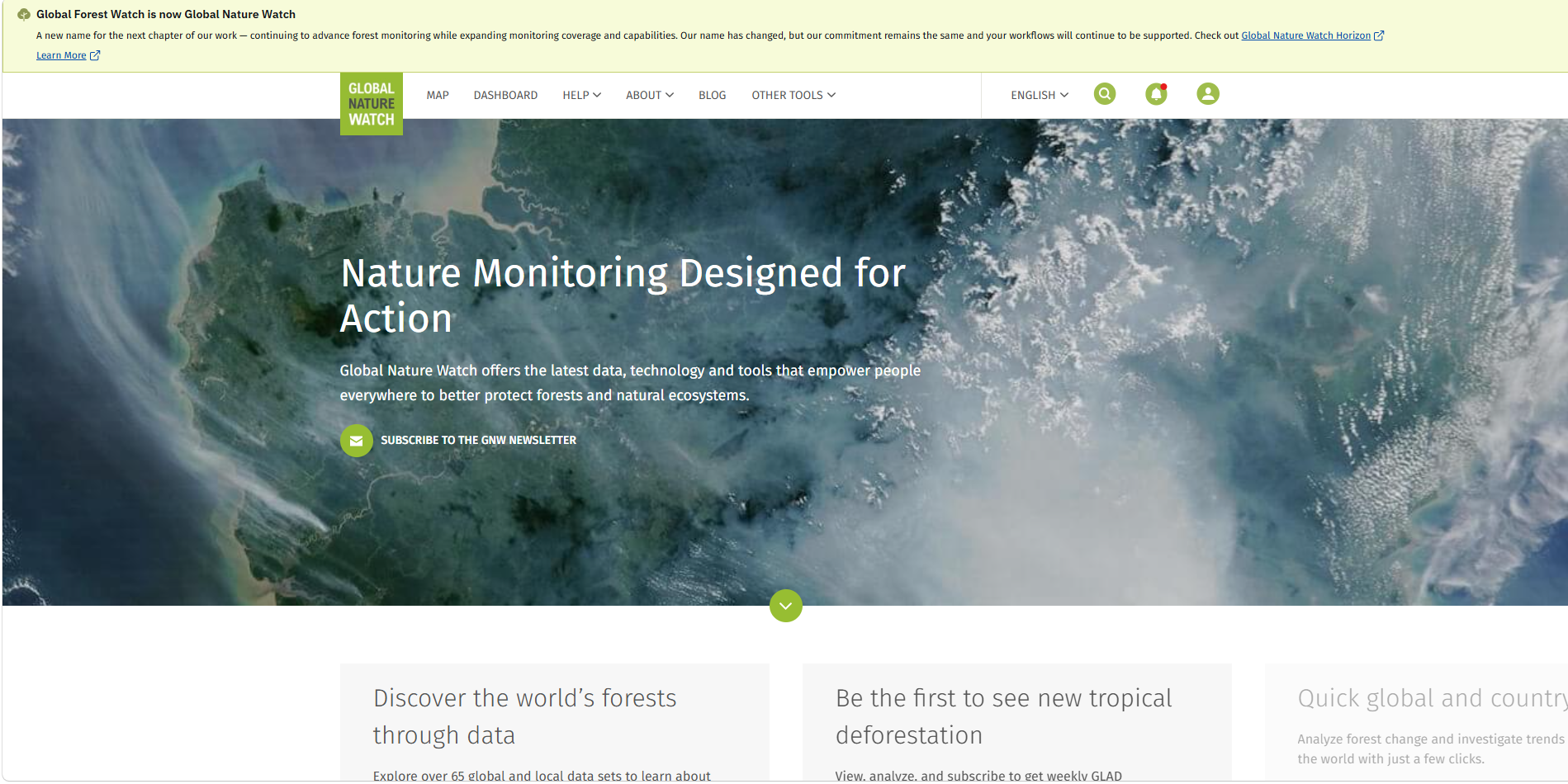
Global Nature Watch
Global Nature Watch is an AI-powered Earth monitoring platform developed by the World Resources Institute and Google. It provides near-real-time data on land-use changes across various ecosystems to support nature-based risk assessment and environmental reporting.
Climate change mitigation and adaptation: What works for data centres? Part 3
This report evaluates climate change mitigation and adaptation strategies for data centres using the ClimaTech database. It assesses the effectiveness of decarbonisation across three scopes and analyses resilience measures for flood, storm, heat, and wildfire risks, providing quantitative performance metrics for various technological solutions.
ASEAN sustainable finance state of the market series
This series by the Climate Bonds Initiative examines the development of sustainable finance markets across ASEAN. It covers green, social, sustainability and sustainability-linked debt instruments, alongside market structures, taxonomies, transition finance and policy developments supporting sustainable capital markets across the region.
Climate-related disclosures: Insights from our reviews 2026
This Financial Markets Authority report reviews 62 climate statements from the second reporting period in Aotearoa New Zealand. It identifies improvements in reporting structures but highlights gaps in physical risk analysis and assurance compliance. Future monitoring will focus on education to improve data substantiation and risk disclosure quality.

The climate premium on commercial real estate insurance
This report analyses rising insurance costs in the United States commercial real estate sector. It finds that premiums have surged 154% since 2017, driven by climate risk and reinsurance trends. High-risk markets face significant valuation erosion, with multi-family properties particularly impacted by increased financial burdens and pricing volatility.
Coller FAIRR seafood index methodology: May 2026
The Coller FAIRR Seafood Index Methodology outlines the framework for assessing 20 global companies across 16 material topics. It details a bottom-up scoring process, ranging from 0 to 100, and a four-step production cycle. The index measures corporate maturity in response to environmental and social risks in the seafood industry.
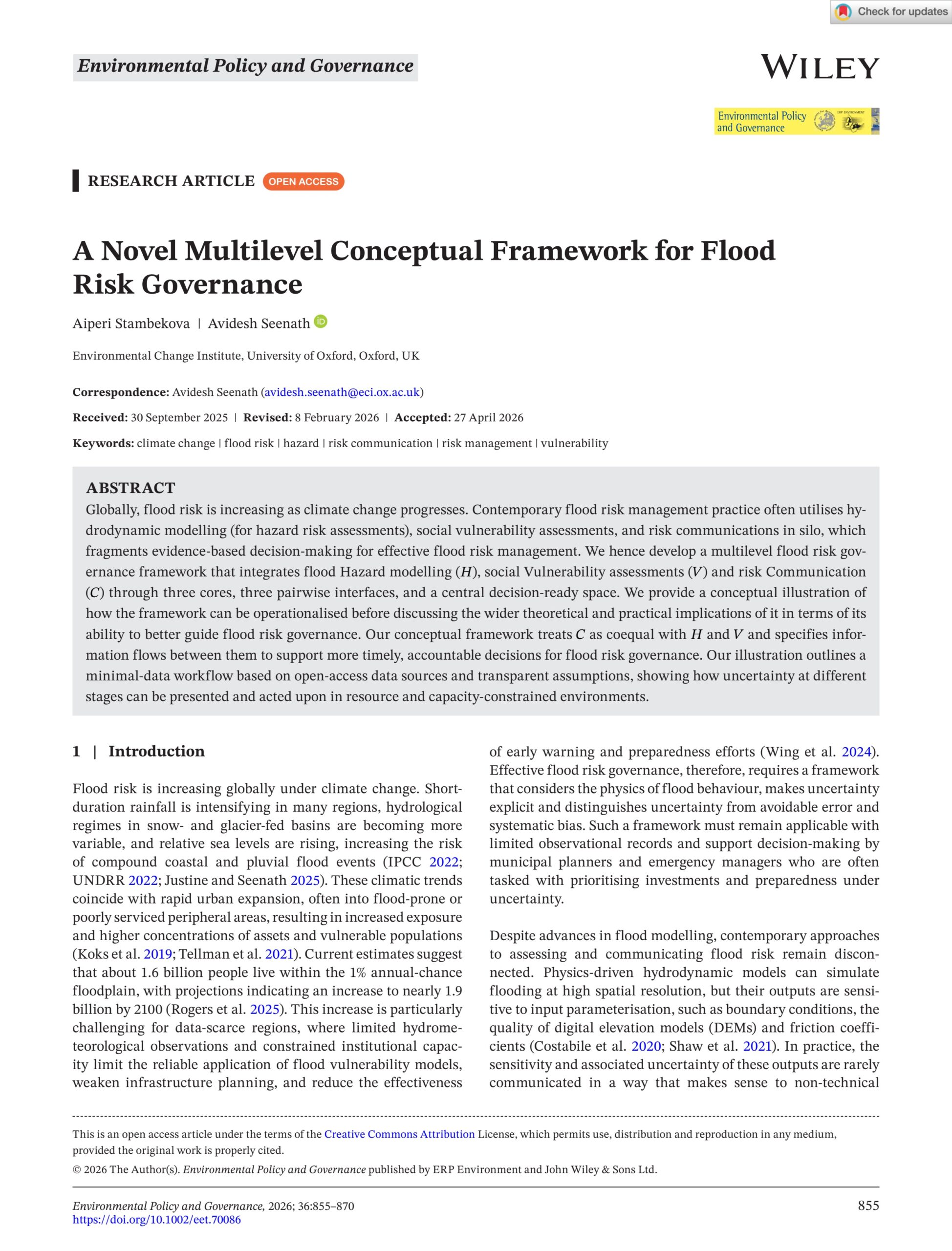
A novel multilevel conceptual framework for flood risk governance
This research introduces a multilevel framework integrating flood hazard modelling, social vulnerability assessments, and risk communication. Designed for data-scarce environments, it addresses analytical silos by treating communication as a coequal component. The framework supports equitable decision-making through consequence-oriented risk surfaces and transparent uncertainty representation for municipal planning.
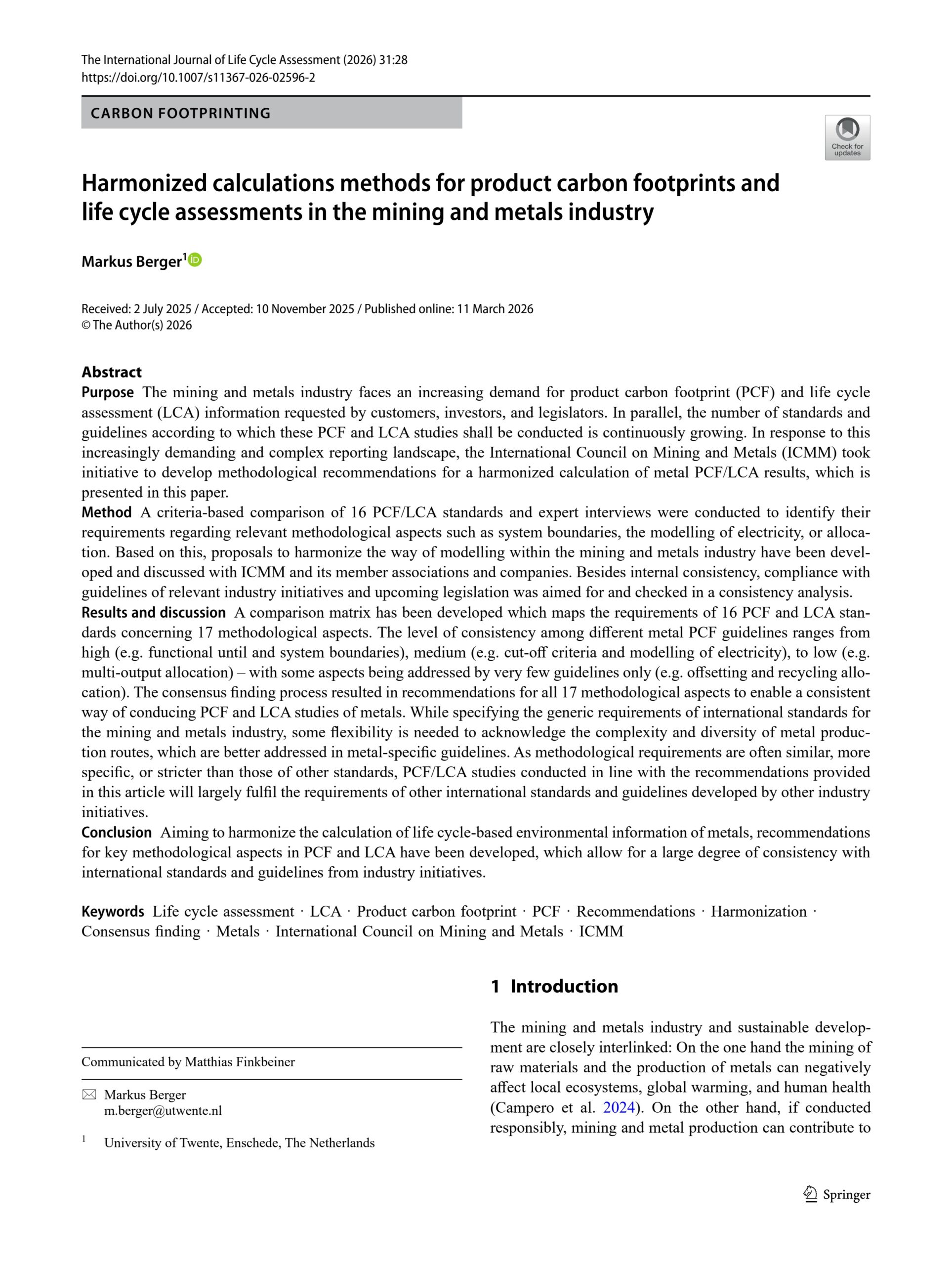
Harmonized calculations methods for product carbon footprints and life cycle assessments in the mining and metals industry
This research presents methodological recommendations for harmonising product carbon footprint and life cycle assessment calculations across the mining and metals industry. Developed with the International Council on Mining and Metals, it establishes consistent guidelines for 17 aspects, including system boundaries, electricity modelling, and multi-output allocation procedures.
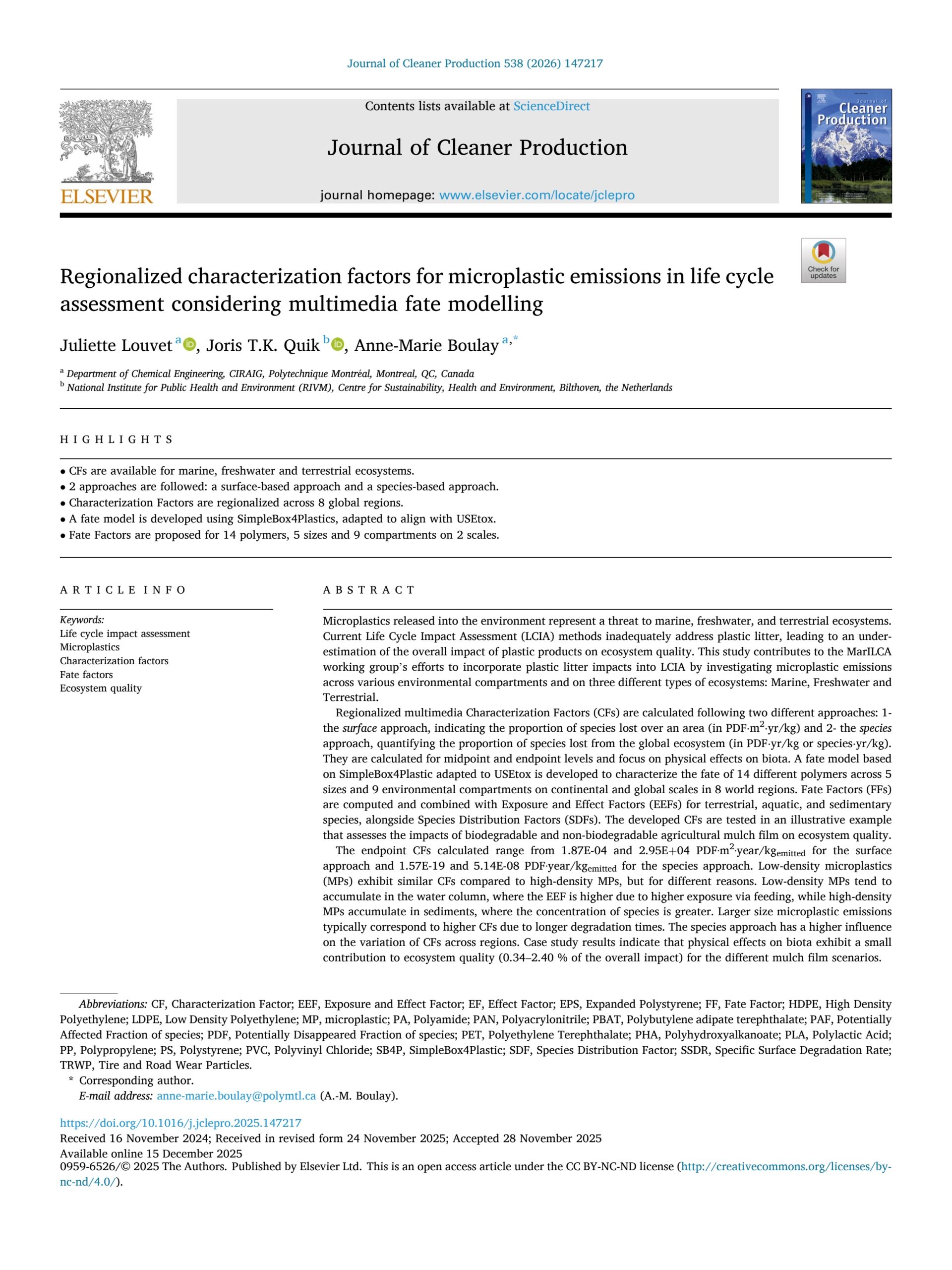
Regionalized characterization factors for microplastic emissions in life cycle assessment considering multimedia fate modelling
This research establishes regionalised characterisation factors for microplastic emissions across marine, freshwater, and terrestrial ecosystems. Using fate modelling aligned with USEtox, it evaluates 14 polymers and five size categories. Findings demonstrate that particle size and density significantly influence environmental persistence and subsequent impacts on global species richness.
ENCORE Insights: Country Dashboard
The ENCORE Insights: Country Dashboard is an interactive tool that maps how national economies and sectors depend on nature. Developed by Global Canopy, it helps finance professionals and regulators assess macroeconomic risks associated with nature degradation and ecosystem service dependencies.
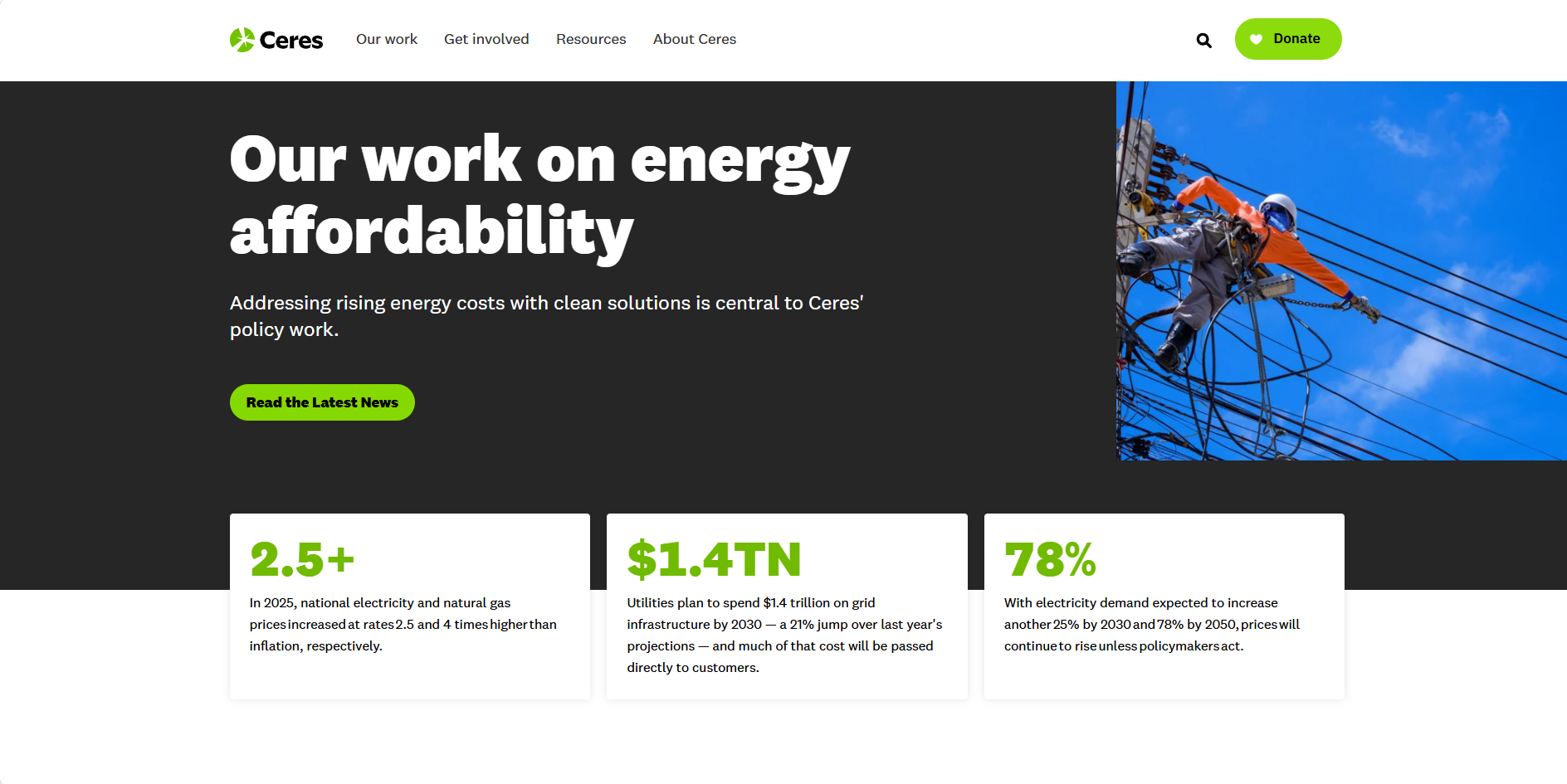
Ceres: Our work on energy affordability
A Ceres initiative and playbook focused on curbing rising energy prices through clean energy expansion, providing policymakers and investors with strategies for a modern, efficient, and affordable energy system.
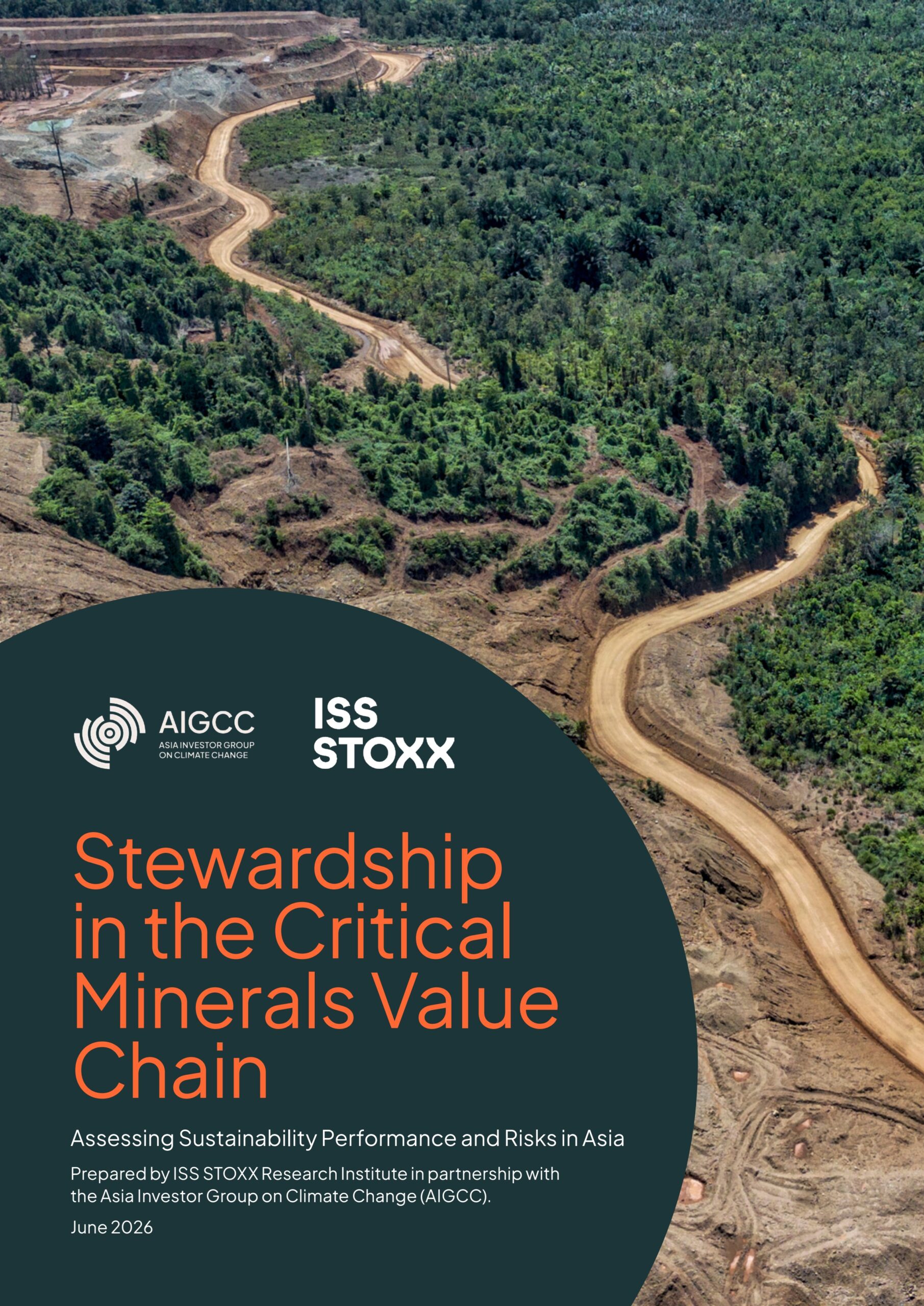
Stewardship in the critical minerals value chain: Assessing sustainability performance and risks in Asia
This research examines sustainability risks in Asia’s critical minerals value chain, focusing on nickel, cobalt and copper. Utilising IRMA-aligned assessments and geospatial data, it highlights gaps between corporate policy and implementation, intensifying physical climate risks, and nature dependencies, providing actionable stewardship priorities for institutional investors in the region.
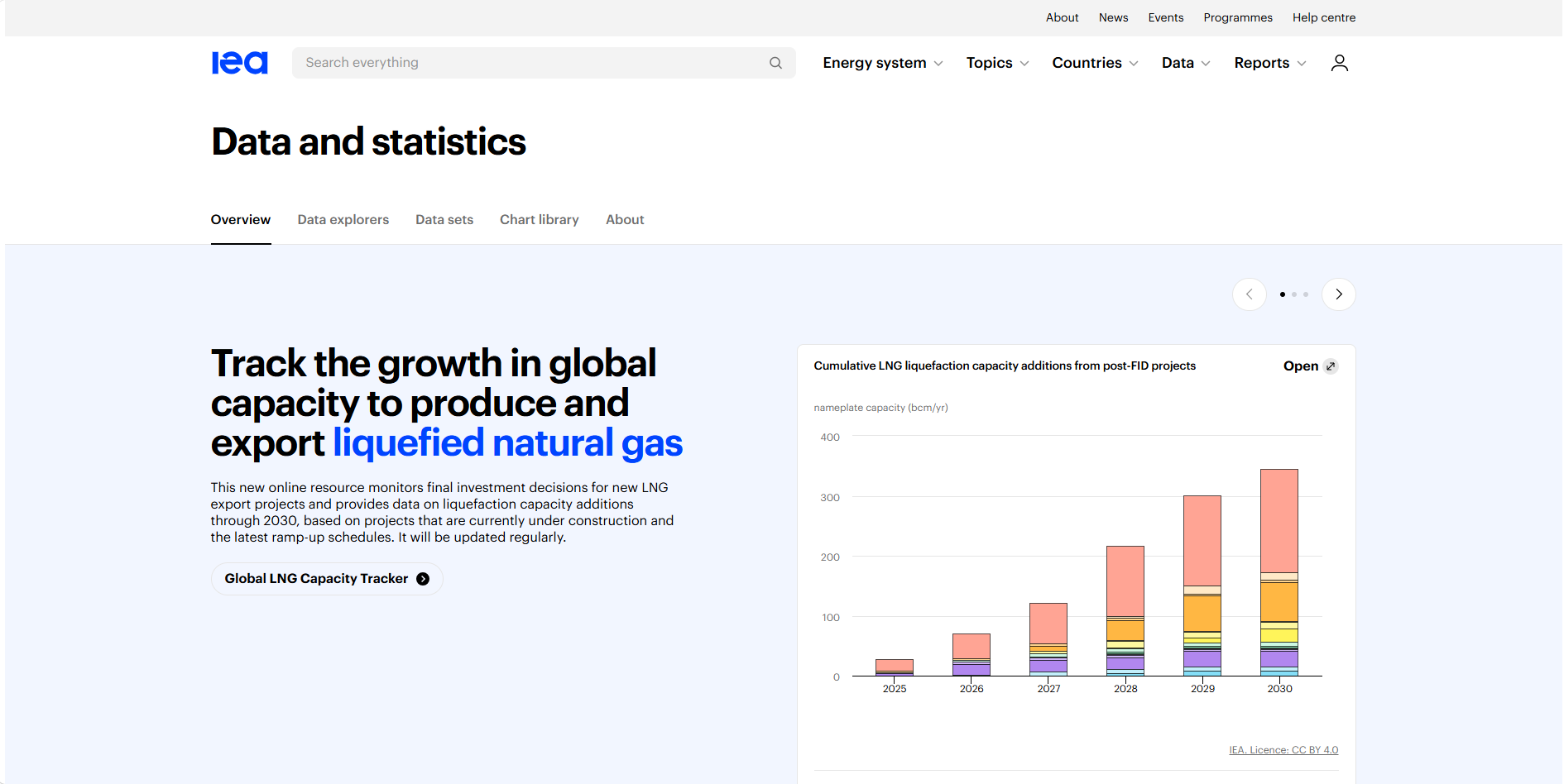
IEA Statistics Search
The IEA Statistics Search is an authoritative data portal providing global energy analysis, projections, and historical statistics. It supports finance professionals in assessing energy market trends, ESG metrics, and investment risks during the clean energy transition.
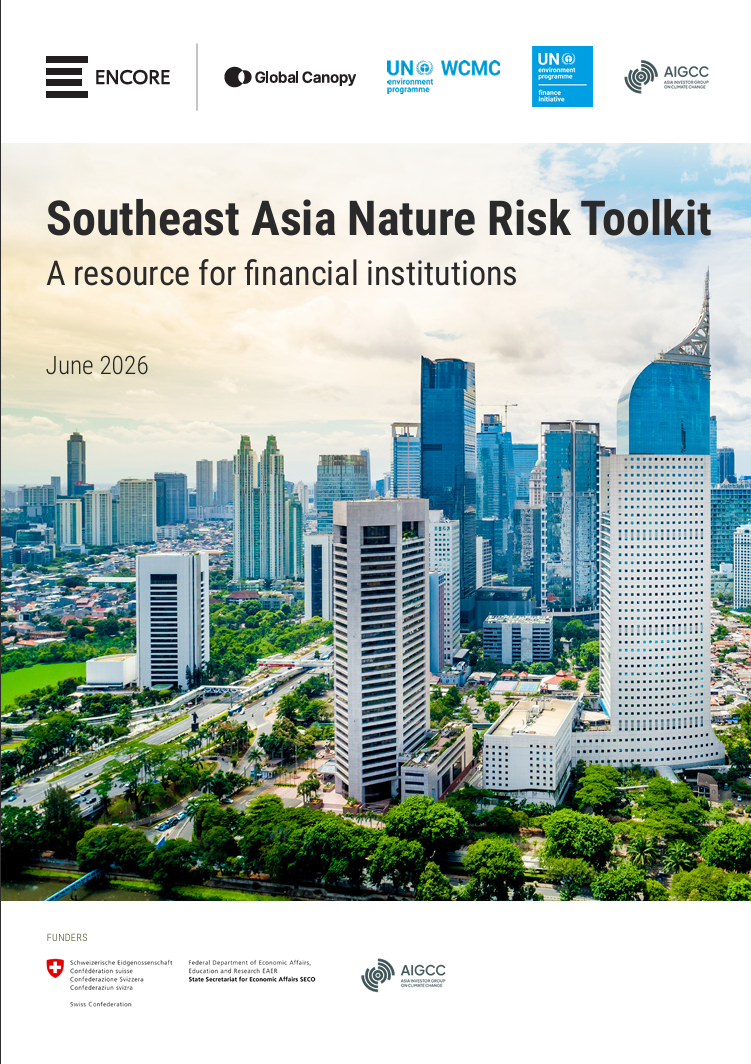
Southeast Asia nature risk toolkit: A resource for financial institutions
A resource-hub and workbook designed by ENCORE partners to help financial institutions assess nature-related risks in Indonesia, Malaysia, Thailand, and Viet Nam. It provides over 120 curated tools and datasets to support TNFD-aligned risk management and investment decisions.


