
Library | ESG issues
Targets & Accountability
Targets and accountability are essential for ensuring organisations and governments follow through on commitments to sustainability, climate action, and social responsibility. Setting measurable and transparent targets such as net-zero goals, emissions reductions, diversity benchmarks, and human rights protections allows for tracking progress and holding entities accountable. Clear, data-driven targets strengthen stakeholder trust and help align financial and business strategies with long-term sustainability objectives.

Refine
355 results
REFINE
SHOW: 16



National Bureau of Economic Research (NBER)
National Bureau of Economic Research (NBER) is a US-based nonpartisan economic research organisation producing working papers, conferences, datasets and publications on macroeconomics, labour markets, health economics and public policy. It supports scholars and policymakers with in-depth empirical research.
Enel: Industry case studies: Electric utility
This report presents Enel’s case study on implementing CFO Principles for the SDGs. It outlines historical drivers, sustainability disruption, strategic responses, and SDG investments, highlighting decarbonisation, electrification, and financial performance assessment. The report details Enel’s renewable energy expansion, SDG alignment, and integration of sustainability outcomes with financial results.
The just transition: How two investors are tackling its social implications
This report by PRI outlines how Fonds de Solidarité FTQ and Ircantec integrate just transition principles into investment strategies. It highlights measures to support decarbonisation, quality jobs, community engagement, sustainable real estate, and shareholder dialogue, linking social considerations with environmental goals in advancing a low-carbon economy.
Target-setting protocol fourth edition
The report outlines the fourth edition of the Science Based Targets initiative’s target-setting protocol. It provides updated guidance, criteria, and methodology for companies to set near-term science-based greenhouse gas emission reduction targets, aligning with 1.5°C pathways and incorporating broader coverage across sectors, geographies, and organisational boundaries.
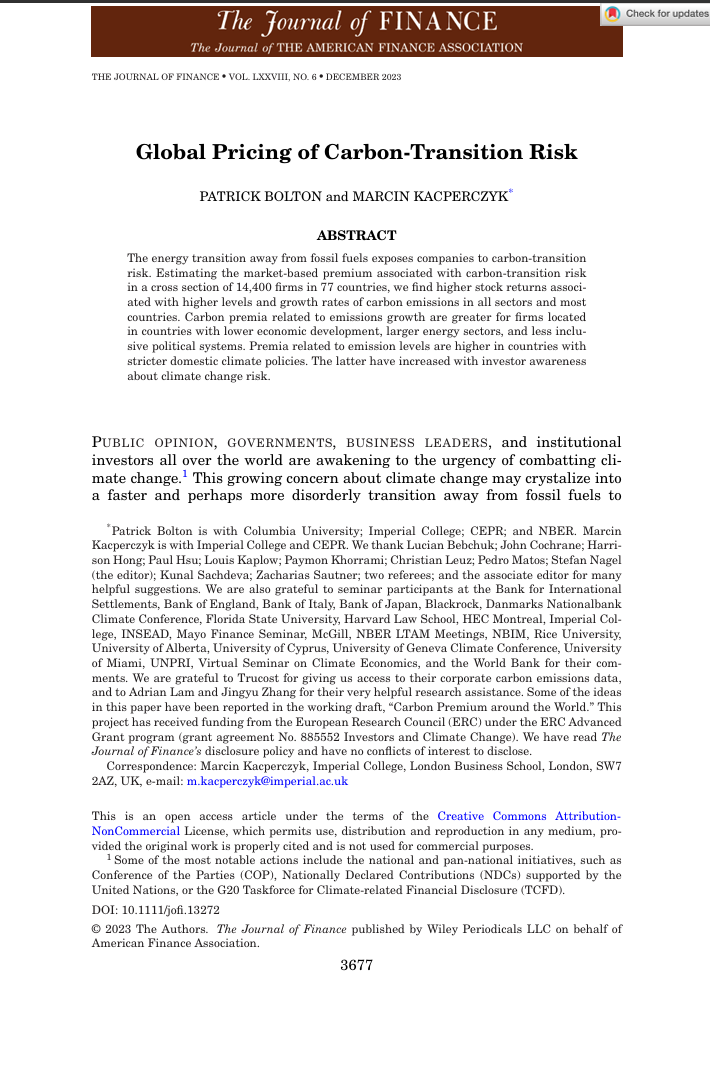
Global pricing of carbon-transition risk
This report examines the global pricing of carbon-transition risk by assessing equity markets’ responses to climate policy and transition exposure. It analyses regional variations, sectoral impacts, and the role of carbon pricing in financial markets, highlighting implications for asset valuation and investment strategies.
ESG and responsible institutional investing around the world: A critical review
This report reviews global ESG and responsible investing practices, focusing on definitions, regulation, climate finance, and institutional investor roles. It evaluates evidence from academic research and PRI data, highlighting investor influence, governance, and engagement strategies, while noting challenges around ratings, greenwashing, and measuring real outcomes.
City development limited: Industry case studies: Real estate
City Developments Limited outlines its sustainability strategy, focusing on climate resilience, stakeholder engagement, and SDG-aligned investments. The report details historical drivers, innovation in green building, ESG integration, and financial performance, highlighting case studies on technology adoption and partnerships to advance low-carbon operations and responsible real estate growth.

DBS Bank
DBS Bank India is a digital-led universal bank offering personal, SME, corporate and wealth management services. Features include resident and non-resident (NRI) savings and fixed deposit accounts, remittance, loans, digital payments and credit/debit card solutions. Positions as Asia’s safest bank with a wide India branch network.
ShareAction's point of no return series
The Point of No Returns benchmark series assesses the world’s largest asset managers on responsible investment across climate, biodiversity, social issues, governance, and stewardship. Published by ShareAction, the series provides rankings, sector-wide analysis, and examples of practice to guide improvement and accountability.

London Stock Exchange Group (LSEG)
LSEG (London Stock Exchange Group) is a global financial markets infrastructure and data provider. It delivers market-data, analytics, news and index products to over 44,000 customers in more than 170 countries. LSEG’s services cover capital markets, post-trade operations, risk management and information services.

Kroll
Kroll is a global financial and risk advisory firm offering services in valuation, investigations, cyber-resilience, regulatory compliance, transaction advisory, restructuring and business services.
With around 6,500 experts across 32 countries, Kroll helps clients build, protect and maximise enterprise value through data, technology and intelligence.
With around 6,500 experts across 32 countries, Kroll helps clients build, protect and maximise enterprise value through data, technology and intelligence.
Externalities and the common owner
This article analyses institutional investors’ incentives to internalise negative externalities across their portfolios. It focuses on climate change, showing how large asset managers influence fossil fuel companies to reduce emissions, disclose risks, and limit lobbying, reframing shareholder primacy by prioritising portfolio-wide welfare over firm-level profit maximisation.
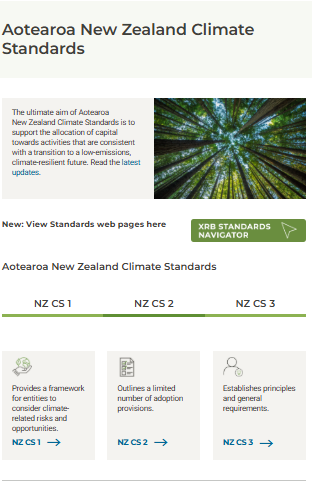
Aotearoa New Zealand climate standards series
The Aotearoa New Zealand Climate Standards series is a benchmark series issued by the External Reporting Board. It sets out the framework for climate-related disclosures, including governance, strategy, risk management, metrics and targets, adoption provisions, and general requirements. The series provides entities with a consistent structure to report climate-related risks and opportunities.

External Reporting Board (XRB)
External Reporting Board (XRB) is an independent Crown entity in New Zealand that develops and issues accounting, auditing & assurance, and climate reporting standards. XRB ensures trusted, high-quality, integrated reporting across public, private and not-for-profit sectors to promote transparency, accountability and support informed decision-making.
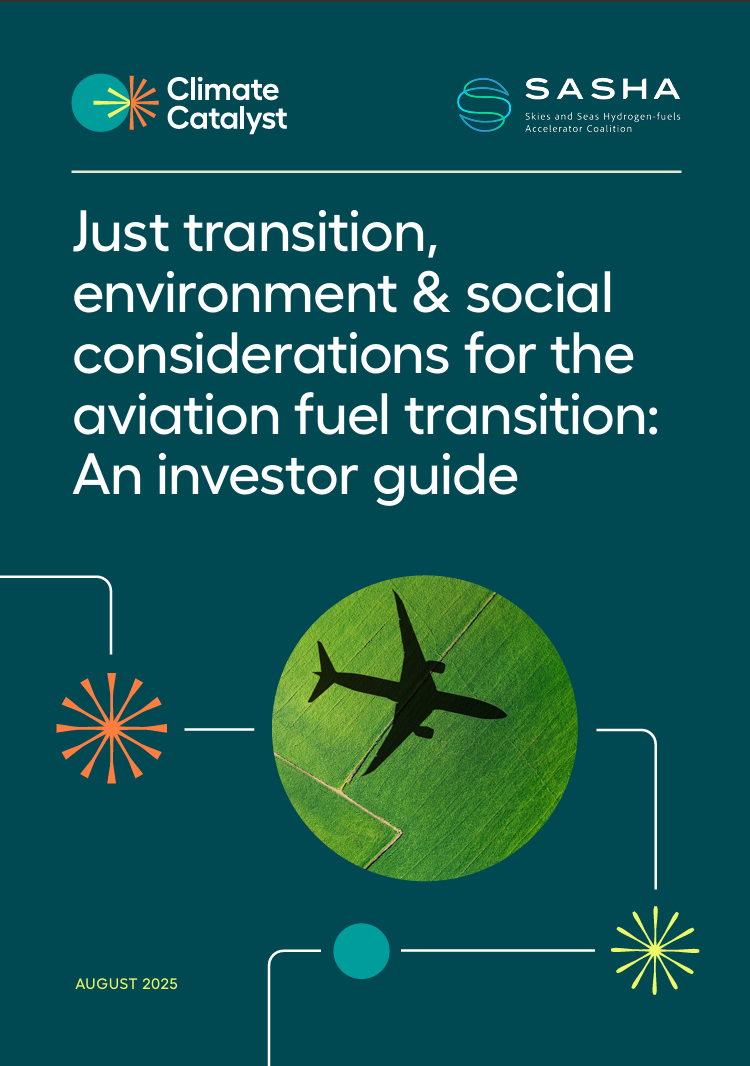
Just transition, environment and social considerations for the aviation fuel transition: An investor guide
This guide outlines environmental, social, and just transition considerations for investors in aviation’s fuel shift. It compares biofuels and e-fuels, highlights regulatory and biodiversity risks, and provides engagement questions to assess companies’ transition strategies, ensuring alignment with climate goals while safeguarding communities and long-term financial stability.

Opportunity Green
Opportunity Green (OG) is a UK-based charity founded in 2021 that harnesses legal, economic and policy expertise to drive climate justice. OG focuses on equity, justice and accountability across overlooked sectors—aviation, shipping, buildings, steel, agriculture—championing decarbonisation, legal innovation and coalition-building for a 1.5 °C-aligned future.


