
Library | ESG issues
Weapons & Armaments
Weapons are objects designed to injure, kill, or defeat, while armaments refer to military weapons and equipment. They are controversial due to their potential to harm civilians, fuel armed conflicts, and contribute to global instability. Certain weapons, such as cluster munitions and nuclear arms, face international divestment efforts due to long-term humanitarian and environmental consequences. Many investors exclude companies involved in weapons production, arms exports, or dealings with oppressive regimes due to ethical, legal, and reputational concerns.
Refine
25 results
REFINE
SHOW: 16



International Campaign to Abolish Nuclear Weapons (ICANW)
International Campaign to Abolish Nuclear Weapons (ICAN) is a global civil society coalition working to eliminate nuclear weapons. ICAN leads advocacy for the Treaty on the Prohibition of Nuclear Weapons, produces policy research, and supports disarmament campaigns worldwide, engaging governments, UN institutions, partners across regions, and multilateral policy forums.
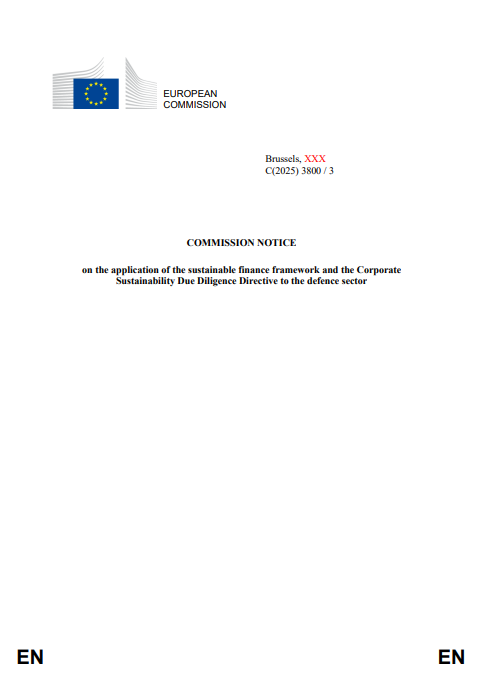
Notice on the application of the sustainable finance framework and the Corporate Sustainability Due Diligence Directive to the defence sector
The European Commission clarifies that the EU sustainable finance framework and Corporate Sustainability Due Diligence Directive apply neutrally to the defence sector. Defence investments are permitted, assessed case by case, with disclosure and due diligence obligations focused on risk mitigation and exclusion limited to internationally prohibited weapons.
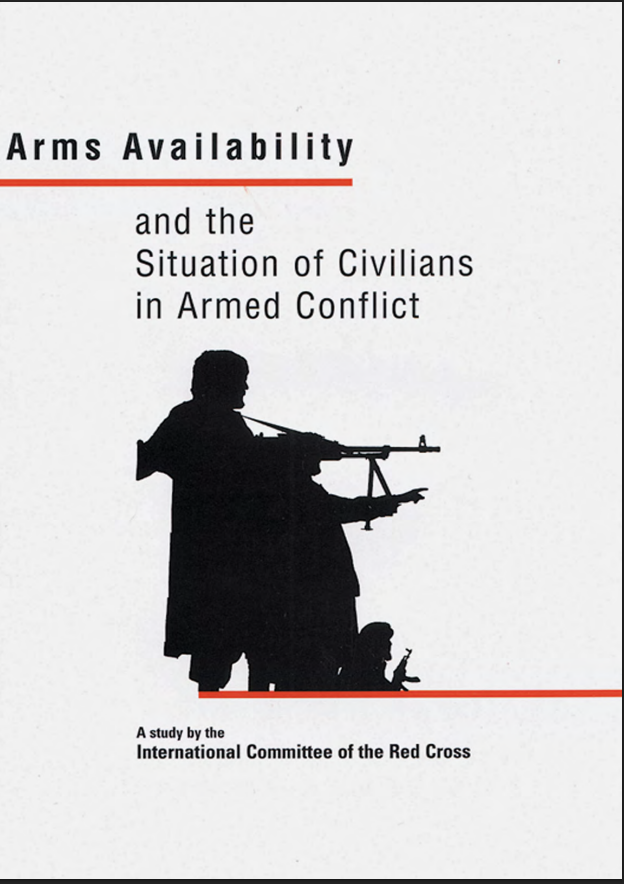
Arms availability and the situation of civilians in armed conflict: A study presented by the ICRC
The ICRC study finds that widespread availability of small arms intensifies civilian harm in armed conflict. Drawing on field data, case studies and staff surveys, it links unregulated arms flows to higher civilian casualties, humanitarian access constraints and weakened compliance with international humanitarian law.
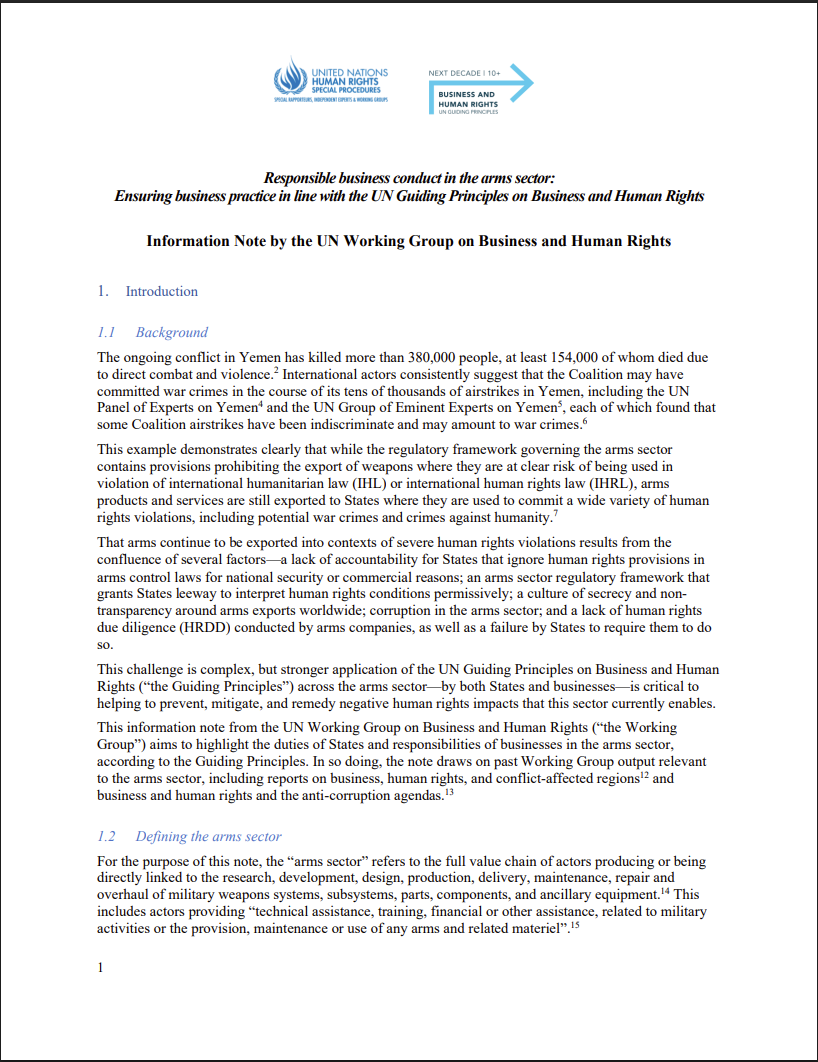
Responsible business conduct in the arms sector: Ensuring business practice in line with the UN guiding principles on business and human rights
The UN Working Group reviews arms sector regulation, finding persistent exports linked to humanitarian and human rights law violations. It identifies weak political will, opaque oversight and limited human rights due diligence, and urges stronger application of the UN Guiding Principles by states and companies.
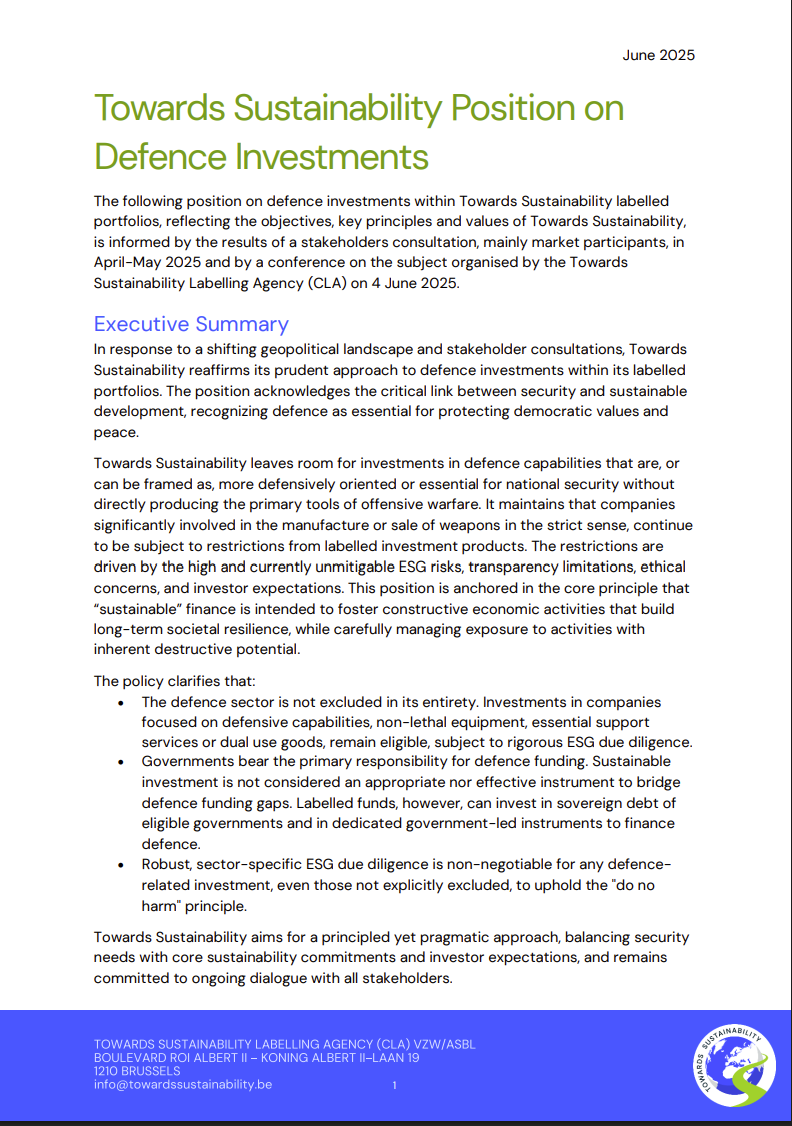
Towards sustainability position on defence investments
The report sets a pragmatic policy on defence investments for Towards Sustainability-labelled funds, permitting defensive, non-lethal and dual-use activities with strict ESG due diligence, while excluding weapons producers. It affirms defence funding as primarily a government responsibility.
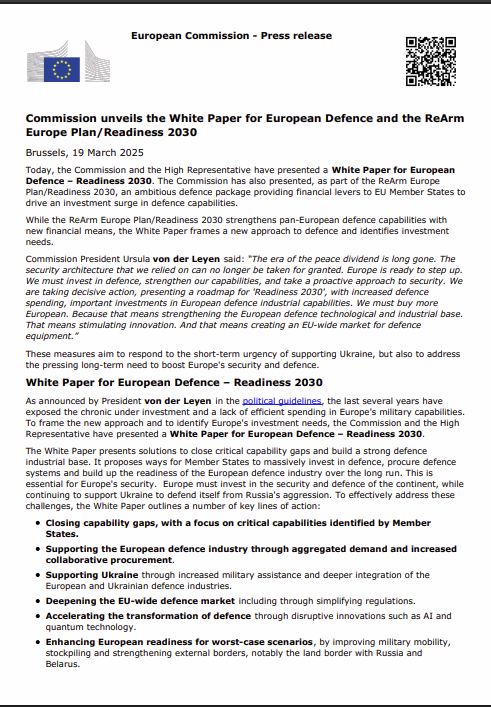
Commission unveils the white paper for european defence and the rearm europe plan readiness 2030
The report outlines the EU’s White Paper on European Defence and the ReArm Europe Plan, targeting defence readiness by 2030 through closing capability gaps, strengthening the defence industrial base, and mobilising over €800 billion via public, EU, and private funding mechanisms.
BPI France: European Defence Bond Framework
Bpifrance’s European Defence Bond Framework defines principles for issuing use-of-proceeds bonds financing eligible defence-sector projects, mainly SMEs, to support European sovereignty. It details eligibility criteria, exclusions, ESG safeguards, governance, reporting, and proceeds management, while stating the bonds are not ICMA-aligned sustainable instruments.
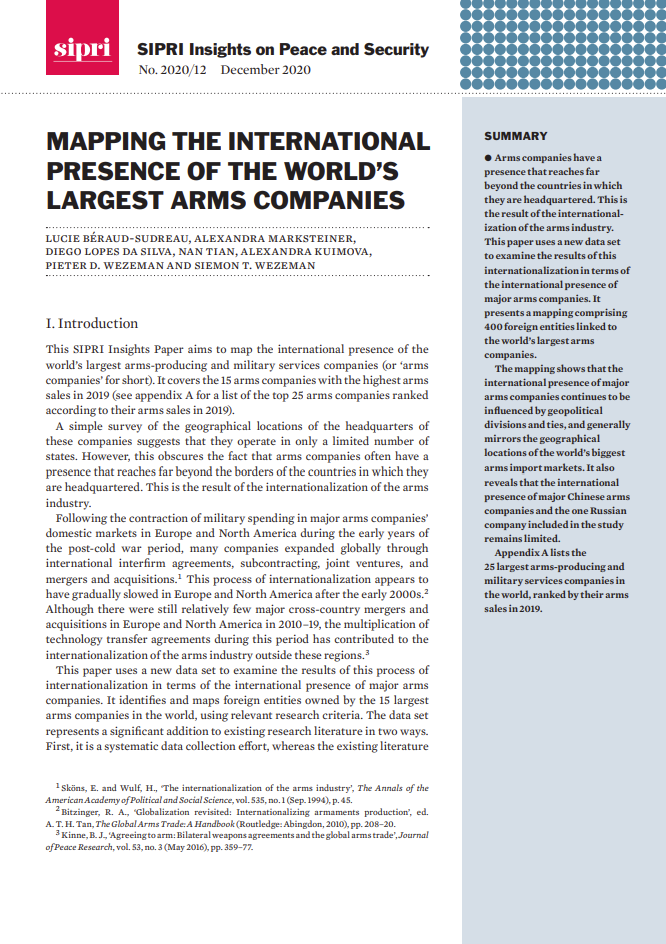
Mapping the international presence of the world's largest arms companies
SIPRI maps the global footprint of the 15 largest arms companies, identifying 400 majority-owned foreign entities. International presence aligns with geopolitical ties and major arms markets. US and European firms dominate; Chinese and Russian companies show limited overseas reach.
Agreement on international responsible investment in the insurance sector: ESG investment framework for the theme: Controversial weapons and the trade in weapons with high risk countries
The 2021 Agreement on International Humane Trapping Standards establishes technical requirements and testing procedures for restraining and killing traps used to capture specific wild mammal species. It aims to ensure humane trapping practices through standardised certification, testing methodologies, and threshold injury scores, whilst providing for periodic review and multilateral cooperation amongst signatory nations.
Responsible investing in defence, security and resilience
The NATO Innovation Fund advocates removing financial exclusions on defence to bolster European security. The report recommends reforming procurement for rapid dual-use technology adoption and implementing a ‘Responsible Use Framework’ to ensure ethical development of emerging capabilities like AI and autonomous systems.
Finance for war: Finance for peace: How values based banks foster peace in a world of increasing conflict
The report analyses global financial links to arms production, showing significant funding for weapons despite rising conflict. It contrasts this with values-based banks, particularly GABV members, which largely exclude arms financing, arguing divestment supports peace, reduces risk, and aligns finance with social and environmental objectives.
Moving away from mass destruction:109 exclusions of nuclear weapon producers
The report reviews 109 financial institutions with policies excluding nuclear weapon producers, assessing policy scope and implementation. It finds 55 institutions apply comprehensive exclusions, while others retain gaps or exposures, reflecting growing financial-sector alignment with the Treaty on the Prohibition of Nuclear Weapons.
The use of the Lavender in Gaza and the law of targeting: AI-decision support systems and facial recognition technology
The report analyses Israel’s alleged use of the ‘Lavender’ AI decision-support system and facial recognition in Gaza, assessing compliance with international humanitarian law. It highlights risks from inaccuracy, bias, automation and opacity, concluding that commanders must retain judgement and verification to meet targeting obligations.
Rearm europe, rearm finance: What role for responsible investment in the financing of european defense?
Mirova assesses Europe’s defence rearmament and examines how responsible investors could contribute without undermining ESG principles. It argues for selective financing, strict exclusions, and innovative tools such as defence bonds, while maintaining focus on environmental transition and European sovereignty.

International Committee of the Red Cross (ICRC)
International Committee of the Red Cross (ICRC) is an independent humanitarian organisation providing protection and assistance to people affected by armed conflict. It promotes international humanitarian law, conducts emergency relief operations, and supports detainees, civilians, and missing persons worldwide through neutral, impartial action, with global reach and sustained operational presence.

War and sanctions database
The War and Sanctions portal, managed by Ukraine’s Defence Intelligence, is an open-access database detailing individuals, entities, and assets linked to Russia’s military activities. It supports due diligence and compliance efforts by providing verified information on sanctions, war-related logistics, and foreign components in weaponry.


