
Library | Finance relevance
Impact investors
Refine
595 results
REFINE
SHOW: 16


The impact potential assessment framework (IPAF) for financial products
The Impact Potential Assessment Framework for financial products (IPAF) is a multi-purpose tool developed to assess products based only on their actions to generate real-life impact. Using public information, it evaluates the product's maximum impact potential through four widely documented mechanisms.

Mobilizing money and movements: Creative finance for food systems transformations
This report explores creative financing strategies for transforming food systems. Through six case studies, it showcases levers of change for transformational investing, including blended finance, shared ownership, and diverse investment types. The report emphasizes community engagement and local food production to build sustainable and resilient food systems.

Assessment of the six largest pesticide companies’ approaches to addressing biodiversity loss
This assessment evaluates the approaches of six leading pesticide companies toward addressing biodiversity loss. None of the companies has committed to phasing out highly hazardous pesticides, and progress in reporting and disclosure is limited. Investors are urged to heed recommendations and use the report to guide engagements.

Constructive corporate engagements: From a corporate perspective
This research focuses on constructive corporate engagement. This report analyses survey results from 100 senior company directors and interviews with ten executives to examine the drivers of successful engagements. Insights include the importance of collaborating with companies, focusing on material issues, and using standard metrics for success.

The climate benefits of plastic waste management in India and Southeast Asia: Investing in waste management and recycling solutions in India and Southeast Asia could reduce GHG emissions by 229 million tonnes by 2030
The Circulate Initiative's GHG calculator indicates that improved waste management and recycling could reduce GHG emissions by 229 million tonnes by 2030. Mismanaged plastic waste rates in six Southeast Asian countries range from 50% to 75%. This sector is crucial for transitioning to a low-carbon economy, attracting climate-focused investors.

Environmental sciences, sustainable development and circular economy: Alternative concepts for trans-disciplinary research
This report discusses the challenges and opportunities of trans-disciplinary research in environmental sciences. It explores three alternative environmental concepts: "environmental sciences", "sustainable development", and the increasingly popular "circular economy". The article clarifies their meaning and inter-relationship, helping trans-disciplinary researchers to understand the opportunities and challenges of each.

The material footprint of nations
This research paper explores consumption-based indicators of resource use, asserting that developed countries have increased the use of natural resources at a slower rate than economic growth, but this is untrue. Material Footprint (MF) uncovers the full material requirements of nations, offering insights into actual resource productivity.
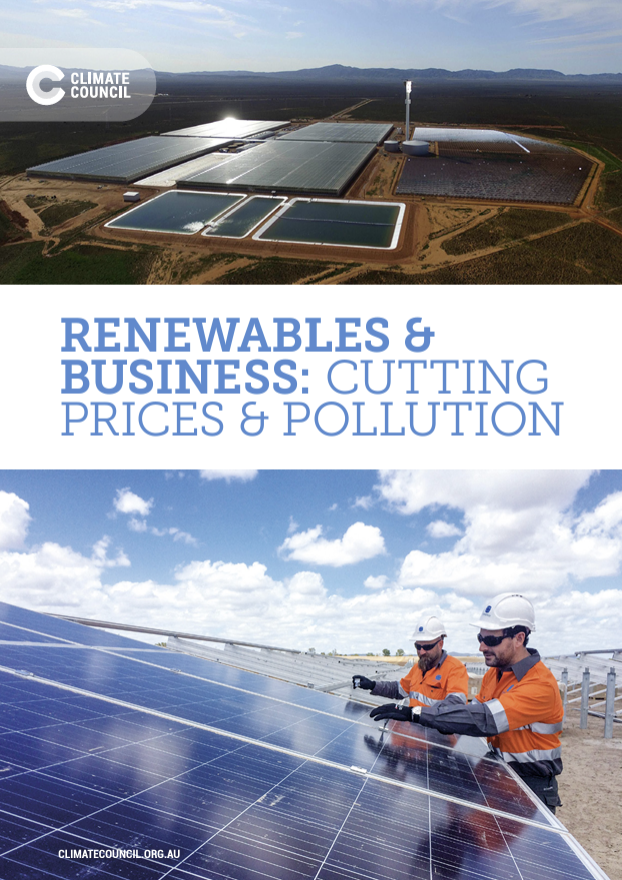
Renewables and business: Cutting prices and pollution
This report shows how investment in renewable energy can reduce exposure to volatile electricity prices and future price hikes. Over 46,000 businesses have already invested in large solar installations, and 40% of businesses are considering similar initiatives. Local and State Governments are also supporting business investment in clean, affordable and reliable renewable energy.

Global compact local networks: Accelerating national SDG implementation
The report emphasizes the role of responsible business in advancing the Sustainable Development Goals (SDGs) and highlights the importance of local networks in mobilizing a global movement of companies committed to advancing the SDGs through capacity-building, awareness-raising, and collaboration.

Transition risks in the automotive sector
This report analyses the potential valuation of BMW, Daimler, and Volkswagen under two different climate change scenarios and pathways. The study reveals insights for equity analysis and company engagement with sensitivity to regional and technological factors. Authors present a warning not to see findings as investment recommendations or forecast.

Farming our way out of the climate crisis
The report focuses on how modifications in farming techniques, land use practices, and food systems can commune climate change reduction, carbon sequestration and carbon sink development and initiates numerous opportunities to become a part of the solution. By changing farming techniques and food systems, we can create numerous opportunities for climate solutions.

Shareholder primacy: The main barrier to sustainable companies
This report analyses the role of company law in achieving sustainable development, focusing on the dominance of shareholder primacy and its impact on corporate decision-making. It evaluates barriers to integrating sustainability, and provides possible ways forward. An essential comparative analysis for academics and professionals interested in promoting sustainable business practices.

Raising the bar: A baseline review of finance sector action on deforestation
The report provides a baseline review of 557 financial institutions' actions on deforestation, revealing that only a few are addressing commodity-driven deforestation and associated human rights abuses. Despite COP26 commitments, most lack comprehensive policies. Financial institutions must take urgent, concrete steps to eliminate deforestation and meet global climate targets.

Beyond diversity: Equity and inclusion as an overlooked opportunity for investors
This report argues that equity and inclusion, rather than diversity alone, are key drivers of business performance. It outlines organisational practices and leadership behaviours that foster inclusion, enabling diverse talent to contribute fully. Investors are encouraged to prioritise structural inclusion metrics over representational data for meaningful performance insights.

Integrating child rights across the ASX: A UNICEF investor tool benchmarking report series
This benchmark report series, "Integrating Child Rights across the ASX," by UNICEF and Ethical Partners Funds Management, assesses and guides ASX companies on integrating children's rights into ESG practices, offering a framework and practical steps for improvement.

The importance of resource security for poverty eradication
This report analyses the impact of resource scarcity on national economies and poverty. It found that 72% of the world’s population live in countries with biocapacity deficits and below-average income, creating an ecological poverty trap. Biological resource security is crucial for development success.


