
Library | Asset Class
Multi-Asset / General
Investment strategies that allocate across multiple asset classes (e.g., equities, bonds, real estate, alternatives) for diversification.
Refine
864 results
REFINE
SHOW: 16


Aligning transition planning and financial planning: A guide for finance teams
This guidance assists finance teams in integrating transition planning into their organisation's core financial processes. It outlines steps to prepare, assess current positions, prioritise actions, and embed sustainability strategies into medium-term financial planning. The report provides practical frameworks for financing, improving decision-making, and monitoring progress towards climate resilience.
Leaning on uncertainty: Are European countries overrelying on carbon removals to reach climate targets?
This report analyses the climate strategies of six European countries and the European Commission, revealing a risky overreliance on unproven carbon dioxide removal technologies. It highlights fragmented planning, absent feasibility assessments, and policies contradicting scientific advice, warning that current approaches threaten effective climate action.
Mobilising trade associations as a force for good: A playbook for companies
This playbook outlines a five-step framework for companies to manage their indirect policy engagement through trade associations. It provides guidance on articulating science-based climate policy priorities, assessing association alignment, engaging to drive improvement, and rigorously reviewing memberships to ensure they support corporate sustainability targets.
Fiscal policy and transition risk
This report uses an environmental dynamic stochastic general equilibrium model to analyse how climate policies interact with pre-existing labour and capital taxes. It finds that transition risks depend on policy design, financing choices, and financial frictions, highlighting critical differences between carbon taxes and abatement subsidies.
Frontier AI auditing: Toward rigorous third-party assessment of safety and security practices at leading AI companies
This report proposes a rigorous framework for third-party auditing of frontier AI systems to verify safety and security claims. Addressing the opacity of current self-assessments, it advocates for structured AI Assurance Levels, deep access to non-public information, and continuous monitoring to enable confident deployment and standardisation across the industry.
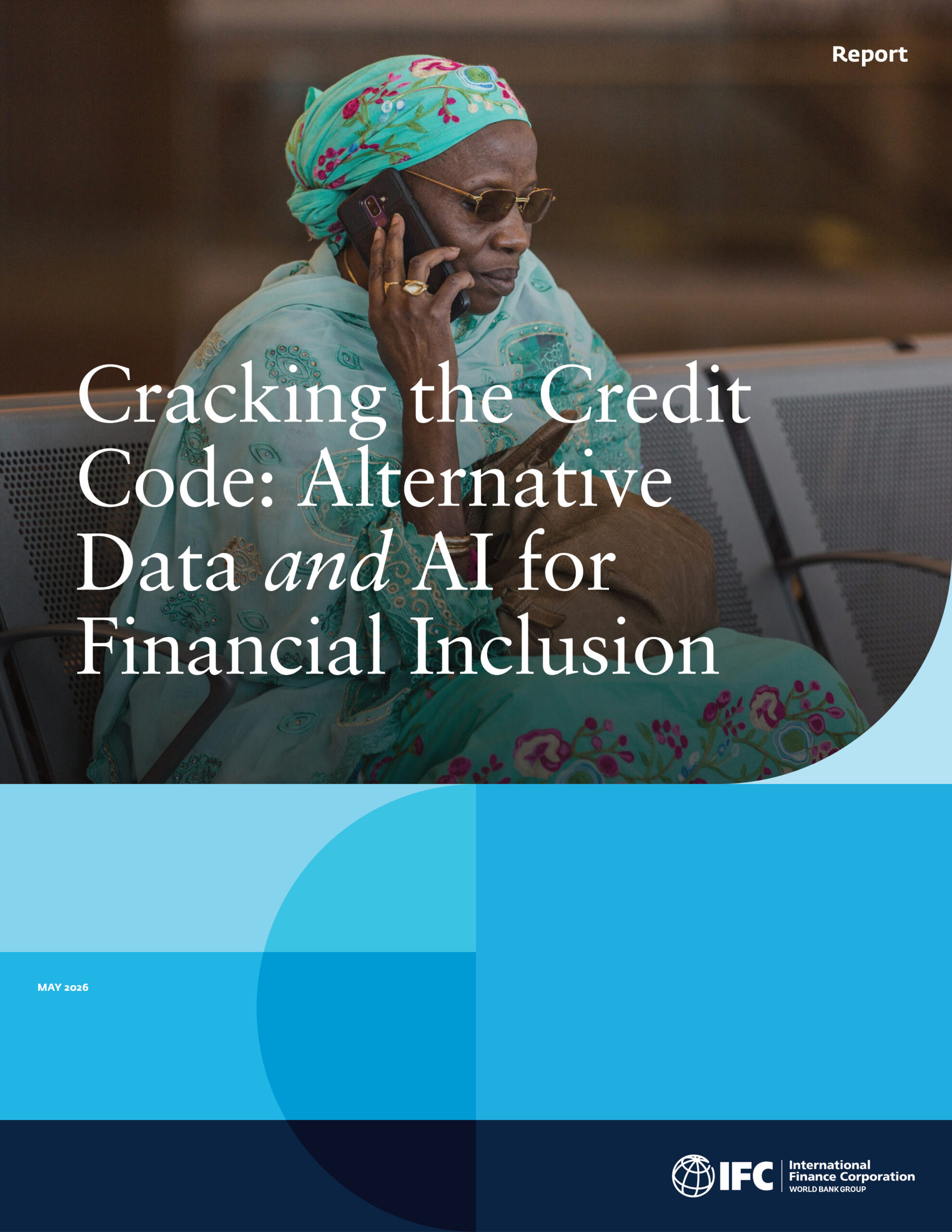
Cracking the credit code: Alternative data and AI for financial inclusion
This report explores how alternative data and artificial intelligence are redefining credit scoring to enhance financial inclusion for women and underserved borrowers. It analyses market trends, evaluates the risks of algorithmic bias, and provides actionable recommendations to scale responsible, inclusive credit access across emerging markets.
A systematic review of the voluntary governance landscape for an urgent, high-integrity, and equitable transition to net zero
This systematic review analyses 36 voluntary governance documents to assess how well they guide non-state entities towards an urgent, high-integrity, and equitable net-zero transition. It identifies consensus areas, like science-based targets, alongside critical gaps in operational detail, equity, and accountability, highlighting the need for robust standards and regulation.
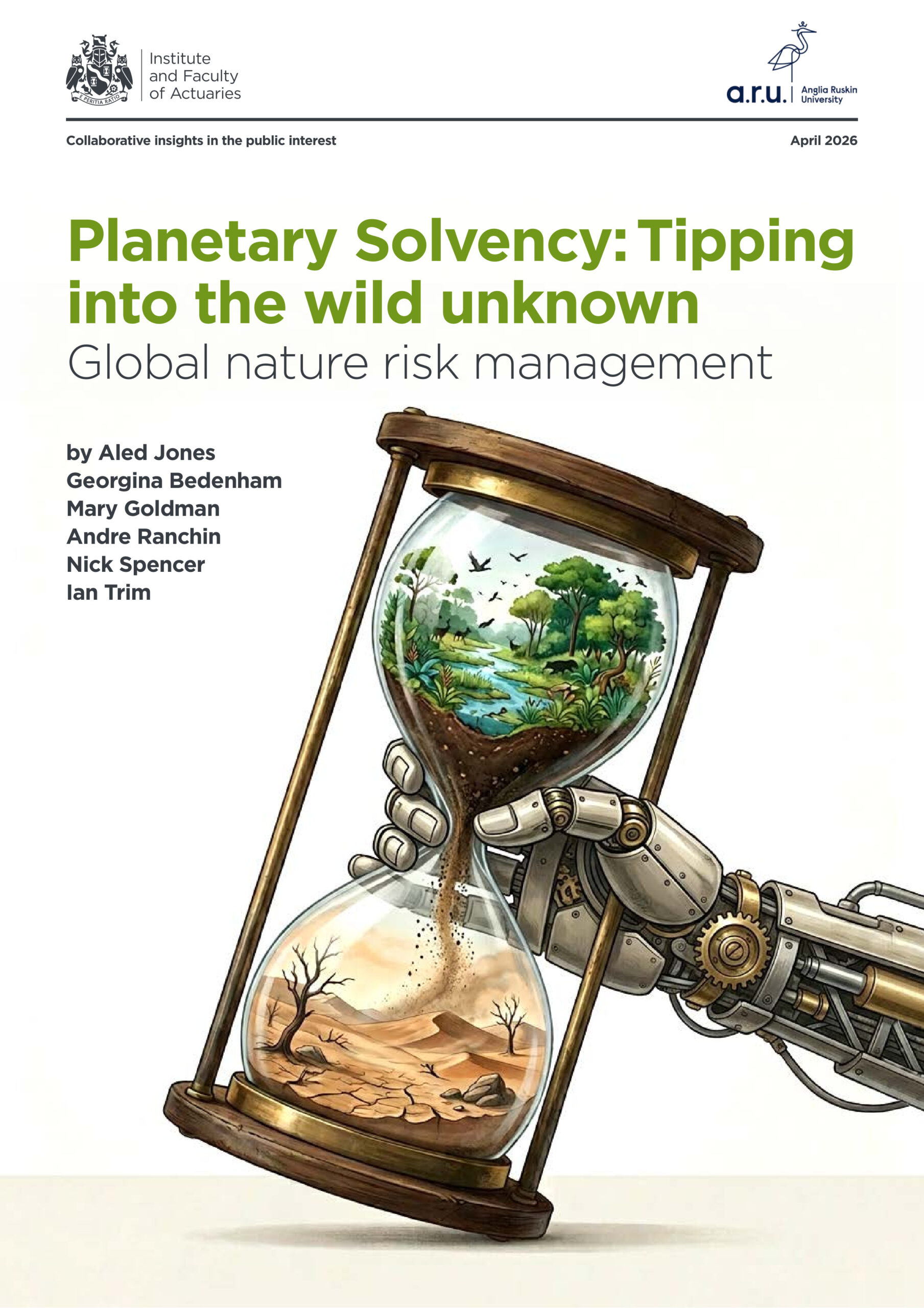
Planetary solvency: Tipping into the wild unknown: Global nature risk management
This report outlines how the degradation of global ecosystems threatens societal and economic resilience. It highlights immediate risks to food systems and health, long-term ecosystem tipping points, and the necessity of integrating biodiversity into financial models. Actuaries and policymakers are urged to adopt systemic, narrative-based risk management strategies.
Integrating climate considerations into environmental impact assessments: Lessons from Latin America and Asia
This report analyses the integration of climate change considerations into environmental impact assessment (EIA) regimes across 20 economies in Latin America and Asia. It evaluates legislative frameworks and climate litigation trends, recommending stronger statutory requirements, detailed technical guidance, and comprehensive assessments of both emissions and adaptation risks.
What can investors do about climate change?
This report explores the evolving role of investors in addressing climate change. Drawing on insights from major asset managers, it advocates shifting from market-led targets to a policy-led approach. Investors are advised to focus on realistic stewardship, pragmatic objective-setting, and policy advocacy to effectively manage climate-related financial risks.
Acceleration is not a strategy: A framework for directing AI towards public value before it's too late
This report outlines a framework for European governments to steer artificial intelligence towards public value rather than just accelerating sector growth. It recommends implementing AI directionism by targeting high-impact uses, preparing priority sectors for adoption, curbing big tech monopolies, and ensuring the economic benefits are broadly shared.
Reforming investment contracts: Why policy - makers must act now — and how
This policy brief highlights the urgent need to reform investor–state contracts to support sustainable development. It explores how fragmented frameworks, outdated stabilisation clauses, and tax incentives undermine national laws. The report recommends strengthening interministerial coordination, assessing existing contracts, and developing national model agreements to improve transparency and policy coherence.
Governance: Hard to build, easy to erode: Global trends, business implications and the role of employer and business membership organizations
This report analyses global governance trends from 1996 to 2024, revealing widespread stagnation and persistent risks of backsliding. It highlights the critical link between stable institutional governance, increased foreign direct investment, and the necessary role of business membership organisations in sustaining long-term policy reforms.
Critical minerals traceability for energy and economic security
IEA finds traceability systems can strengthen critical mineral supply chain resilience by improving visibility, diversification and responsible sourcing. Adoption is increasing but remains uneven due to costs, interoperability issues and limited incentives. The report recommends harmonised standards, financial support and international co-operation to improve energy and economic security.

RIAA Conference Australia 2026 - Companion Resources
Responsible investment has moved well beyond principles and pledges. Today’s challenges require practical capability and informed judgement. The RIAA Conference is a must-attend event for finance, sustainability and industry practitioners who want to focus on the key themes for responsible investment in 2026 and what implementation really looks like. Designed as an immersive, hands-on experience, the program focuses on the systems that underpin strong financial performance, and will help you understand how climate, nature, technology, governance and regulation intersect.
These specially curated companion resources have been recommended by the conference speakers and Altiorem team.
These specially curated companion resources have been recommended by the conference speakers and Altiorem team.
Equity in principle, misalignment in practice: Adaptation finance governance in the adaptation fund and green climate fund
The report argues that adaptation finance through the Adaptation Fund and Green Climate Fund formally prioritises equity, vulnerability and country ownership, but remains constrained by voluntary funding, access barriers and project-based delivery, limiting alignment with Global South priorities.


