
Library | Sustainable Finance Practices
ESG Integration and analysis
Tools, methodologies, and frameworks for embedding ESG factors into financial analysis, valuation, credit assessment, underwriting, and portfolio management, while separating out broader strategic elements.
Refine
537 results
REFINE
SHOW: 16


Institute for Sustainable Finance (ISF)
Institute for Sustainable Finance (ISF) at Smith School of Business, Queen’s University, is Canada’s first multi-disciplinary hub aligning finance with environmental sustainability. It conducts research, publishes policy guidance, and runs education and collaboration programmes to help policymakers, investors, and firms integrate climate risk, nature, and ESG considerations into capital allocation and regulation.

International Union for Conservation of Nature (IUCN)
International Union for Conservation of Nature (IUCN) is a global membership Union—comprising governments, NGOs and civil-society organisations—that works to conserve biodiversity and promote sustainable use of natural resources. Founded in 1948, IUCN mobilises a network of over 1,400 Member organisations and around 16,000 experts worldwide. IUCN monitors species and ecosystems, develops data-driven policy guidance, and supports conservation and restoration projects across lands, oceans, freshwater systems and climate-sensitive regions.
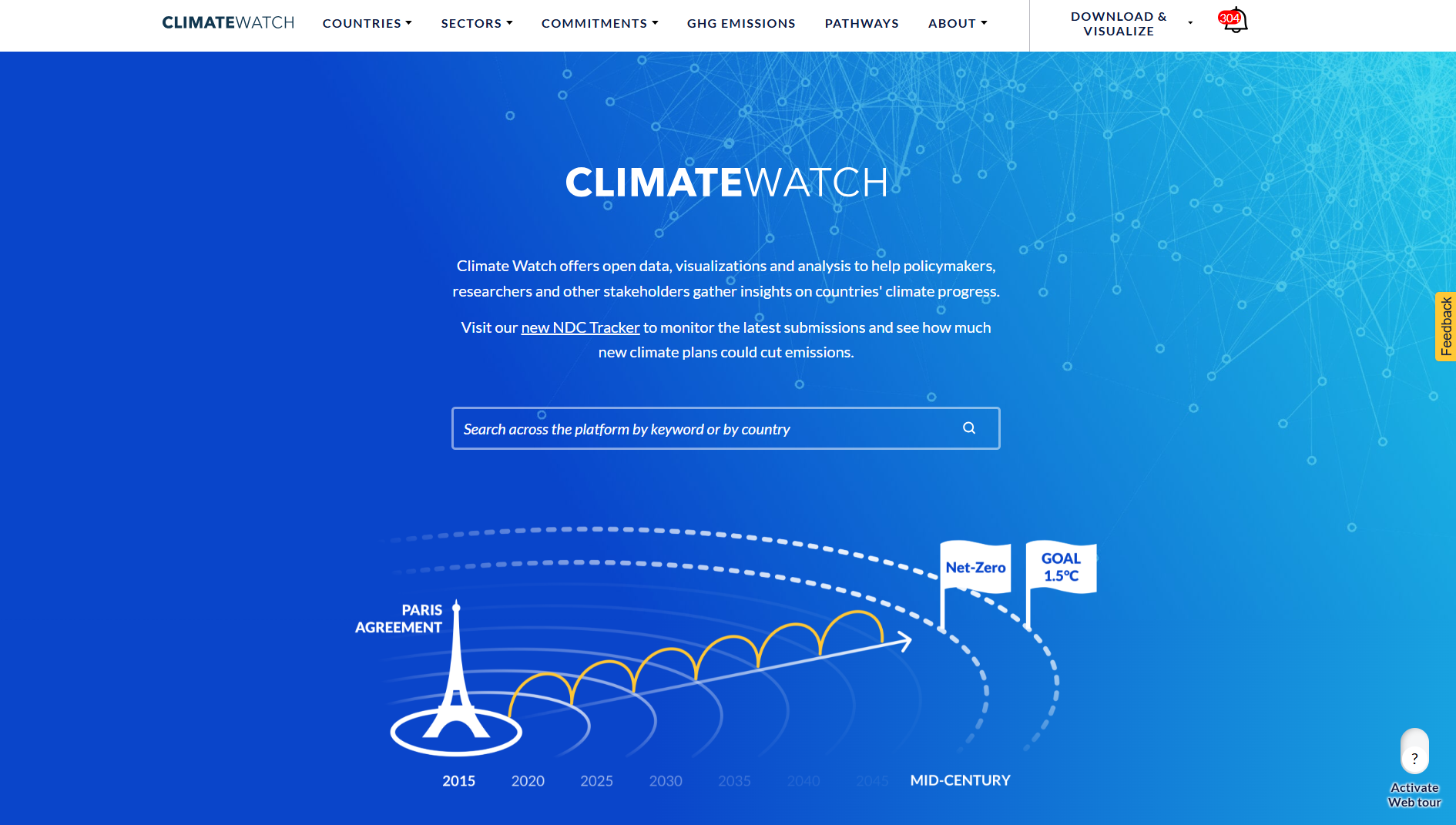
CLIMATEWATCH
Climate Watch is a free, open-data platform aggregating global and national climate information: historical greenhouse-gas emissions, future scenarios, and countries’ climate commitments (NDCs, long-term strategies, net-zero pledges).
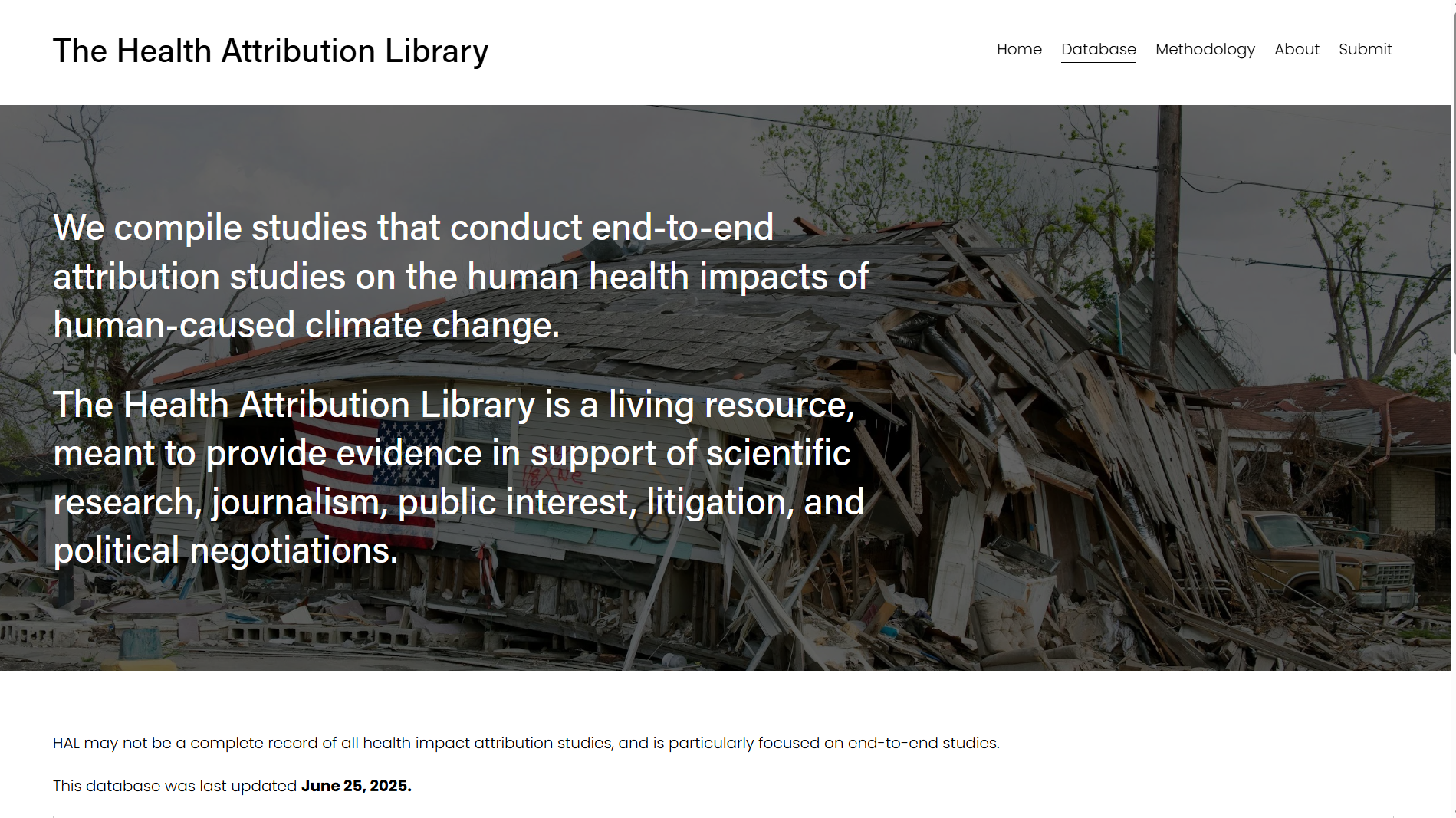
The (climate) Health Attribution Library
The Health Attribution Library is a curated “living” database compiling peer-reviewed studies that quantify human-health impacts of anthropogenic climate change through end-to-end detection and attribution analysis.
Essential guide to valuations and climate change
This guide provides a framework for incorporating climate-related risks and opportunities into business valuations. It outlines a five-step process, highlights data and disclosure challenges, and illustrates application through case studies. The aim is to support more consistent, transparent and informed valuation practice as climate impacts become increasingly material.
Guidance on value chains
This guidance outlines how organisations can assess nature-related dependencies, impacts, risks and opportunities across their value chains. It explains common challenges, approaches using the TNFD LEAP framework, and the role of primary and secondary data. It also summarises how major sustainability frameworks address value chain considerations.
ESG and the sustainable economy handbook series
The ESG and the Sustainable Economy Handbook series is a multi-part research and guidance series that explains how environmental, social and governance (ESG) considerations intersect with legal, operational and investment practices across global markets, supporting finance professionals and corporate actors to understand and integrate ESG into business and investment decision-making.
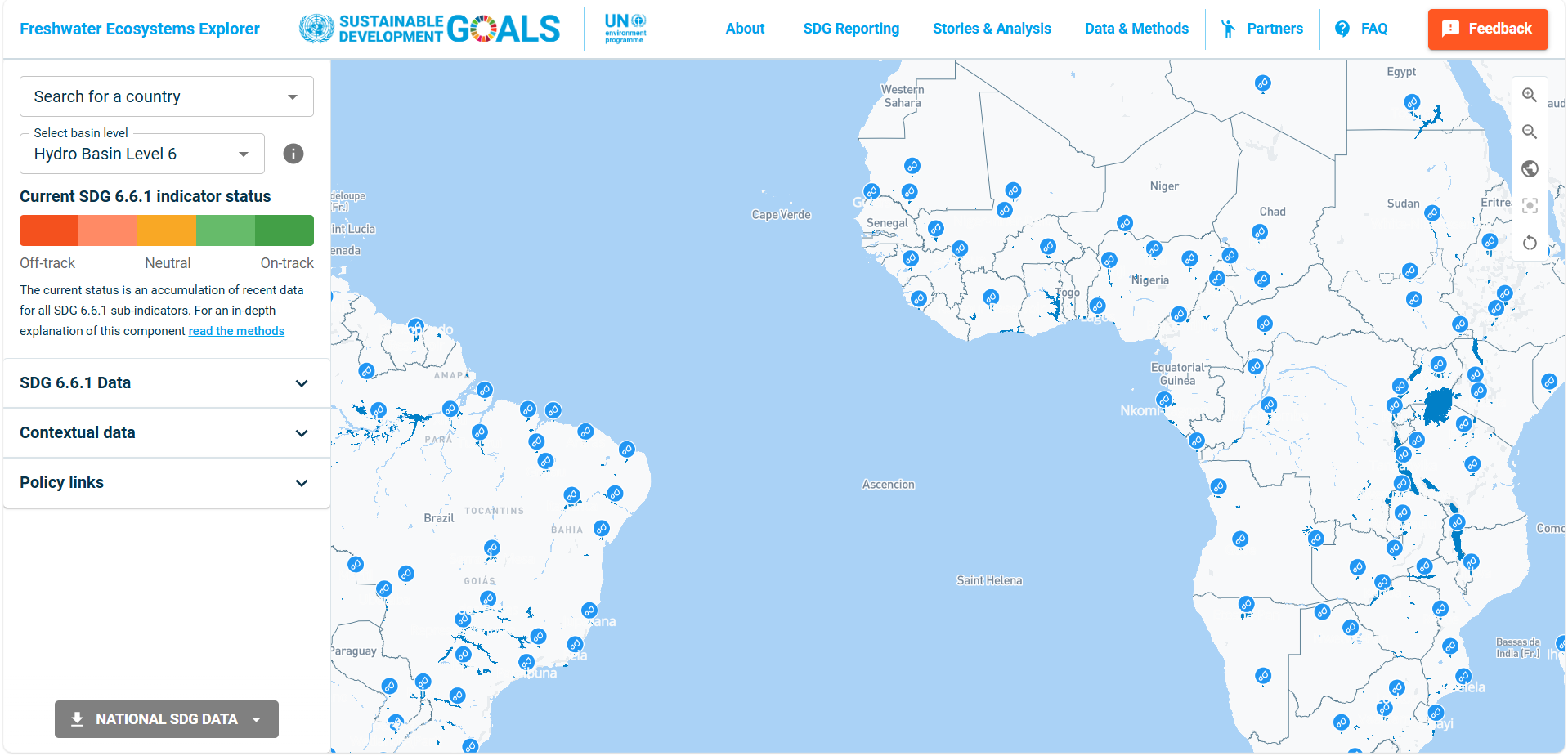
Freshwater ecosystem explorer
FreshExplorer is an interactive mapping tool that displays data on water, sanitation, and hygiene services globally, assisting policymakers and researchers to view coverage statistics, trends, and service gaps. The platform enables data exploration by country, service type, and time period, using Aus/UK spelling and grammar conventions.

Oxygen Consulting
Oxygen Consulting offers specialist sustainability consulting services across carbon, climate and nature, sustainability strategy and advisory, disclosure and reporting, audit and assurance, and capability development. Serving organisations in New Zealand across diverse sectors, it supports measurement, strategy formation and robust sustainability-governance frameworks to drive meaningful business impact.
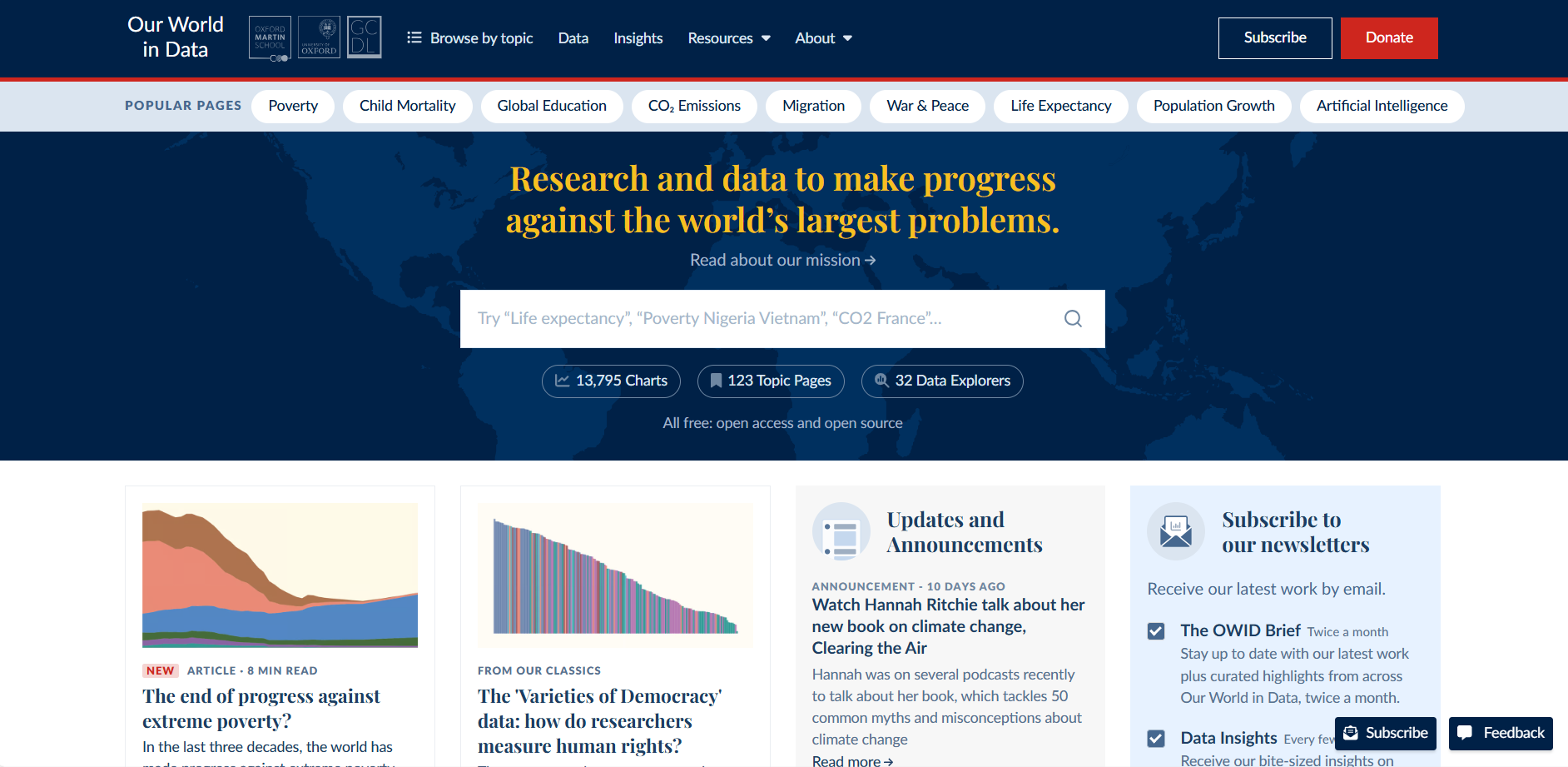
Our world in data
Our World in Data is a free, open-access research platform maintained by the UK-based non-profit Global Change Data Lab that collates, visualises and publishes global long-term data on topics such as health, economy, environment and development.
Increasing climate ambition, decreasing emissions: The third progress report of the net-zero asset owner alliance
The report outlines the Net-Zero Asset Owner Alliance’s progress in reducing financed emissions, strengthening target-setting, and expanding climate-solution investments. It highlights updated methodologies, increased engagement with companies and policymakers, and rising member participation, underscoring the need for credible transition pathways and supportive policy environments to advance alignment with 1.5°C goals.
Responsible Investment: Australian perspectives on Private Equity practices
This report outlines how Australian private equity firms are integrating ESG across the investment cycle in response to mandatory climate reporting, taxonomy alignment, and stakeholder expectations. It highlights evolving screening, due diligence, ownership, and exit practices, and shows how ESG integration can support value creation and strengthen competitive positioning.
Firm‐level climate change exposure
The report develops a machine-learning method to measure firm-level climate change exposure from earnings calls across 34 countries. It identifies opportunity, physical, and regulatory dimensions and shows that these exposures predict green hiring, green patenting, and are reflected in options and equity markets.
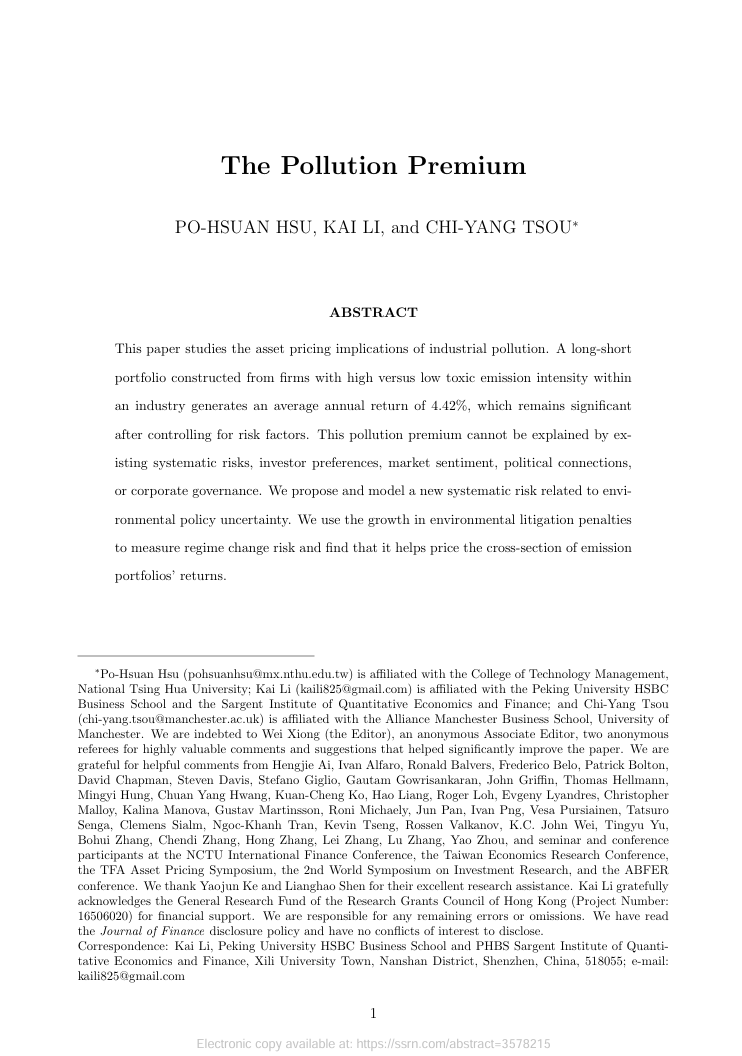
The pollution premium
The report “The Pollution Premium” analyses how industrial pollution influences asset pricing. Using U.S. firms’ toxic emission data (1991–2016), it finds that companies with higher emission intensity earn around 4.4% higher annual returns than their low-emission peers, even after accounting for known risk factors. The study introduces environmental policy uncertainty as a new systematic risk, showing that firms more exposed to potential regulatory tightening demand higher expected returns as compensation.
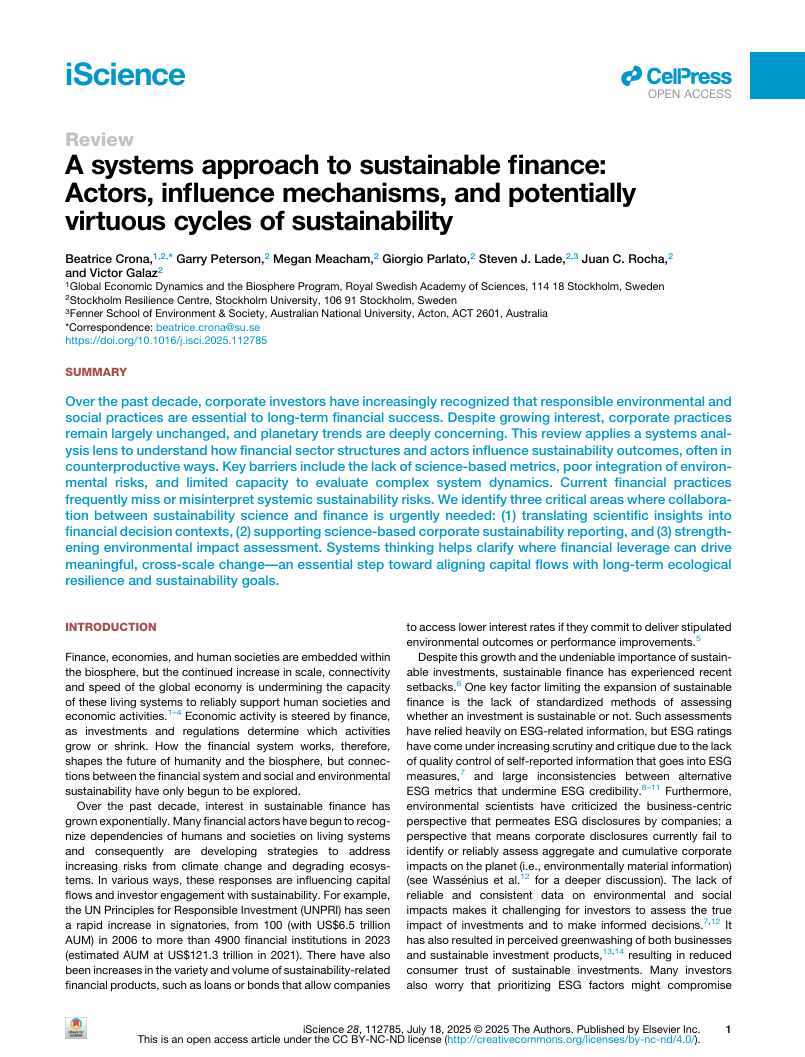
A systems approach to sustainable finance: Actors, influence mechanisms, and potentially virtuous cycles of sustainability
This review examines how financial sector structures and actors influence sustainability outcomes through a systems lens. It identifies barriers such as inadequate metrics, poor risk integration, and limited understanding of complex dynamics, while highlighting collaboration opportunities between finance and science to align capital flows with long-term ecological resilience.
Circular Australia's Circular economy for investors and lenders series
This series explores how investors and lenders can integrate circular economy principles into financial decision-making. It outlines practical tools and frameworks for assessing risks and opportunities linked to circularity, helping finance professionals align portfolios with sustainability objectives while supporting Australia’s transition to a regenerative, low-waste economy.


