

Sustainable Finance Roundup January 2026: Geopolitics, Energy Transitions, and Systemic Risk
This month’s sustainable finance article roundup examines a landscape increasingly shaped by geopolitics and climate risk, as near-term fragmentation, energy security, and affordability pressures collide with intensifying long-term threats from climate change, biodiversity loss, and water stress. The works featured analyse how these dynamics are reshaping capital allocation, disclosure, and resilience planning, demonstrating the growing need for sustainable finance to integrate geopolitical risk with real-economy transition.



Each month, we gather standout sustainable finance articles from our favourite writers. This curated selection brings together the most engaging ideas, timely analyses, and fresh perspectives published over the past month, so you can catch up on what mattered most.
Photo by Road Ahead on Unsplash
How do we get the cogs in motion? Interpreting Sustainability Trends
Visakhan Vythilingam
In this synthesis piece, Visakhan Vythilingam connects sustainability, finance, and geopolitics to highlight the deeper system-level shifts shaping sustainable finance practice beyond 2026.
Key points:
The hidden ESG skills gap
- Mandatory climate reporting is breaking down traditional ESG silos and pushing sustainability into core roles, requiring finance teams to understand carbon accounting, engineers to model transition risk, and procurement to trace modern slavery exposure.
From disclosure to deployment
- Drawing on Bloomberg’s Zero podcast, the article questions whether climate finance has focused too heavily on risk disclosure, arguing that capital has not shifted at scale toward decarbonisation without coordinated system-wide action.
Markets follow the real economy
- True emissions reduction depends on financing and advocating for resilient energy, transport, and built systems, potentially reshaping how fiduciary duty and institutional self-interest are understood.
Water as a sovereign and security risk
- Water scarcity is emerging as a major geopolitical threat, with weak governance and climate stress intensifying conflict and instability, creating underpriced risk for investors and insurers.
China’s ‘green arbitrage’
- China’s clean-tech leadership is underpinned by coal-intensive manufacturing, challenging Western transition assumptions and highlighting the strategic importance of decarbonising industrial supply chains.
Implications for sustainable finance
- The piece underscores the need for new skills, system-level capital allocation, and geopolitical literacy as sustainability shifts from reporting frameworks to real-economy transformation.

Top 10 Sustainability Markers – January 2026
Terence Jeyaretnam
In his latest piece, Terence Jeyaretnam maps the key climate, energy, nature, and regulatory signals shaping risk, capital allocation, and sustainability strategy at the start of 2026.
Key points:
Global risk reprioritisation
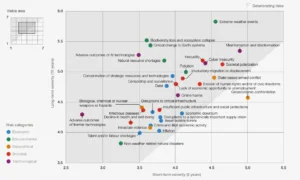
- WEF’s Global Risks Report 2026 elevates geopolitics, misinformation, and security as near-term threats, while extreme weather, biodiversity loss, and Earth-system change remain the most severe long-term risks.
Biodiversity pressure in Australia
- Approved clearing of 57,000+ hectares of threatened species habitat in 2025 marks a 15-year high, sharpening focus on whether EPBC reforms will deliver real protection outcomes.
Heat, fires, and climate attribution
- Australia’s early-2026 heatwave and bushfire conditions were made ~5x more likely by human-caused climate change, reinforcing physical risk as a financial issue.
Solar and demand response go mainstream
- Rooftop solar now covers more than one in three Australian homes, while curtailment and paid demand response are becoming core grid reliability tools.
Renewables scale continues
- Australia added ~7 GW of renewable capacity in 2025, with renewables supplying around 50% of Q4 electricity, underscoring progress—and the scale still required to reach 2030 targets.
Fragmented ESG priorities for 2026
- Leading outlooks highlight energy security, affordability, AI, water stress, supply chains, and geopolitical fragmentation alongside climate mitigation and adaptation.
Disclosure architecture expands
- China’s ISSB-aligned climate disclosure standard signals growing global convergence, with implications for governance, assurance, and supply-chain transparency.
US regulatory and insurance signals
- California’s climate disclosure rules and proposed insurer “climate-readiness plans” show climate risk embedding into both corporate reporting and prudential-style regulation.
Nature and water as resilience themes
-
From dugong loss in Thailand to global water stress, biodiversity and water are emerging as central risks shaping strategy, adaptation, and long-term value.
Implications for boards and investors
-
The markers reinforce the need to integrate climate, nature, technology, and geopolitics into core financial decision-making, risk oversight, and capital allocation.

Chained to the Booth. A Few Thoughts on Sustainability…
Simon Rebbechi
In this wide-ranging analysis, Simon Rebbechi connects energy affordability, grid stress, carbon markets, and transport transitions to show how climate, politics, and markets are colliding in ways that are increasingly material for investors and sustainable finance practitioners.
Key points:
Energy affordability as a financial and social risk
-
Rebbechi highlights the US House vote against stronger energy-efficiency standards for mobile homes, a move that could add around $475 per year in utility costs for low-income households and exacerbate heat-related mortality, especially in high-growth, high-heat states like Arizona and across the energy-burdened US Southeast.
Exploding electricity demand and grid stress
- Electricity demand is rising rapidly due to data centers and extreme heat (Arizona demand up 8% in 2025, four times the national pace), creating political and regulatory pressure on utilities struggling to balance shareholder returns, affordability, and reliability.
Political intervention as a market catalyst
-
Unprecedented federal involvement in PJM electricity markets is framed less as a structural break and more as an accelerant of existing trends, potentially unlocking stalled decisions and creating space for new approaches to pricing and capacity procurement.
Innovation in data-center power models
- The article points to “flexible data centers” and bring-your-own-capacity models as a way to reduce grid bottlenecks, shorten time-to-power, and shift incremental costs away from retail consumers. This is critical as residential electricity prices rise far faster than those faced by large commercial users.
Setbacks for US carbon markets
- US withdrawal from UN climate institutions risks excluding US-based projects from emerging compliance markets under Article 6, potentially shrinking market size, lowering credit prices, and increasing policy risk just as global carbon pricing coverage expands.
Global EV adoption beyond the US-China lens
- Rebbechi stresses that EV momentum is strongest outside developed markets, with countries like Vietnam and Thailand outpacing the US, and notes that 22% of new heavy-duty truck sales in China are now electric, accelerating the decline in diesel demand.
Affordability drives EV uptake
-
Evidence suggests EV adoption in the US is shaped more by cost, charging access, and range than politics, with falling prices, refreshed sub-$30k models, and hybrids quietly delivering meaningful emissions reductions.
The overlooked role of micromobility
- Globally, over 280 million electric two- and three-wheelers are already displacing roughly 1 million barrels of oil per day, making them one of the most impactful yet under-recognised decarbonisation levers.
Physical climate risks are accelerating
-
The piece underscores record global heat, rapidly rising sea levels (US coastal rise more than doubling over the past century), and mounting adaptation costs, highlighting why climate risk gas grown increasingly financially material at local and regional levels.
Adaptation, pragmatism, and capital allocation
- From flood-plain buyouts to the Everglades restoration, Rebbechi points to climate-agnostic, bipartisan adaptation efforts as models for deploying capital where mitigation politics stall but financial and human risks are undeniable.
Do you write thoughtful commentary on ESG, sustainability, or sustainable finance? We’d love to feature your work.
Contact us and we’ll be in touch.
Relevant library resources

Geopolitics of the energy transition: Critical materials
Enel: Industry case studies: Electric utility

Embedding just transition into corporate climate action strategies

The new disclosure landscape - Comparing sustainability standards and regulations: ESRS, IFRS S1/S2, SEC Climate Rule, and CA SB 253/261
Investing in tomorrow: A guide to building climate-resilient investment portfolios


