
Library | Location
Canada
Refine
199 results
REFINE
SHOW: 16


Global responsible investment trends: Inside PRI reporting data 2025
The 2025 PRI report analyses data from 3,048 signatories, highlighting trends in climate risk management, stewardship, and human rights. Asset owners show increased engagement, with climate and social issues gaining priority. Investors continue integrating responsible investment into decision-making and oversight, with varied progress across policy, governance, and disclosure practices.
Disability: IN's disability equality index series
The Disability Equality Index is a benchmark series assessing corporate performance in disability inclusion across multiple markets. It provides organisations with a structured tool to evaluate, compare, and enhance their inclusive practices aligned with sustainability and governance expectations.
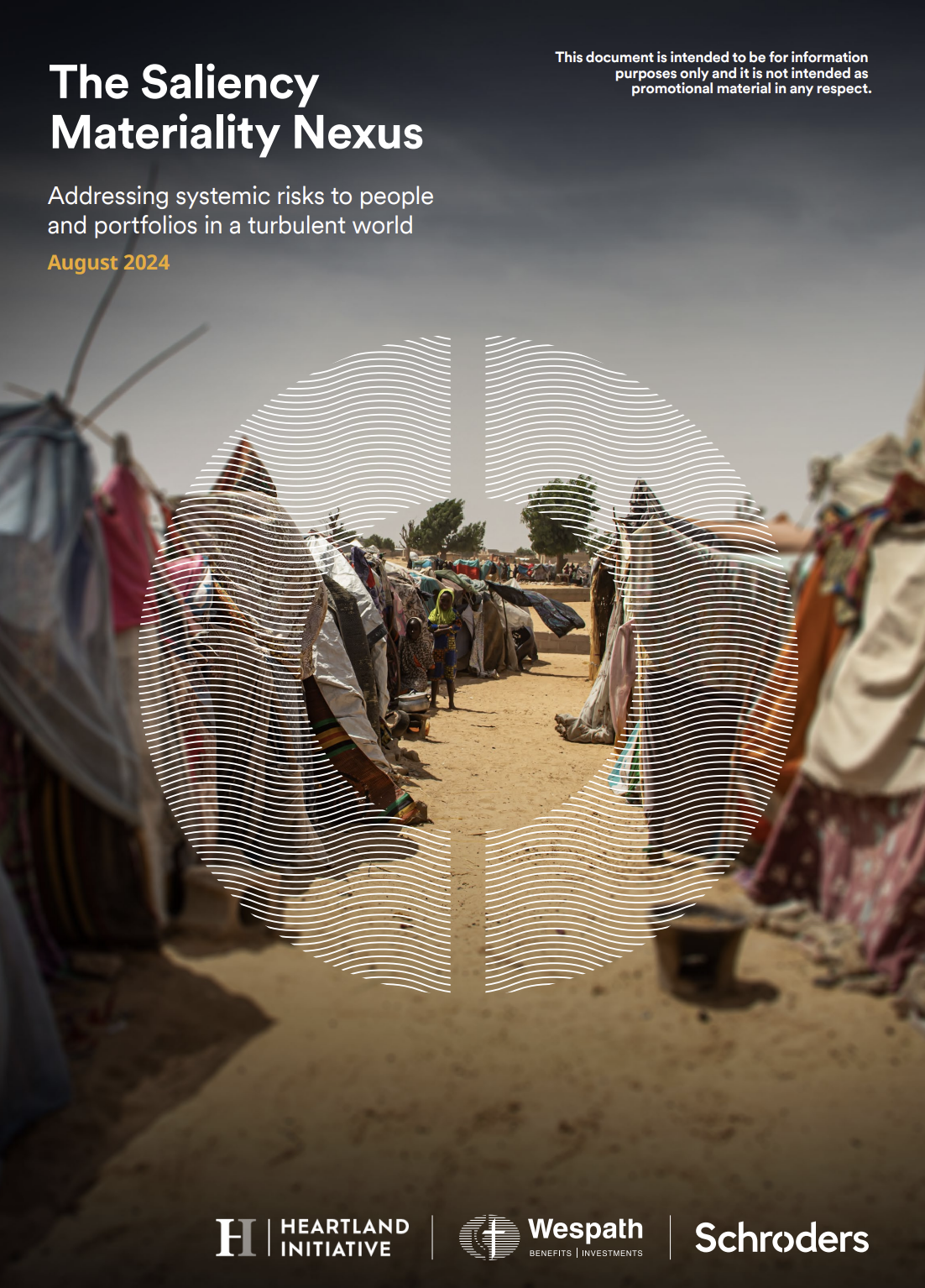
The saliency-materiality nexus: Addressing systemic risks to people and portfolios in a turbulent world
This report introduces the saliency-materiality nexus, a framework linking severe human rights harms to financially material risks in conflict-affected areas. It highlights case studies totalling over $85 billion in losses and offers guidance for investors on due diligence, portfolio risk management, and alignment with legal and ethical responsibilities.
Human rights due diligence for private markets investors: A technical guide
This guide outlines how private markets investors can integrate human rights due diligence into investment processes, aligned with the UN Guiding Principles. It covers policy commitments, risk assessment, stakeholder engagement, and remedy provision to address human rights impacts, mitigate risk, and meet evolving legal and societal expectations.
Pursuing impact within a portfolio: Insights from institutional asset owners
This report explores how institutional asset owners integrate impact goals into portfolio strategy. Through four case studies, it examines aligning financial returns with social and environmental outcomes using an impact lens. It highlights investment approaches addressing climate change, health, regional development and systemic inequality across diverse asset classes and geographies.
Recalibrating feedback loops: Guidance for asset owners and institutional investors assessing the influence of system-level investing
This report guides asset owners in assessing how their investments affect systemic environmental and social issues. It introduces a framework to align investment practices with system-level goals and improve financial system resilience. Case studies explore climate change, income inequality, and racial inequity to illustrate practical applications.
The imperative for impact management: Clarifying the relationship between impacts, system-wide risk and materiality
The report argues that managing environmental and social impacts is essential for sustainable financial performance. It connects impacts to both entity-specific and system-wide risks, urging enterprises, investors, and policymakers to adopt a unified, evidence-based impact management approach aligned with global sustainability goals and evolving disclosure standards.
Climate risk and adaptation in global food
The report outlines rising climate risks to global food supply chains, projecting up to $38 trillion in damages by 2050. It explores mitigation and adaptation strategies across crops, livestock, and fisheries, and highlights investor actions to build resilience, support sustainable practices, and adapt to shifting market, environmental, and regulatory conditions.
A time for change in the sustainable fund market: Reflections and recommendations in a new regulatory environment
The report examines recent regulatory shifts in Europe and the UK affecting sustainable funds. It outlines rebranding impacts, highlights inconsistencies in fund categorisation, and stresses the need for broader sustainability definitions beyond the EU Taxonomy to avoid constraining investment opportunities and to better accommodate transition-related financial products.
The purpose of investor stewardship
This paper critically examines investor stewardship, shifting from traditional shareholder-focused governance towards "enlightened stewardship." It advocates balancing fiduciary duties with broader societal and environmental considerations. Analysing the evolution of the UK Stewardship Code, it highlights a systemic shift to integrate sustainability and stakeholder concerns alongside financial returns for long-term value creation.
Closing the gap: Investing in natural capital to meet the SDGs
The report analyses the investment required to address the natural capital gap for achieving Sustainable Development Goals in 40 countries, finding that investing US$7.4 trillion could generate returns exceeding US$152 trillion, greatly benefiting air quality, human health, ecosystems, and reducing premature deaths and resource depletion globally.
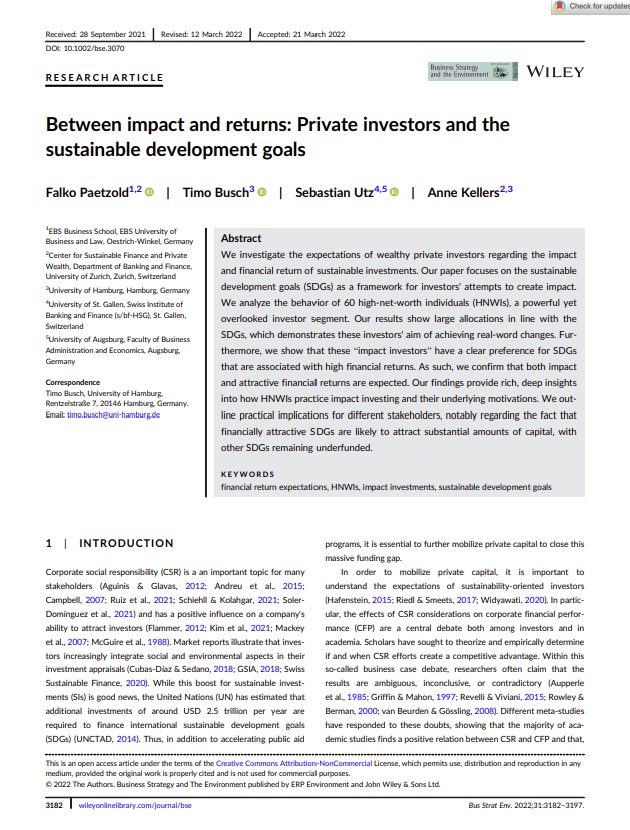
Between impact and returns: Private investors and the sustainable development goals
Wealthy private investors increasingly align their portfolios with the UN Sustainable Development Goals (SDGs), seeking both measurable impact and financial returns. Investors favour SDGs linked to higher expected profits, leading to underinvestment in less profitable goals. Findings are based on portfolio data, surveys, and interviews with 60 high-net-worth individuals.
Conservation investment blueprint: Forest landscape conservation, restoration, and sustainable timber production
This blueprint contributes to the conservation and restoration of forest ecosystems – achieved by investors purchasing forests, or purchasing land and reforesting; with the express goal of sustainably managing those forests in adherence to relevant sustainability or management certifications.

The race against time for smarter development: To be smart, the digital revolution will need to be inclusive
The report underscores the need for inclusivity in the digital revolution, highlighting gender disparities in STEM fields. Women are underrepresented in digital and engineering roles, limiting their access to future job opportunities. Policy interventions, improved workplace conditions, and equitable funding are essential to fostering diversity in technological innovation and ensuring sustainable, inclusive development.

The CARE Principles for Indigenous data governance
The CARE Principles for Indigenous Data Governance emphasise collective benefit, authority to control, responsibility, and ethics to safeguard Indigenous data rights while promoting equitable participation. These principles complement FAIR data guidelines, ensuring data use aligns with Indigenous values, self-determination, and innovation in research and governance.

GRI 101: Biodiversity 2024
The GRI 101: Biodiversity 2024 report establishes a framework for organisations to disclose their biodiversity impacts and management practices. Effective from 1 January 2026, the standard outlines disclosure requirements across biodiversity policies, impact management, ecosystem services, and compliance. It aligns with global sustainability goals, emphasising mitigation hierarchies and stakeholder engagement for transparency and ecological accountability.


