
Library | Location
China
Refine
224 results
REFINE
SHOW: 16


Product life cycle accounting and reporting standard
The GHG Protocol Product Life Cycle Accounting and Reporting Standard provides a globally consistent framework for companies to quantify and publicly report greenhouse gas emissions and removals associated with individual products across their life cycle. It enables informed emissions reduction strategies and supports performance tracking, supplier engagement, and product differentiation.

Policy and action standard: An accounting and reporting standard for estimating the greenhouse gas effects of policies and actions
The Policy and Action Standard provides a consistent framework for estimating and reporting the greenhouse gas (GHG) impacts of policies and actions. It outlines methods for ex-ante and ex-post assessments, defines principles of GHG accounting, and offers guidance on defining policy boundaries, estimating baseline emissions, and assessing uncertainty to support transparent, accurate decision-making.

Mitigation goal standard: An accounting and reporting standard for national and subnational greenhouse gas reduction goals
This report outlines a standardised framework for governments to design, assess, and report on greenhouse gas mitigation goals. It defines principles, methodologies, and accounting requirements to support consistent and transparent emissions tracking and goal evaluation at national and subnational levels.

Corporate value chain (scope 3) accounting and reporting standard: Supplement to the GHG protocol corporate accounting and reporting standard
The Corporate Value Chain (Scope 3) Accounting and Reporting Standard provides a consistent framework for measuring and reporting indirect greenhouse gas (GHG) emissions across a company’s value chain. It outlines 15 categories of Scope 3 emissions, offers guidance on boundary setting, data collection, and reporting, and aims to improve transparency, enable emissions reduction, and support strategic decision-making.

Opportunities for methane mitigation in agriculture: Technological, economic, and regulatory considerations
This report assesses cost-effective methods to reduce methane emissions from enteric fermentation, manure management, and rice cultivation. It outlines region-specific strategies and underscores the need for research, regulatory frameworks, and cross-sector collaboration to support implementation and scale-up of mitigation solutions.

Green and intelligent: the role of AI in the climate transition
Artificial intelligence (AI) can support the climate transition by reducing global emissions by up to 5.4 GtCO₂e annually by 2035 in the power, food, and transport sectors, surpassing its own energy footprint. Strategic government action is essential to ensure AI accelerates low-carbon solutions equitably and effectively.

The path to a new era for nuclear energy
Nuclear energy is gaining momentum as a reliable, low-emissions electricity source. The report outlines growth drivers, investment needs, emerging technologies such as small modular reactors, and policy frameworks required for scale-up. Financing challenges, supply chain risks, and workforce planning are key to realising nuclear’s role in future energy systems.
Targeting net zero: The need to redesign bank decarbonization targets
This report examines the limitations of current bank decarbonisation targets and proposes design reforms to align with net zero. It analyses scope coverage, target types, and sector alignment, offering practical recommendations for enhancing climate credibility and effectiveness in financial institutions’ transition planning.

Nature positive: Leaders’ insights for the transition in cities
The report outlines strategies and case studies from global cities integrating nature into urban development to address climate and biodiversity challenges. It highlights the importance of public-private collaboration, compact planning, and nature-based infrastructure in fostering resilient, sustainable, and equitable cities. Solutions are scalable and grounded in real-world examples.
Kantar
Kantar is a global leader in marketing data, insights and analytics, supporting over 96 of the world’s top 100 advertisers across 90+ markets. It combines behavioural and attitudinal data to inform brand strategy, creative testing, media effectiveness, customer experience and sustainable growth.
Starting up: Responsible investment in venture capital
This report examines how environmental, social, and governance (ESG) factors are being adopted in venture capital. It outlines current practices, challenges, and industry-specific considerations, and highlights the need for tailored guidance, collaboration, and early-stage engagement to advance responsible investment across the venture capital ecosystem.
The value of NGO activism
NGO campaigns alleging environmental and social “E&S-washing” lead to negative stock and media responses, especially on financially material issues. Firms reduce direct emissions following climate-related allegations—often shifting them to supply chains. NGOs also prompt investor engagement, suggesting a monitoring role despite unintended consequences such as increased indirect emissions.
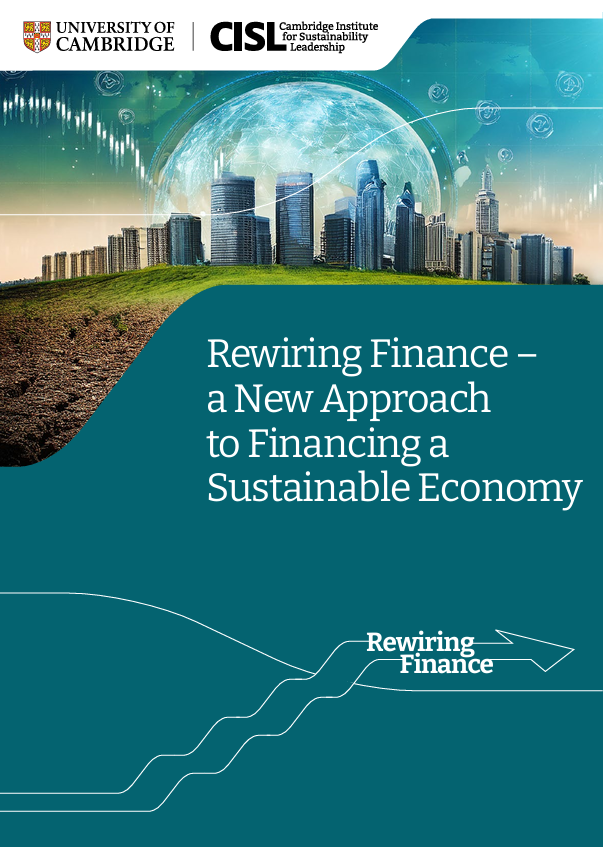
Rewiring finance – a new approach to financing a sustainable economy
This report outlines three systemic shifts needed to align finance with sustainability: policy reform to drive market incentives, mindset changes to embrace long-term value, and structural financial changes to embed environmental and social risks. It highlights barriers and proposes actions to support an inclusive, sustainable economic transition.
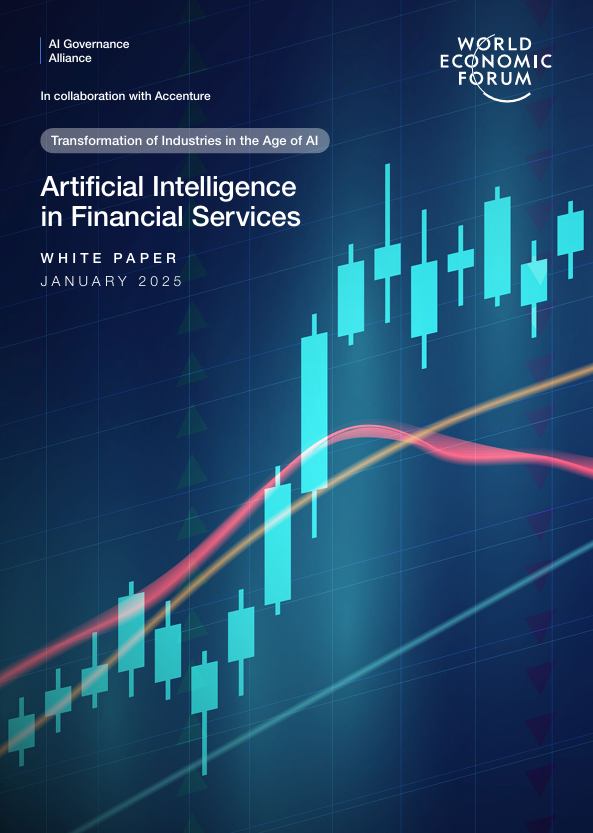
Artificial intelligence in financial services
AI is reshaping financial services by enhancing efficiency, reducing costs and unlocking new revenue opportunities. With $97 billion in projected investment by 2027, firms must address risks like misinformation and data bias while prioritising governance, regulation and workforce reskilling to ensure responsible, secure and effective AI adoption.
Regulating AI in the financial sector: Recent developments and main challenges
The report outlines AI’s growing use in finance—especially in underwriting, fraud detection, and customer support—highlighting regulatory challenges around explainability, governance, and data security. It discusses evolving global guidance and the need for risk-based, proportionate oversight, particularly as generative AI gains traction in high-impact applications.
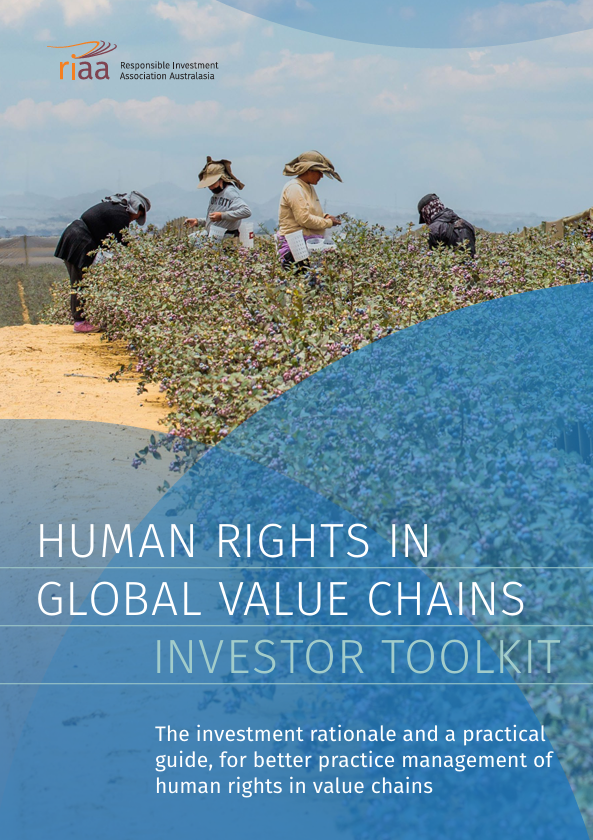
Human rights in global value chains investor toolkit
This toolkit guides investors in addressing human rights risks in global value chains. It outlines regulatory developments, risk identification practices, and engagement strategies to improve corporate accountability. Practical steps include audits, grievance mechanisms, collaboration, and traceability to mitigate modern slavery and labour abuses, enhancing long-term investment and operational resilience.


