
Library | Location
Sweden
Refine
73 results
REFINE
SHOW: 16


Stockholm Environment Institute
Stockholm Environment Institute is a global research organisation focused on sustainable development. Their research spans climate change, energy, water resources, and more. Explore SEI's insights for evidence-based solutions to environmental challenges.

Diversity wins: How inclusion matters
This report highlights that the business case for gender and ethnic diversity in executive teams is stronger than ever, having been deepened by the COVID-19 crisis. Emphasis on diverse representation within organisations is no longer sufficient; employees must feel and perceive equality and fairness of opportunity in their workplace.

A status report on financial institutions’ experiences from working with green, non green and brown financial assets and a potential risk differential
This 2020 report presents the results from a survey that assesses whether a risk differential can be detected between green, non-green and brown financial assets (loans and bonds). Based on information obtained by 49 banks, it presents a snapshot of current practices among financial institutions in their asset allocation.

Winning climate strategies: Practical solutions and building blocks for asset owners from beginner to best practice
Based on interviews with 22 leading asset owners, this 2018 report explores the best-practices landscape for managing climate risks and opportunities. The report identifies barriers faced by industry leaders and presents a framework of ten building blocks for other asset owners developing and introducing climate strategies.

Appetite for disruption: A second serving
This report explores the growth of the alternative protein market, particularly in the face of supply chain disruptions, food safety concerns from COVID-19, and global emissions. This is published alongside FAIRR's Sustainable Proteins Hub, an interactive tool which allows investors to assess how companies are diversifying toward alternative, climate-positive portfolios.

Stockholm University
State-governed Stockholm University in Sweden holds sustainability and the environment as central issues. It looks to work actively – through education, research, and collaboration with business, state and civil society – to help achieve the global sustainable development goals (SDGs) of the 2015 UN Resolution known as Agenda 2030.
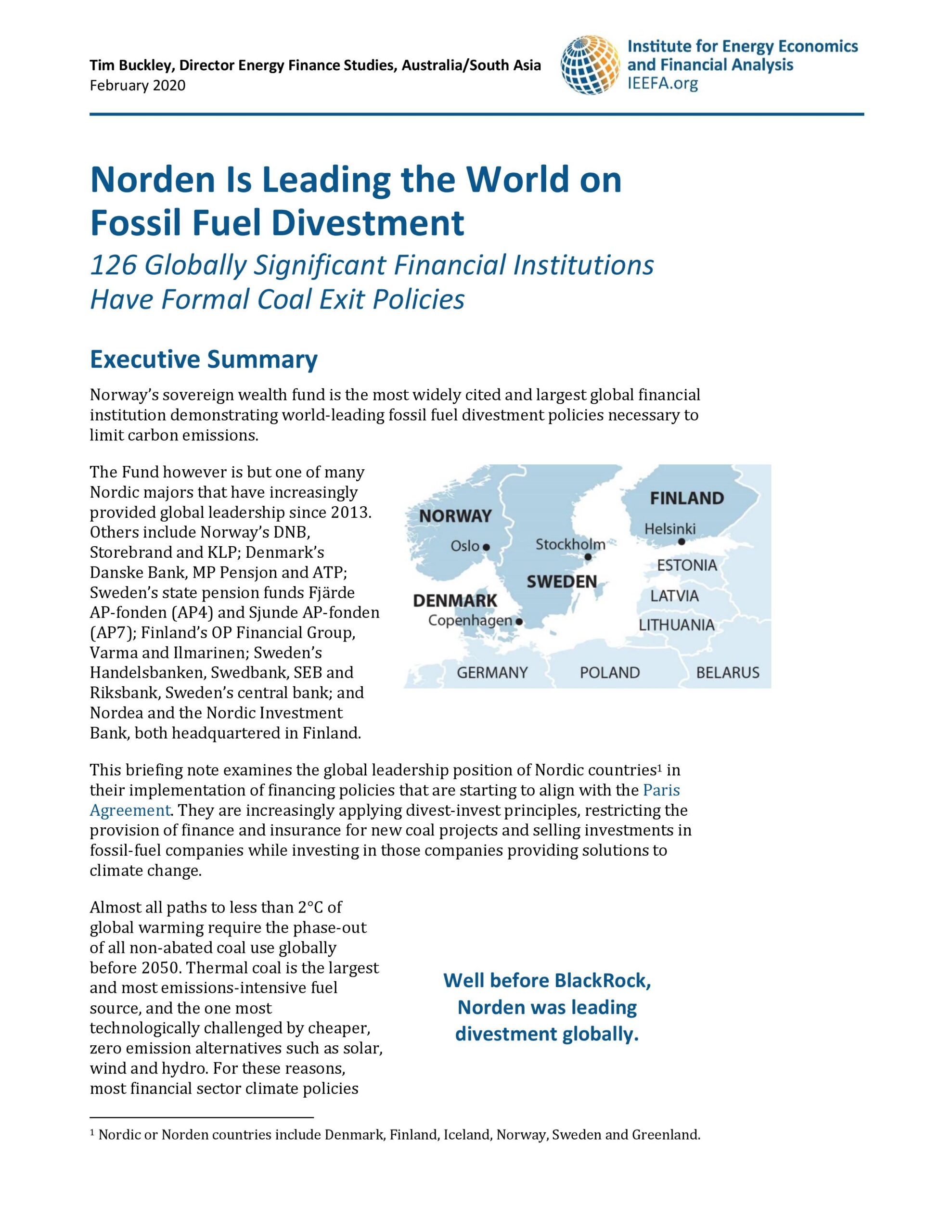
Norden is leading the world on fossil fuel divestment
This briefing examines the world-leading divestment strategies of Nordic countries from the fossil fuel industry. It looks at the current policies of pension funds, insurers, banks, development finance institutions, credit agencies and central banks.

Stockholm Resilience Centre
Stockholm Resilience Centre (SRC), launched in 2007, is leading science centre seeking to address the complex challenges facing humanity. SRC is a joint initiative between Stockholm University and the Beijer Institute of Ecological Economics at The Royal Swedish Academy Sciences.
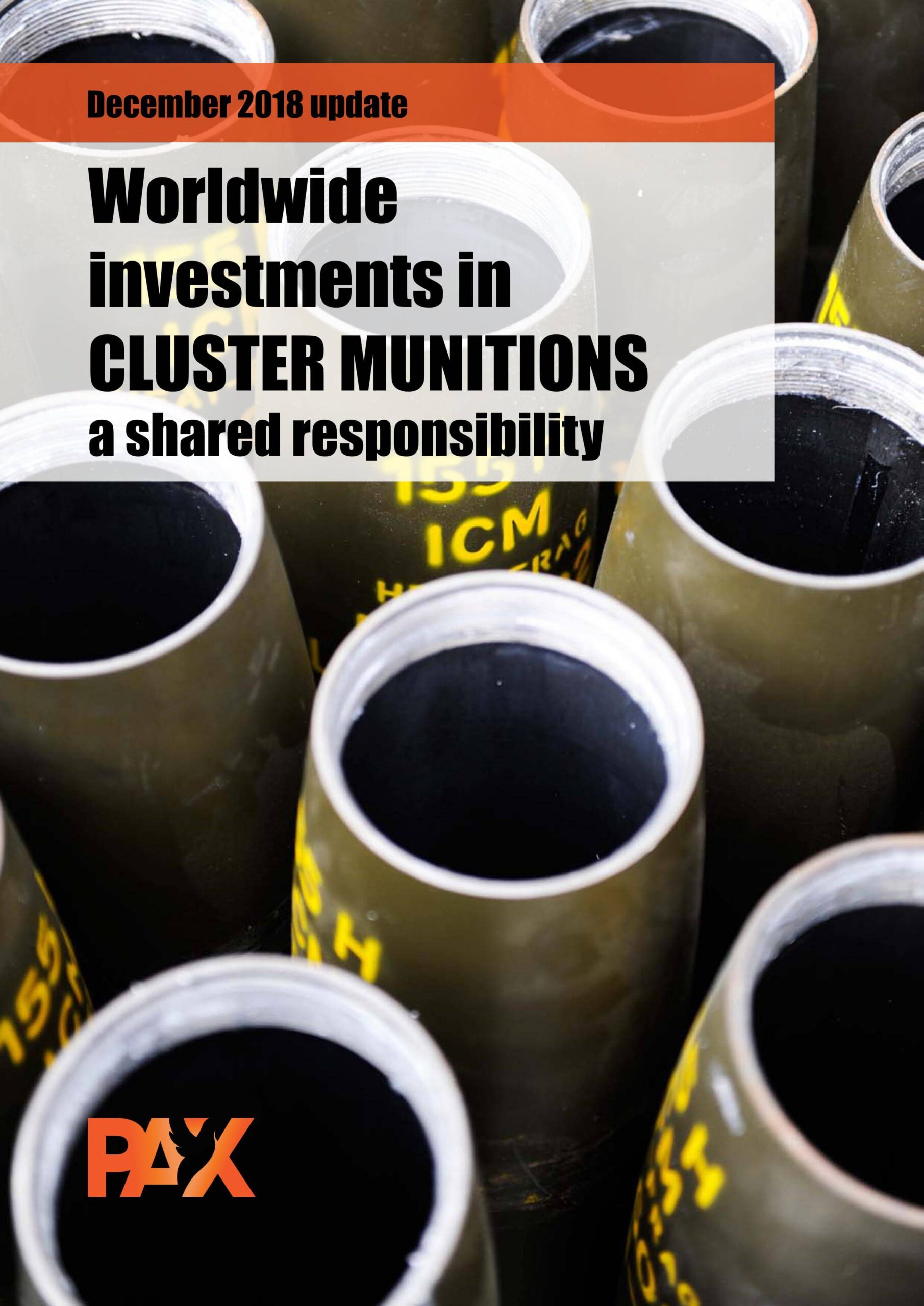
Worldwide investments in cluster munitions: A shared responsibility
A 2018 report on worldwide investments in harmful cluster munitions. Two arms manufacturers recently ended production of cluster munitions, and more financial institutions and states are acting to end money going to producers. Despite declining investment from financial institutions, there are seven companies in the report still manufacturing.


