
Refine
461 results
REFINE
SHOW: 16


openLCA Nexus
openLCA Nexus is an online repository providing access to life cycle assessment databases for environmental and sustainability analysis. It hosts free and licensed datasets from multiple providers, covering energy, materials, agriculture, transport and waste, designed for use within the openLCA software environment.

Climate Interactive
Climate Interactive creates and shares scientifically grounded climate simulators and interactive tools that help users explore climate solutions, energy policy impacts and systems thinking. It supports workshops, role-playing games and training to inform effective, equitable climate action worldwide, with tools like En-ROADS and C-ROADS widely used by educators and policymakers.
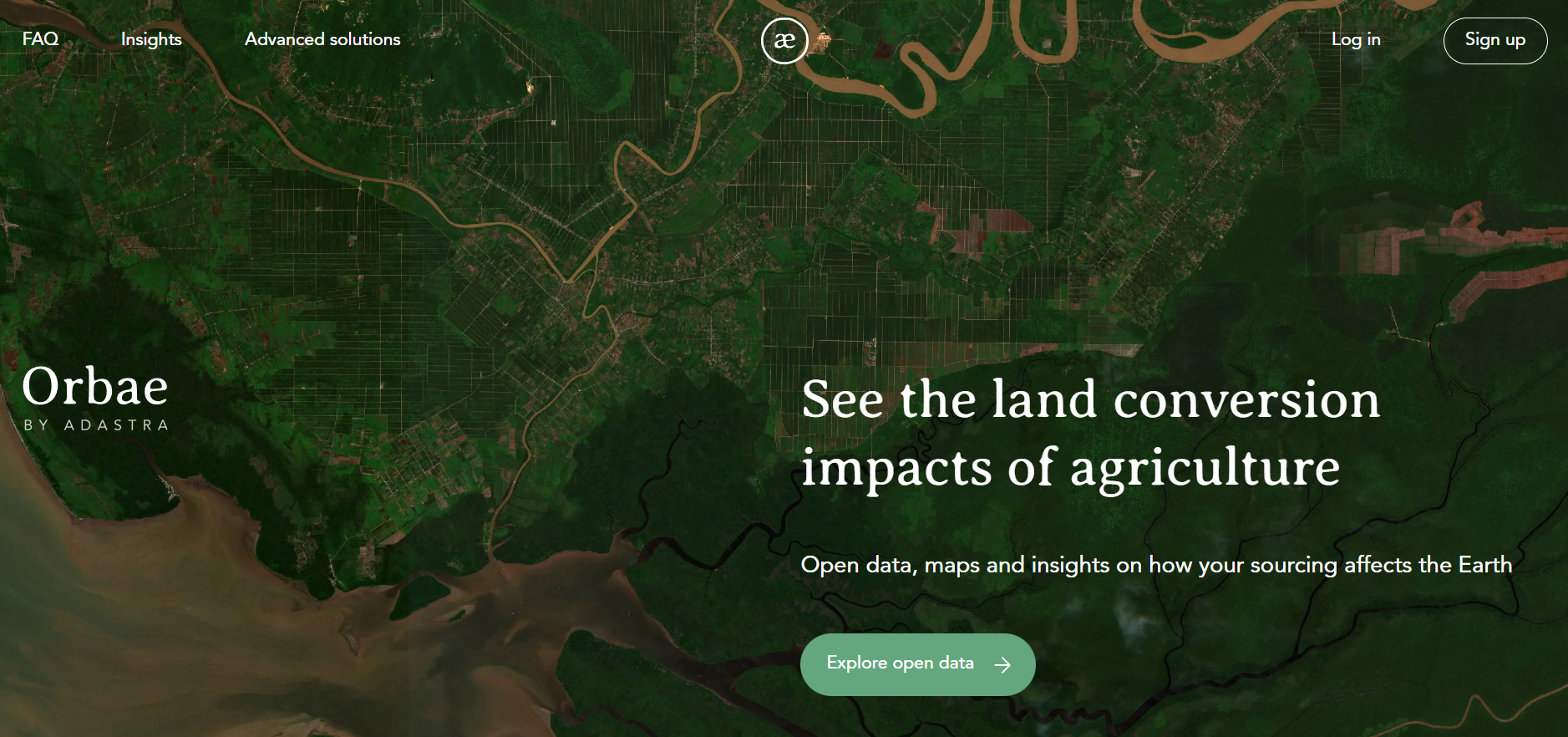
Orbae
Orbae is an open-data platform by AdAstra Sustainability that quantifies greenhouse gas emissions from agricultural land-use change. It provides high-resolution, spatially explicit data to assess land conversion impacts across crops, regions and supply chains, supporting climate risk analysis, reporting and sustainable finance decision-making.
OS-Climate: Transition Analysis
OS-Climate Transition Analysis is an open-source scenario-modelling tool that simulates economic, energy and climate system interactions. It supports assessment of transition risks, technology pathways and investment trade-offs under alternative decarbonisation scenarios for financial and strategic analysis.
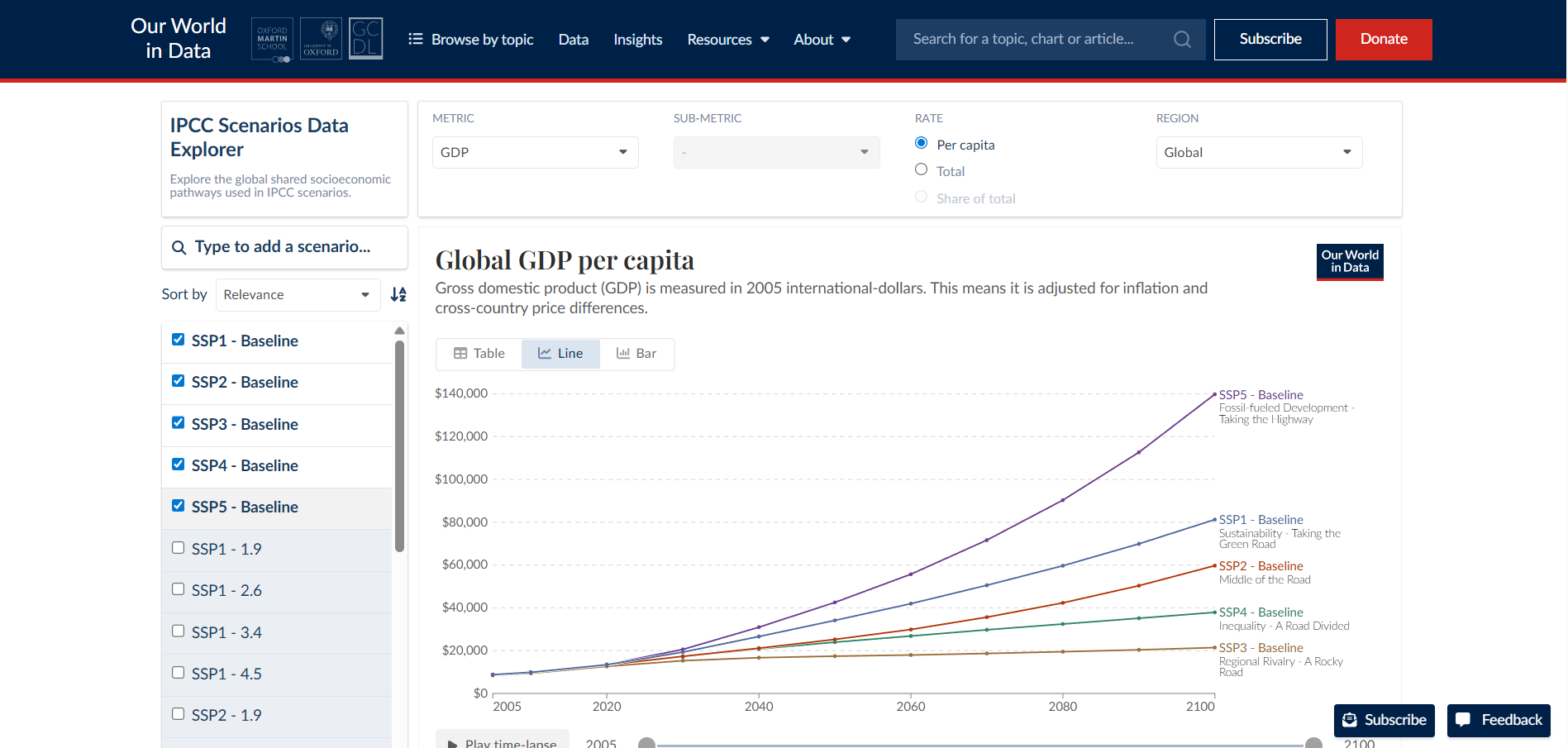
IPCC Shared Economic Pathways (SPPs)
An interactive data explorer for the Shared Socioeconomic Pathways (SSPs) used in IPCC climate modelling, allowing comparison of socioeconomic and emissions trajectories under different future scenarios. It presents scenario data on population, economy, energy and related variables to analyse possible climate outcomes.
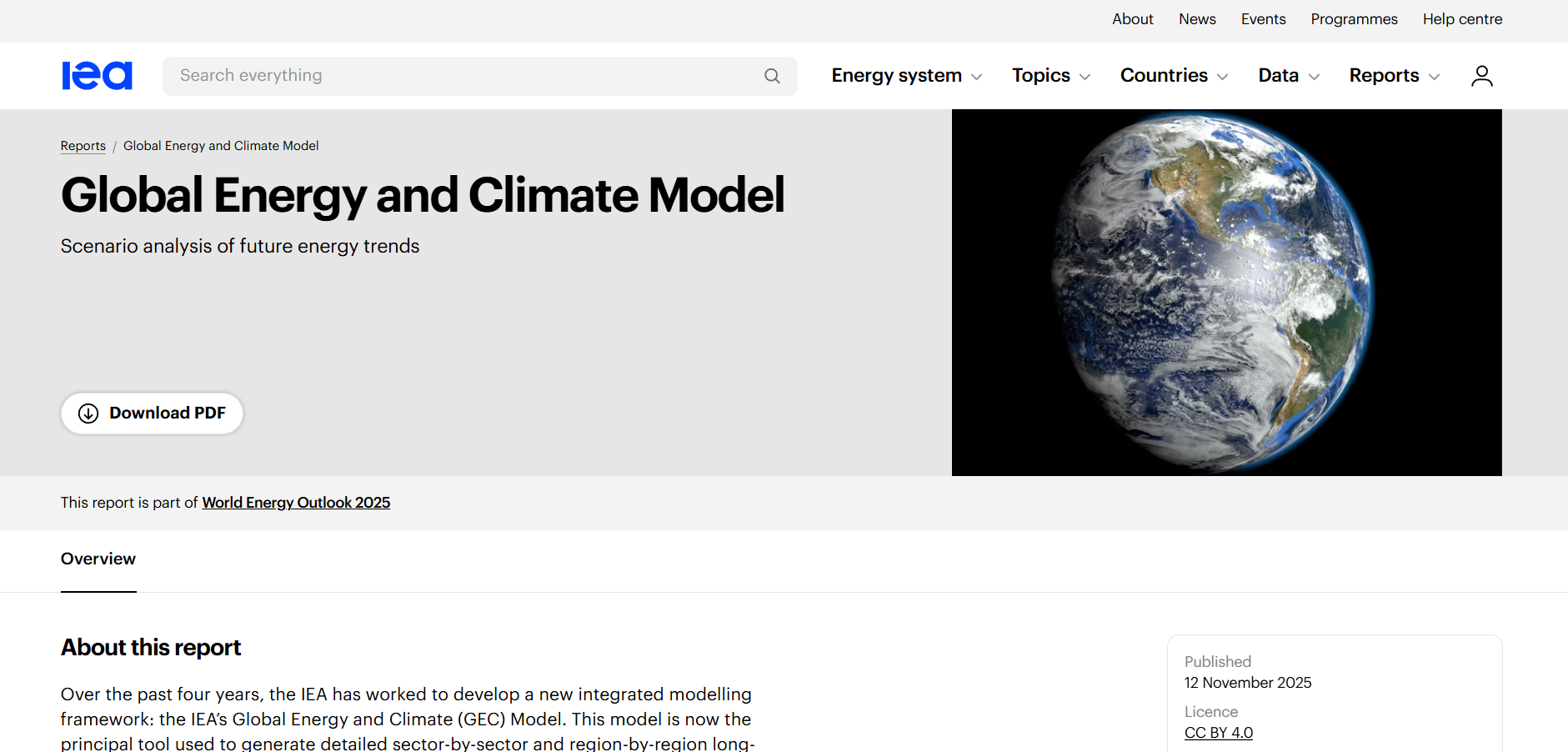
IEA Global Energy and Climate Model
The Global Energy and Climate Model is an integrated analytical tool developed by the International Energy Agency to assess long-term global energy systems. It supports scenario analysis of energy demand, supply, investment and emissions under different policy and technology pathways.
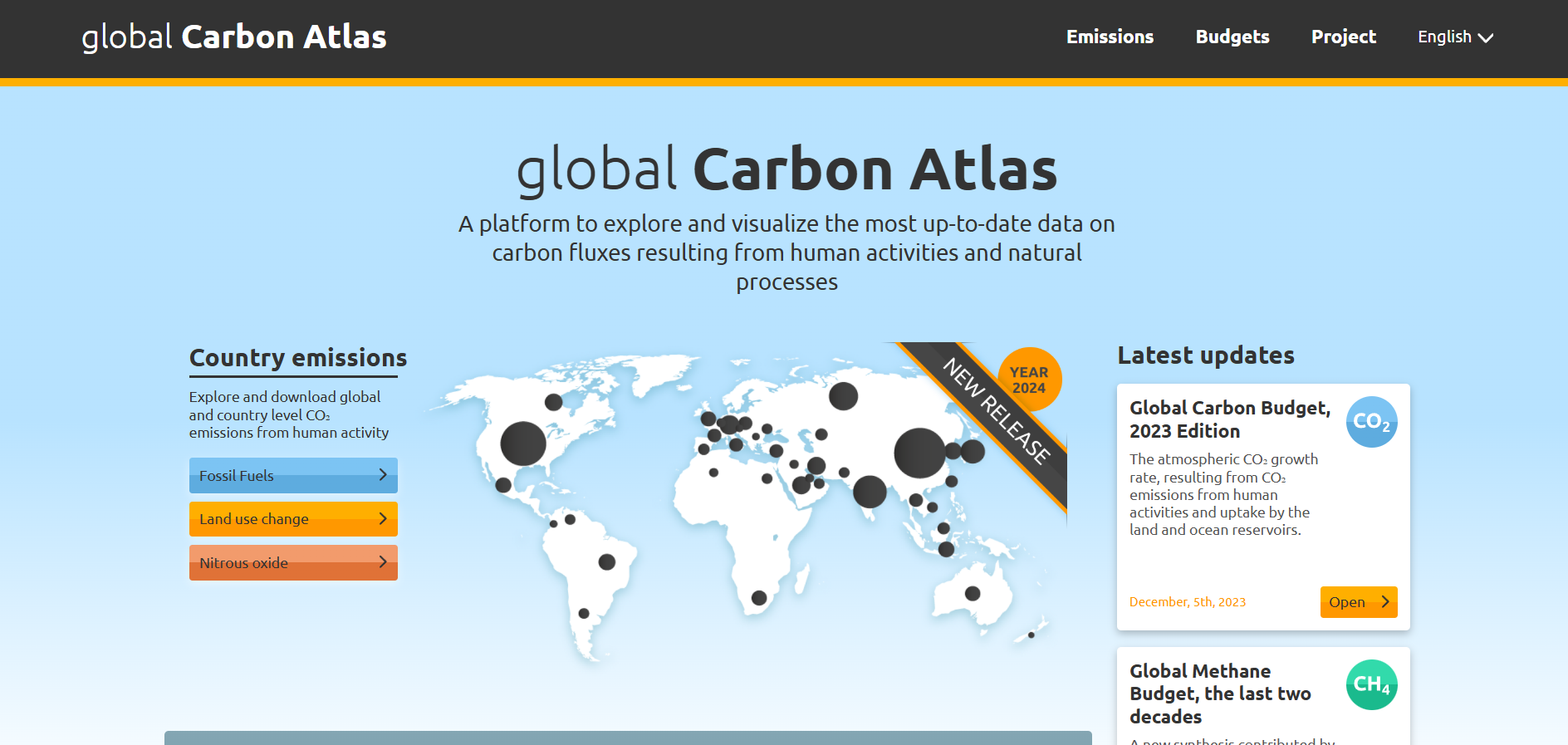
Global Carbon Atlas
GlobalCarbonAtlas.org is an online platform for exploring, visualising and downloading up-to-date global and regional carbon flux and emissions data from human activities and natural processes, supporting analysis of CO₂, methane and nitrous oxide trends across countries and sectors.
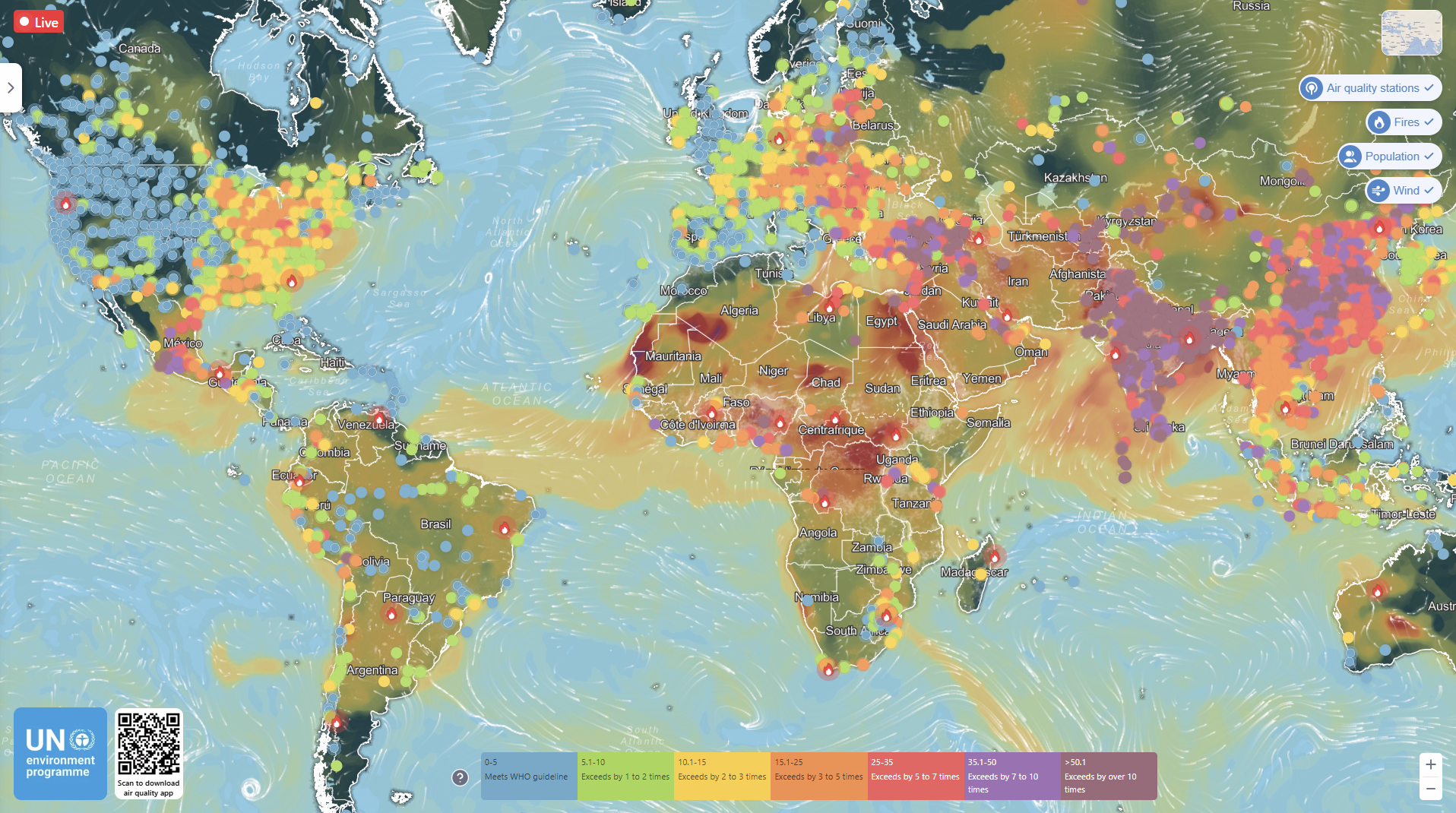
WESR: Air Visual
The IQAir × UNEP air quality tool aggregates real-time PM2.5 data from thousands of monitors worldwide to show current air pollution exposure and estimates by age group, relative to WHO guidelines. It supports global air quality assessment through an interactive map and hourly updated exposure statistics.
WESR: Ozone
UNEP’s Ozone Secretariat portal supports implementation of the Montreal Protocol by providing access to data, reports, legal texts and compliance resources on ozone-depleting substances (ODS). It aids national authorities and stakeholders in tracking ODS phase-out and supporting global efforts to protect and restore the ozone layer.
Integrated Carbon Observation System (ICOS)
Integrated Carbon Observation System (ICOS) Near Real-Time Observational Data (Level 1) provides rapidly delivered atmospheric and ecosystem measurements, typically within 24 hours. Data undergo automated quality control only and are released as growing time series. Suitable for monitoring and exploratory analysis, not final scientific assessment.
The twin transition century
This paper argues that Europe’s green transition depends on aligning digital transformation with sustainability goals. It outlines how digital research can both reduce its own environmental footprint and enable climate action, calling for long-term, interdisciplinary research investment and coordinated EU policy.
New approaches and challenges regarding trade, climate action, and the WTO
The report analyses how WTO trade rules can support climate action. It assesses tools such as border carbon adjustments, standards, subsidies and technology policy, identifying legal gaps, development impacts and the need for coordinated reforms to align multilateral trade governance with climate objectives.
Assessing the credibility of a company’s transition plan: framework and guidance
This report presents a harmonised framework to assess the credibility of corporate climate transition plans. It defines core plan elements, assessment principles, and a four-step process to evaluate ambition, feasibility, consistency, governance, and financial alignment with Paris-aligned decarbonisation pathways.
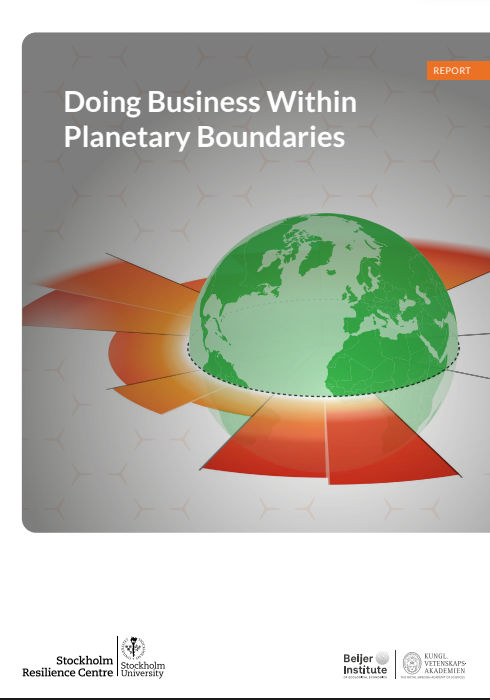
Doing business within planetary boundaries
This report argues that corporate reporting must incorporate absolute, location-specific environmental impacts aligned with planetary boundaries. It proposes science-based disclosures and the Earth System Impact score to improve assessment of cumulative nature-related risks, support credible investment decisions, and enhance comparability beyond carbon-focused metrics.
Defining climate finance justice: Critical geographies of justice amid financialized climate action
The article defines “climate finance justice” as a framework for analysing how financialised climate action shapes equity, power, and outcomes. It critiques climate finance mechanisms, including UNFCCC processes and voluntary carbon markets, and argues for justice-centred approaches that address historical responsibility, governance, and uneven impacts.
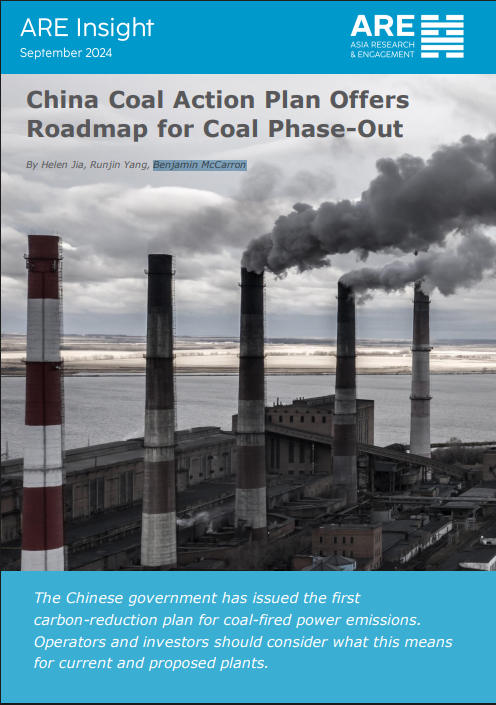
China coal action plan offers roadmap for coal phase-out
The report analyses China’s first quantitative coal power decarbonisation plan, outlining emissions-reduction targets to 2027 via co-firing and carbon capture. It finds retrofitted coal increasingly uncompetitive versus renewables with storage, raising risks for new coal investments and strengthening the case for no-new-coal commitments.


