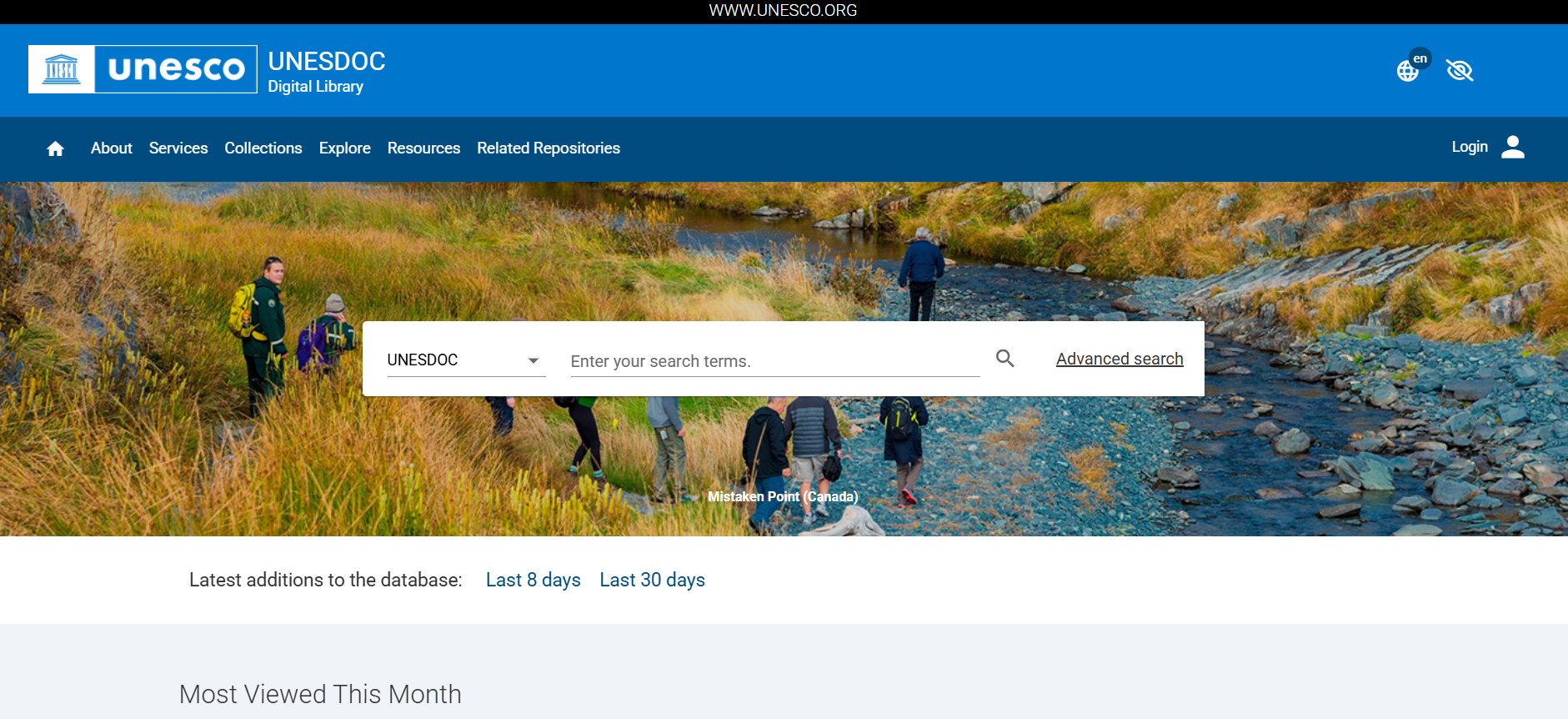
UNESDOC is UNESCO’s digital library, providing open access to a large collection of publications, reports, archival materials and institutional documents dating back to 1945. It functions as the organisation’s central knowledge repository across education, science, culture and communication. For finance professionals, it offers contextual information on global development, sustainability and policy trends relevant to long-term investment analysis.
Organisation behind the resource
UNESDOC is maintained by the United Nations Educational, Scientific and Cultural Organization (UNESCO), a specialised agency of the United Nations. UNESCO focuses on international cooperation in education, science, culture and communication to support sustainable development and knowledge sharing.
What the resource does
- Provides access to over 350,000 UNESCO publications, reports and archival documents.
- Includes materials such as global reports, policy documents, speeches, and governing body records.
- Covers thematic areas including education, natural sciences, social sciences, culture and communication.
- Offers searchable bibliographic data, full-text downloads and metadata on publications.
- Aggregates collections from UNESCO libraries, archives and documentation centres worldwide.
Target audience
The primary users are researchers, policymakers, academics and international organisations. It is also relevant for students, development practitioners and the general public seeking authoritative global knowledge resources.
Relevance to finance professionals
- Risk assessment – insights on education, climate, culture and social systems that influence long-term country and sector risk.
- ESG analysis – data and reports on sustainability, human development, cultural preservation and governance issues.
- Market/commodity insights – information on water, education systems, infrastructure and scientific development relevant to economic activity.
- Investment context – long-term global trends in development, inequality, knowledge economies and policy priorities that shape investment environments.