
Library | ESG issues
Climate Change
Climate change, driven by human-induced greenhouse gas (GHG) emissions, is increasing global temperatures and extreme weather events. Major GHGs like carbon dioxide and methane primarily come from burning fossil fuels, deforestation, and agriculture. Key sectors contributing to emissions include energy, industry, transport, buildings, and land use, making mitigation and adaptation essential for environmental and economic stability.

Refine
1170 results
REFINE
SHOW: 16


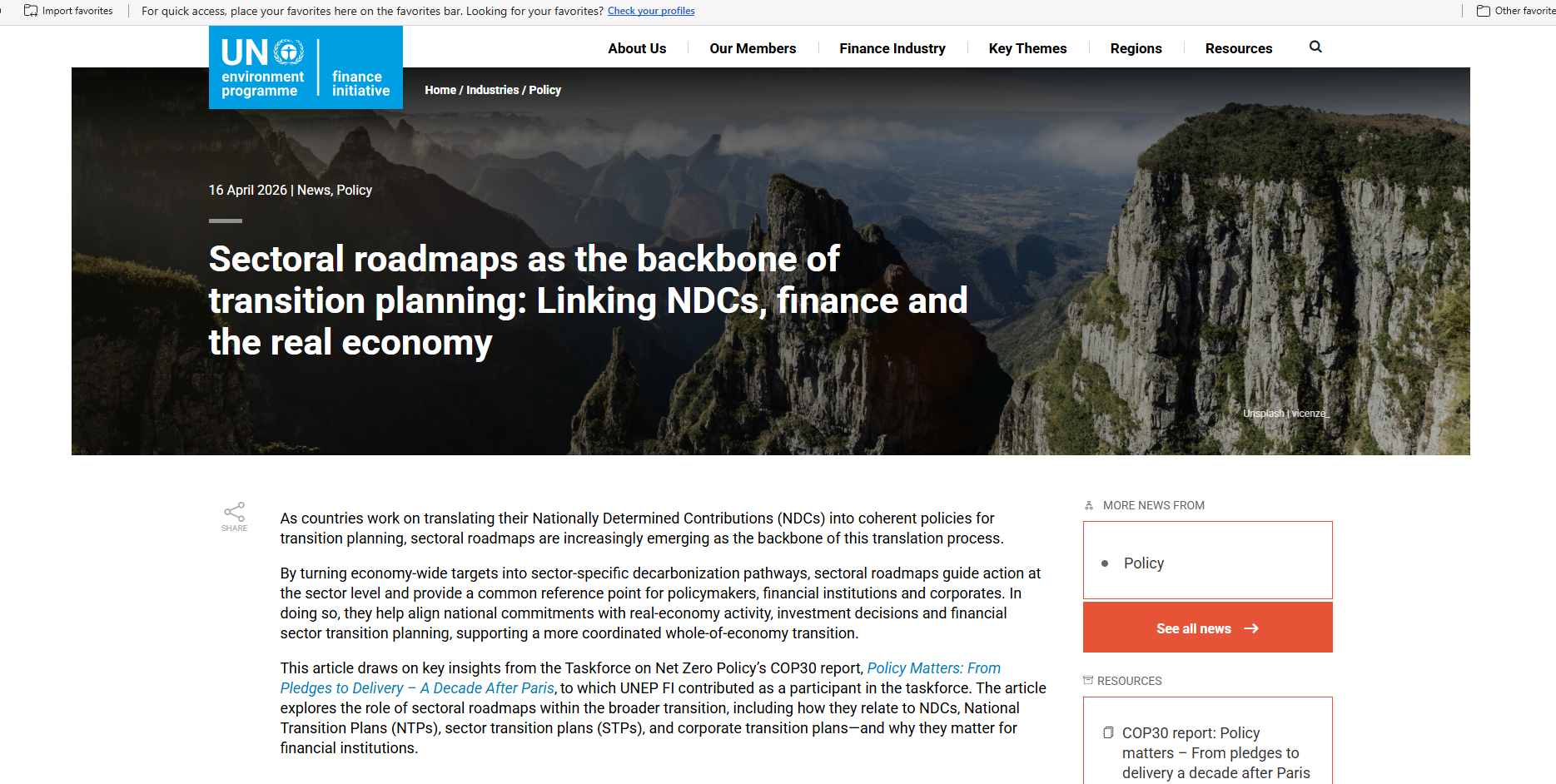
Sectoral roadmaps as the backbone of transition planning: Linking NDCs, finance and the real economy
Sectoral roadmaps translate national climate targets into sector-specific decarbonisation pathways, guiding policy, investment and corporate transition plans. They align real-economy activity with finance, reduce uncertainty, and support risk assessment and capital allocation, strengthening the credibility and implementation of whole-economy transition planning.
IFC's performance standards on environmental and social sustainability
The IFC Performance Standards (2012) form part of the Sustainability Framework, setting requirements for clients to identify, manage, and mitigate environmental and social risks in financed projects. They comprise eight standards covering areas such as labour, resource efficiency, biodiversity, and community impacts, and are widely used as a global benchmark for responsible investment.
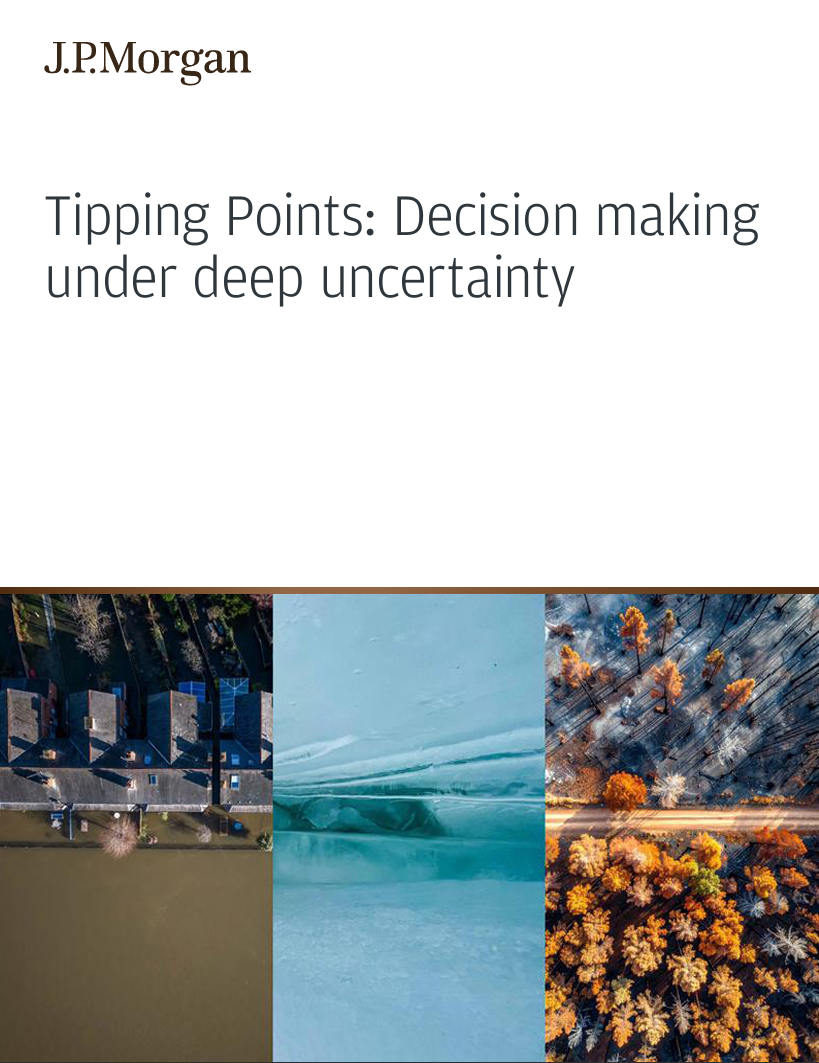
Tipping points: Decision making under deep uncertainty
Examines climate tipping points and their implications for financial decision-making under deep uncertainty. It outlines risks of abrupt, nonlinear climate shifts, limitations of traditional valuation models, and emerging approaches including scenario analysis, resilience planning and climate intervention, emphasising challenges in pricing, timing and managing long-term systemic risks.
Implications of the International Court of Justice’s Advisory Opinion on Climate Change for directors’ duties in relation to climate-related risks
Examines how the ICJ’s climate advisory opinion may elevate climate-related risks and regulatory pressures, increasing directors’ duty of care. Highlights litigation, disclosure, and transition risks, particularly for emissions-intensive sectors, and emphasises informed decision-making and accurate reporting to mitigate liability.
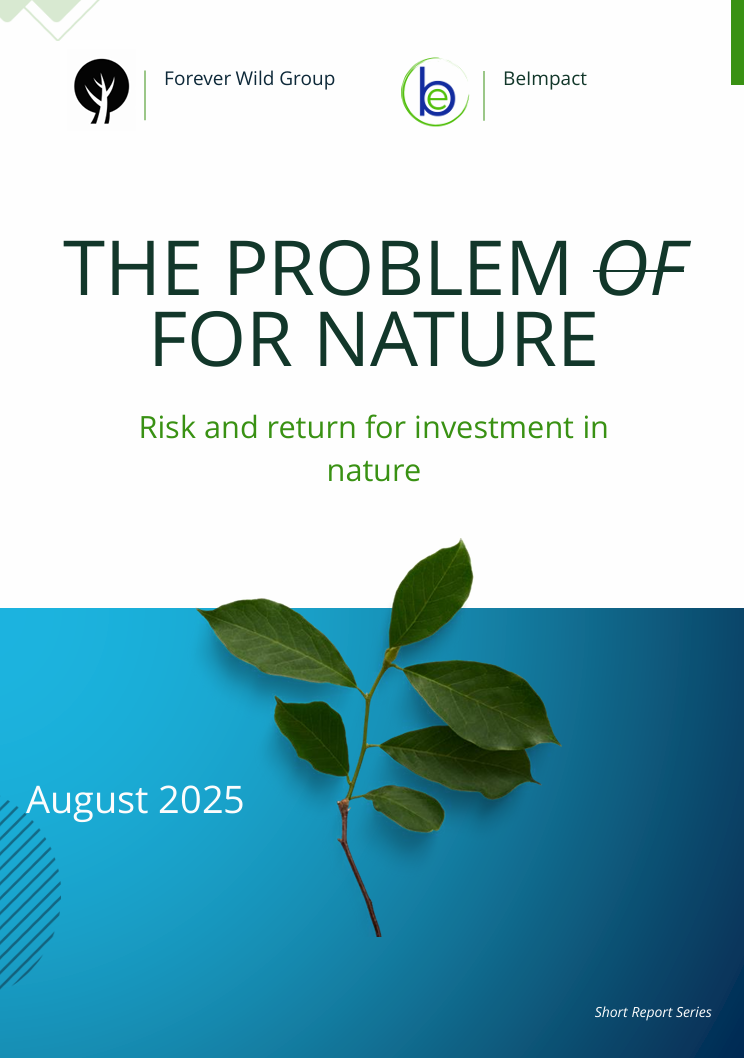
Forever wild series
This series outlines the Forever Wild Initiative’s approach to financing and managing large-scale wilderness landscapes through blended capital models, community co-design, and nature-based enterprises. It documents the development of equitable nature finance structures that integrate conservation, economic activity, and social outcomes across landscapes.
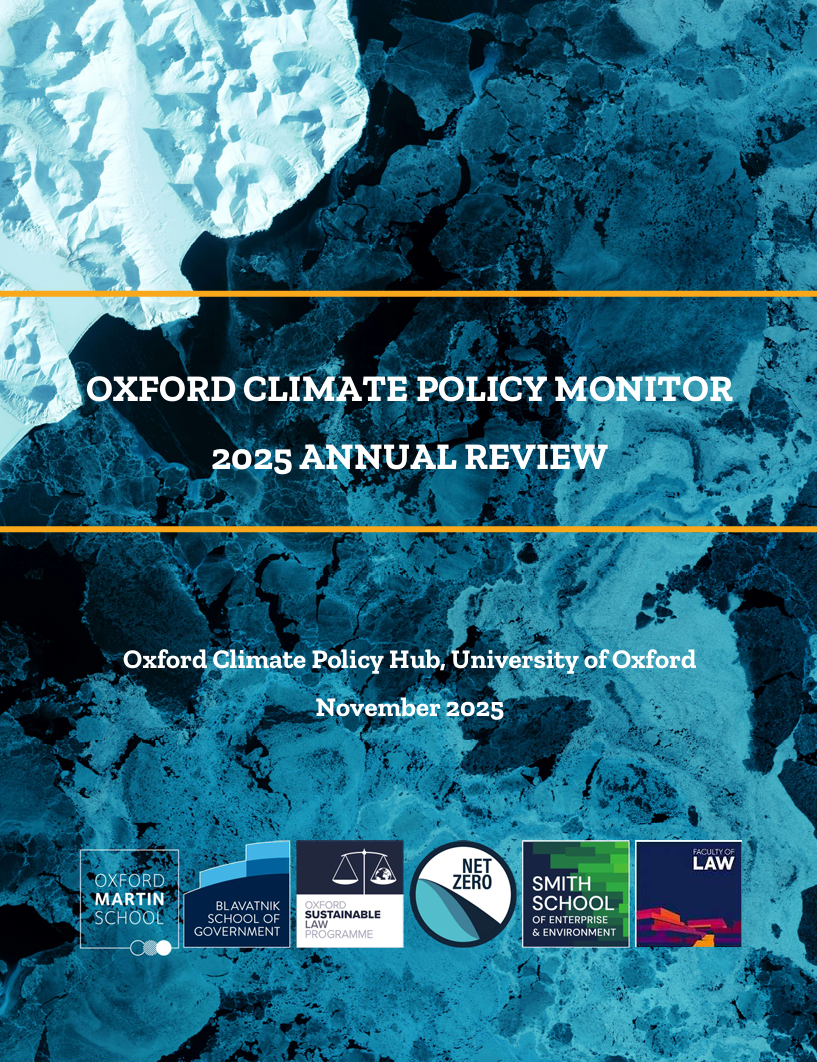
Oxford climate policy monitor: 2025 annual review
Assesses climate policies across 37 jurisdictions and six domains, finding overall strengthening despite political pressures, but slow implementation. Highlights rising policy leadership in developing regions and persistent gaps in ambition and execution relative to Paris Agreement targets.
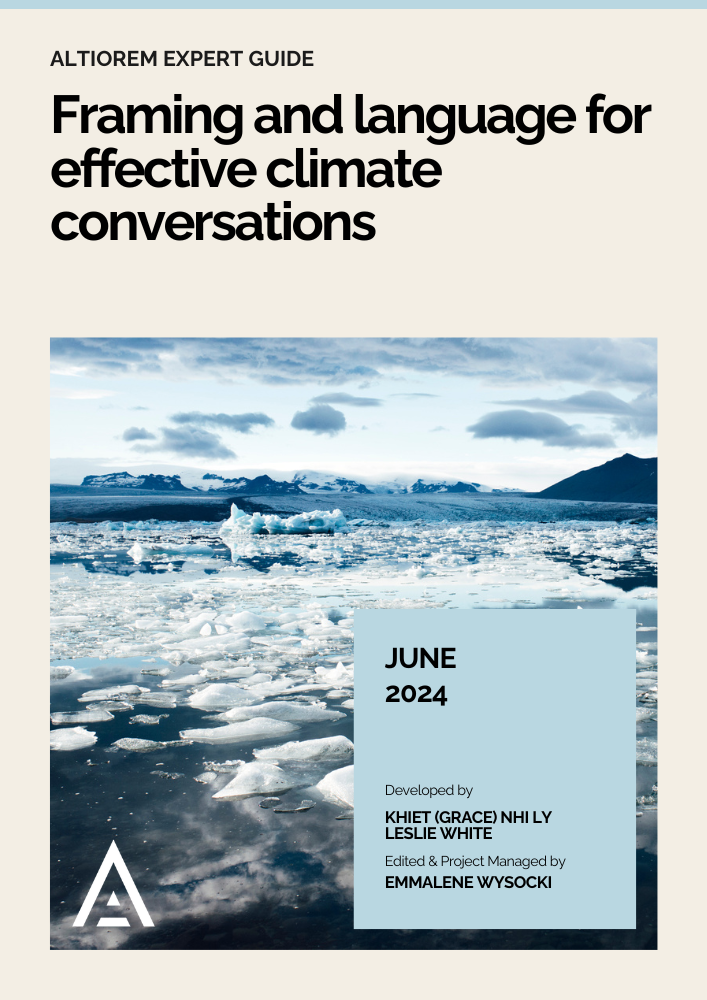
Framing and language for effective climate conversations
Guide outlines how framing and language influence climate engagement, especially among ‘middle ground’ audiences. It emphasises aligning messages with shared values, avoiding polarising or technical language, and using practical, relatable framing to build support for emissions reduction and climate action.
Australian taxonomy-aligned debt guidance: Issuing use-of-proceeds debt under the Australian sustainable finance taxonomy
Guidance explains applying the Australian sustainable finance taxonomy to use-of-proceeds debt, outlining classification, allocation, and disclosure requirements. It details technical screening criteria, Do No Significant Harm and social safeguards, and supports consistent, transparent identification of climate-aligned investments for issuers and investors.
Energy technology perspectives series
The Energy Technology Perspectives is a series by the IEA that provides analysis of global energy systems, focusing on the development, deployment and innovation of clean energy technologies and their role in achieving sustainable, secure and low-emissions energy transitions across sectors and regions.
Mind the gap: An insurance climate vulnerability assessment
APRA assesses Australia’s home insurance protection gap under climate scenarios, finding affordability pressures may increase uninsured households from one in seven to one in four by 2050. Rising weather risks and economic factors drive premiums, widening financial system risks, particularly in regional areas, with implications for households, insurers and banks.
The Climateworks guide to credibility for corporate climate transition plans
Provides an Australian-focused framework for assessing the credibility of corporate climate transition plans, outlining principles, criteria and disclosure expectations. It supports companies, investors and regulators in evaluating emissions targets, governance, strategy alignment and risk management within mandatory climate reporting and net zero transition planning.

Climateworks Centre
Climateworks Centre is an independent non-profit climate research organisation based at Monash University. It develops evidence-based solutions to support net zero emissions across Australia, Southeast Asia and the Pacific, advising governments, businesses and investors on decarbonisation, sustainable finance, and climate transition strategies.
Governing for net zero: The board's role in organisational transition planning
This report guides Australian boards on integrating net zero transition planning into strategy, governance, disclosure and stakeholder engagement. It outlines directors’ legal duties, mandatory climate reporting requirements, and practical oversight questions to help organisations manage climate-related risks, opportunities and implementation.
Guidance for applying absolute environmental sustainability assessment on activities at different scales (BETA version)
Provides beta guidance for applying Absolute Environmental Sustainability Assessment, comparing activities’ environmental burdens against planetary boundaries. It outlines a three-phase, nine-step framework, supported by case studies (buildings, cement, EU consumption), and aligns with existing accounting standards while addressing methodological gaps in allocating environmental limits.
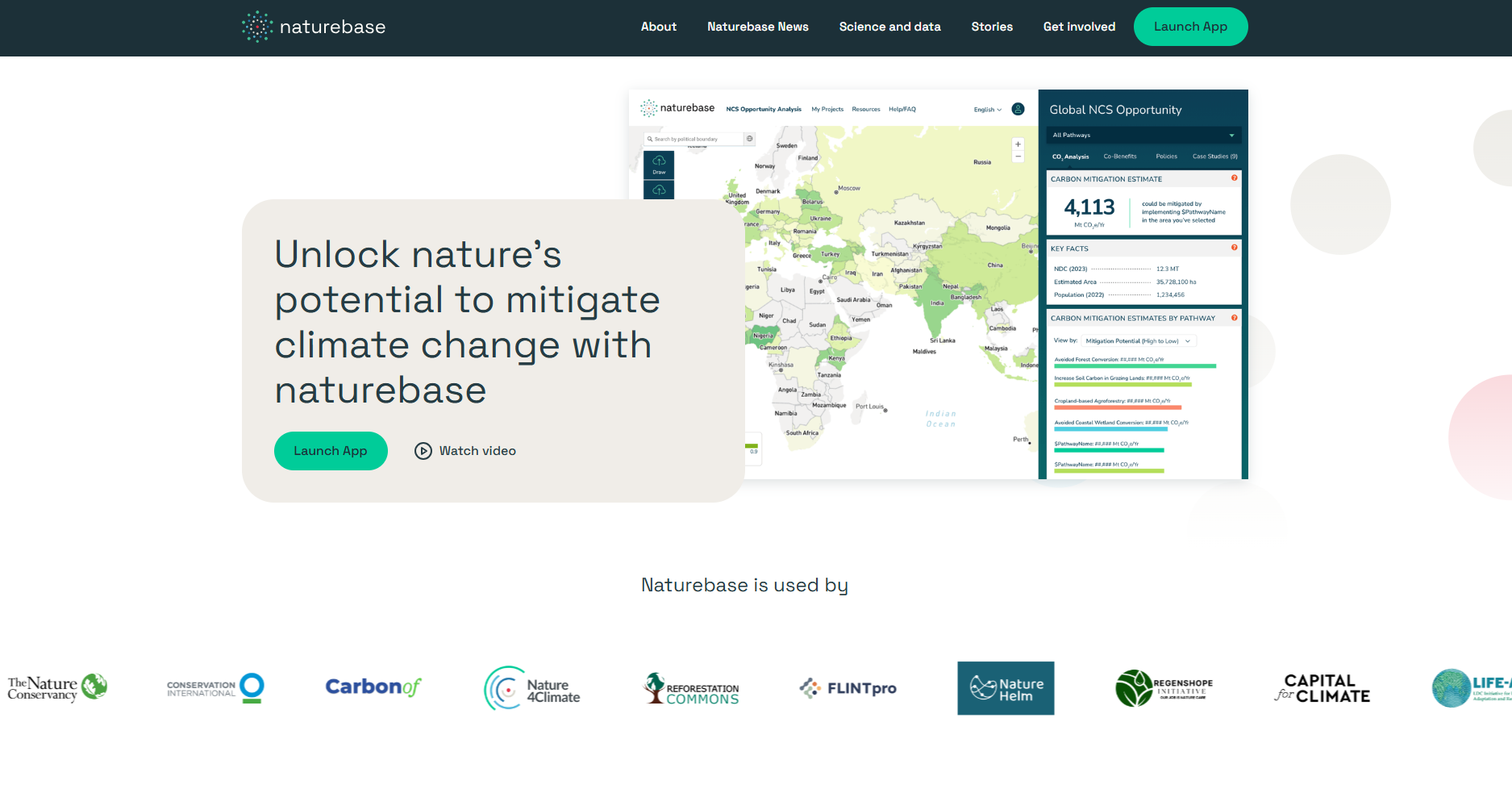
Naturebase
Naturebase is a free, science-based platform that maps where and how to implement nature-based solutions. It provides data on carbon mitigation potential, biodiversity and social benefits, alongside policy guidance and case studies, enabling investors and policymakers to identify, assess and finance high-integrity climate and nature projects.
Attribution of extreme events to climate change in the Australian region
This report reviews how reliably climate change can be linked to extreme events in Australia, finding strongest attribution for heat-related events, moderate confidence for some rainfall and drought, and limited capability for storms, east coast lows and multi-year droughts, while outlining research priorities to improve attribution.


