
Library | ESG issues
Community Development
Community development is a process where individuals and groups collaborate to create a more inclusive society by addressing shared social and economic challenges. It empowers communities to take collective action, ensuring equitable access to resources and opportunities. Examples include investments in affordable housing, infrastructure such as roads, libraries, and parks, and initiatives that support local businesses and workforce development. Strong community development enhances economic resilience, social cohesion, and long-term value creation, influencing corporate and investment strategies.


Refine
158 results
REFINE
SHOW: 16


Driving positive social change through co-operatives and mutual enterprises (CMEs)
This guide explains how co-operatives and mutual enterprises can support social change through democratic governance, member focus and long-term value. It argues they can improve stability, competition and sustainability in finance, while noting challenges including regulation, capital raising and market awareness.
Nourish and flourish: Water solutions to feed 10 billion people on a livable planet
This World Bank report outlines transforming agricultural water management to feed 10 billion people sustainably. It introduces a water-food nexus framework, highlights inefficiencies in current systems, and emphasises data-driven, service-oriented irrigation and financing reforms to improve productivity, resilience, and environmental outcomes.
Sustainable Finance Roundup March 2026: Markets, Climate Risk, and the Transition in Practice
This month’s sustainability roundup captures a shift from framework development to real-world application, where climate and nature risks are increasingly embedded across financial systems, legal accountability, and decision-making. It highlights how intensifying physical climate signals, evolving disclosures, and maturing litigation are converging with insights on sovereign risk, energy systems, and corporate strategy. Together, these developments show how sustainability is moving beyond principle—being tested, priced, and enforced across markets, regulation, and the real economy.

You Built This
This article argues that modern investment strategies fuel economic extraction while often underperforming simpler alternatives. It calls on investors to realign portfolios with productive, community-oriented investments that generate real economic and social value.
Resourcing the solidarity economy: Insights on building community power through reorganising wealth
This report examines how solidarity economy organisations can be resourced through wealth redistribution, arguing they are underfunded, misrecognised and poorly served by conventional investment models. It recommends reparative, community-led financing and ecosystem support rather than profit-focused, repayable finance.
Marico Innovation Foundation
Marico Innovation Foundation (MIF) is a philanthropic organisation that supports impact-driven innovation and entrepreneurship in India. It works with startups, innovators and ecosystem partners to scale solutions in areas such as climate adaptation, plastic waste management, clean technology and agriculture technology, aiming to create large-scale social, environmental and economic impact.
Mobilising investment for climate adaptation
This report assesses Australia’s escalating climate risks and argues for scaling adaptation investment. It recommends improved valuation methods, a nationally coordinated adaptation investment framework, and diversified public-private financing mechanisms to reduce long-term economic damage and enhance resilience.
Climate and catastrophe insight series
The Climate and Catastrophe Insight is an annual research series that provides a consistent global view of natural disaster activity and climate-related catastrophe trends. It examines impacts on people, assets and economies to support risk assessment, resilience planning and long-term decision-making.

Sustainable Finance Roundup January 2026: Geopolitics, Energy Transitions, and Systemic Risk
This month’s sustainable finance article roundup examines a landscape increasingly shaped by geopolitics and climate risk, as near-term fragmentation, energy security, and affordability pressures collide with intensifying long-term threats from climate change, biodiversity loss, and water stress. The works featured analyse how these dynamics are reshaping capital allocation, disclosure, and resilience planning, demonstrating the growing need for sustainable finance to integrate geopolitical risk with real-economy transition.
Benchmarking impact: Australian impact investor insights activity and performance series
Benchmarking Impact is a benchmark series that provides a structured, recurring assessment of Australia’s impact investing market. It examines investor activity, market practices, and product development to support comparability over time and inform understanding of how impact investing is evolving across the financial system.

UNSW Centre for Social Impact
UNSW Centre for Social Impact (UNSW CSI) is a research and education centre focused on social impact, impact measurement, social investment and purpose-driven leadership. Based at UNSW Business School, it works with government, business, philanthropy and civil society to support evidence-based social and environmental outcomes.
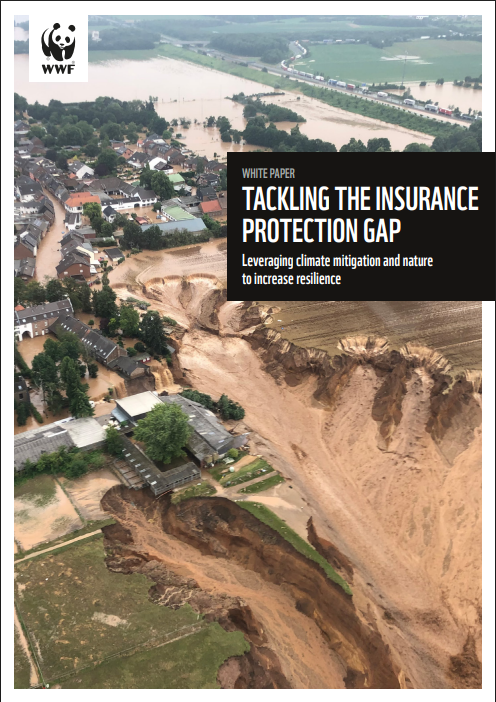
Tackling the insurance protection gap: Leveraging climate mitigation and nature to increase resilience
This white paper analyses how climate change and nature loss are widening insurance protection gaps in advanced economies. It outlines impacts on affordability and coverage, and recommends combining climate mitigation, nature-based solutions, and regulatory reforms to strengthen resilience and maintain insurability.
INGENIAR Risk Intelligence
Ingeniar: Risk Intelligence is a commercial risk management consultancy specialising in disaster risk assessment, climate resilience, and probabilistic risk modelling. It provides technical studies, analytics, and software tools supporting infrastructure planning, adaptation strategies, and financial risk decision-making for public and private sector clients globally.
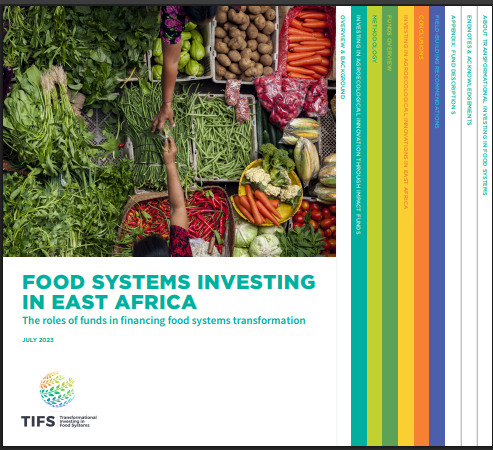
Food systems investing in East Africa: The roles of funds in financing food systems transformation
This report analyses 23 impact funds investing in East African food systems, assessing their design, impact alignment, and financing roles. It identifies gaps, good practices, and recommendations to strengthen agroecological and regenerative food systems investing.
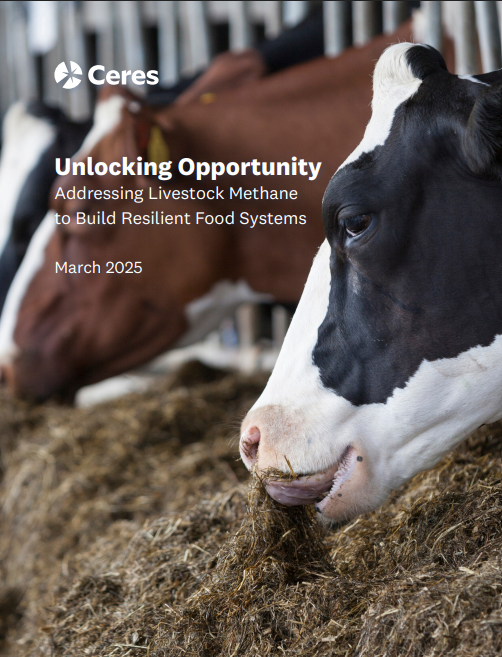
Unlocking opportunity: Addressing livestock methane to build resilient food systems
This Ceres report outlines the financial and climate case for reducing livestock methane. It maps methane exposure across food supply chains and sets out strategies for companies and investors to manage risk, strengthen resilience, and capture value through near-term methane mitigation.
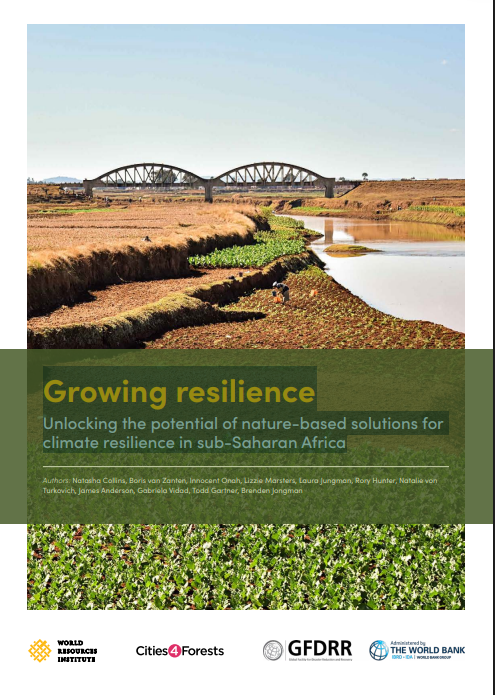
Growing resilience: Unlocking the potential of nature-based solutions for climate resilience in sub-Saharan Africa
The report assesses nature-based solutions for climate resilience in sub-Saharan Africa, reviewing nearly 300 projects. It finds growing adoption but insufficient scale, highlighting financing, policy, and capacity gaps, and recommends integrating NBS into infrastructure planning, diversifying funding, and strengthening social inclusion and local capability.


