
Library | ESG issues
Environmental
The environmental pillar in ESG (environmental, social, and governance) assesses an organisation’s impact on the planet. It includes issues such as climate change, biodiversity, waste management and water management. Strong environmental practices help businesses reduce risks, comply with regulations, and drive long-term sustainability.
Refine
1580 results
REFINE
SHOW: 16


Aotearoa New Zealand climate standards series
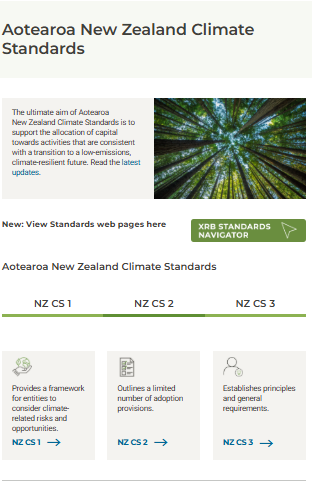
The Aotearoa New Zealand Climate Standards series is a benchmark series issued by the External Reporting Board. It sets out the framework for climate-related disclosures, including governance, strategy, risk management, metrics and targets, adoption provisions, and general requirements. The series provides entities with a consistent structure to report climate-related risks and opportunities.

External Reporting Board (XRB)
External Reporting Board (XRB) is an independent Crown entity in New Zealand that develops and issues accounting, auditing & assurance, and climate reporting standards. XRB ensures trusted, high-quality, integrated reporting across public, private and not-for-profit sectors to promote transparency, accountability and support informed decision-making.
Chemsec's Sin Producers
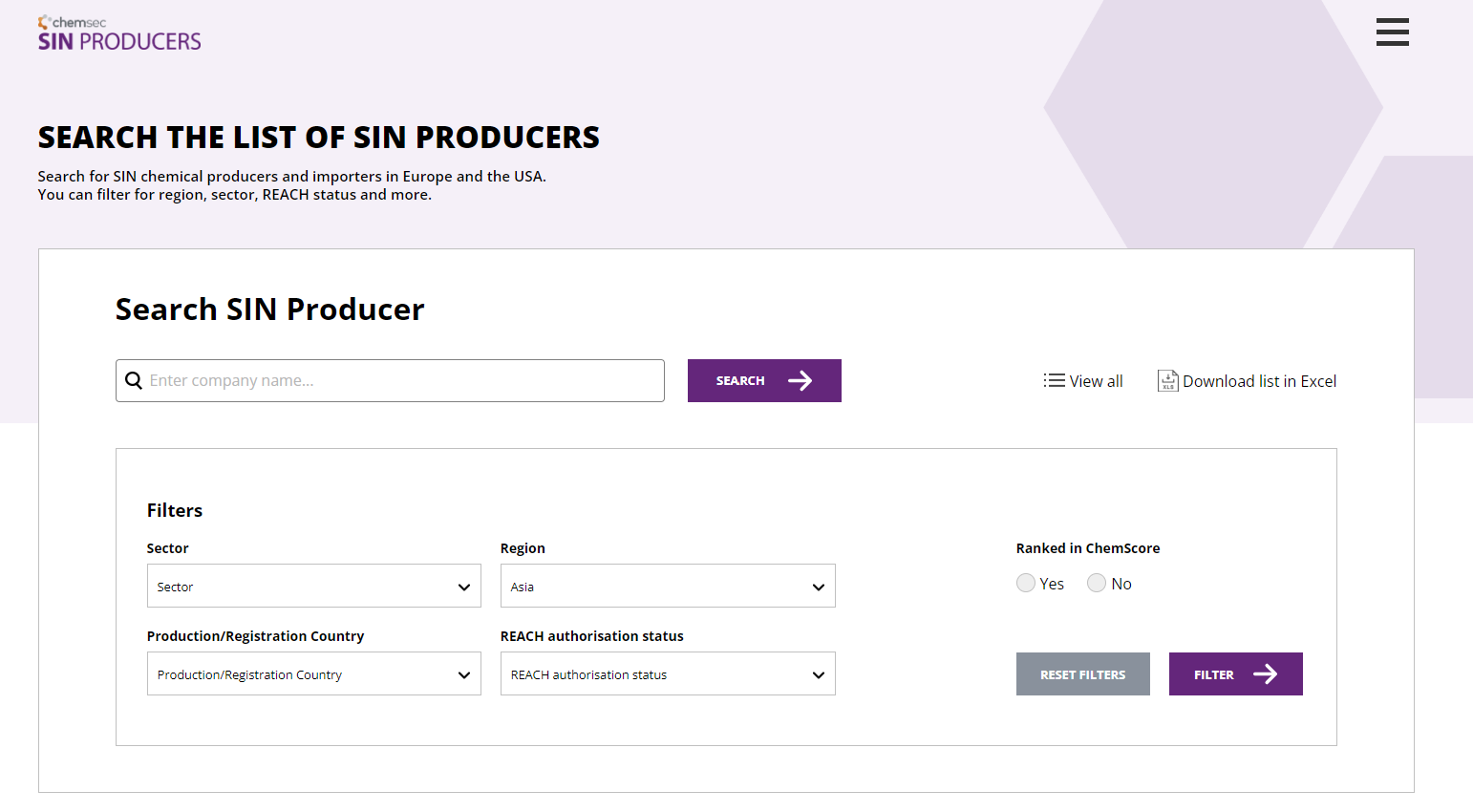
The SIN Producers tool identifies companies producing hazardous chemicals, helping finance professionals assess risks in their portfolios. The tool provides concise, structured information for making informed investment decisions, focusing on sustainability and regulatory compliance.
Just transition, environment and social considerations for the aviation fuel transition: An investor guide
This guide outlines environmental, social, and just transition considerations for investors in aviation’s fuel shift. It compares biofuels and e-fuels, highlights regulatory and biodiversity risks, and provides engagement questions to assess companies’ transition strategies, ensuring alignment with climate goals while safeguarding communities and long-term financial stability.

Opportunity Green
Opportunity Green (OG) is a UK-based charity founded in 2021 that harnesses legal, economic and policy expertise to drive climate justice. OG focuses on equity, justice and accountability across overlooked sectors—aviation, shipping, buildings, steel, agriculture—championing decarbonisation, legal innovation and coalition-building for a 1.5 °C-aligned future.
CEDIM Risk Explorer Germany
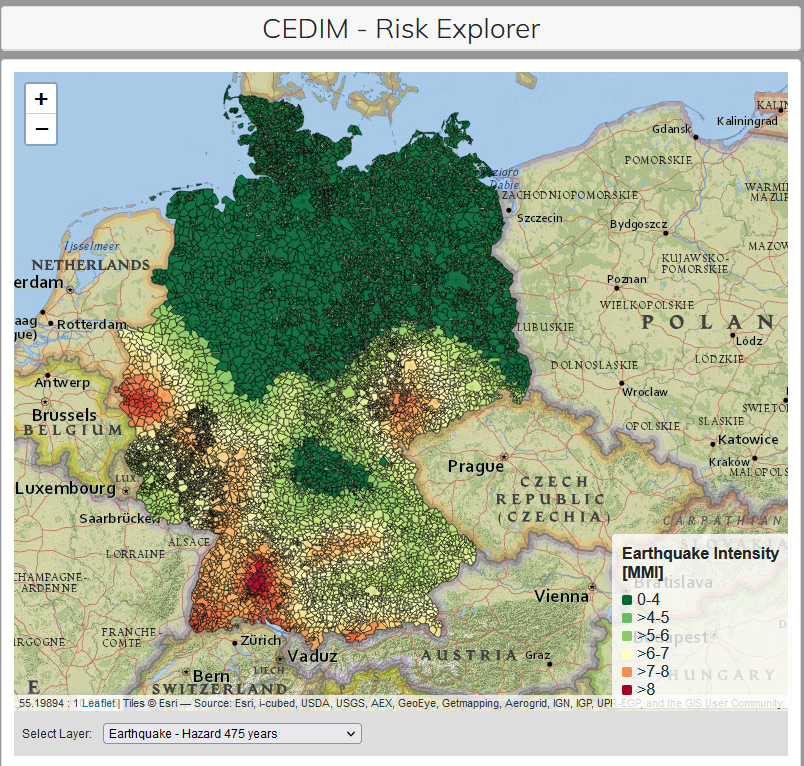
The CEDIM Risk Explorer Germany is a public, web‑based map viewer that enables interactive visualisation of hazard, vulnerability and risk across Germany—covering phenomena such as earthquakes, winter storms and (in Saxony) floods—for spatial risk assessment and expected monetary loss estimation.
GFZ Helmholtz Centre for Geosciences
GFZ Helmholtz Centre for Geosciences (GFZ) is Germany’s national Earth system research centre. It investigates solid‑Earth processes—including geology, geophysics, geodesy and geochemistry—and operates global observatories, satellite missions and analytical infrastructure. GFZ advances understanding of natural hazards, climate impact and resource management to support sustainable solutions.

Center for disaster management and risk reduction technology
Center for Disaster Management and Risk Reduction Technology (CEDIM) is an interdisciplinary research centre at Karlsruhe Institute of Technology, enhancing disaster resilience. Focusing on natural and human-made hazards—such as earthquakes, droughts, heatwaves and floods—it develops early warning systems, risk mapping and forensic disaster analysis. Ideal for innovators in disaster risk science.
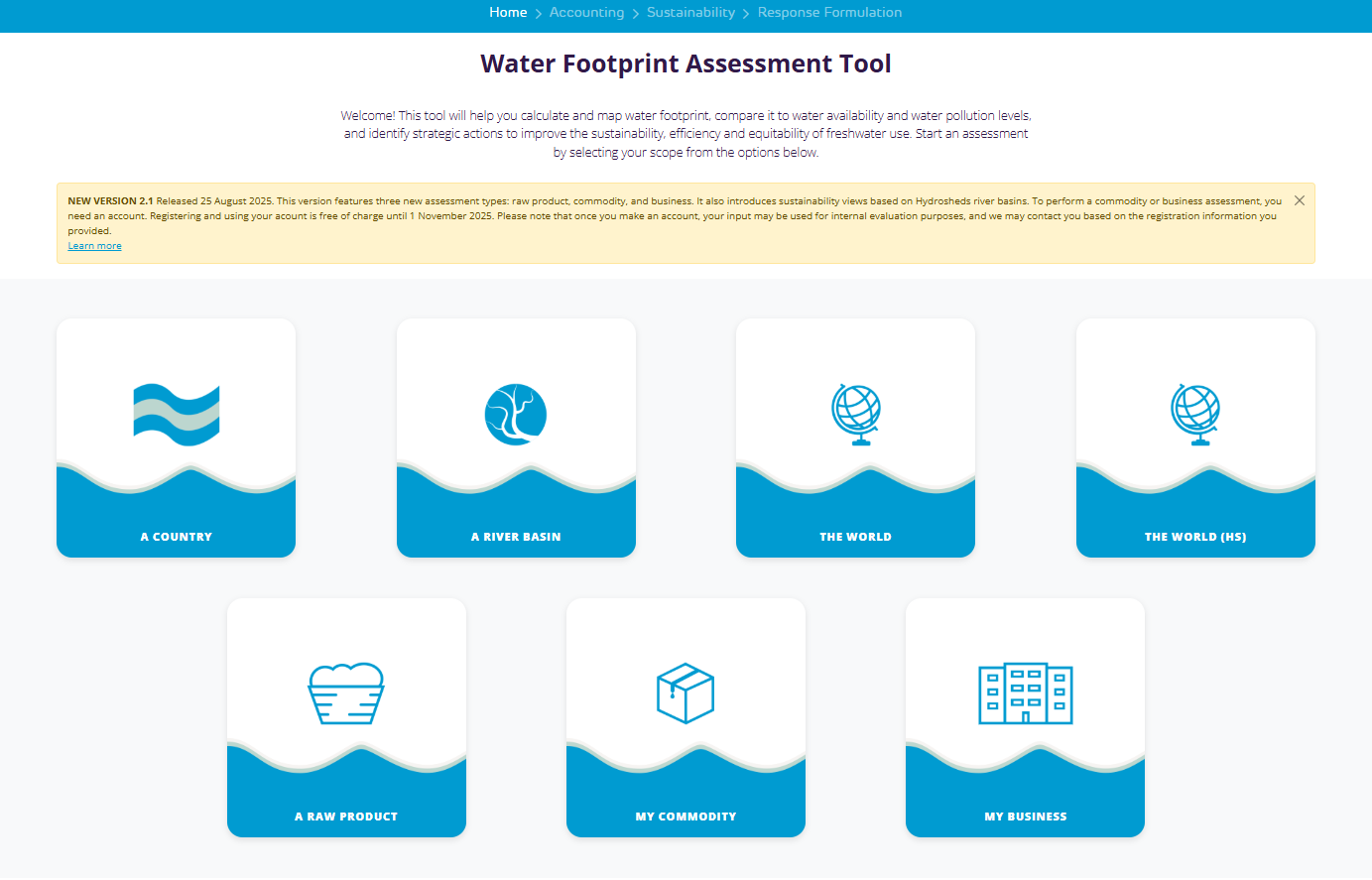
Water footprint assessment tool
The Water Footprint Assessment Tool is a free online application that enables businesses, governments, investors, NGOs and researchers to calculate and map green, blue and grey water footprints, assess sustainability, efficiency and equitable water use, and identify strategic actions to improve water management.
Water footprint implementation
Water Footprint Implementation supports companies and governments with water accounting, sustainability assessment and water-footprint compensation. A spin-off of Water Footprint Network research, it delivers actionable insights for ESG reporting, water stewardship, water-footprint benchmarking and tailored reduction strategies to enhance resilience, reduce risk and foster sustainable water management.
Water footprint network
Water Footprint Network is a non-profit, global collaboration platform advancing fair and smart freshwater use. It champions science-based water footprint assessment, offers open-access tools and data for businesses, governments and communities, and guides sustainable, equitable water governance to address water scarcity and pollution worldwide.
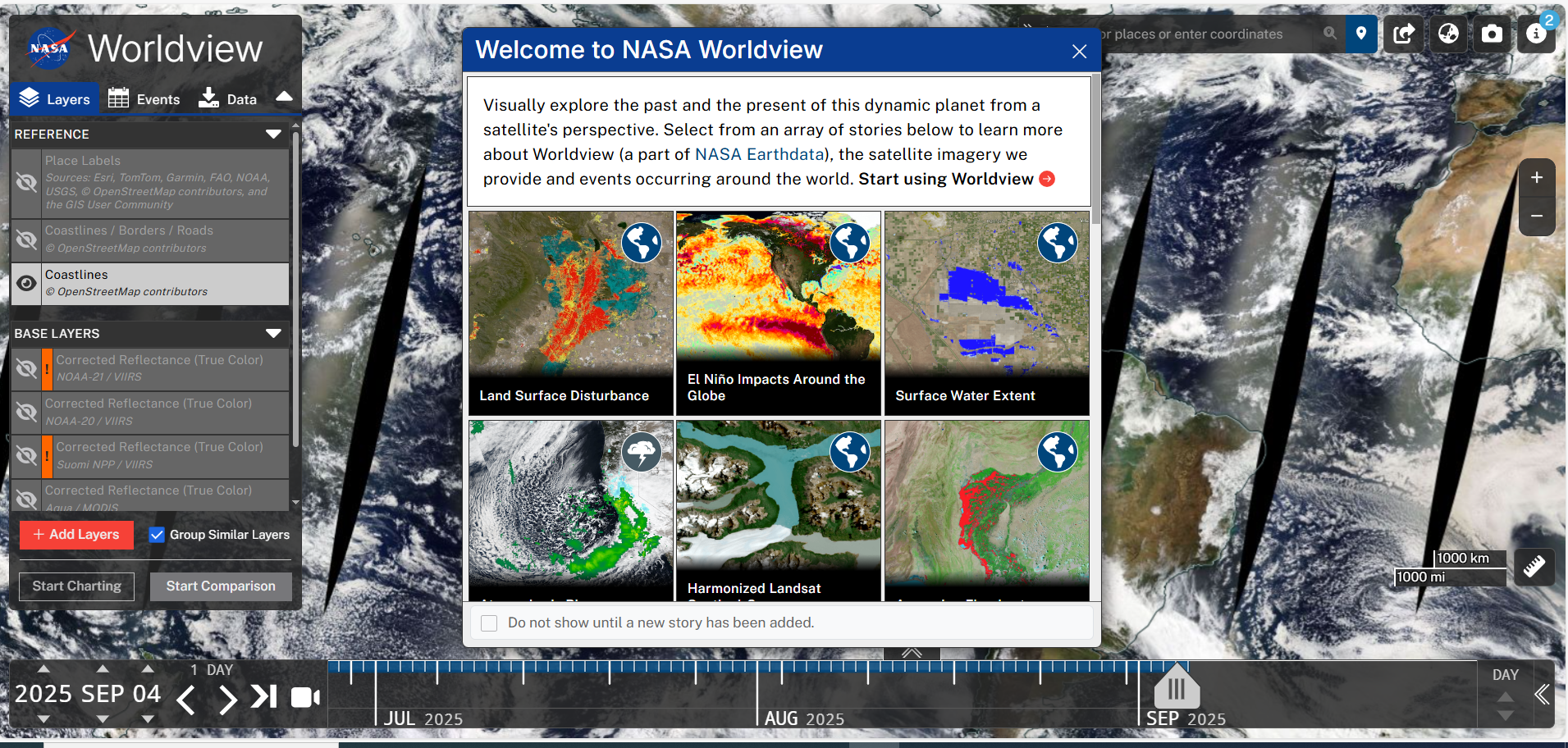
NASA world viewer
NASA’s Worldview is a web‑based visualisation tool offering interactive browsing, animation and download of over 1000 global satellite imagery layers, many available within three hours of observation. It supports time‑critical and historical analysis of natural hazards, climate phenomena and environmental change.

National Aeronautics and Space Administration (NASA)
National Aeronautics and Space Administration (NASA) drives space exploration, scientific discovery and aeronautics innovation. Its work spans human spaceflight, planetary missions, Earth and climate research, advanced space technology and satellite programmes. NASA shares open data, images and video to inform global science and deepen understanding of Earth and the universe.
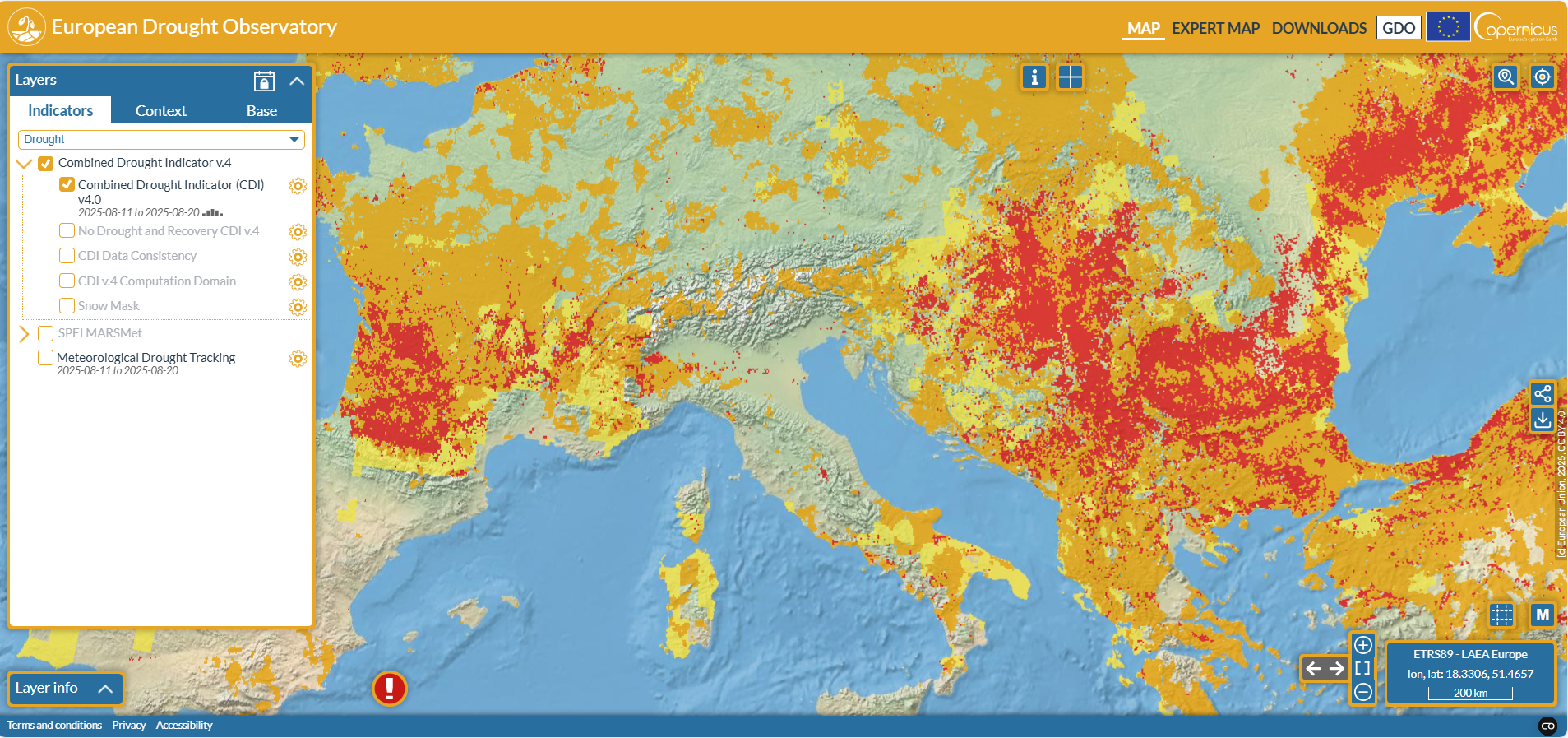
European drought observatory
Copernicus’ European Drought Observatory (EDO) mapviewer displays up‑to‑date drought indicators—such as soil moisture, low‑flow, precipitation and the Combined Drought Indicator—across Europe. Users can access, view and download data freely, though caution is advised interpreting some hydrological outputs east of Poland since mid‑May 2025.

Joint Research Centre
Joint Research Centre (JRC) is the European Commission’s science and knowledge service. It provides independent research and data to support EU policies on climate change, energy, health, food security, digital innovation and safety. JRC delivers scientific evidence to help policymakers address global challenges with reliable analysis and solutions.
Climate Policy Radar
Climate Policy Radar is a UK-based not-for-profit that builds open, AI-powered databases and research tools. It enables governments, researchers, civil society and investors to explore and analyse global climate laws, policies and UN submissions. Open data, transparency and data-driven climate finance insight support evidence-based decision-making.


