
Library | ESG issues
Environmental
The environmental pillar in ESG (environmental, social, and governance) assesses an organisation’s impact on the planet. It includes issues such as climate change, biodiversity, waste management and water management. Strong environmental practices help businesses reduce risks, comply with regulations, and drive long-term sustainability.
Refine
1899 results
REFINE
SHOW: 16


Restor
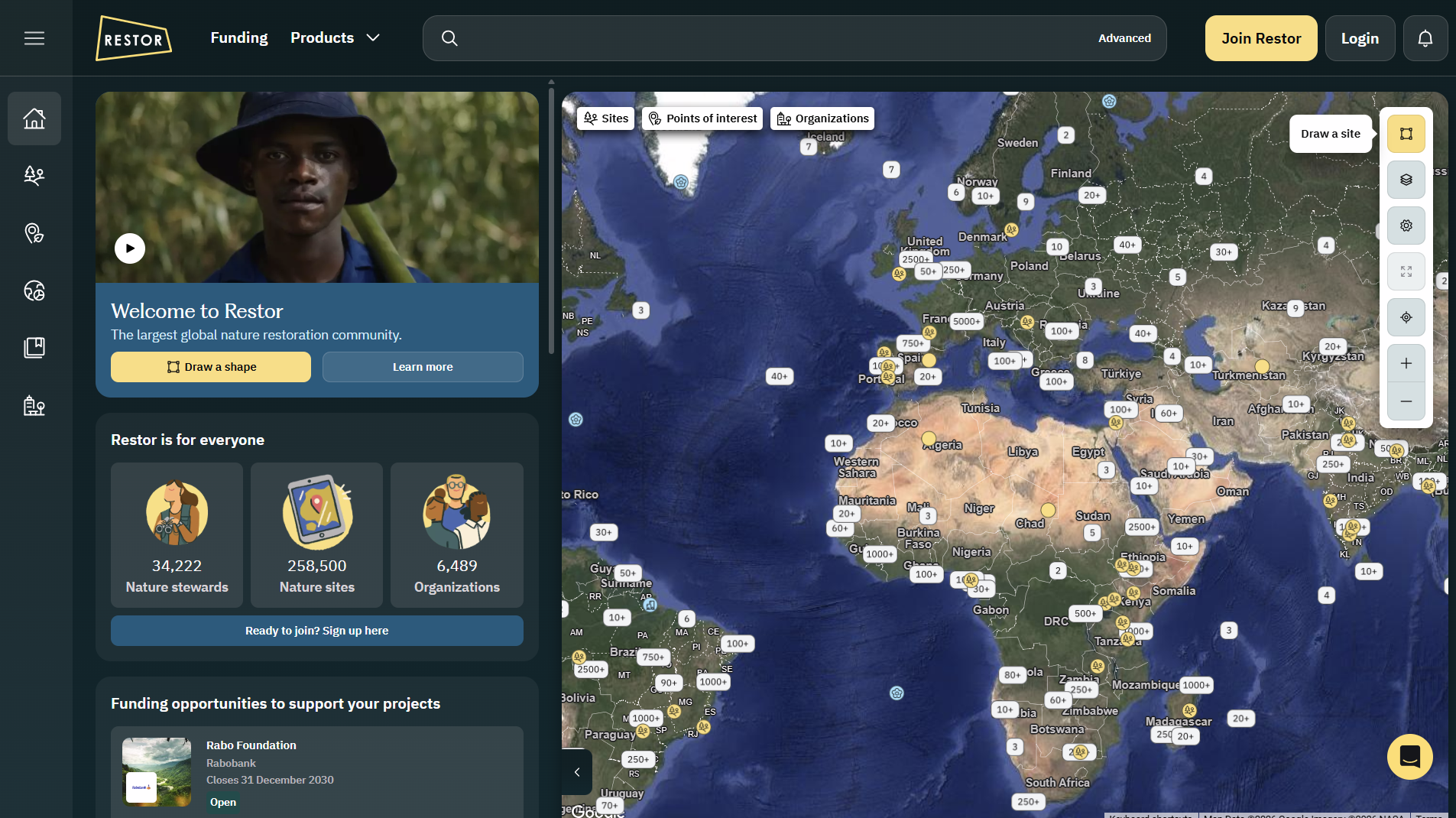
Restor.eco is an open-data geospatial platform that maps and analyses global nature restoration and biodiversity projects, offering environmental datasets, impact tracking, funding opportunities and reporting tools to support transparent ecosystem restoration and conservation efforts worldwide.
Sustainability Reporting Navigator
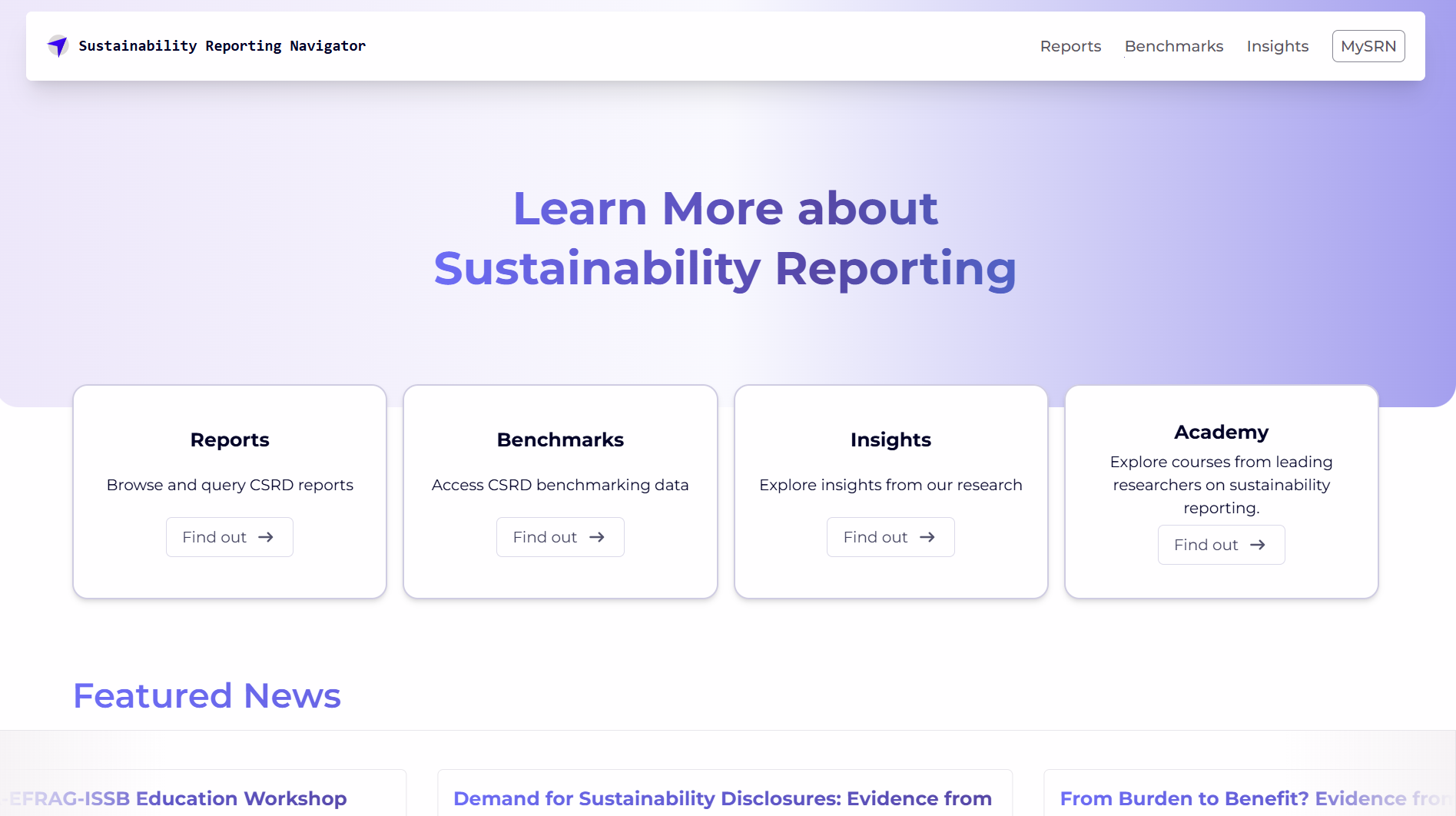
Sustainability Reporting Navigator (SRNAV) is an online database and benchmarking platform providing access to over 500 mandatory CSRD sustainability reports, interactive comparison tools and research insights to support systematic analysis of corporate sustainability disclosures. It includes a free benchmarking hub for reports and disclosure data under the EU CSRD regime. Accounting Research Centre (ARC) is a research centre operated within the EAA, created to develop and host research tools and databases such as SRNAV.
LobbyMap
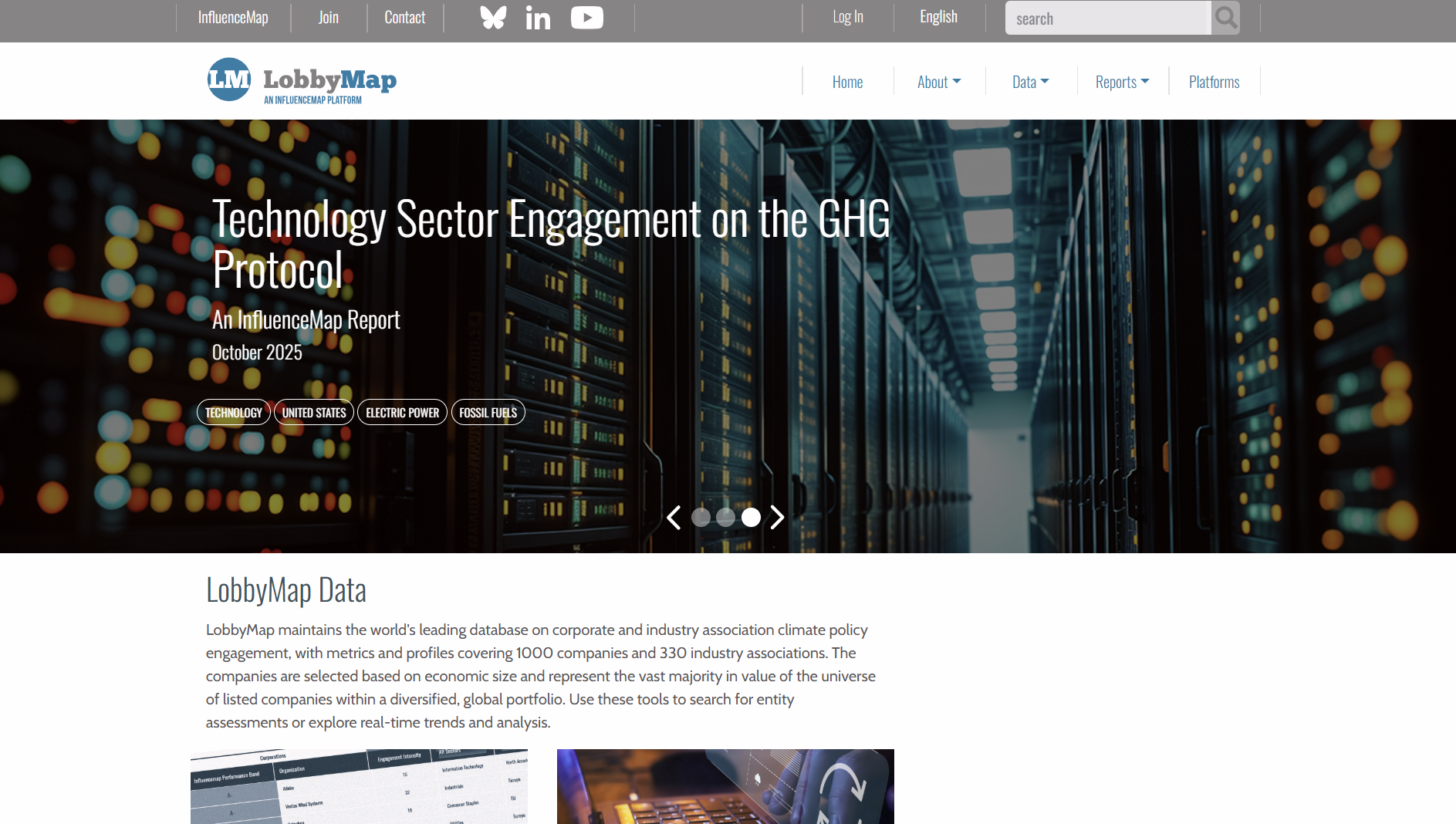
LobbyMap is an online database that analyses corporate and trade association lobbying on climate and energy policy. It compares stated public positions with lobbying activities to assess alignment, consistency, and potential risks for investors and financial decision-making.
IPE Green supply chain
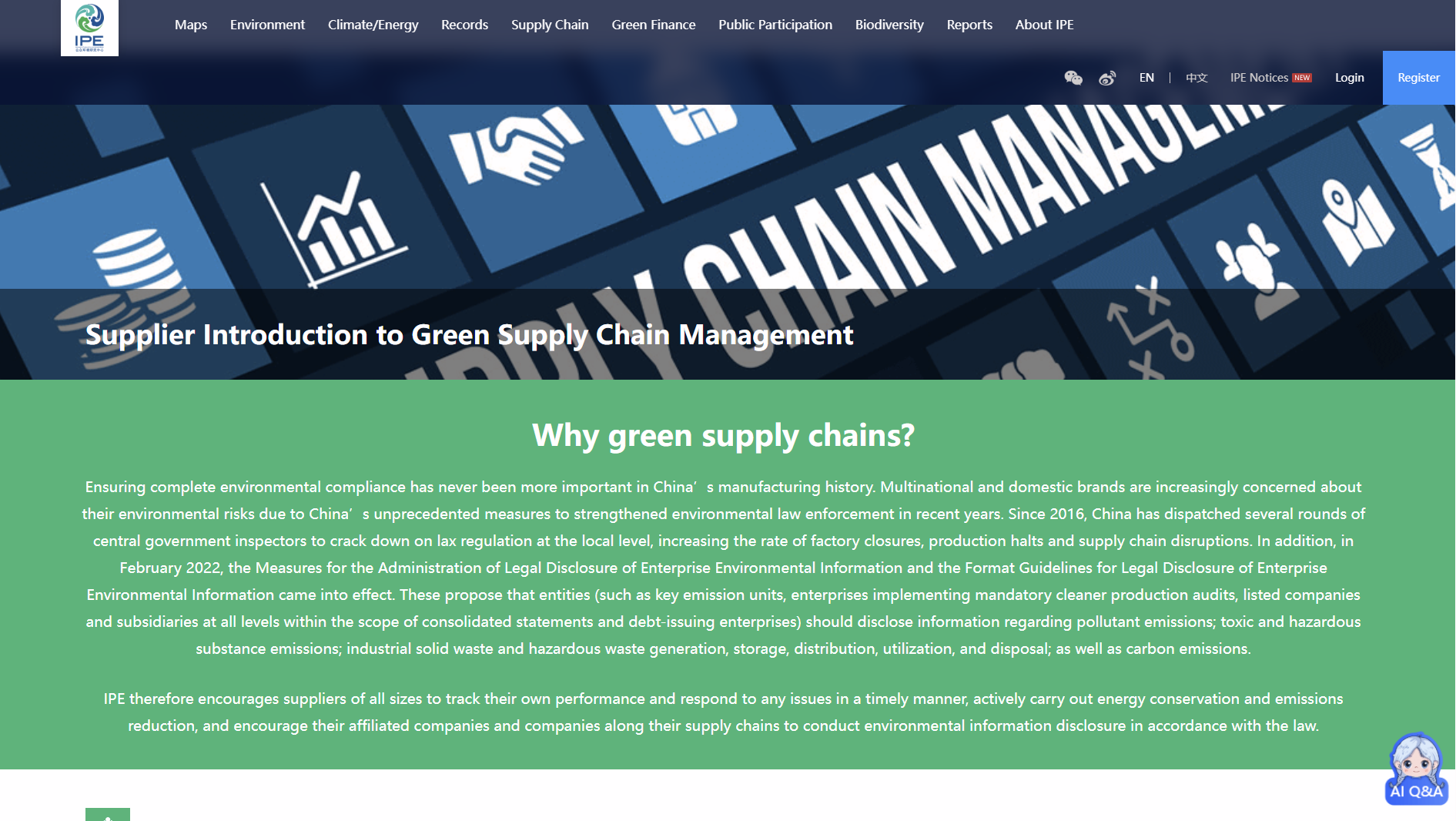
The Institute of Public & Environmental Affairs Green Supply Chain Supplier Database tracks environmental compliance of Chinese suppliers. It consolidates government violation records and corporate disclosures to support supply chain due diligence, risk screening, and ESG assessment by investors and companies.

Crowther Lab
Crowther Lab is a global ecology research group advancing understanding of climate, biodiversity and ecosystem restoration.Based at ETH Zurich, it produces high-impact scientific research, datasets and policy-relevant insights on forests, soils and nature-based solutions, supporting evidence-led environmental decision-making worldwide through collaboration with academic, public and international partners, globally recognised.

Restor
Restor is an open-access digital platform supporting ecosystem restoration and biodiversity monitoring worldwide. It integrates spatial data, science-based tools, and community networks to track restoration progress, assess ecological impact, and inform decision-making for practitioners, researchers, investors, and policymakers involved in nature and biodiversity outcomes across terrestrial and marine landscapes globally.

Climate arc
Climate Arc is a non-profit organisation focused on accelerating capital flows to climate solutions. It develops data tools, research, and insights to assess transition performance across companies, sectors, and markets. Climate Arc supports investors, policymakers, and practitioners seeking credible, decision-useful climate intelligence, with a global perspective and independent analytical approach.

Institute of Public & Environmental Affairs (IPE)
Institute of Public & Environmental Affairs is a China-based environmental non-governmental organisation promoting pollution transparency and corporate accountability. It operates public databases on air, water and supply chain compliance, supporting ESG research, responsible investment, environmental risk analysis, and sustainability decision-making in China.
Climate transition and global financial stability
This literature review assesses evidence on how delayed, failed or uneven climate transitions affect UK and global financial stability. It finds intensifying physical and transition risks, potential mispricing and spillovers, and significant uncertainty, highlighting EMDE transitions as central to managing systemic financial risk.
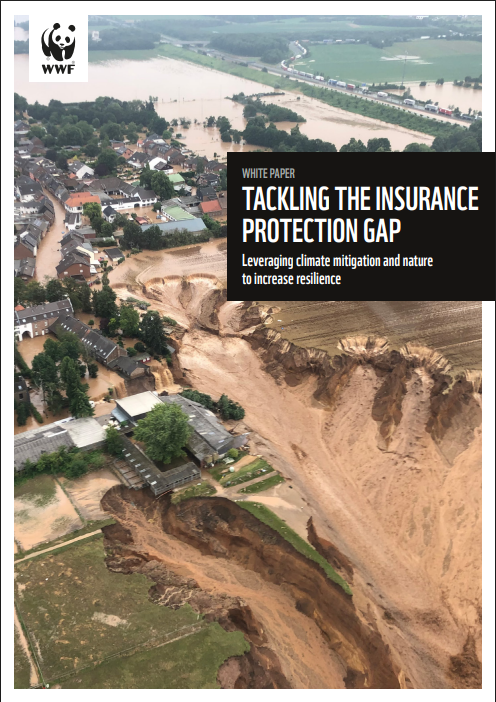
Tackling the insurance protection gap: Leveraging climate mitigation and nature to increase resilience
This white paper analyses how climate change and nature loss are widening insurance protection gaps in advanced economies. It outlines impacts on affordability and coverage, and recommends combining climate mitigation, nature-based solutions, and regulatory reforms to strengthen resilience and maintain insurability.
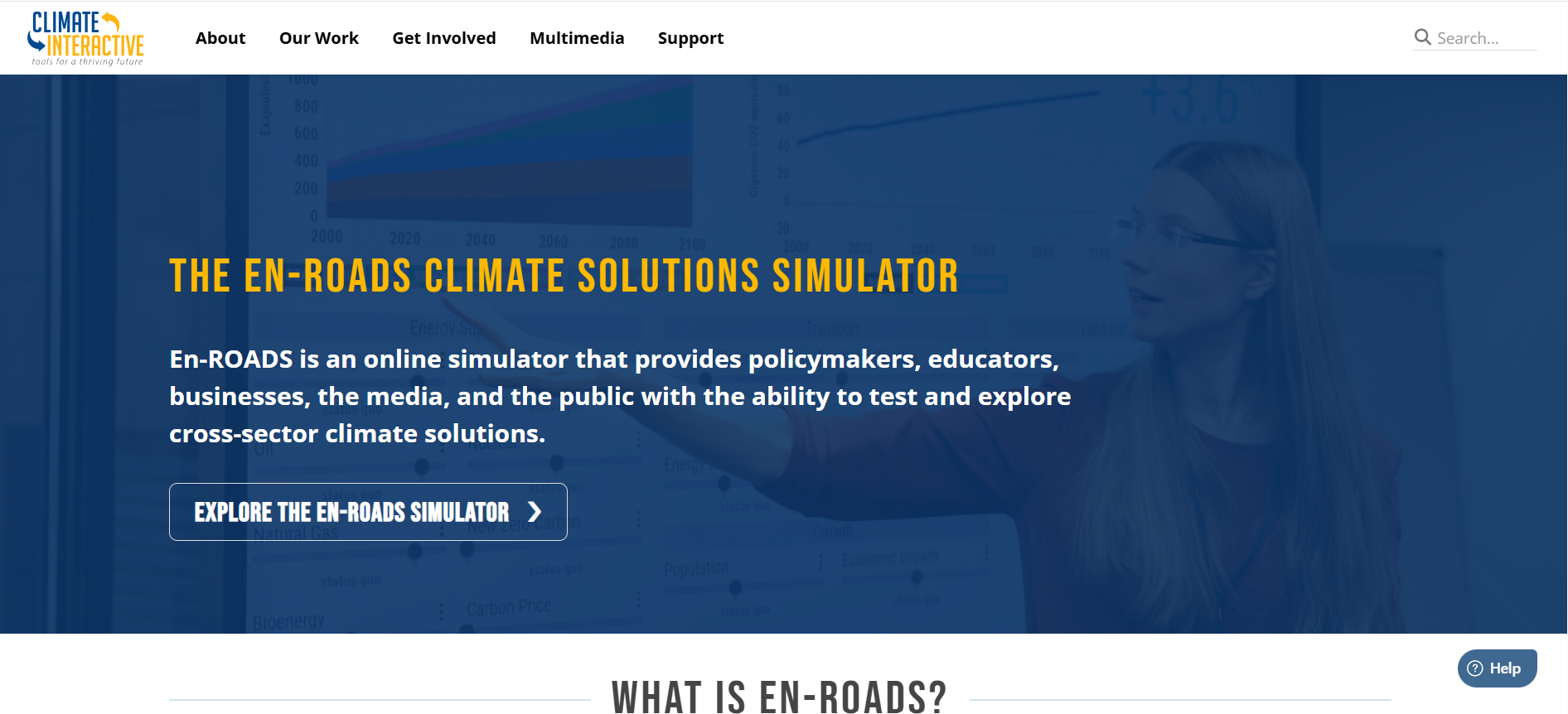
En-ROADS Climate Solutions Simulator
En-ROADS is an interactive global climate and energy policy simulation tool developed by Climate Interactive. It enables users to test policy scenarios and assess impacts on emissions, energy systems and temperature pathways to 2100, supporting climate risk analysis, strategy development and decision-making.
Adaptation and resilience impact measurement toolkit : A practical framework for financial institutions
Provides a practical framework for financial institutions to measure climate adaptation and resilience impacts. It sets principles, indicators and decision pathways across banks, insurers, DFIs and asset managers, linking outputs, outcomes and impacts to capital allocation, risk management, compliance and reporting.
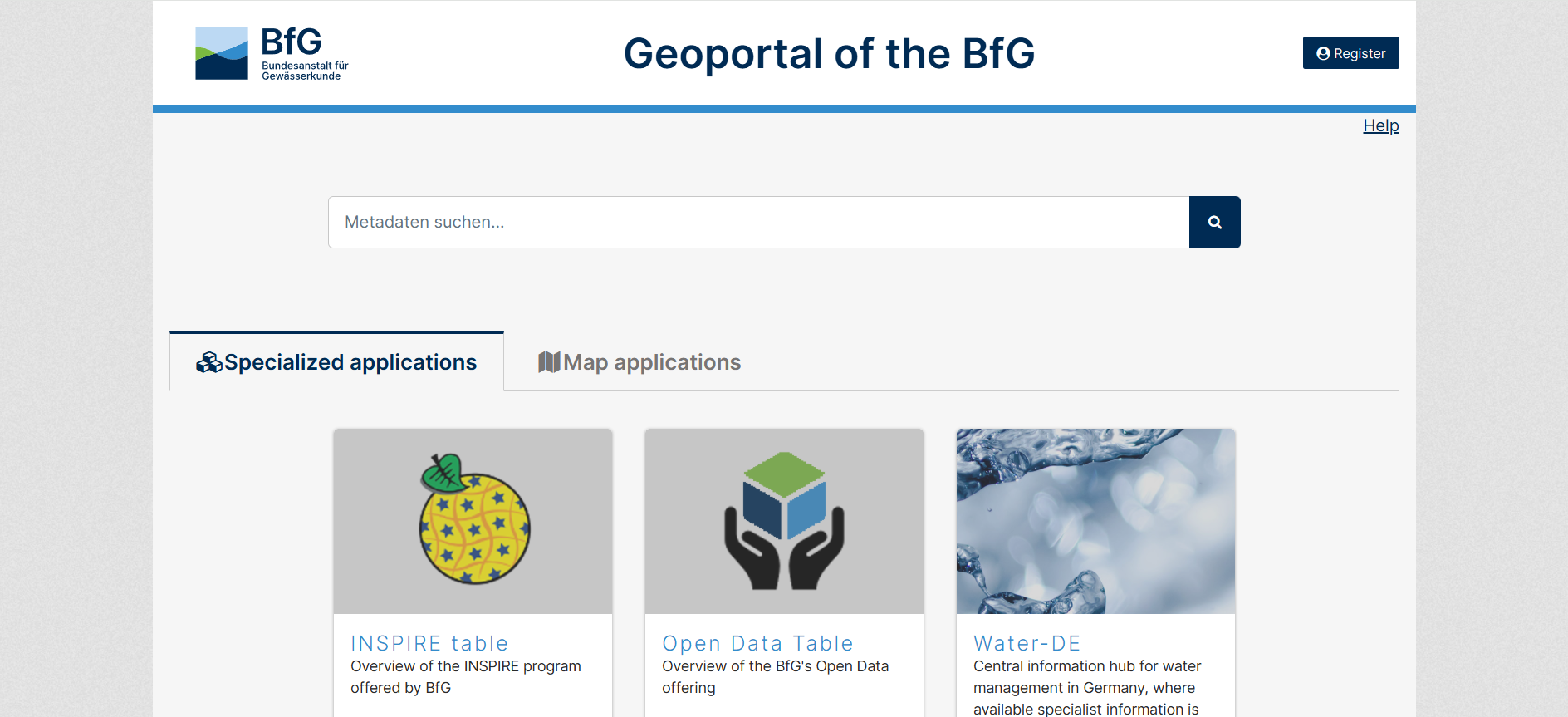
Geoportal of the BfG
The GGInA Geoportal is an online geospatial database operated by Federal Institute of Hydrology. It provides access to hydrological, waterway, and environmental spatial data for Germany, supporting analysis, research, and evidence-based decision-making through interactive maps and metadata services.
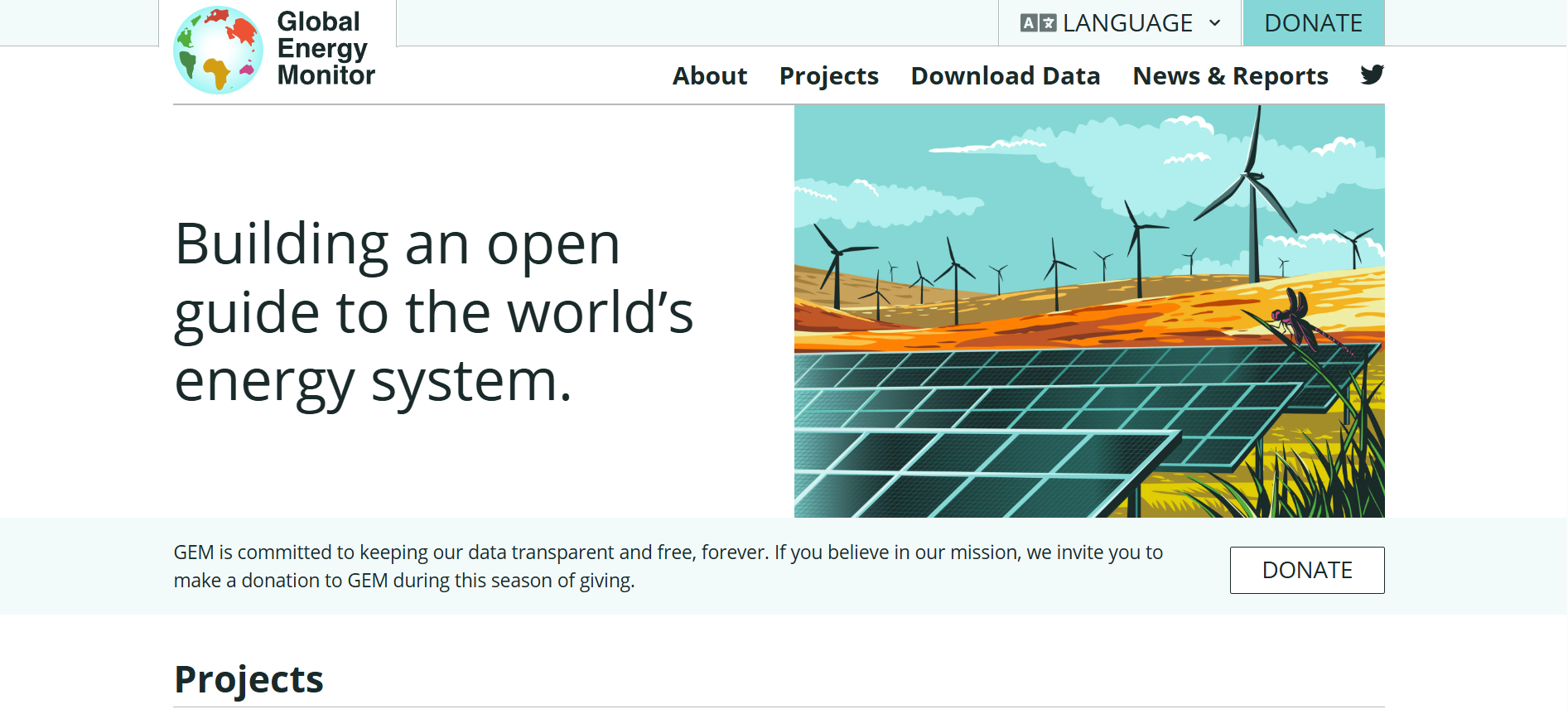
Global Energy Monitor
Global Energy Monitor is an open-access research database that compiles and analyses global energy infrastructure data, including fossil fuel and renewable projects, via interactive tools, maps and downloadable datasets to support informed analysis of energy trends and ownership structures.
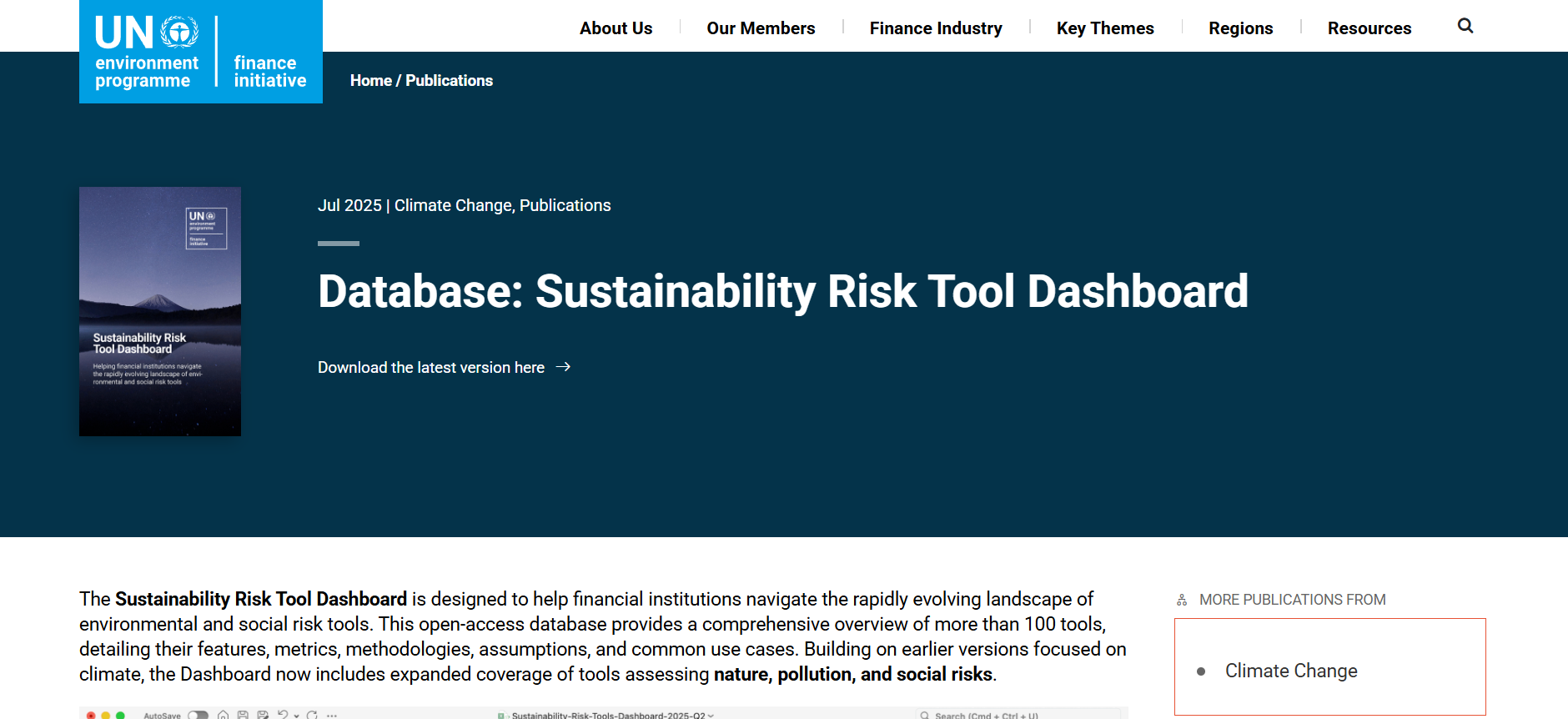
UNEP FI Sustainability Risk Tool Dashboard
The Sustainability Risk Tool Dashboard is an open-access database for financial institutions with an overview of 100+ environmental and social risk assessment tools, detailing features, metrics, methodologies, assumptions and common use cases to support sustainability risk analysis and comparison.
Swiss Data Cube
The Swiss Data Cube is a national platform providing consistent, long-term Earth observation data for Switzerland. It supports environmental monitoring, trend analysis, and evidence-based decision-making relevant to climate, land use, and natural resource management.


