
Library | ESG issues
Environmental
The environmental pillar in ESG (environmental, social, and governance) assesses an organisation’s impact on the planet. It includes issues such as climate change, biodiversity, waste management and water management. Strong environmental practices help businesses reduce risks, comply with regulations, and drive long-term sustainability.
Refine
1909 results
REFINE
SHOW: 16


Initiative for Responsible Mining Assurance (IRMA)
Initiative for Responsible Mining Assurance (IRMA) sets global standards for responsible mining practices through independent third-party assessments. IRMA's mission is to protect communities and the environment by ensuring transparency, accountability, and ethical practices in the mining sector. The organisation's Standard for Responsible Mining covers diverse issues, from worker rights to environmental protection.

Climate and Clean Air Coalition (CCAC)
Climate and Clean Air Coalition (CCAC) is a global partnership working to reduce short-lived climate pollutants like methane, black carbon, and HFCs. By focusing on key sectors, CCAC promotes strategies that simultaneously improve air quality and combat climate change. Explore their initiatives to support sustainable development and climate resilience.

The conflict minerals handbook: Your guide to compliance
This report outlines best practices for complying with conflict minerals regulations. It covers the definition of conflict minerals, due diligence processes, and the broader impact of responsible sourcing. Key guidelines include using the OECD Due Diligence framework and tools like the Conflict Minerals Reporting Template (CMRT) for supply chain transparency.

Material insights
Material Insights is a tool to help companies and stakeholders manage environmental, social, and governance (ESG) risks in mineral supply chains. It provides data-driven insights on specific minerals, supporting responsible sourcing and sustainability efforts in the raw materials sector.
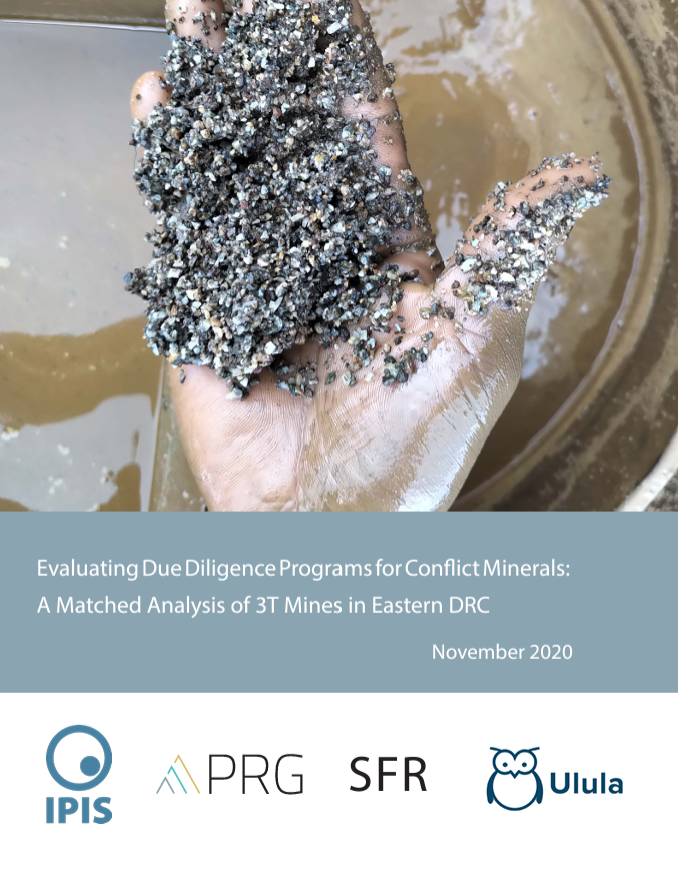
Evaluating due diligence programs for conflict minerals: A matched analysis of 3T mines in eastern DRC
This report evaluates the impact of due diligence programs (DDP) on 3T mines (tin, tantalum, and tungsten) in Eastern DRC. It finds reductions in interference by armed forces, increased state presence, but no significant changes in child labour rates. Economic improvements are noted, but DDP does not eliminate all mining-related harms.

Project on Resources and Governance (PRG)
Project on Resources and Governance (PRG) focuses on improving natural resource governance to benefit local communities in resource-rich countries. Through research and partnerships with governments, organisations, and institutions, PRG aims to create evidence-based solutions that enhance resource management, reduce conflicts, and promote sustainable development.

Practical guide to minerals due diligence implementation
This guide provides practical steps for companies to implement due diligence in their mineral supply chains, aligning with OECD, SEC, and EU regulations. It focuses on establishing strong management systems, identifying and mitigating supply chain risks, and ensuring compliance with responsible sourcing standards to prevent human rights abuses and support ethical mineral sourcing practices.

International Peace Information Service (IPIS)
IPIS Research (International Peace Information Service) is an independent research institute focusing on conflict mapping, natural resources, and business and human rights in sub-Saharan Africa. Through in-depth analysis and field research, IPIS provides valuable insights for policymakers, NGOs, and businesses seeking to understand complex issues in these regions.

Responsible Minerals Initiative (RMI)
Responsible Minerals Initiative (RMI) helps companies ensure responsible mineral sourcing from conflict-affected regions. RMI provides tools, standards, and guidance for supply chain transparency, risk management, and ethical sourcing practices.

Alignment assessment of industry programmes with the OECD Minerals Guidance
The report evaluates the extent to which five industry programmes align with the OECD Due Diligence Guidance for responsible mineral sourcing. It highlights gaps and improvements in standards and implementation, focusing on due diligence, risk assessment, and audit practices across mineral supply chains.

An introduction to key ecological concepts, financial opportunities, and risks underpinning aspirations for nature positive
The report introduces key ecological concepts critical to achieving a nature-positive future. It outlines the financial opportunities and risks involved, emphasising the need for collaboration between ecologists and business professionals to effectively implement nature-positive strategies. The report also highlights the challenges and complexities in aligning ecological goals with financial instruments.
Global Biodiversity Score (GBS)
The Global Biodiversity Score (GBS) is a tool developed by CDC Biodiversité that helps businesses and financial institutions measure their impact on biodiversity. It provides a quantitative assessment, enabling users to integrate biodiversity considerations into decision-making and align with sustainability goals.

CDC Biodiversité
CDC Biodiversité is a French organisation focused on biodiversity conservation and sustainable development. It works on integrating biodiversity into economic activities, offering innovative solutions for businesses and policymakers. CDC Biodiversité promotes sustainable finance, environmental impact assessments, and nature-based solutions to address global biodiversity challenges.
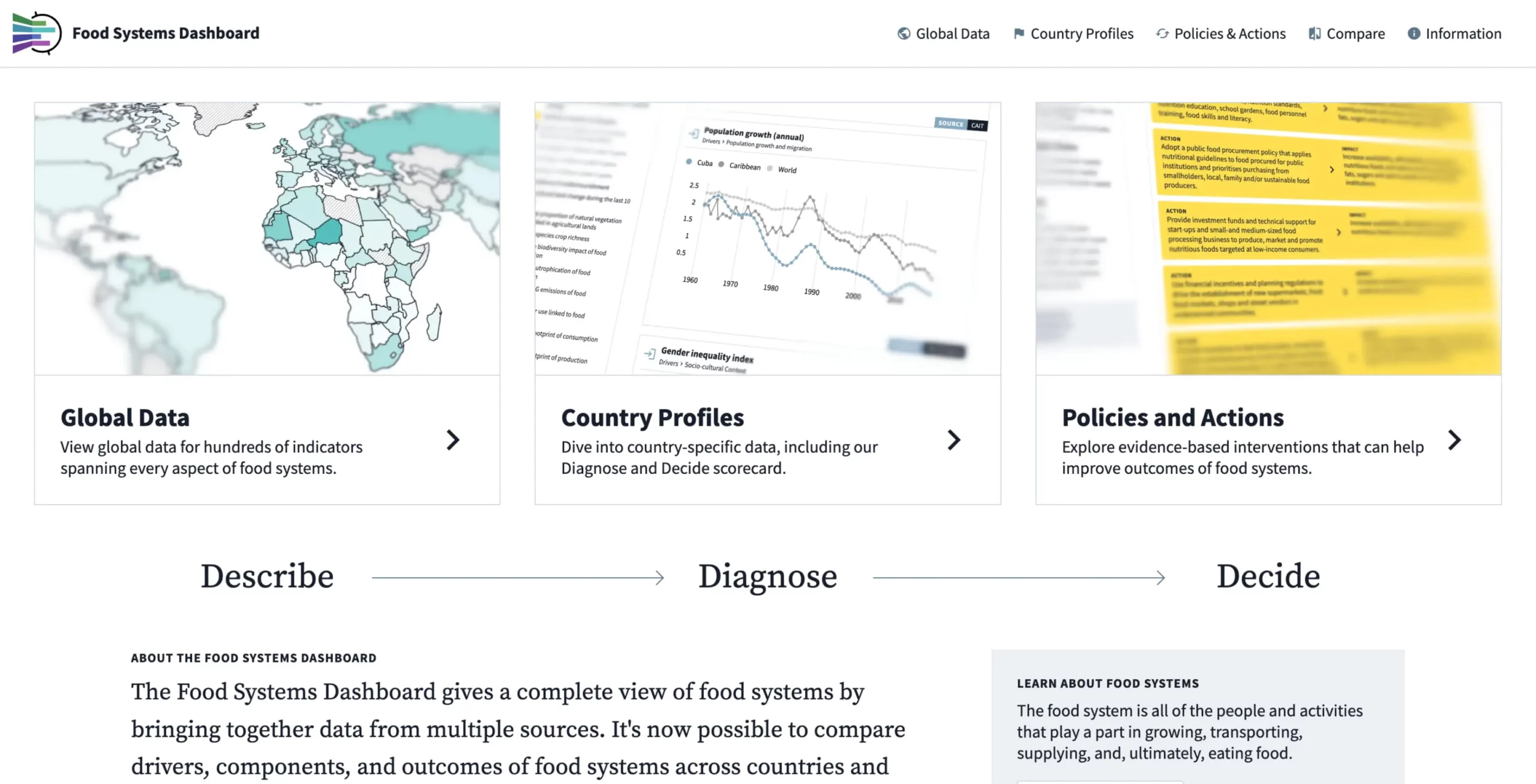
Food Systems Dashboard
The Food Systems Dashboard is a comprehensive tool providing insights into global food systems. It offers data on food production, consumption, and nutrition, enabling users to analyse and compare food systems across countries. This tool supports informed decision-making for improving food security and sustainability.

Global Alliance for Improved Nutrition (GAIN)
Global Alliance for Improved Nutrition (GAIN) is an international organisation focused on tackling malnutrition and improving nutrition worldwide. GAIN works with partners to create sustainable, scalable solutions, improving access to nutritious food. Their initiatives target vulnerable populations, aiming to enhance health and well-being through better nutrition.
3 degrees more: The impending hot season and how nature can help us prevent it
This three-part journal explores the severe impacts of a 3°C temperature rise on climate, biodiversity, agriculture, human survival, and the economy, emphasising the need for urgent climate action and nature-based solutions.


