
Library | ESG issues
Environmental
The environmental pillar in ESG (environmental, social, and governance) assesses an organisation’s impact on the planet. It includes issues such as climate change, biodiversity, waste management and water management. Strong environmental practices help businesses reduce risks, comply with regulations, and drive long-term sustainability.
Refine
1909 results
REFINE
SHOW: 16


Drivers of change: Meeting the energy and data demands of AI adoption in Australia and New Zealand
The report explores the energy challenges posed by AI adoption, highlighting concerns among IT managers about increased energy consumption and uncertainty regarding its impact on sustainability. The research underscores the need for enhanced energy efficiency and green energy solutions to meet ESG goals without hindering AI deployment.

How the oil industry has sustained market dominance through policy influence
The report details how the oil and gas industry has systematically opposed renewable energy and electric vehicles through a long-standing narrative playbook. This opposition has hindered the global energy transition, contributing significantly to continued high emissions and delaying critical climate action.

Storylines: A science-based method for assessing and measuring future physical climate-related financial risk
The report presents a method called "storylines" for assessing future physical climate-related financial risks. It emphasises plausibility over probability, allowing for a more comprehensive understanding of uncertainties and risks in financial disclosures, particularly in the context of extreme climate events. This approach enhances risk assessment by integrating climate science with traditional financial analysis frameworks.

Climate Action Tracker
The Climate Action Tracker tool evaluates and tracks government climate actions against the Paris Agreement targets, providing insights into policy effectiveness. It offers finance professionals data-driven analysis to assess climate risks and opportunities, supporting informed investment decisions aligned with global sustainability goals.
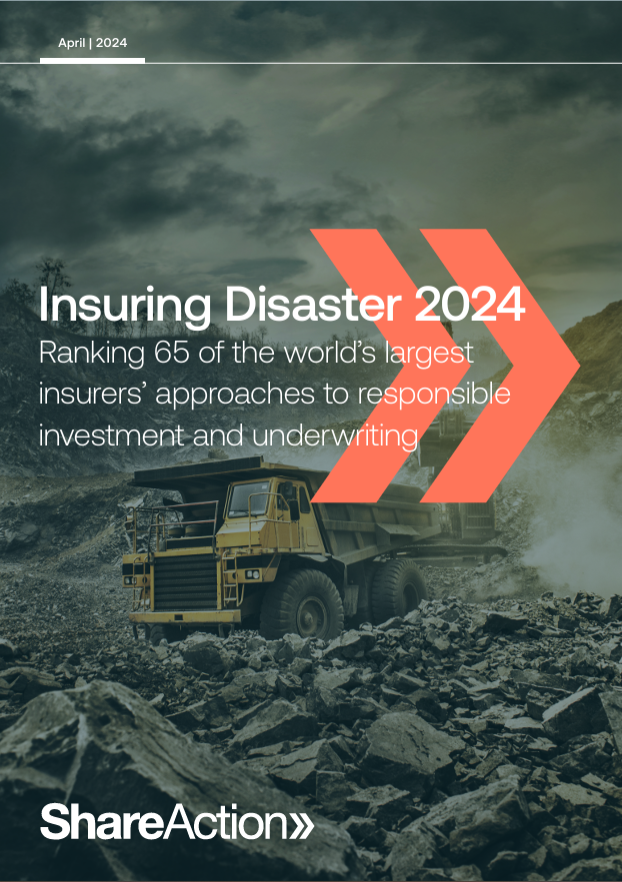
ShareAction's insuring disaster benchmark series
The "Insuring Disaster" series by ShareAction evaluates the responsible investment and underwriting practices of the world's largest insurers, focusing on their approaches to critical environmental and social issues. This benchmark series highlights the industry's impact on climate, biodiversity, and human rights, offering actionable recommendations for improvement.
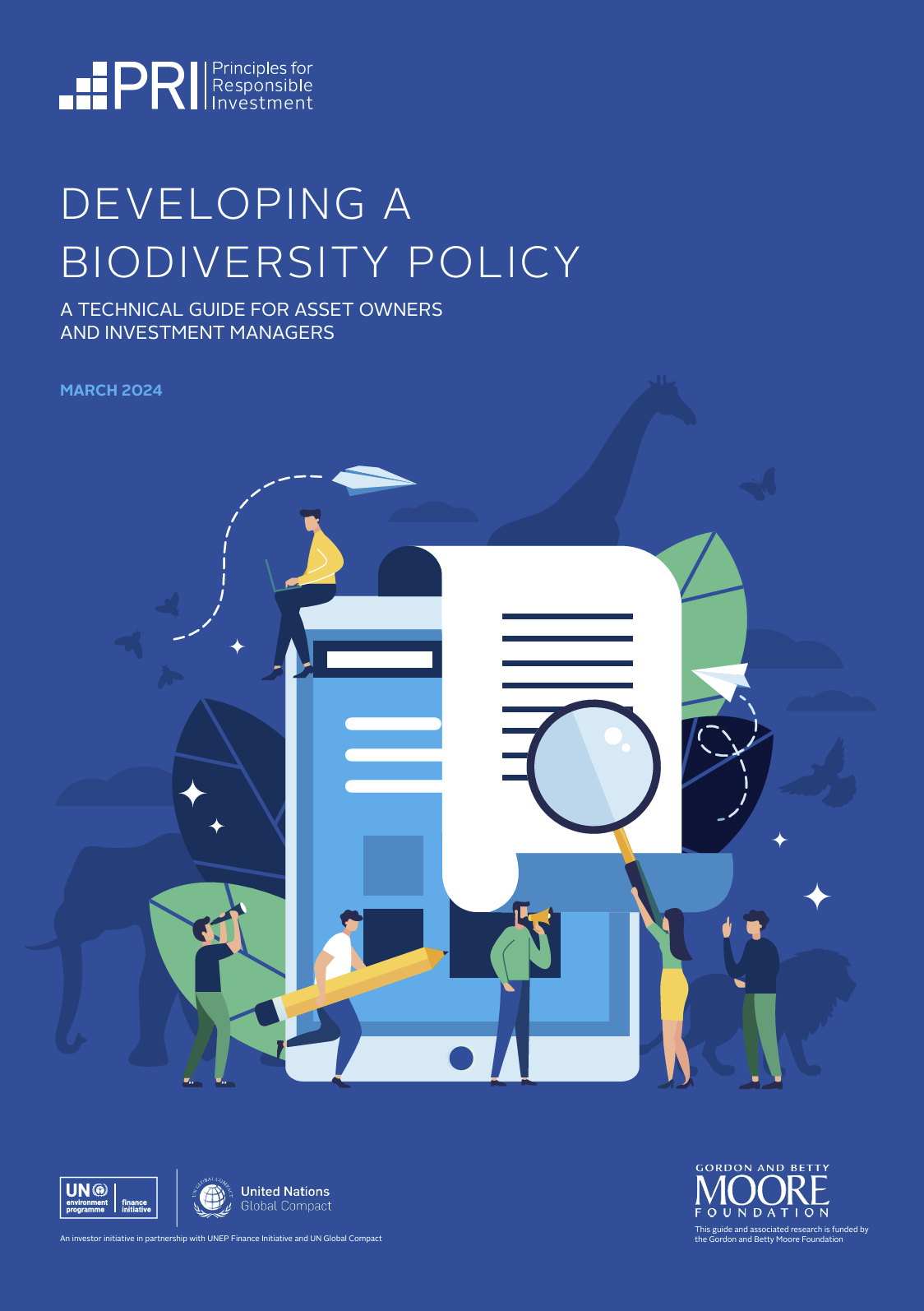
Developing a biodiversity policy: A technical guide for asset owners and investment managers
This guide provides asset owners and investment managers with a structured approach to developing a biodiversity policy. It outlines the importance of addressing biodiversity loss, offers a five-step process for integrating biodiversity considerations into investment practices, and details key components of a comprehensive biodiversity policy, including governance, target setting, and risk management.

Beyond an age of waste: Turning rubbish into a resource
The report highlights the urgent need to rethink waste as a resource. It emphasises the significance of reducing waste generation, improving waste management practices, and transitioning towards a circular economy to mitigate the environmental impacts of waste. The report presents scenarios for future waste management and advocates for global action to prevent a worsening waste crisis.

Natural Capital Protocol
The Natural Capital Protocol provides a step-by-step guide for businesses to measure, value, and integrate natural capital into their operations. Divided into 9 stages, this comprehensive guide offers a practical approach to assess material risks and opportunities, communicate with stakeholders, and make informed decisions towards sustainable business practices.

Regenerative development and design
The report explores the necessity and principles of regenerative development, aiming to create thriving living systems that evolve toward greater health and vitality. It emphasises aligning human actions with natural systems, integrating ancient wisdom with modern science, and fostering holistic, co-creative partnerships between people and the planet for sustainable and thriving futures.

Charting a greener course: The role of Sustainable Aviation Fuels in the net-zero transition
This report examines the potential of sustainable aviation fuels (SAFs) in reducing the environmental impact of aviation. It highlights various types of SAFs, their scalability, and the critical role of investors in supporting high-integrity fuels to achieve net-zero emissions in the aviation sector.

Sustainable aviation fuel policy in the UK
The UK Government has finalised its sustainable aviation fuels (SAF) mandate, requiring jet fuel suppliers to blend SAF into conventional fuel. Despite existing funds, further financial support is needed. The policy landscape is expected to evolve, particularly with the upcoming General Election. The mandate aims to align aviation with climate targets.

Sustainable aviation fuel policy in the United States
The policy summary discusses the US sustainable aviation fuel (SAF) policy, highlighting the favourable regulatory landscape, the Biden administration's support through tax credits and subsidies, and the SAF Grand Challenge. It also covers the different acts, state-level initiatives, and various financial mechanisms to bolster SAF production and adoption, comparing it with EU and UK policies.

Sustainable aviation fuel policy in the European Union (EU)
The EU is developing a policy framework for sustainable aviation fuels (SAFs) to achieve net zero aviation. The ReFuelEU Aviation Initiative mandates SAF blending, with targets rising to 70% by 2050. Supporting measures include the Net Zero Industry Act and the EU Emissions Trading Scheme. Significant investment is required for this transition.

Asia in focus: ESG investing and the business and human rights agenda
The report examines the state of ESG investment in Asia, highlighting the challenges and opportunities faced by investors, regulators, and companies. It explores the rise of ESG funds, active ownership, sustainable bonds, and the evolving regulatory landscape.
Qualitative assessment of complex and interacting climate risks
This report highlights the limitations of solely relying on quantitative climate risk assessments and emphasises the importance of qualitative methods. It discusses complex interactions between hazards, vulnerabilities, and exposures across built, social, natural, and economic domains, advocating for systems thinking and intersectional approaches to better capture and mitigate climate risks.

Lifetime emissions from aircraft under a net-zero carbon budget
The report evaluates the aviation sector's ability to meet net-zero CO2 emissions by 2050. It projects that current fleet emissions will exhaust half the sector's carbon budget by 2032, necessitating zero-emission aircraft by the mid-2030s to achieve climate goals.


