
Library | ESG issues
Governance
The governance pillar in ESG (environmental, social, and governance) refers to the systems, policies, and practices that ensure an organisation is managed responsibly and ethically. It includes issues such as board structure, reporting & disclosures, shareholders & voting, and risk management. Strong governance reduces risks, enhances trust, and supports long-term business sustainability.
Refine
2256 results
REFINE
SHOW: 16


AASB S2: Climate-related disclosures
AASB S2 establishes mandatory climate-related financial disclosure requirements for Australian entities, aligned with IFRS S2. It requires reporting on governance, strategy, risk management, and metrics and targets, including greenhouse gas emissions, where climate risks and opportunities may affect cash flows, access to finance, or cost of capital.
AASB S1: General requirements for disclosure of sustainability-related financial information
AASB S1 is a voluntary Australian standard setting general requirements for sustainability-related financial disclosures. It outlines objectives, materiality, governance, strategy, risk management, and metrics to inform users about risks and opportunities affecting cash flows, access to finance, and cost of capital.
Mobilising investment for climate adaptation
This report assesses Australia’s escalating climate risks and argues for scaling adaptation investment. It recommends improved valuation methods, a nationally coordinated adaptation investment framework, and diversified public-private financing mechanisms to reduce long-term economic damage and enhance resilience.
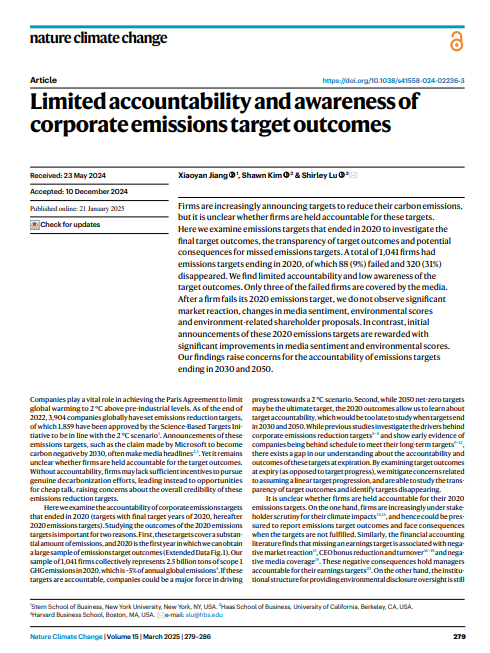
Limited accountability and awareness of corporate emissions target outcomes
The study analyses 1,041 corporate emissions targets ending in 2020, finding limited accountability. Thirty-one per cent of targets disappeared and 9% failed, with minimal disclosure, media attention or market penalties. By contrast, target announcements improved media sentiment and ESG scores, raising concerns for future climate targets.
More than a buzzword: Mapping interpretations of the ‘polycrisis’
This study analyses how experts interpret “polycrisis” using Q-methodology. It identifies four coherent framings, showing consensus on cross-scale, interconnected crises but disagreement on drivers and governance. The authors argue polycrisis is an analytical lens, not a buzzword, informing sustainability science and policy.
Climate and catastrophe insight series
The Climate and Catastrophe Insight is an annual research series that provides a consistent global view of natural disaster activity and climate-related catastrophe trends. It examines impacts on people, assets and economies to support risk assessment, resilience planning and long-term decision-making.
Net Zero Asset Managers' target disclosures series
The Net Zero Asset Managers Target Disclosures is a reporting series that tracks how participating asset managers set, disclose, and update net zero targets over time. It provides a consistent, initiative-wide view of commitments, disclosure practices, governance arrangements, and methodological approaches across reporting years.
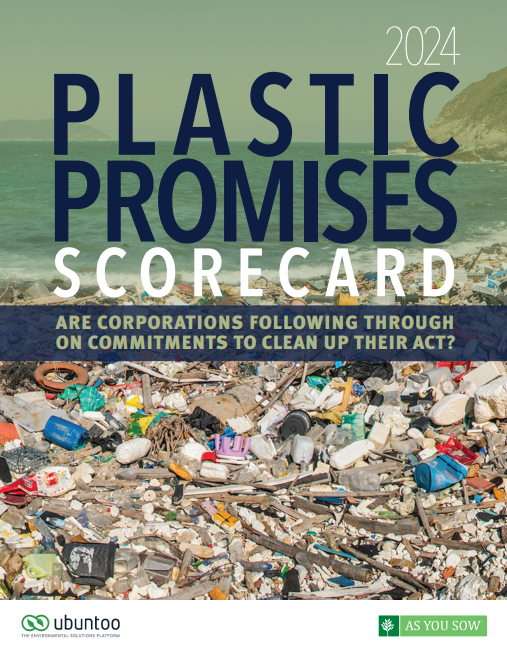
Plastic promises scorecard series
The Corporate Plastic Pollution Scorecard is a benchmark series that assesses how large consumer-facing companies address plastic packaging responsibility. It reviews corporate policies, commitments, disclosures, and practices across key areas of packaging design, reuse, recycled content, transparency, recycling support, and producer responsibility, enabling consistent comparison over time.
Climate change and news audiences report series
Annual survey-based report analysing climate change news consumption, trust, political leadership perceptions, AI attitudes, and audience needs across eight countries.

Footprint data foundation
Footprint Data Foundation (FoDaFo) is a not-for-profit organisation that governs the National Footprint and Biocapacity Accounts. It ensures ecological footprint data are accurate, transparent and independent, supporting researchers, policymakers and sustainability practitioners with robust environmental accounting used globally.

Sustainable Finance Roundup January 2026: Geopolitics, Energy Transitions, and Systemic Risk
This month’s sustainable finance article roundup examines a landscape increasingly shaped by geopolitics and climate risk, as near-term fragmentation, energy security, and affordability pressures collide with intensifying long-term threats from climate change, biodiversity loss, and water stress. The works featured analyse how these dynamics are reshaping capital allocation, disclosure, and resilience planning, demonstrating the growing need for sustainable finance to integrate geopolitical risk with real-economy transition.
Corporate climate responsibility monitor series
The Corporate Climate Responsibility Monitor is a recurring research series that independently assesses the transparency, integrity and credibility of corporate climate strategies. It evaluates how major global companies set, disclose and implement emission reduction targets, using a consistent methodology to enable year-on-year comparison across sectors.
Canadian pension climate report card series
Grades 11 Canadian pension funds on climate performance across six indicators including net-zero targets, fossil fuel exclusions, and climate engagement.
IQAir world air quality series
The World Air Quality Report is an annual research series assessing global air quality using ground-level PM2.5 monitoring data. It provides consistent country, regional and city-level comparisons, supported by transparent methodology and harmonised datasets to inform policy, research and investment analysis.

10 New insights in climate science series
The 10 New Insights in Climate Science is an annual series that synthesises recent peer-reviewed climate research across natural and social sciences. It provides a concise, policy-relevant overview of emerging scientific developments to inform decision-makers, practitioners, and stakeholders engaged in climate policy, finance, and governance.
Benchmarking impact: Australian impact investor insights activity and performance series
Benchmarking Impact is a benchmark series that provides a structured, recurring assessment of Australia’s impact investing market. It examines investor activity, market practices, and product development to support comparability over time and inform understanding of how impact investing is evolving across the financial system.


