
Library | ESG issues
Governance
The governance pillar in ESG (environmental, social, and governance) refers to the systems, policies, and practices that ensure an organisation is managed responsibly and ethically. It includes issues such as board structure, reporting & disclosures, shareholders & voting, and risk management. Strong governance reduces risks, enhances trust, and supports long-term business sustainability.
Refine
1872 results
REFINE
SHOW: 16


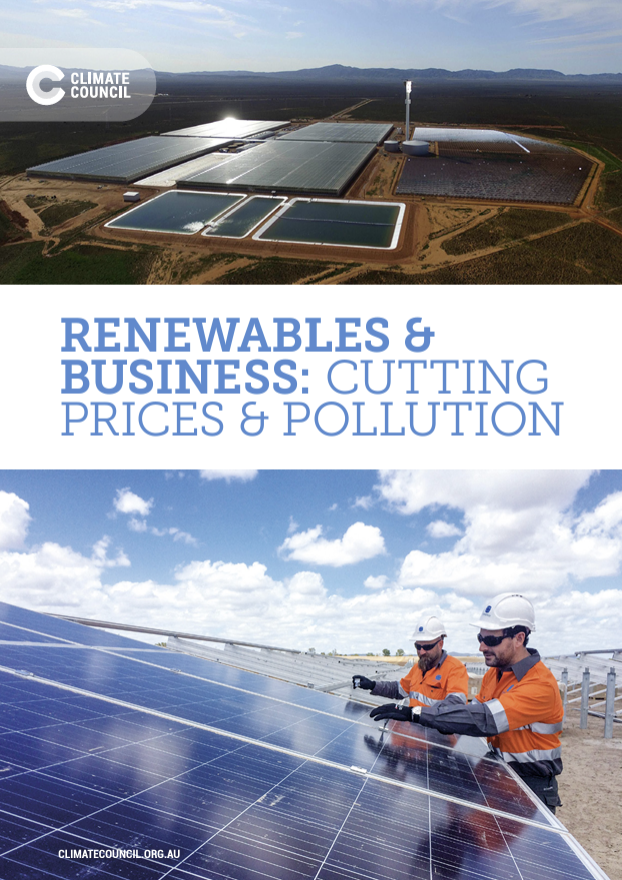
Renewables and business: Cutting prices and pollution
This report shows how investment in renewable energy can reduce exposure to volatile electricity prices and future price hikes. Over 46,000 businesses have already invested in large solar installations, and 40% of businesses are considering similar initiatives. Local and State Governments are also supporting business investment in clean, affordable and reliable renewable energy.

Innovation and resilience: A global snapshot of social enterprise responses to Covid-19
This report offers a global overview of social enterprise responses to the Covid-19 pandemic. It identifies innovation and agility as critical factors for survival. However, it notes that women-led and youth-led social enterprises face higher closure rates, greater reductions in activity, and more limited access to government support.

Growth-positive zero-emission pathways to 2050
This paper presents pathways to achieving growth positive zero-emission targets by 2050. The report concludes that significant action is required globally to achieve the low-carbon transition required to limit temperature increases to 1.5 °C, including the refashioning of multiple fundamental socio-economic systems and the international co-operation of decision-makers.

Global compact local networks: Accelerating national SDG implementation
The report emphasizes the role of responsible business in advancing the Sustainable Development Goals (SDGs) and highlights the importance of local networks in mobilizing a global movement of companies committed to advancing the SDGs through capacity-building, awareness-raising, and collaboration.

Transition risks in the automotive sector
This report analyses the potential valuation of BMW, Daimler, and Volkswagen under two different climate change scenarios and pathways. The study reveals insights for equity analysis and company engagement with sensitivity to regional and technological factors. Authors present a warning not to see findings as investment recommendations or forecast.

Making global goals local business: A new era for responsible business
This report highlights the need for private sector involvement in achieving the Sustainable Development Goals (SDGs) of the 2030 Agenda. It showcases the progress made so far by various companies and organisations and the role they play in building a better world through responsible business practices.
Earth beyond six of nine planetary boundaries
Six of nine planetary boundaries are exceeding safe thresholds, with ocean acidification and aerosol loading at tipping points. Maintaining functional biosphere integrity requires controlling human appropriation of net primary production. Earth system modelling illustrates the need to consider anthropogenic impacts on Earth in a systemic way.

Rethinking impact to finance the SDGs
This paper examines the financing gap for the UN’s Sustainable Development Goals (SDGs) and proposes new innovative solutions for stakeholders, including the need for stronger integrated planning, strategic thinking and policy integration to meet the US$5-7tn annual financing requirement.

Shareholder primacy: The main barrier to sustainable companies
This report analyses the role of company law in achieving sustainable development, focusing on the dominance of shareholder primacy and its impact on corporate decision-making. It evaluates barriers to integrating sustainability, and provides possible ways forward. An essential comparative analysis for academics and professionals interested in promoting sustainable business practices.

Directors' liability and climate risk: White paper on India
This paper explores the legal obligations of directors in addressing climate risk and mitigating their environmental impact. This report studies the duties of directors in relation to trust and loyalty, competence, disclosure, and their application in the context of climate risk, according to existing company and securities laws in India.

Raising the bar: A baseline review of finance sector action on deforestation
The report provides a baseline review of 557 financial institutions' actions on deforestation, revealing that only a few are addressing commodity-driven deforestation and associated human rights abuses. Despite COP26 commitments, most lack comprehensive policies. Financial institutions must take urgent, concrete steps to eliminate deforestation and meet global climate targets.

An enhanced assessment of risks impacting the energy system
This report assesses the risks impacting the energy system. It explores the challenges, uncertainties, and opportunities organizations face in the near-term and long-term. The Dynamic Risk Assessment methodology is designed to incorporate future trends and their potential downstream exposures into risk management processes.

Beyond diversity: Equity and inclusion as an overlooked opportunity for investors
This report argues that equity and inclusion, rather than diversity alone, are key drivers of business performance. It outlines organisational practices and leadership behaviours that foster inclusion, enabling diverse talent to contribute fully. Investors are encouraged to prioritise structural inclusion metrics over representational data for meaningful performance insights.

New legal opinion cautions Indian company directors to take climate change seriously or risk personal liability
This paper provides guidance to company directors in India regarding their obligations to consider climate change-related risks in the discharge of their duties under Indian law. It argues that directors' duties extend beyond shareholders to the community on matters concerning the environment, and that litigation risks to companies are increasing as a result of climate change.

Climate endgame: Exploring catastrophic climate change scenarios
This report explores the potential for worldwide societal collapse and human extinction due to anthropogenic climate change. It argues that this topic has not been given enough consideration despite existing evidence of catastrophic outcomes. The proposed research agenda seeks to understand the likelihood and mechanisms of such events and their implications for policy.

Acute climate risks in the financial system: Examining the utility of climate model projections
This research examines the effectiveness of global mean temperature projections as a tool for identifying acute climate risks to the financial sector. The study highlights the limitations of current 'top-down' approaches and recommends the use of more granular 'bottom-up' methods to more accurately estimate regional-level financial risks.


