
Library | ESG issues
Governance
The governance pillar in ESG (environmental, social, and governance) refers to the systems, policies, and practices that ensure an organisation is managed responsibly and ethically. It includes issues such as board structure, reporting & disclosures, shareholders & voting, and risk management. Strong governance reduces risks, enhances trust, and supports long-term business sustainability.
Refine
1872 results
REFINE
SHOW: 16


Toward ESG alpha: Analyzing ESG exposures through a factor lens
This paper investigates the relationship between environmental, social and governance (ESG) exposures and factor returns for 1,312 US equity mutual funds. The study suggests that factor tilts, rather than pure ESG considerations, drive factor returns. ESG components unrelated to factors carry insignificant excess return premiums that are economically small.

Sustainable investing in pensions: Top tips for sponsors of pension schemes
This report provides insight into embedding social and environmental risk into pension schemes to meet the growing economical demand. This guidance provides actionable top-tips for any sponsor to take the necessary steps to align their organisation's values with their pension scheme.

Aligning to a net zero pathway: Top tips for pension scheme trustees
This report provides practical insights for pension scheme trustees in aligning their investments with a net zero pathway. The guide's tips are broadly applicable to pension funds across the globe. It defines "net zero," the challenges and opportunities facing trustees, and the importance of stakeholder engagement in crafting a successful transition.

Managing nature risks and investing in the opportunities: Top tips for pension fund chairs and trustees
This report provides top tips to pension fund chairs and trustees on managing nature risks and investing in opportunities. With insights from industry professionals, it highlights the importance of nature for long-term market returns and discusses emerging regulation to guide action, while offering practical advice on how to identify risks and integrate nature into stewardship plans.

A toolbox of sustainable crisis response measures for central banks and supervisors – second edition: Lessons from practice
This report is a toolbox of options for central banks and supervisors to align crisis response measures with climate and sustainability objectives. The second edition includes an extended analysis of sustainability-linked measures. It also highlights the importance of moving from voluntary to mandatory environmental reporting and recommends efficient disclosure to regulated financial institutions.

Intentionally designed endowment primer
This primer provides insight into aligning endowment investments with institutional missions while considering sustainability. The report includes strategic questions, background, examples, and relevant research. Intended for fiduciaries, this primer encourages institutional acceptance and deployment of Environmental, Social, and Governance (ESG) criteria to facilitate profitable sustainability while advancing social purpose.

Future of sustainability in investment management: From ideas to reality
This report examines sustainable investing, considering the increasing investor demand for ESG factors and how to adapt to the sustainability paradigm. It identifies business model and investment model drivers, as well as operating and people model enablers and the challenges and skills required for integrating ESG.

Study on sustainability - related ratings, data and research
This study on sustainability-related ratings, data and research seeks to explore the sustainability data landscape and the issues related to the assessment and evaluation of sustainability performance. It examines various sustainability-related rating systems, methodologies, and data providers, with insights from asset managers, asset owners, and benchmark administrators.
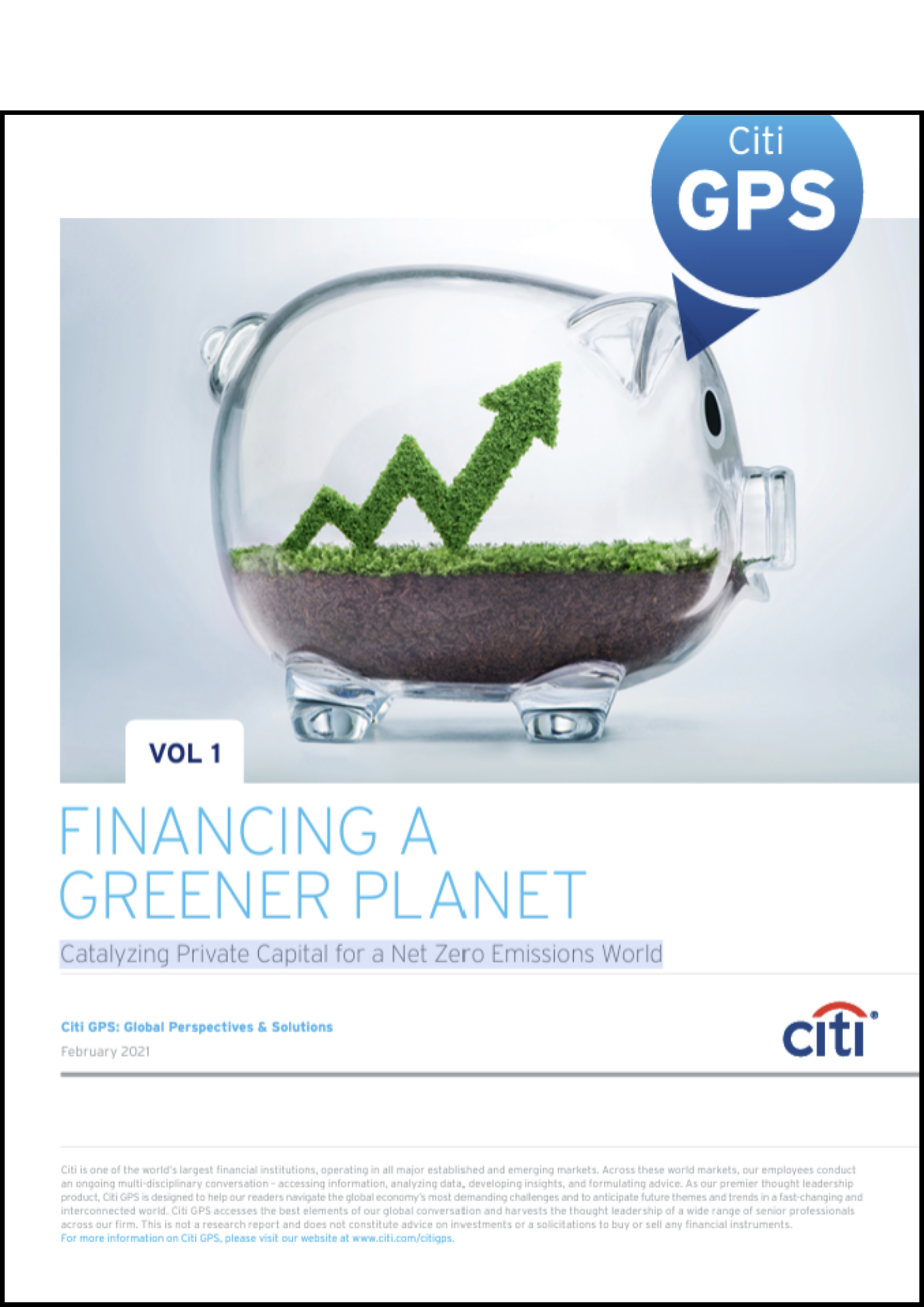
Financing a greener planet: Catalysing private capital for a net zero emissions world
This report provides an overview of the private capital markets and their potential to fund a greener planet. It explores the increasing interest in ESG investing and the significant role that investors can play in delivering a net-zero emissions world, specifically focusing on sustainable agriculture, clean energy, and transportation.

Disrupting privilege as power and control: Re-imagining business and the appreciation of Indigenous stewardship in management education curricula
This report explores privilege's systemic connection to mainstream management education and proposes how engaging with Indigenous stewardship can tackle this. Using a case study of stewardship's implementation in a Master of Commerce program, educators can contribute to literature on re-imagining business and create better future business leaders.

Electric vehicle fleets: An impact opportunity for investors
This report makes the case for electric vehicle fleets as an important opportunity for investors. It outlines the potential financial incentives, risks and benefits, and impact on the environment, economy, and society. The report also includes recommendations for investor engagement with EV adoption.

Who cares wins: Connecting financial markets to a changing world
The report outlines recommendations by leading financial institutions for integrating environmental, social, and governance factors in financial analysis and investment decisions. Produced under the auspices of the United Nations Global Compact, this report reflects the commitment to corporate responsibility and sustainable development by twenty endorsing institutions.

Primer on climate change: Directors’ duties and disclosure obligations
This report provides an overview of contemporary evidence that climate change presents foreseeable, and in many cases material, financial and systemic risks that affect corporations and their investors. It discusses general climate obligations, directors' duties, disclosure obligations, and advice to directors, emphasising the importance of embedding climate change in financial risk management, disclosure, and supervisory practices.

The debt-fossil fuel trap: Why debt is a barrier to fossil fuel phase-out and what we can do about it
This paper explores the links between indebtedness and fossil fuel exploitation in developing countries. The briefing concludes with recommendations for achieving debt justice, preserving the environment, and tackling climate change.

Dhawura Ngilan: A vision for Aboriginal and Torres Strait Islander heritage in Australia
Dhawura Ngilan (Remembering Country) is a vision statement outlining aspirations for the protection, preservation, and celebration of Aboriginal and Torres Strait Islander heritage in Australia. The report emphasises the importance of Indigenous communities' involvement in heritage management and calls for consistent policies and legislation across jurisdictions.

Diversity washing
This paper investigates the phenomenon of "diversity washing," whereby companies appear to prioritise diversity and inclusion (DEI) in their public discourse to a greater degree than their internal practices suggest. The authors use an empirical approach to evaluate the prevalence and effectiveness of this phenomenon.


