
Library | ESG issues
Reporting & Disclosures
Reporting and disclosures provide transparency on a company’s financial performance, strategy, and sustainability practices. Clear, reliable disclosures improve stakeholder trust, inform investment decisions, and drive corporate accountability.
Team Altiorem recommends


Refine
711 results
REFINE
SHOW: 16


Financial crime compliance to fight modern slavery and human trafficking
This blueprint urges financial institutions to tackle human trafficking and modern slavery, suggesting that both are a financial crime and compliance risk, and warns against wholesale de-risking. This report outlines strategies for detecting financing of such illegal activities, reducing risk, and government action towards AML/CFT risk assessments, ahead of regulatory fines and sanctions in jurisdictions worldwide.

Gender bonds: A toolkit for the design and issuance of gender bonds in Africa
This toolkit was prepared to design and issue gender bonds in Africa. It provides recommendations for issuers and investors on the issuance and monitoring of gender bonds with a focus on transparency and reporting.

Full disclosure: Improving corporate reporting on climate risk
This report summarises how investors utilize corporate reporting to manage climate-related financial risks, identify opportunities, and set strategies for transitioning to net-zero emissions. The report contains investors' expectations from climate reports, insights on scenario analysis, and recommendations for improving corporate disclosure on climate risks.

Field guide to impact investing: For Australian charitable trusts and foundations
This is a comprehensive resource to help organisations make sustainable impact investing decisions. Covering everything from impact measurement to legal structuring, this guide contains expert insights and is designed to be an essential tool for the industry.

Deforestation tools assessment and gap analysis: How investors can manage deforestation risk
This report explores investor deforestation initiatives. It assesses existing tools and datasets, identifies gaps, and offers recommendations. The report highlights the importance of managing deforestation risk while acknowledging the complexity of supply chains and information gaps.

Sustainability bond framework
This sustainability bond framework was published to finance expenditures supporting green and social categories compliant with eligibility criteria. The framework adheres to the highest standards of environmental and social impact reporting.

Prioritising nature-related disclosures: Considerations for high-risk sectors
This report outlines information on high-risk sectors for nature-related disclosures and their dependencies and impacts. It identifies sectors with the greatest risk and vulnerabilities and provides sector-based insights to deploy financial risk management and report nature-related financial disclosure in a consistent and meaningful manner.

Failure by design: Is the net zero asset managers initiative broken?
This initiative was designed to align asset managers' portfolios with net-zero targets. However, their methodology lacks standardisation and rigour, leading to ambiguous targets and little progress towards net zero. An overhaul of the initiative is needed to ensure asset managers are held accountable.

Resources, energy and modern slavery: Practical responses to managing risks to people
This report provides practical responses for managing modern slavery risks in the resources and energy sectors. Covering topics such as risk to people and business, human rights risks, and key responses for addressing these risks, the report is an essential guide for companies seeking to effectively identify and manage modern slavery risks.

Sustainable voting behaviour of asset managers: Do they walk the walk?
This paper analyses a decade of voting data with more than 20 million observations to investigate asset manager characteristics that influence environmental, social and governance (ESG) voting patterns. Asset managers mostly vote against social and environmental proposals. Despite increased attention to sustainability, asset managers hardly voted in favour of these proposals.

Who pays for sustainability? An analysis of sustainability-linked bonds
This paper analyses sustainability-linked bonds (SLBs), which tie bond coupons to sustainability performance targets. They find issuing an SLB yields an average premium of -9 basis points on the yield at issue compared to a conventional bond, and the savings for an issuer exceed the maximum penalty for failure to meet the target.

Natural capital accounting: Design and implementation protocol V1.1
This document provides guidance on natural capital accounting, a means to extend economic information to meaningfully describe the relationship between the economy and the environment. The report outlines a high-level, five-step process for designing and implementing natural capital accounting and compiling coherent environmental-economic data to support policy and decision-making.
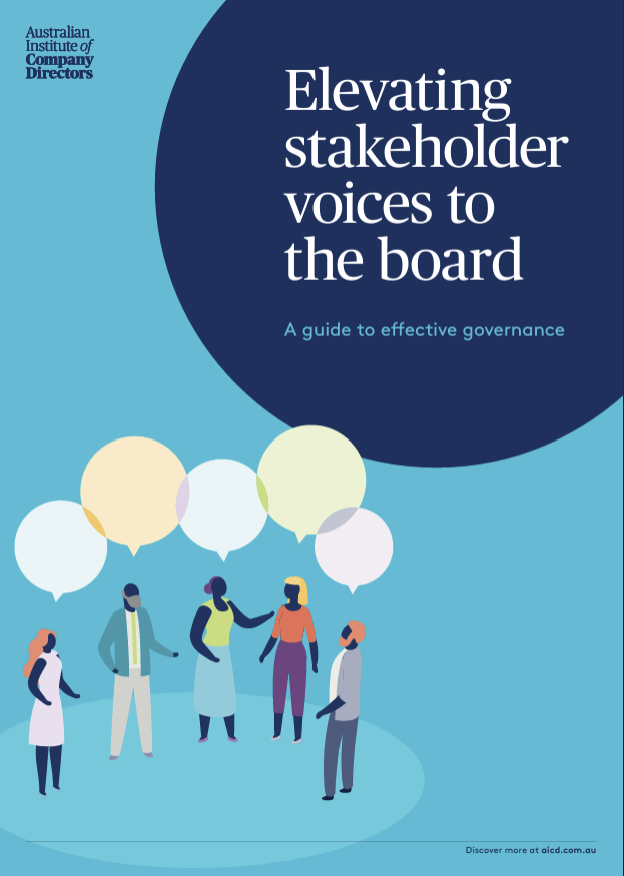
Elevating stakeholder voices to the board: A guide to effective governance
This guide offers Australian directors valuable insights on elevating stakeholder perspectives to the board, emphasising a broader view of corporate interests. It explores stakeholder governance, effective practices, and the advantages of integrating voices from employees, customers, suppliers, and the community into board-level decision-making.

Increasing female participation on boards: Effects on sustainability reporting
This study explores the relationship between board gender diversity and sustainability reporting using data from 2,116 banks over a ten-year period. Results indicate that having 22–50% female board members positively affects ESG disclosure, but beyond 50%, negative effects appear. It suggests that banks should mandate quotas to promote sustainable disclosure.
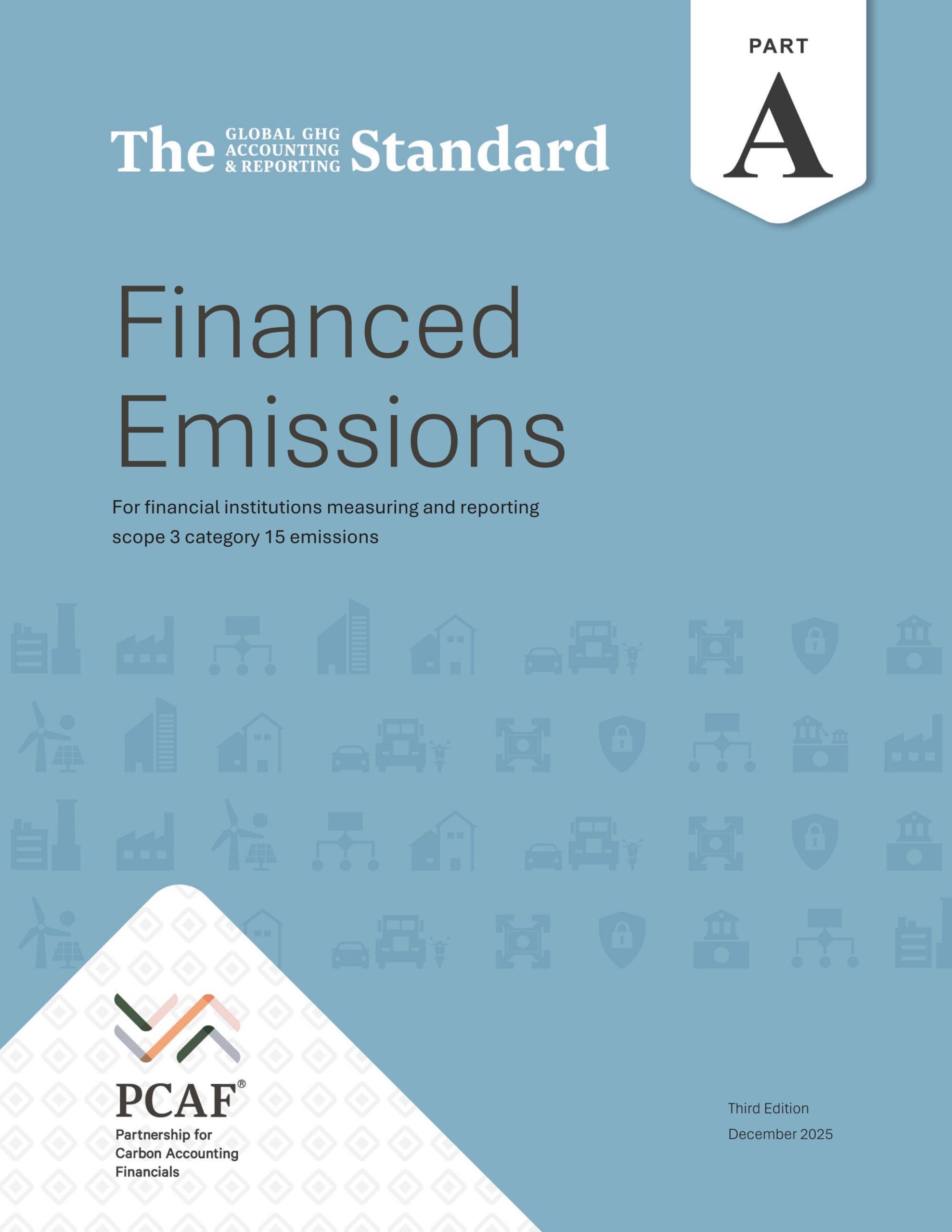
The global GHG accounting and reporting standard for the financial industry series
Standardised methodologies for financial institutions to measure and disclose financed GHG emissions across ten asset classes under scope 3 category 15.

Climate governance study 2024: Moving from vision to action
This study reveals that Australian directors increasingly prioritise climate change as a material governance issue. However, stakeholders are pulling in a variety of directions, making it challenging for organisations to execute their climate strategies. Policy uncertainty poses the most significant obstacle for climate governance, although the implementation of mandatory climate reporting from July 2025 presents an opportunity for greater accountability.


