
Library | ESG issues
Social
The social pillar in ESG (environmental, social, and governance) assesses a organisation’s impact on people and society. It covers labour practices, diversity and inclusion, human rights and community engagement. Prioritising social responsibility not only benefits society but also mitigates risks, strengthens reputation, and creates long-term value for businesses and investors.
Refine
1331 results
REFINE
SHOW: 16


Heightened human rights due diligence
UNDP’s training guide explains heightened human rights due diligence for companies in conflict-affected contexts, outlining frameworks, legal expectations and practical steps to assess, mitigate and remedy impacts on human rights and conflict, supported by case studies and tools to guide implementation.
Sustainable Finance Roundup March 2026: Markets, Climate Risk, and the Transition in Practice
This month’s sustainability roundup captures a shift from framework development to real-world application, where climate and nature risks are increasingly embedded across financial systems, legal accountability, and decision-making. It highlights how intensifying physical climate signals, evolving disclosures, and maturing litigation are converging with insights on sovereign risk, energy systems, and corporate strategy. Together, these developments show how sustainability is moving beyond principle—being tested, priced, and enforced across markets, regulation, and the real economy.

University of Maryland
University of Maryland (UMD) is a leading public research university in the United States, known for academic excellence, innovation and interdisciplinary research. Based in College Park, UMD offers diverse degree programmes and collaborates with government and industry to address global challenges in science, technology, public policy and sustainability.
Engaging the public on climate risks and adaptation: A briefing for UK communicators
This briefing summarises UK public attitudes to climate risks and adaptation, highlighting rising concern, strong policy support, and the importance of communication strategies. It emphasises linking climate impacts to lived experience, health, and values to strengthen public engagement and support for adaptation and mitigation.
Communicating climate change and migration: A user’s guide to navigating the research
This report guides practitioners on communicating climate-linked migration, highlighting research gaps, biases and limited diversity. It emphasises critical engagement with academic literature, improved representation of affected communities, and the need for nuanced, interdisciplinary approaches to inform effective, ethical communication strategies.
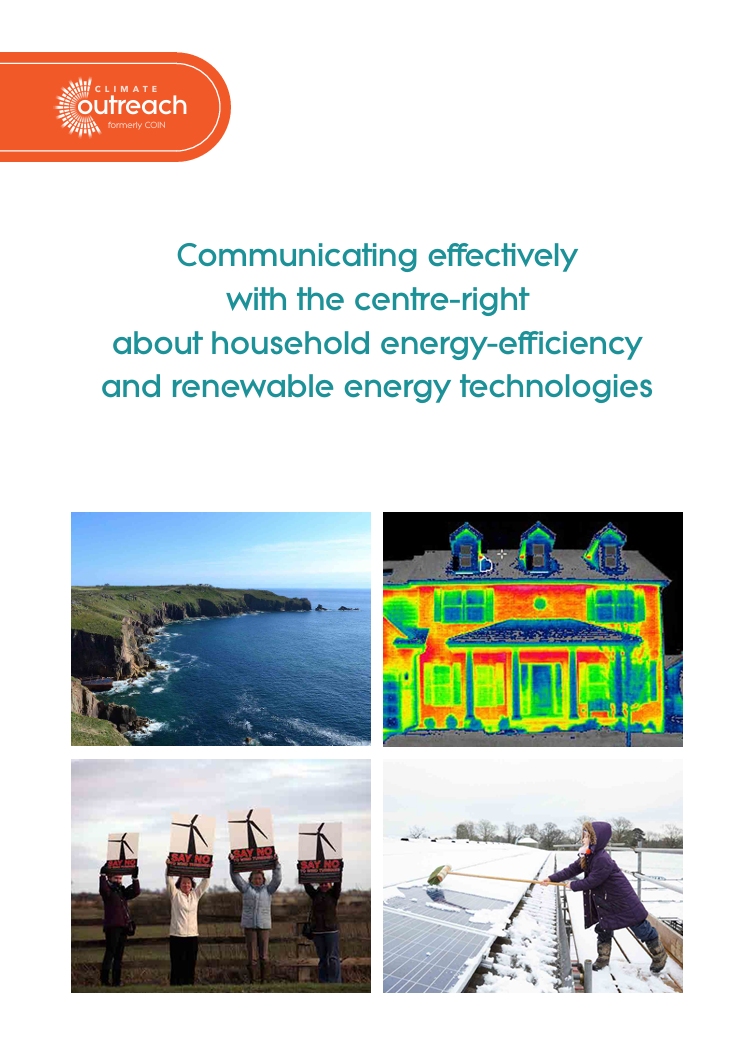
Communicating effectively with the centre-right about household energy-efficiency and renewable energy technologies
Report presents UK qualitative research on centre-right attitudes to energy efficiency and renewables, finding trust deficits and scepticism. Messaging aligned with values—avoiding waste, local control, and authenticity—resonates best, while economic or corporate framing underperforms. Emphasises credible messengers and community-based approaches.
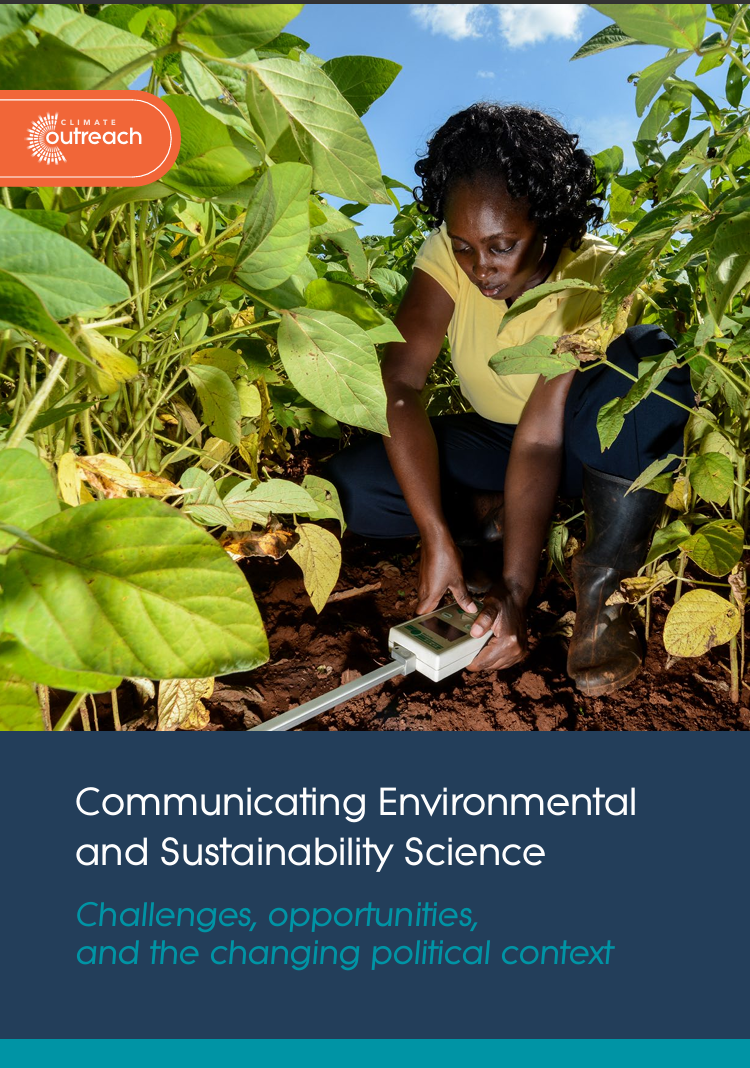
Communicating environmental and sustainability science: Challenges, opportunities, and the changing political context
Synthesises research on communicating environmental and sustainability science, highlighting a shift from one-way information to dialogue. Identifies challenges including political polarisation, trust, and misinformation, and emphasises values-based framing, narratives, and audience engagement as critical for effective public communication and future research priorities.
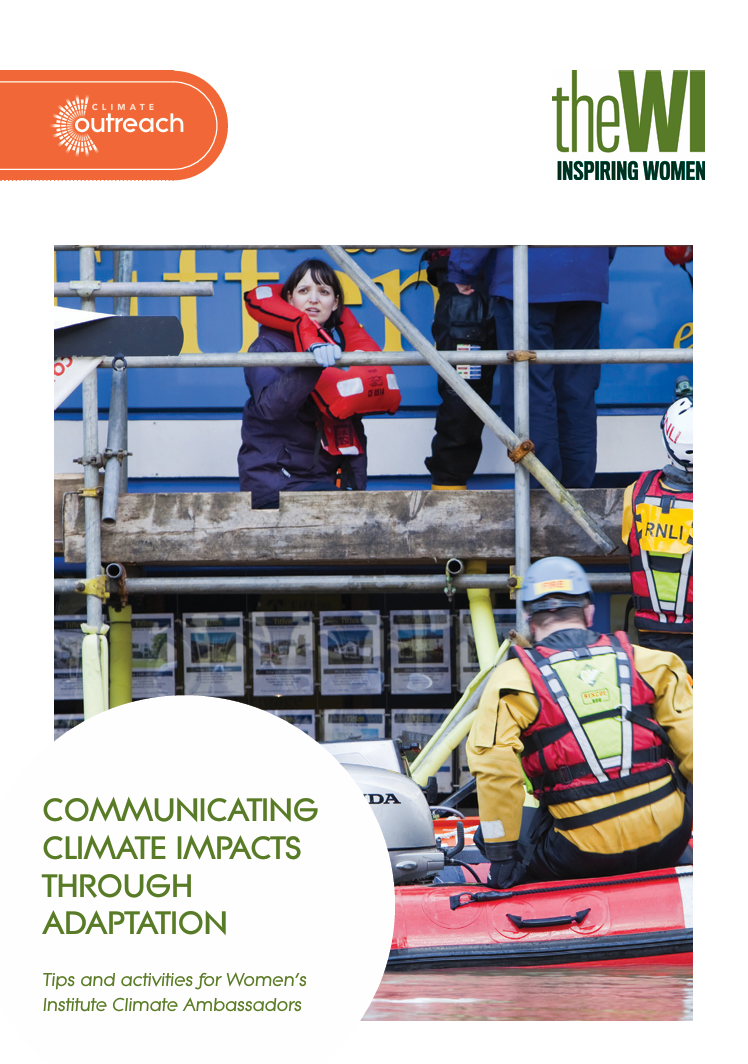
Communicating climate impacts through adaptation: Tips and activities for women's institute climate ambassadors
Guide outlines evidence-based strategies for communicating climate impacts through adaptation, emphasising values-led narratives, trusted messengers, and relatable imagery. It provides practical activities and case studies enabling community engagement on risks such as flooding, drought and heatwaves, encouraging locally relevant, action-oriented responses.
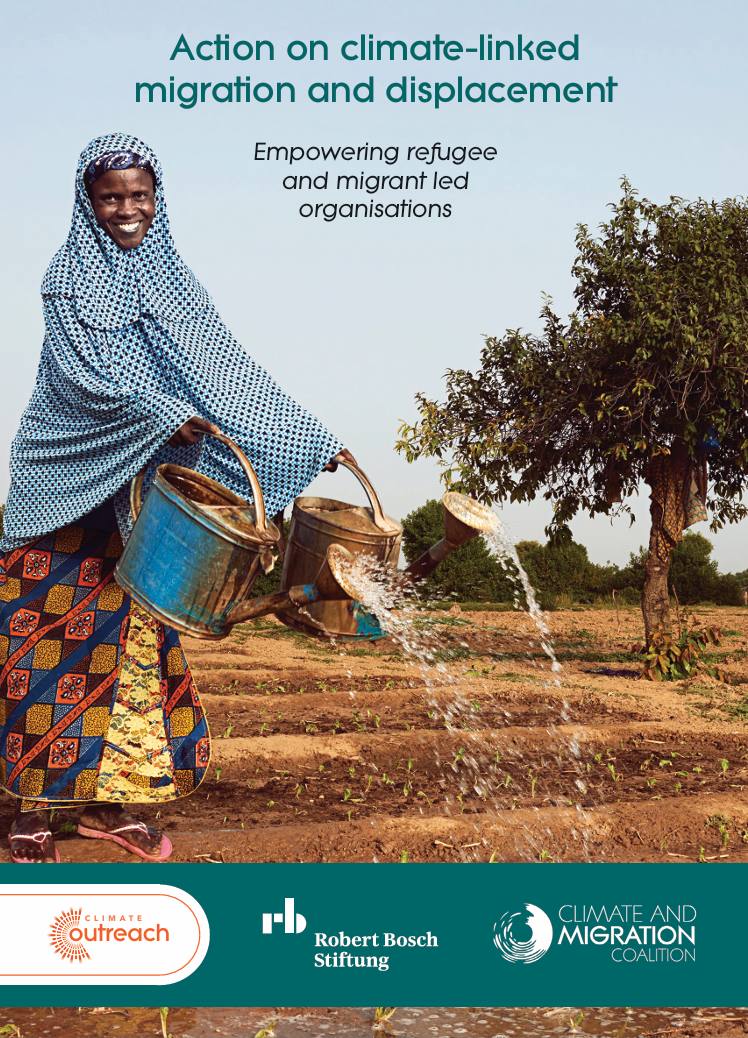
Action on climate-linked migration and displacement: Empowering refugee and migrant led organisations
Analyses climate-linked migration, highlighting impacts on displacement patterns and vulnerabilities. Evaluates roles, motivations and barriers for refugee- and migrant-led organisations, and proposes funding and policy interventions to strengthen their engagement in climate advocacy and support adaptive, rights-based responses.
Private doubts, collective conformity: the Power and fragility of climate narratives
This article examines why current climate frameworks persist despite widespread professional skepticism, highlighting institutional incentives and “preference falsification” as key drivers. It calls for more open, cross-sector dialogue focused on diagnosing real problems and unlocking practical, system-level solutions.
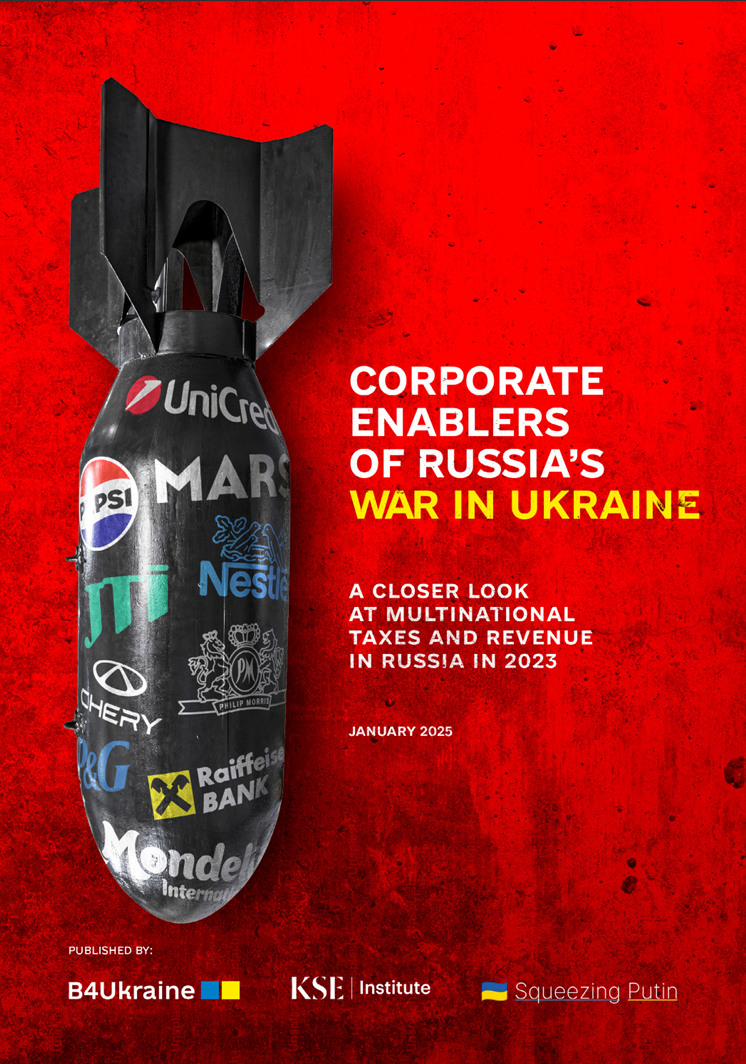
Corporate enablers of Russia’s war in Ukraine: A closer look at multinational taxes and revenue in Russia in 2023
Examines multinational companies’ revenues and taxes in Russia (2021–2023), showing continued corporate activity generated significant tax contributions supporting the Russian state. Highlights sectoral drivers, limited exits, and rising fiscal pressures, concluding that ongoing operations pose financial, legal, and human rights risks.

Life, Climate Volatility, and What Comes After the Final No: Part 3—AFTER THE FINAL NO.
This final article in a three-part series explores how to navigate resistance to systemic change. Drawing on personal experience, it outlines a framework for resilience—building alliances, embracing interdisciplinary thinking, and storytelling—empowering leaders to persist through setbacks and turn persistent “no” into transformative, collective “yes.”
Life, Climate Volatility, and What Comes After the Final No: Part 2—CLIMATE VOLATILITY
This second article in a three-part series reframes climate change as volatility rather than warming. Drawing on finance and systems thinking, it explores how risk pricing, redesigned economic incentives, and nature-based solutions can build resilience, urging leaders to manage climate as the ultimate systemic risk.

Life, Climate Volatility, and What Comes After the Final No: Part 1 - LIFE
Written by Ken Coulson, a former global finance executive turned sustainability strategist, this first article in a three-part series explores humanity’s origins as a cosmic accident. It reframes Earth’s natural systems as a fragile inheritance under threat, urging a shift from extraction to stewardship through a unifying cosmic perspective on climate, responsibility, and systemic change.
Doughnut economics for regenerative business design
An edited volume applying Doughnut Economics to business design, using case studies and critical reflections to examine how purpose, networks, governance, ownership and finance can support regenerative and distributive business models. It focuses on redesigning firms to operate within ecological and social limits.

You Built This
This article argues that modern investment strategies fuel economic extraction while often underperforming simpler alternatives. It calls on investors to realign portfolios with productive, community-oriented investments that generate real economic and social value.


