
Library | ESG issues
Social
The social pillar in ESG (environmental, social, and governance) assesses a organisation’s impact on people and society. It covers labour practices, diversity and inclusion, human rights and community engagement. Prioritising social responsibility not only benefits society but also mitigates risks, strengthens reputation, and creates long-term value for businesses and investors.
Refine
1300 results
REFINE
SHOW: 16


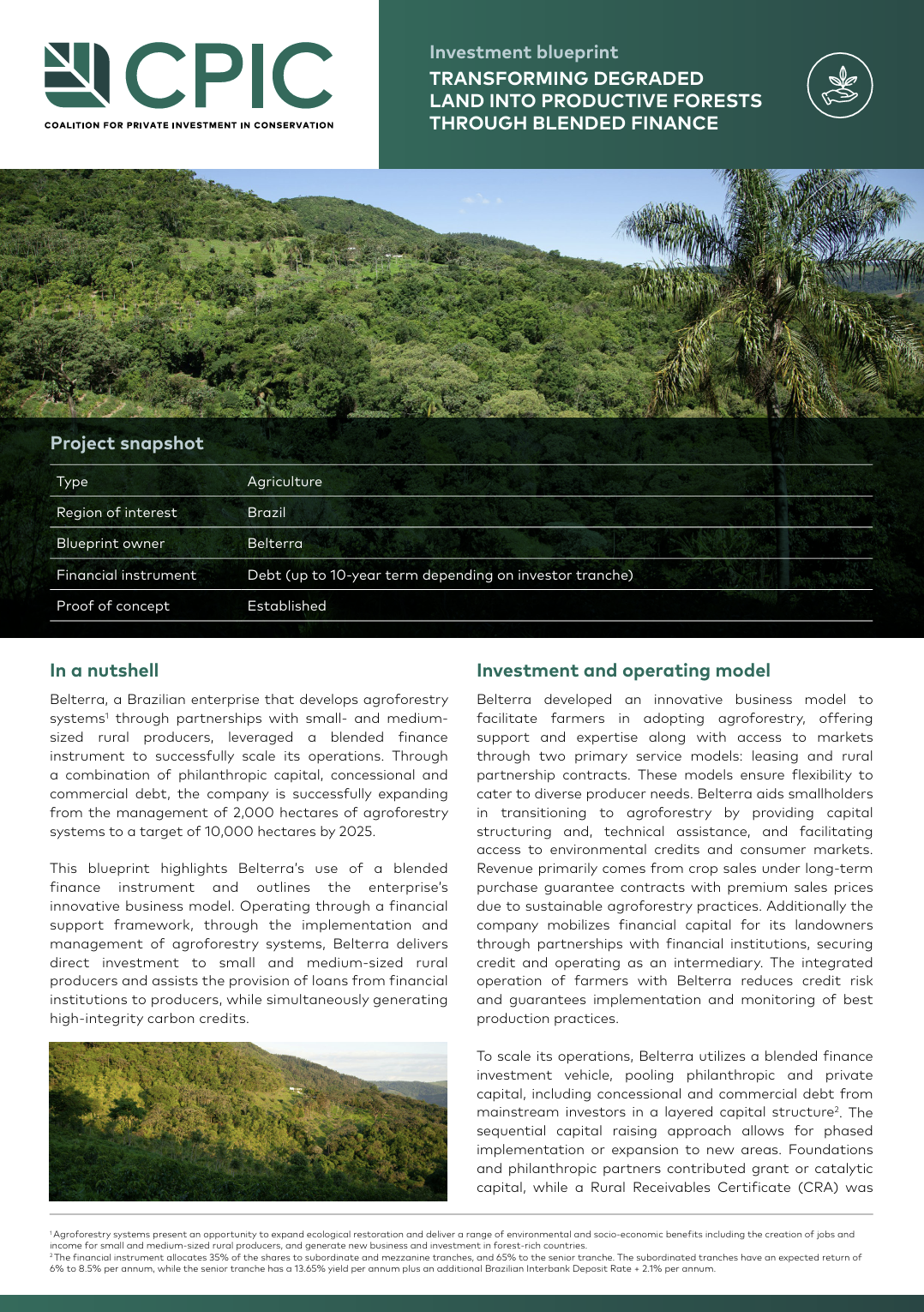
Investment blueprint: Transforming degraded land into productive forests through blended finance
This case study offers a blueprint for impact investment in sustainable cocoa supply chains. It highlights strategies for improving environmental and social outcomes in cocoa production, providing investors with opportunities to support sustainable agriculture while achieving financial returns.
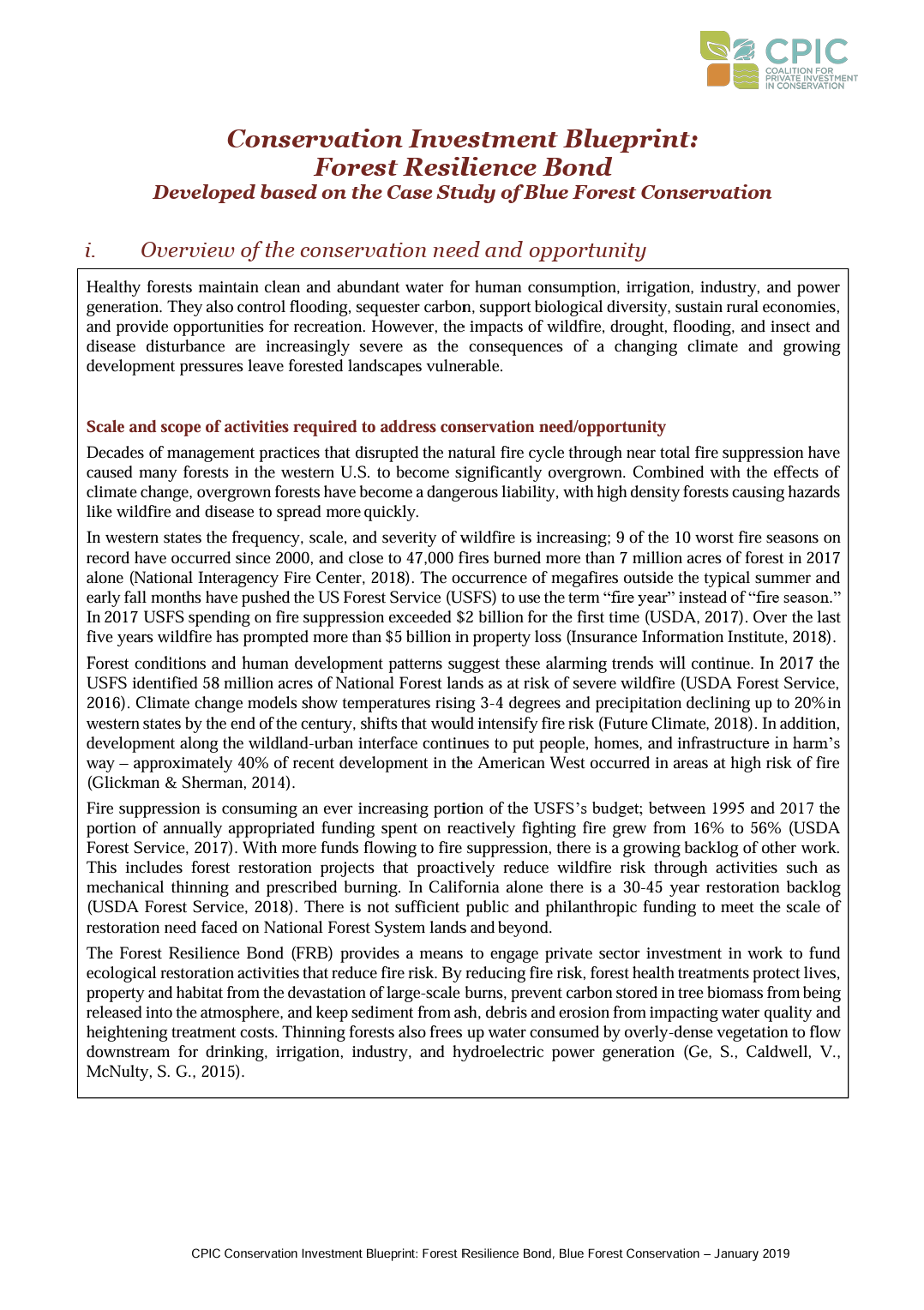
Conservation investment blueprint: Forest Resilience Bond developed based on the case study of Blue Forest Conservation
This blueprint provides a model for using blended finance to support agroforestry projects. It illustrates how investors can combine public and private capital to develop sustainable agroforestry practices, achieving both economic and environmental benefits.
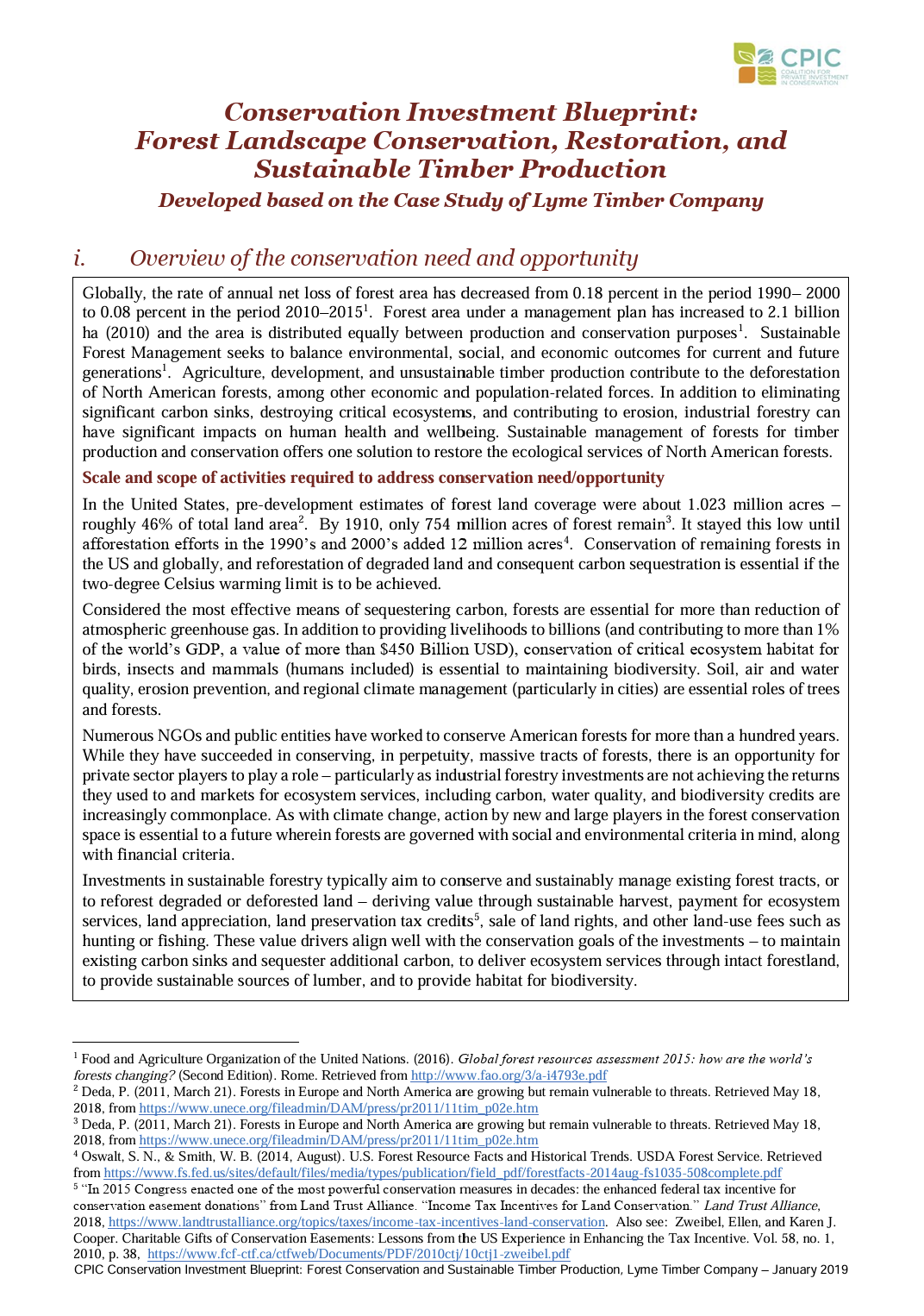
Conservation investment blueprint: Forest landscape conservation, restoration, and sustainable timber production
This blueprint contributes to the conservation and restoration of forest ecosystems – achieved by investors purchasing forests, or purchasing land and reforesting; with the express goal of sustainably managing those forests in adherence to relevant sustainability or management certifications.
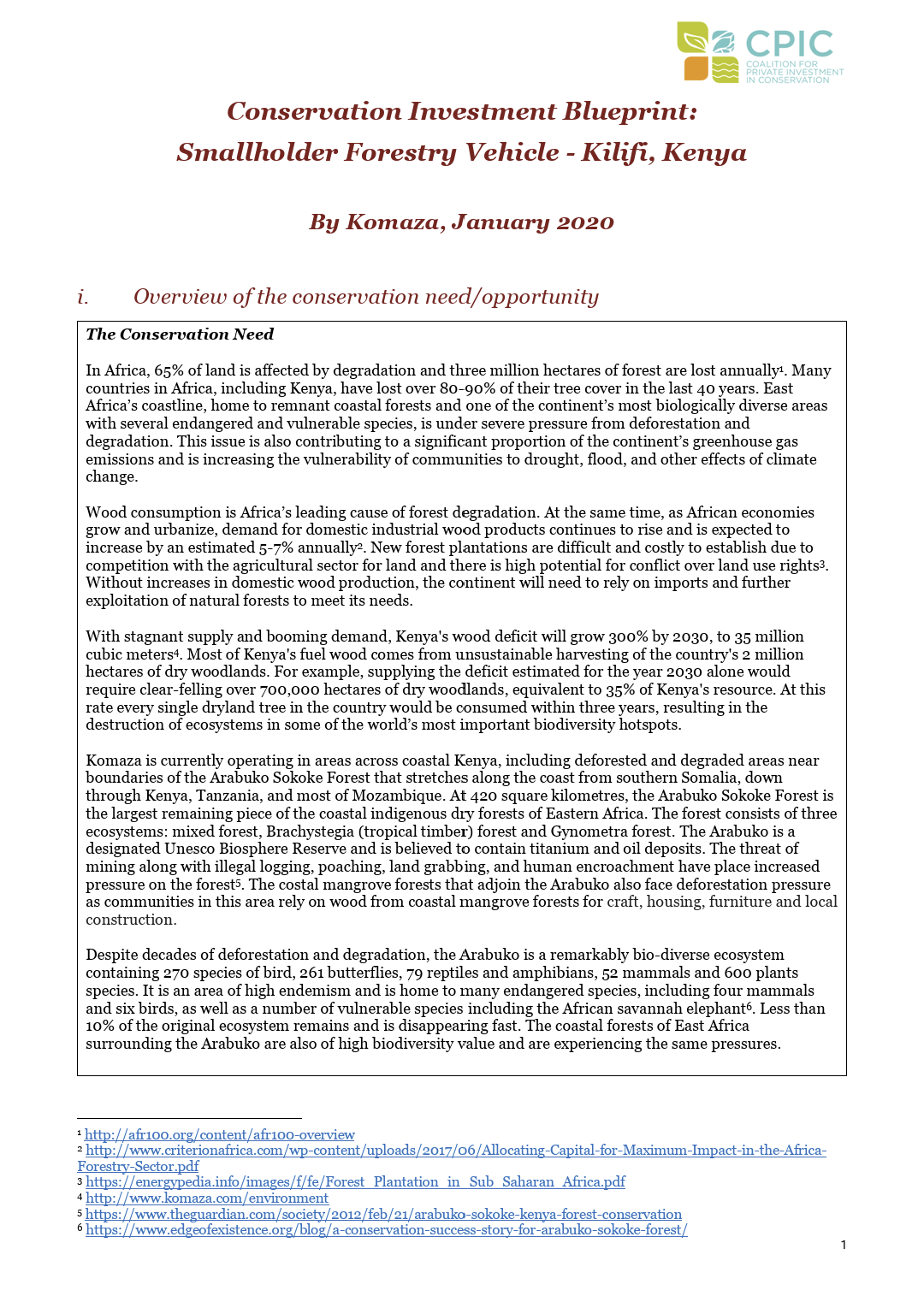
Conservation investment blueprint: Smallholder forestry vehicle - Kilifi, Kenya
This blueprint provides investors with a framework for supporting community forestry projects. It emphasises the role of community engagement in sustainable forest management, offering strategies to achieve both financial returns and conservation outcomes.

Australian Impact Investments (Aii)
Australian Impact Investments (Aii) is a specialist asset consulting firm dedicated to mobilising capital for positive social and environmental impact alongside financial returns. Established in 2014, Aii collaborates with charitable trusts, foundations, family offices, wealth advisors, and institutions, offering bespoke impact strategies, rigorous investment analysis, and comprehensive portfolio management. With a focus on responsible investing, Aii assists clients at every stage of their impact journey.

Investor expectations for corporate just transition planning
The report outlines investor expectations for corporate just transition planning, offering a framework for assessing companies' strategies in transitioning to a net zero economy. It highlights key principles, including stakeholder engagement, economic stability, and social equity. Investors are advised to evaluate transparency, governance, and worker support measures to ensure responsible and sustainable corporate transitions.
Conservation investment blueprint: Environmental impact bond for green infrastructure - coastal resilience
This case study outlines the Environmental Impact Bond (EIB) model for funding coastal resilience projects. It focuses on Louisiana’s wetland restoration to mitigate storm damage and land loss. The EIB attracts private investment, enabling earlier project implementation, cost savings, and ecological benefits. It aligns financial incentives with conservation goals through performance-based returns.
Environment, equity and just transition for emerging aviation fuels
The report analyses the environmental, equity, and just transition challenges of emerging aviation fuels. It highlights the sector’s carbon footprint, workforce impacts, and policy needs, advocating for transparent regulations, equitable resource distribution, and community engagement to ensure a sustainable and fair transition to low-emission aviation.

The race against time for smarter development: To be smart, the digital revolution will need to be inclusive
The report underscores the need for inclusivity in the digital revolution, highlighting gender disparities in STEM fields. Women are underrepresented in digital and engineering roles, limiting their access to future job opportunities. Policy interventions, improved workplace conditions, and equitable funding are essential to fostering diversity in technological innovation and ensuring sustainable, inclusive development.

Green Climate Fund (GCF)
Green Climate Fund (GCF) is a global fund established by the United Nations Framework Convention on Climate Change (UNFCCC) to support developing countries in tackling climate change. It provides financing for mitigation and adaptation projects, focusing on low-emission, climate-resilient development. Funded by governments, GCF plays a key role in international climate finance.

Building disaster- and climate-resilient infrastructure through public–private partnerships
The report discusses leveraging public–private partnerships (PPPs) to build disaster- and climate-resilient infrastructure in Southeast Asia, addressing funding gaps, enhancing regulatory frameworks, and integrating resilience measures. It highlights Australian practices, aligning climate, disaster, and inclusion goals for sustainable infrastructure development.

Decarbonisation investment solutions for sectors: A discussion paper on Sector Transition Plans and their importance to investors
The report from the Investor Group on Climate Change (IGCC) discusses the development and importance of sector transition pathways to support Australia’s decarbonisation. It highlights how clear pathways aligned with the Paris Agreement can guide investment, minimise risks, and foster collaboration among investors, governments, and companies to achieve net-zero emissions by 2050.

Shifting gears: Challenges in scaling outcomes partnerships in government and strategies for success
This report explores the barriers to expanding outcomes-based partnerships in public service delivery. It provides actionable strategies for policymakers, investors, and stakeholders to enhance policy innovation and effectiveness. Key insights include addressing institutional challenges, political dynamics, and public-private collaboration for sustainable impact.

The CARE Principles for Indigenous data governance
The CARE Principles for Indigenous Data Governance emphasise collective benefit, authority to control, responsibility, and ethics to safeguard Indigenous data rights while promoting equitable participation. These principles complement FAIR data guidelines, ensuring data use aligns with Indigenous values, self-determination, and innovation in research and governance.

Guidelines for engagement with Māori
These Guidelines will assist readers to determine who they need to engage with, how to engage, and how to develop an effective engagement strategy. They have been designed to be read in conjunction with the Crown engagement with Māori framework. In this guidance document, “Engagement” refers to the range of methods and activities that are used to interact with Māori.

A guide to just transitions for communities in Aotearoa New Zealand
The case studies and guidance found in this document illuminates how just transitions for Māori (and planetary) wellbeing are operationalised on the ground. Investors aiming to align impact finance or more conventional capital flows with a just transition can find valuable insights in the form of both tangible examples and a visionary roadmap, demonstrating how justice is meaningful embedded in community transitions.


