
Library | ESG issues
Systemic Risk Management
Systemic risk refers to the possibility that an event at the company level could trigger severe instability or collapse in an entire industry or economy. It extends beyond individual failures, encompassing large-scale threats such as climate change, natural disasters, inflation, geopolitical crises, and pandemics. Effective systemic risk management requires proactive monitoring, regulatory safeguards, and resilience strategies to mitigate risks and ensure financial stability in an increasingly complex and uncertain global landscape.
Refine
296 results
REFINE
SHOW: 16



Global cybersecurity outlook 2026: Insight report
Global Cybersecurity Outlook 2026 examines AI-driven threats, geopolitical volatility and supply chain vulnerabilities shaping cyber risk. Drawing on a global survey, it highlights rising AI-related risks, escalating cyber-enabled fraud, regulatory fragmentation and persistent skills shortages, emphasising resilience, ecosystem collaboration and economic impacts as strategic priorities.

Systems-informed stewardship part III: Reimagining stewardship for a sustainable future
This article presents systems-informed stewardship as a new approach to advancing sustainability across the finance sector. It outlines two interdependent lenses and three practical shifts, embedding responsibility, designing for complexity, and managing adaptively to improve stewardship effectiveness.
Ecosystem tipping points: Understanding the risks to the economy and the financial system
This report analyses ecosystem tipping points as systemic risks to economies and financial systems, highlighting non-linear, irreversible ecosystem collapse. It finds current models underestimate impacts and urges precautionary, ecosystem-focused policy and financial regulation to protect price and financial stability.
Too-big-to-strand? Bond versus bank financing in the transition to a low-carbon economy
The paper shows bond markets price fossil fuel stranding risk, while syndicated bank loans do not. Firms substitute bonds with bank loans as climate policy risk rises, concentrating exposure in large banks and raising “too-big-to-strand” regulatory concerns.
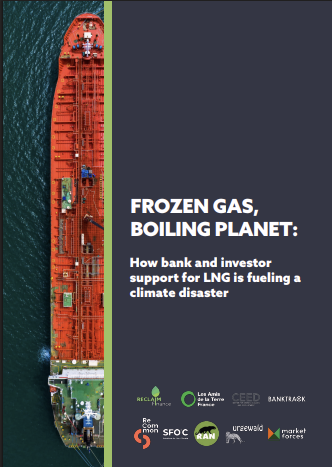
Frozen gas, boiling planet: How bank and investor support for LNG is fueling a climate disaster
The report analyses bank and investor financing of LNG expansion, finding US$213 billion in bank support and US$252 billion in investor exposure since 2021. It concludes this financing drives overcapacity, climate risk and misalignment with 1.5 °C pathways.
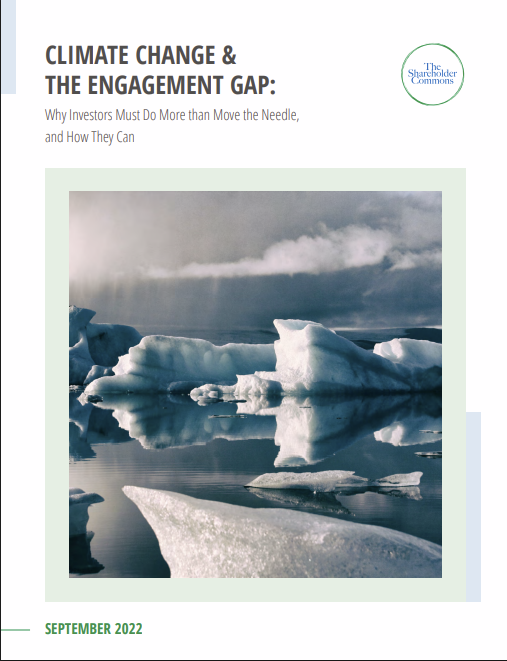
Climate change & the engagement gap: Why investors must do more than move the needle, and how they can
This report argues that climate change poses systemic risks to diversified portfolios and that conventional ESG engagement is insufficient. It proposes investor-led, enterprise-agnostic “guardrails” to limit greenhouse gas emissions, protect overall economic value, and complement inadequate regulation.
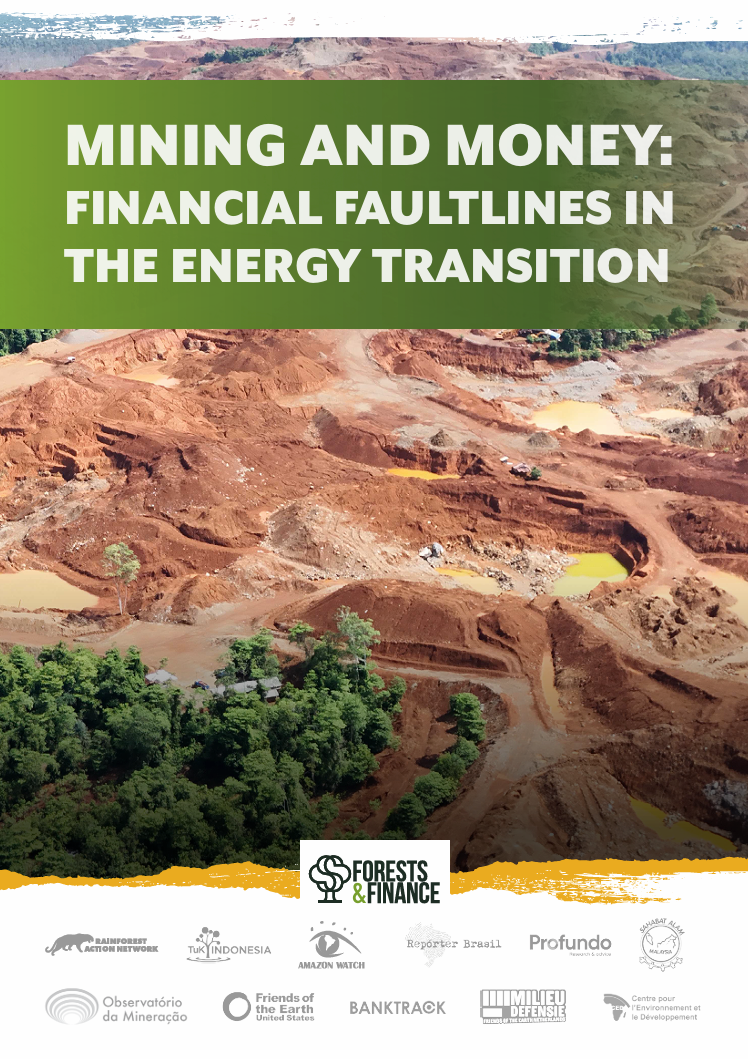
Mining and money: Financial fault lines in the energy transition
This report analyses global financing of transition mineral mining, showing concentrated capital flows, weak financial institution policies, and material environmental and human rights risks. It links bank and investor finance to mining harms across key regions and calls for stronger regulation and safeguards to enable a just energy transition.

We can’t ignore the largest source of methane
This article argues the global food system is the largest source of human-caused methane and deserves far more policy and funding attention. It maps key emission “hot spots”—ruminant livestock, food waste in landfills, biomass burning, and flooded rice fields—and outlines practical mitigation options from dietary shifts to landfill capture and improved rice management.

Systems-informed stewardship part II: Bringing a systems perspective to stewardship
This article applies a systems lens to stewardship, arguing that fragmented intermediation and entrenched short-term time horizons undermine sustainability outcomes. It calls for recognising these structural barriers as a critical step toward more effective, systems-informed stewardship.

Climate fiduciaries: part III – mind the model gap
The article explores how pension funds rely on imperfect climate models to assess financial risk and whether fiduciary duty requires deeper scrutiny of their assumptions. It highlights emerging legal challenges, model limitations, and the shift toward richer scenarios and climate narratives in investment decision-making.
A path to post-growth pensions: How rethinking retirement savings could help us ensure wellbeing for all
This report examines how pension systems reliant on perpetual economic growth face systemic financial, social and environmental risks. It proposes reorienting pensions towards a post-growth framework, emphasising wellbeing and multicapital outcomes over financial returns alone, and outlines pathways and barriers for pension fund reform.
Climate change risk index and municipal bond disclosures of United States drinking water utilities
This study develops a climate risk index for 1,455 US municipal drinking water utilities and compares projected risks with municipal bond disclosures. It finds material mismatches between climate risk and disclosure, highlighting utilities where climate adaptation and financial risk management may be insufficient.

The British Standards Institution (BSI)
British Standards Institution (BSI) Group is a global standards organisation supporting quality, safety and sustainability. It develops British and standards, certification, training and solutions across sectors, helping organisations manage risk, improve performance and meet regulatory and ESG requirements worldwide for supply chains, compliance and resilience in regulated and emerging markets.
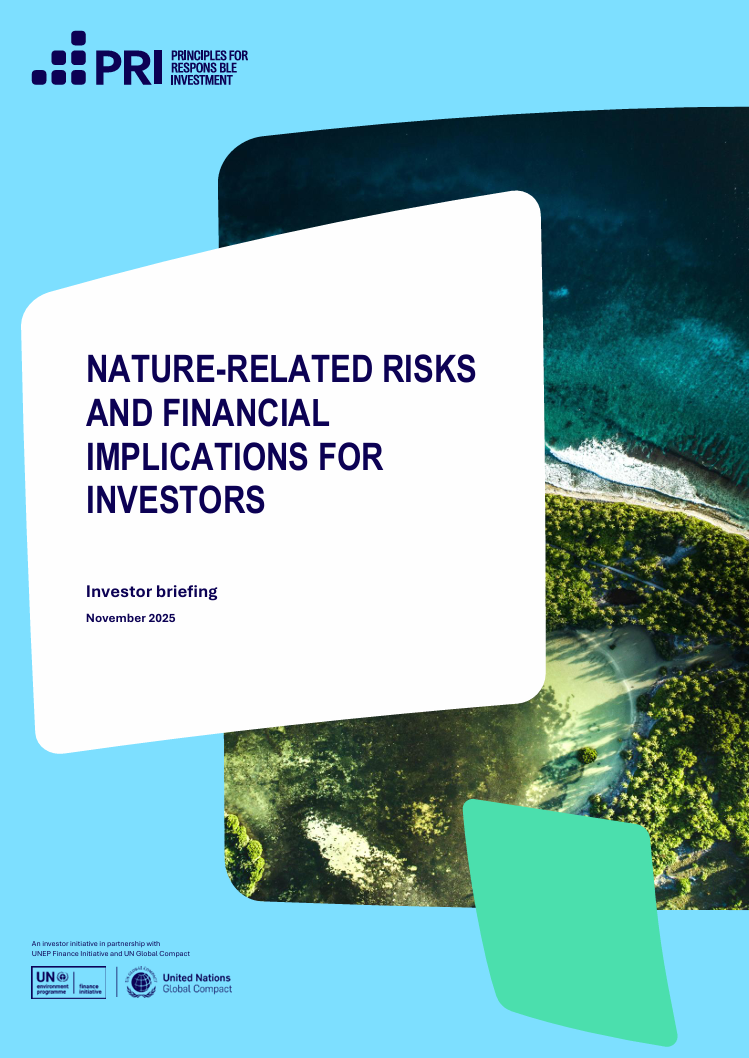
Nature-related risk and financial implications for investors
This investor briefing examines how nature-related physical, transition and system-level risks translate into financial risks for investors. It outlines macroeconomic and company-level impacts, and describes how institutional investors can integrate nature considerations into investment strategies, stewardship and policy engagement.
Sustainability disclosure landscape report for risk management: Insights from climate-focused case studies
This report reviews sustainability disclosure standards and regulatory uptake, focusing on climate-related risk management. Using case studies, it examines IFRS S1 and S2 implementation, materiality assessments and transition plans, highlighting disclosure gaps, data challenges and practical approaches to improve decision-useful climate risk reporting.
Mobilising investment for climate adaptation
This report assesses Australia’s escalating climate risks and argues for scaling adaptation investment. It recommends improved valuation methods, a nationally coordinated adaptation investment framework, and diversified public-private financing mechanisms to reduce long-term economic damage and enhance resilience.


