
Library | SDGs
GOAL 01: No Poverty
Refine
85 results
REFINE
SHOW: 16


Collaborative for Frontier Finance
Collaborative for Frontier Finance (CFF) is a multi-stakeholder initiative that aims to increase access to capital for small and growing businesses in emerging markets. CFF works with diverse stakeholders- including local capital providers and institutional investors to accelerate financing solutions that target Small and Growing Businesses.

Global microscope 2020: The role of financial inclusion in the COVID-19 response
This report is a study of the enabling environment for financial inclusion in 55 low to middle income countries. It focuses on the role of financial inclusion in terms of how governments in those countries responded to the COVID-19 pandemic.

A research and learning agenda for the impact of financial inclusion
There is consistent evidence of financial services contributing to improved well-being, yet the influence of contextual factors is largely unknown. The theory of change framework identifies several knowledge gaps that funders/researchers can address to develop a more accurate prediction of when financial inclusion policy will generate positive wellbeing outcomes.
Blueprint for business leadership on the SDGs: A principles-based approach
Business cannot thrive unless people and planet are thriving. This publication presents a framework for the next generation of business leadership with the intention to foster contribution to the United Nations Sustainable Development Goals at scale.

Inclusive business: What it is and why it matters
This report examines the concept of inclusive business as a means of enabling disadvantaged populations to participate in economic activity and share economic value. The report provides a comprehensive discussion of what an inclusive business initiative comprises and contains examples showing how they address social challenges.
Can government policies that drive strong economic outcomes for the private sector alleviate poverty?
The report examines how the adoption of policies that drive strong economic outcomes for the private sector often reduce poverty in the developing world, primarily through opportunities for job creation. In particular, the report calls for policies that promote greater access to credit and the protection of minority investors.

Strengthening financial resilience among rural and refugee communities in Rwanda
United Nations Capital Development Fund (UNCDF) has improved financial inclusion, through implementing its Expanding Financial Access and Digital and Financial Literacy (REFAD) program in Rwanda, and by working with local partners to help cater digital financial solutions and improve financial literacy for rural and refugee communities.

Financial inclusion: What have we learned so far? What do we have to learn?
Introduces financial inclusion as a dimension of financial development by presenting main findings and key insights from a micro and macroeconomic standpoint. Examines trends and provides insights into the effects of financial inclusion initiatives on the economy with a focus on household and micro, small and medium-sized (MSMEs) enterprise outcomes.

Australia's welfare 2019: Data insights
This 14th biennial welfare report of the Australian Institute of Health and Welfare, presents an overview of the welfare data landscape and explores selected welfare topics - including intergenerational disadvantage, income support, future of work, disability services, elder abuse and child wellbeing - in eight original articles.
In pursuit of deep impact and market-rate returns: KL Felicitas Foundation's journey
The report is an update of NPC’s 2015 review of the KL Felicitas Foundation, Investing for impact: Practical tools, lessons, and results. It explores how the KL Felicitas Foundation’s impact investing portfolio balances social impact with financial return.
An investor briefing on the apparel industry: Moving the needle on responsible labour practices
This report highlights why responsible labour practices in the apparel industry matter for investors. Drawing on investor case studies, the report explains how to implement effective strategies that address risks and negative human rights impacts in investee companies and their supply chains.
SDG Industry Matrix: Healthcare and life sciences
Compiled by the UN Global Compact and KPMG, the SDG Industry Matrixes focus on the opportunities, principle-based initiatives, and opportunities for collaboration across seven sectors. This matrix applies to companies and initiatives in the healthcare and life sciences sector, highlighting the nexus between sustainability and value.
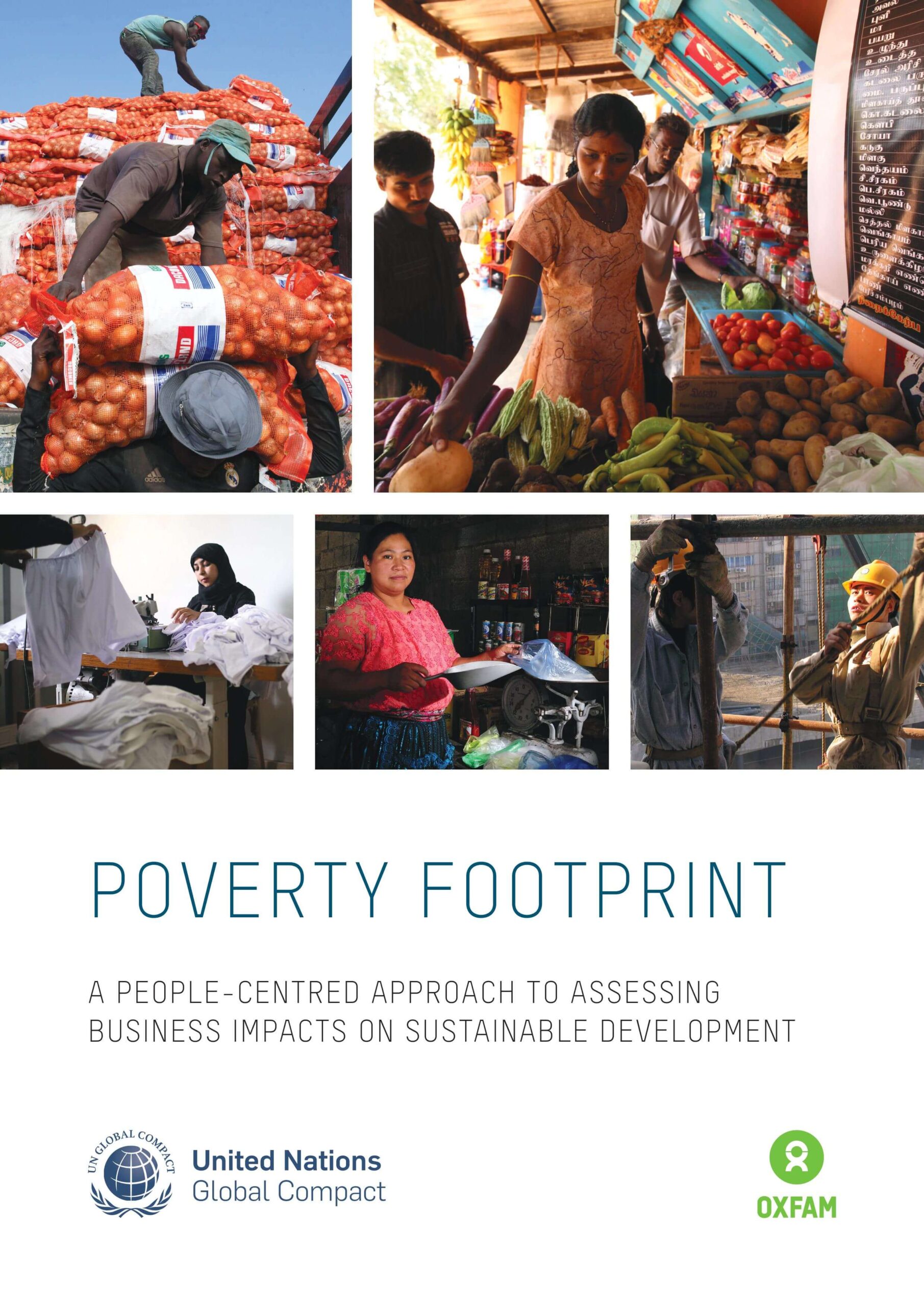
Poverty Footprint
The Poverty Footprint is a tool that enables companies and partners to implement a people-centred assessment of corporate impacts on poverty. The report is used to better understand the impacts of operations and value chain on people and poverty, and to turn this learning into action.
SDG Industry Matrix: Energy, natural resources and chemicals
The Industry Matrix aims to inspire and inform the private sector, driving it towards inclusiveness and sustainable prosperity by identifying opportunities for greater social and environmental change. This Matrix applies to industries involved in energy, natural resources and chemicals, outlining ways that companies can create value for shareholders as well as society.
SDG Industry Matrix: Industrial manufacturing
The Industry Matrix outlines 17 Sustainable Development Goals with industry specific practical examples that companies can incorporate and follow. These industry specific ideas outline opportunities to create blended value by addressing both shareholder interests and welfare of the society.
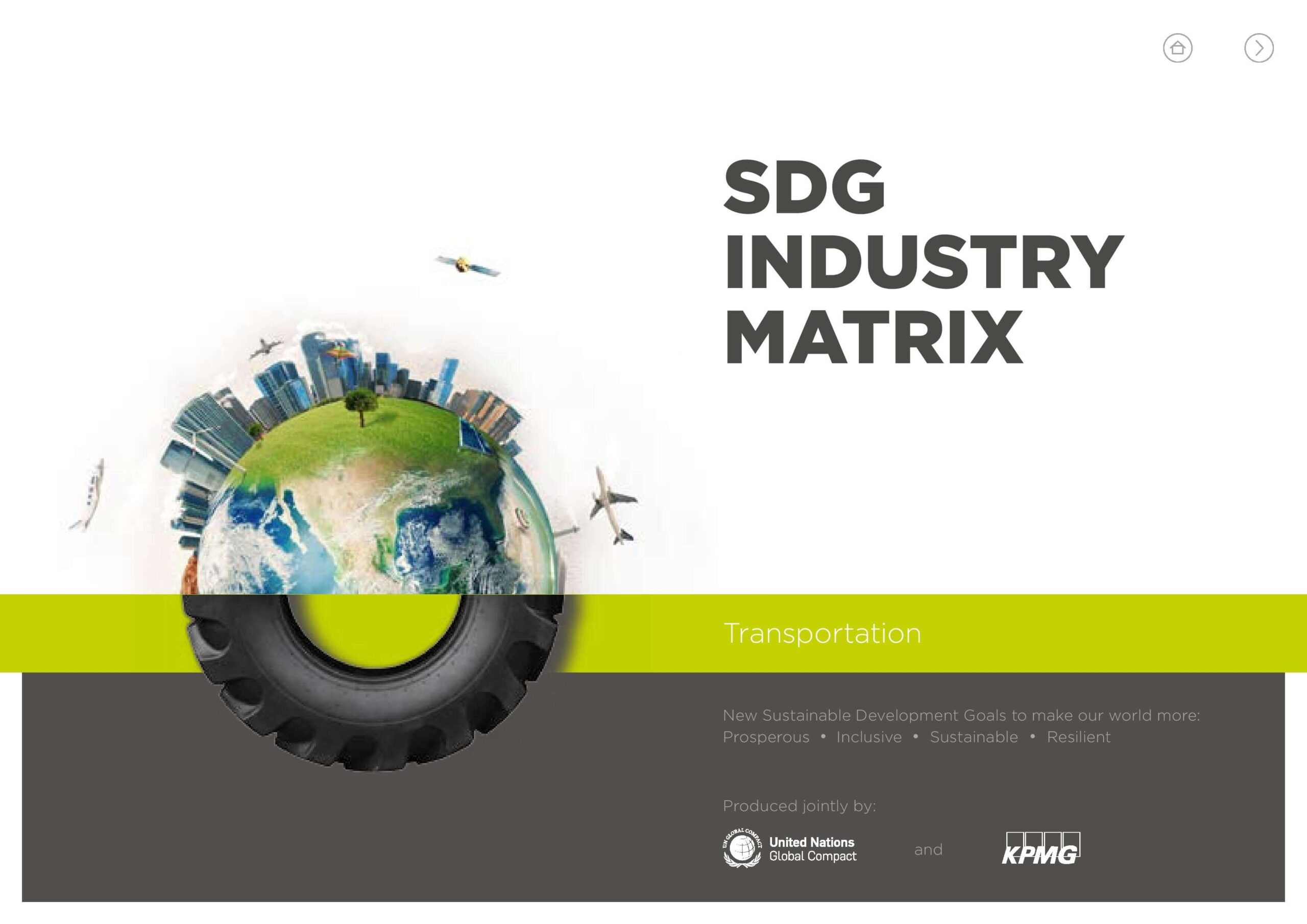
SDG Industry Matrix: Transportation
The main purpose of the Matrix is to attract and influence the transportation industry to take measures that drive the Sustainable Development Goals (SDGs). The Matrix provides industry specific ideas and leading examples for each SDG, and outlines opportunities for the industry, as well as society, through shared value.


