
Library | SDGs
GOAL 03: Good Health and Well-being
Refine
83 results
REFINE
SHOW: 16


Guide to banking and sustainability: Edition 2
This guide provides advice, best practices, and case studies for banks to integrate sustainability principles into their operations and services, ultimately enhancing the long-term value of their businesses.

A guide to SDG interactions: From science to implementation
This report examines the nature of interlinkages between Sustainable Development Goals (SDGs), underpinned by a framework for understanding sustainable development goal interactions. Policymakers, practitioners and scientists working on implementing SDGs are the intended audience for this report.

The great wake-up: Why and how investors must act on women's health - now
This paper highlights the critical need for investor action in support of women's health in the workplace and beyond. The report examines the current lack of attention to this topic in the financial sector and provides guidance for institutions to learn, set priorities, act and activate systems toward improving outcomes on women's health.

Integrating nutrition and obesity prevention considerations into institutional investment decisions regarding food companies: Australian investment sector perspectives
This study investigates views of stakeholders in the Australian investment sector on the incorporation of nutrition and obesity prevention considerations within institutional investment decision-making regarding food companies and identifies several key challenges and opportunities to the integration of nutrition and obesity prevention considerations.

Putting pandemics behind us: Investing in one health to reduce risks of emerging infectious diseases
This report discusses One Health, an approach that recognises the interdependent nature of human, animal, and environmental health. It presents an investment framework designed to mobilise finance for pandemic prevention and reduce the risks of emerging infectious diseases.

Climate poverty connections: Opportunities for synergistic solutions at the intersection of planetary and human well-being
The report highlights co-benefits of climate solutions that also improve human well-being. The report focuses on sub-Saharan Africa and South Asia and shows the potential of environmental solutions to help relieve poverty. It also recommends further evaluation on existing solutions and assessing unintended consequences.

Breaking the plastic wave: A comprehensive assessment of pathways towards stopping ocean plastic pollution
This report highlights innovative solutions and strategies that can reduce plastic pollution by 80% by transforming how plastic is produced, used, and managed. The report uses thorough analysis to identify specific opportunities for various stakeholders - from policymakers to businesses and consumers - to curb plastic waste and achieve measurable results.

Sustainability bond framework
This sustainability bond framework was published to finance expenditures supporting green and social categories compliant with eligibility criteria. The framework adheres to the highest standards of environmental and social impact reporting.

Child-lens investing framework
This report introduces the Child-Lens Investing Framework, an approach to impact investing designed to guide investors to invest using a child-centric lens. The report provides an overview of the framework's various components and explores its alignment with leading responsible and impact investing standards and frameworks.
Clearing the air: A case for investor action on air quality and a practical guide for getting started
This report summarises the health implications, financial risks, and actions investors and companies can take to reduce air pollution emit. It also highlights existing regulations across the world as well as upcoming sustainability reporting standards.

UN Environment Programme's adaptation gap report series
The Adaptation Gap Report series provides yearly updates on global progress in climate change adaptation. It assesses the status of adaptation planning, implementation, and finance, highlighting the increasing gap between the need for adaptation and the actions taken.

Workplace health is workplace wealth: A case for investor action on worker health and a practical guide for getting started
This report highlights the financial benefits to companies and the economy as a whole of investing in worker health. The report urges investors to consider population health when making investment decisions, and outlines a practical guide for companies to improve worker health. Key areas include job security, mental health, and good work-life balance.
What Doughnut Economics means for business: Creating enterprises that are regenerative and distributive by design
This guide is intended for businesses and individuals who want to implement Doughnut Economics principles. It provides guidance on how to redesign a business through its strategic decisions and operations by focusing on purpose, networks governance, ownership and finance. The paper explores barriers and innovations to sustainable business design.

Collaborative for Frontier Finance
Collaborative for Frontier Finance (CFF) is a multi-stakeholder initiative that aims to increase access to capital for small and growing businesses in emerging markets. CFF works with diverse stakeholders- including local capital providers and institutional investors to accelerate financing solutions that target Small and Growing Businesses.
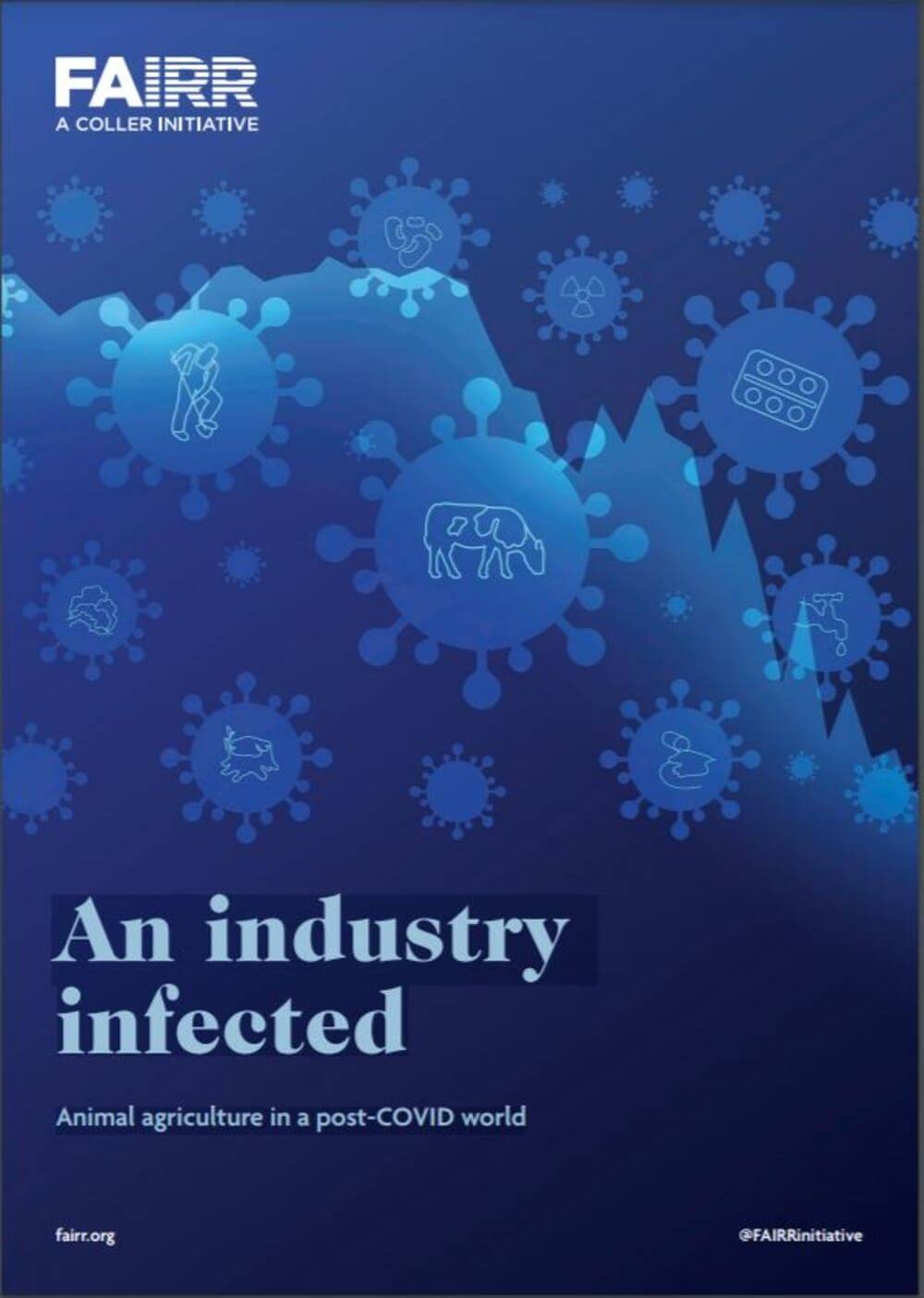
An industry infected: Animal agriculture in a post-COVID world
In light of COVID-19, this report explores the growing concerns that the animal protein industry is vulnerable to fostering diseases, supply-chain bottlenecks, and food safety issues. FAIRR promotes the Coller FAIRR Protein Producer Index, a tool for investors to analyse how companies address animal welfare, and worker and food safety.
Blueprint for business leadership on the SDGs: A principles-based approach
Business cannot thrive unless people and planet are thriving. This publication presents a framework for the next generation of business leadership with the intention to foster contribution to the United Nations Sustainable Development Goals at scale.


