
Library | SASB Sustainability Sector
Alternative Energy
Refine
199 results
REFINE
SHOW: 16


Cooler finance: Mobilizing investment for the developing world’s sustainable cooling needs
The report highlights the critical need for sustainable cooling in developing countries to meet climate goals, reduce emissions, and support health, food security, and productivity. It estimates a market demand of $600 billion annually by 2050 and provides strategies to attract private investment through policy, financing models, and international collaboration.

The effect of pricing instruments on CO2 emissions: Empirical evidence from Australia
The report evaluates Australia's short-lived carbon tax and renewable energy policies. It finds a 7% per capita emissions reduction from 2009 to 2018, with effects weakening after policy repeal. Coal exports increased during this period, potentially offsetting domestic emission reductions.

Blended finance and the gender-energy nexus: A stocktaking report
The report explores how gender-responsive financing can be integrated into the energy sector through blended finance. It highlights market trends, key players, case studies, and challenges in promoting gender equality within climate action. The report underscores the need for technical assistance and innovative financial structures to close gender gaps in the sector, enhancing both climate resilience and economic opportunities for women.

Securing minerals for the energy transition: Unlocking the value chain through policy, investment and innovation
The report highlights the need for collaboration and innovation to secure a stable supply of critical minerals. These minerals are essential for the energy transition but face supply-demand imbalances. The report discusses financial and regulatory barriers and outlines solutions involving policy initiatives, stakeholder partnerships, and investment to ensure a sustainable, affordable, and available supply of critical minerals for clean energy technologies.

OpenSecret's federal lobbying tool
OpenSecrets' Federal Lobbying tool offers insights into lobbying activities within the US government. It tracks spending by companies, industries, and interest groups, providing finance professionals with data on how lobbying efforts may influence legislation and policy, helping inform decision-making on regulatory and governance issues.

Towards orderly green transition: Investment requirements and managing risks to capital flows
The report examines the investment needs for a green transition in emerging markets (EMs), the current state of green investment flows, and the risks to capital flows. The report underscores the need for increased private investment and addresses the barriers and structural issues limiting green finance in EMs.

Sustainable finance roadmap 2024
The Australian Government's 2024 Sustainable Finance Roadmap outlines a plan to mobilise private capital towards achieving net-zero emissions. It focuses on improving transparency in climate and sustainability reporting, enhancing financial system capabilities, and demonstrating government leadership. Key initiatives include mandatory climate-related financial disclosures, developing a sustainable finance taxonomy, and issuing sovereign green bonds.

Scaling up sustainable aviation fuel supply: Overcoming barriers in Europe, the US and the Middle East
The report explores the challenges and key actions needed to scale sustainable aviation fuel (SAF) production in these regions. It highlights technological advancements, regulatory frameworks, and strategic collaborations necessary to achieve 10% SAF by 2030 and sector decarbonisation by 2050. The report emphasises the importance of investments, policy support, and public awareness to drive the adoption of SAF globally.

Clean Energy Council's clean energy Australia report series
The series provides an annual overview of Australia's renewable energy sector. This benchmark series covers industry trends, policy developments, and technology profiles across various energy sources such as solar, wind, hydro, and battery storage. It offers insights into state and federal targets, investment trends, and employment impacts within the clean energy landscape.

Net Zero Investment Framework 2.0
The Net Zero Investment Framework (NZIF) 2.0, updated in June 2024, provides guidelines for investors to align their portfolios with the Paris Agreement goals. It includes detailed methodologies for various asset classes, governance, strategic asset allocation, and policy advocacy, focusing on achieving real economy emissions reductions through independent fiduciary decisions.

Capital for kilowatts: The (non)-inflationary impacts of the green transition
The report examines Australia's need for significant investment in renewable energy infrastructure. It argues that despite high costs, the green transition's inflationary effects will be minimal and manageable, contributing to long-term macroeconomic stability and a more sustainable future.
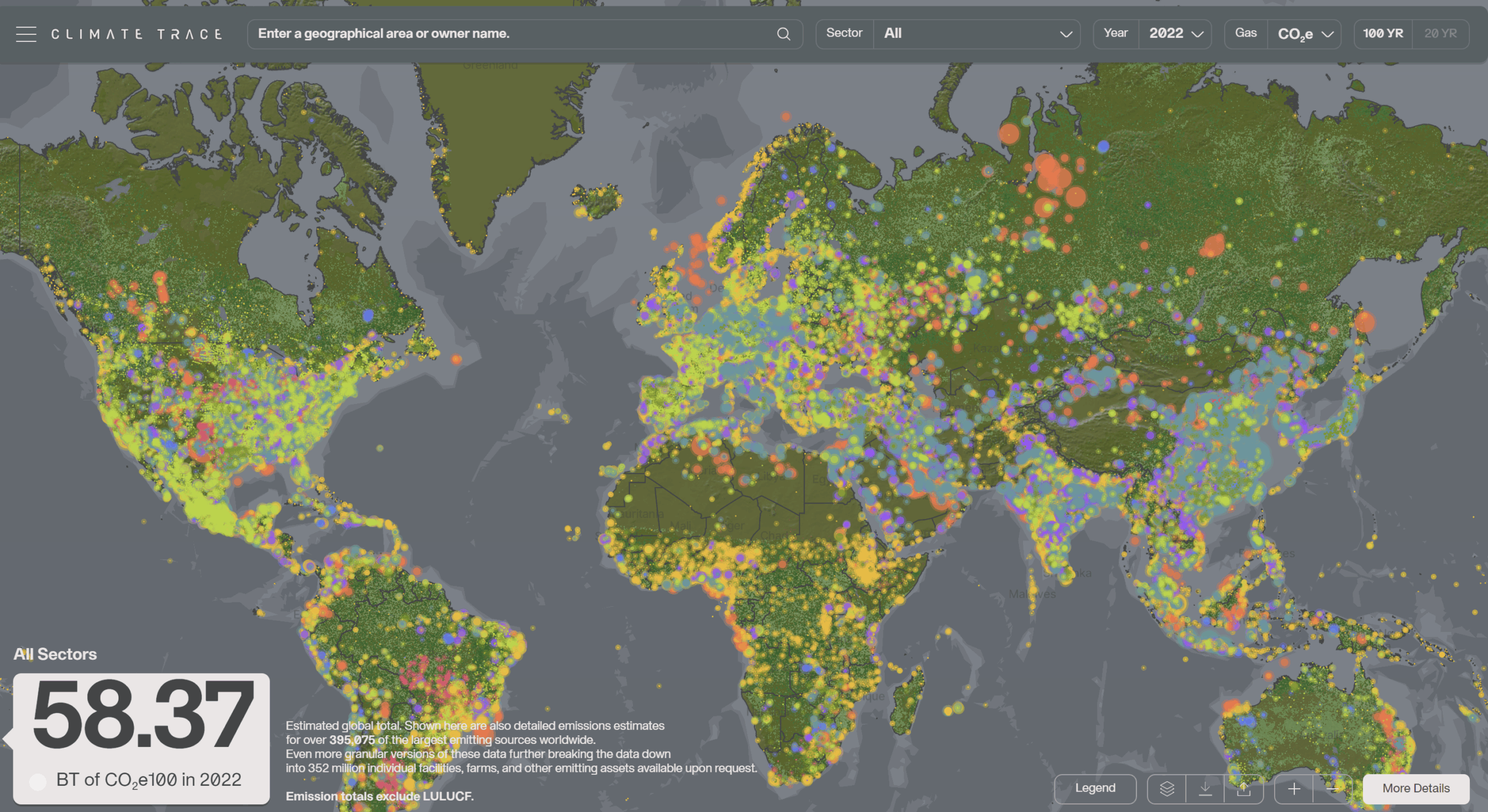
Climate TRACE
Climate TRACE is a comprehensive tool for tracking global greenhouse gas emissions. Utilising satellite data and AI, it provides real-time insights, helping finance professionals assess environmental impacts and make informed decisions. This tool supports ESG integration and sustainability in financial practices.

Exploring the cooperative economy report 2023
The 2023 World Cooperative Monitor Report provides rankings of the top 300 global cooperatives by turnover and GDP per capita. It highlights the economic impact and member benefits of cooperatives, offering insights into their performance, sustainability, and contribution to local communities and development goals.
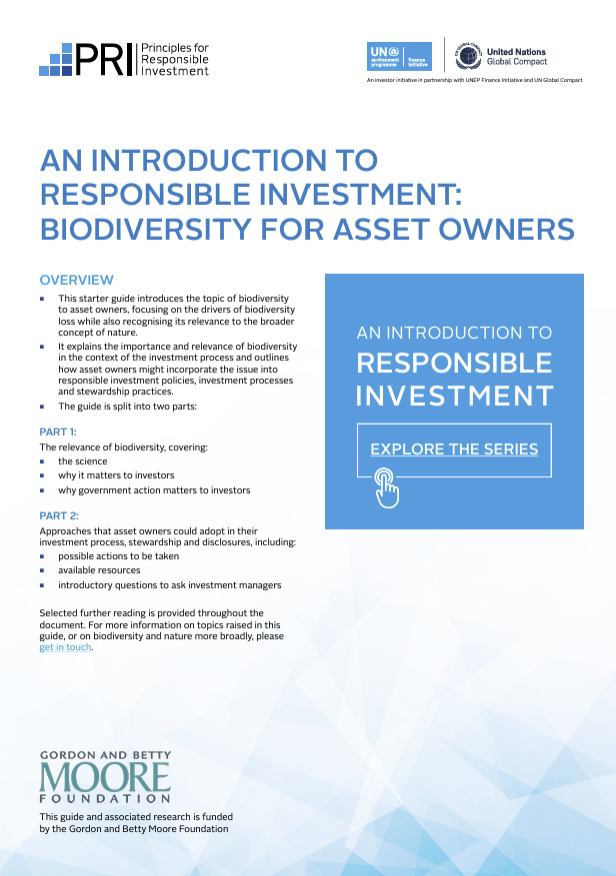
An introduction to responsible investment: Biodiversity for asset owners
This introductory guide for asset owners explores the financial risks and opportunities associated with biodiversity loss. It explains the relevance of biodiversity to investment processes and outlines how asset owners can incorporate biodiversity considerations into their responsible investment policies, stewardship practices, and disclosures.

Empowering key development finance institutions in Asia to accelerate the decarbonization of the energy sector
The report outlines Asia's challenges to decarbonising energy while driving economic development. It suggests there is significant room for improvement among regional banks and to achieve their commitments to the Paris Agreement, firms need to implement more stringent sustainable finance policies.
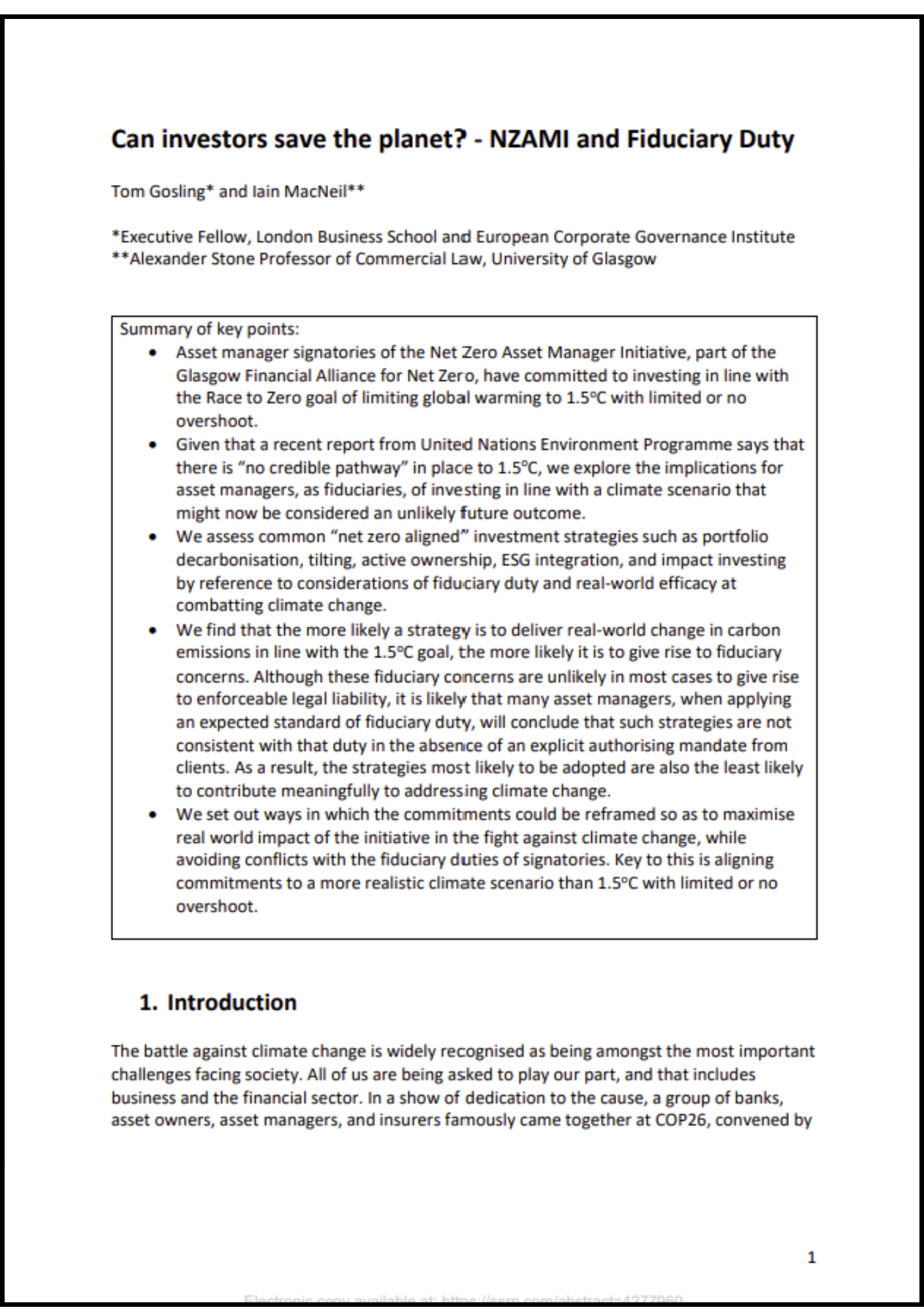
Can investors save the planet? - NZAMI and fiduciary duty
The report evaluates asset managers' strategies aligning with the Race to Zero goal of limiting global warming while considering the possibility of a different climate scenario. It finds impactful environmental approaches might pose fiduciary challenges. Authors propose revising commitments to enhance climate impact while upholding fiduciary duties.


