
Library | SASB Sustainability Sector
Corporate & Retail Banking
Refine
440 results
REFINE
SHOW: 16


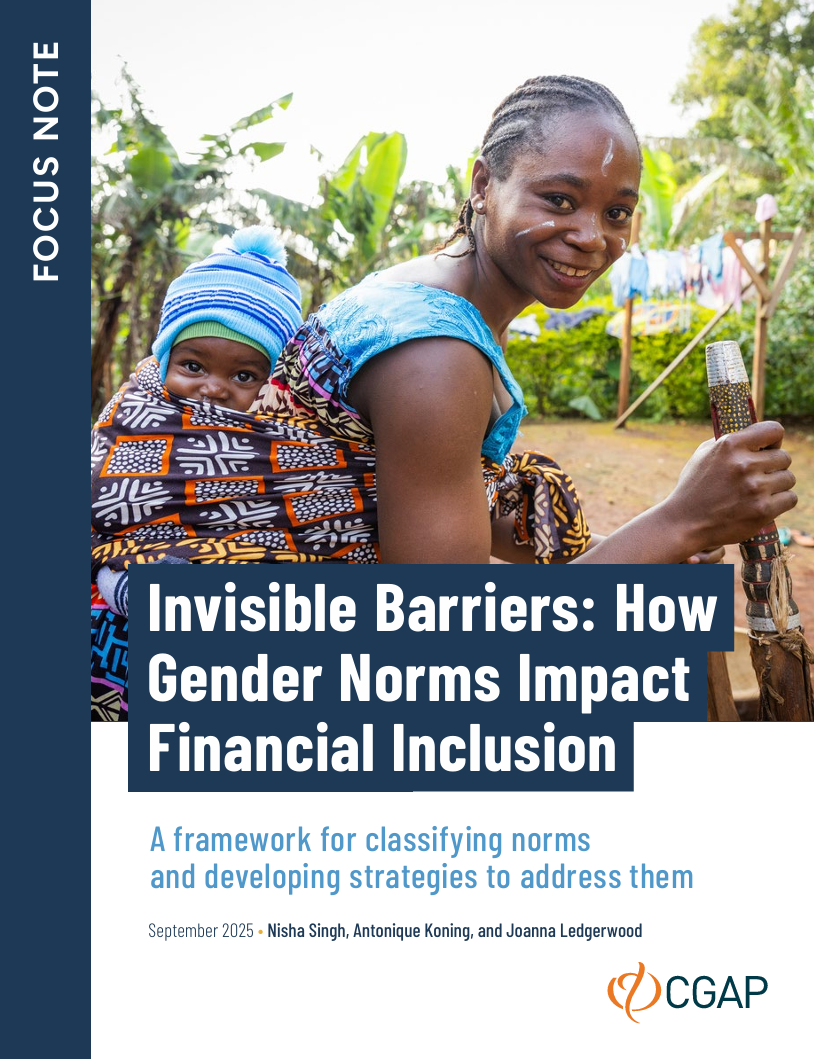
Invisible barriers: How gender norms impact financial inclusion A framework for classifying norms and developing strategies to address them
This CGAP Focus Note presents a framework classifying gender norms by strength and prevalence to address barriers to women’s financial inclusion. Drawing on diagnostics in Rwanda, Tanzania and Uganda, it outlines four intervention strategies for development and market actors to transform financial systems and advance women’s economic empowerment.
China sustainable investment review series
The China Sustainable Investment Review is a recurring research series that provides a structured overview of the development of China’s sustainable investment market. It examines policy evolution, market practices, product types, and ESG integration across financial institutions using publicly available information.
Too-big-to-strand? Bond versus bank financing in the transition to a low-carbon economy
The paper shows bond markets price fossil fuel stranding risk, while syndicated bank loans do not. Firms substitute bonds with bank loans as climate policy risk rises, concentrating exposure in large banks and raising “too-big-to-strand” regulatory concerns.
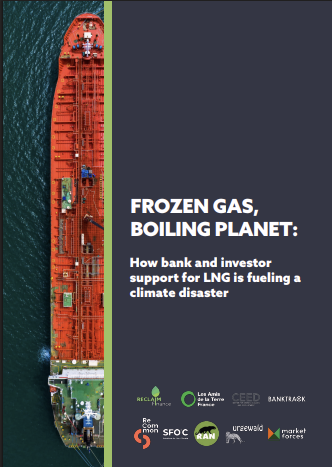
Frozen gas, boiling planet: How bank and investor support for LNG is fueling a climate disaster
The report analyses bank and investor financing of LNG expansion, finding US$213 billion in bank support and US$252 billion in investor exposure since 2021. It concludes this financing drives overcapacity, climate risk and misalignment with 1.5 °C pathways.
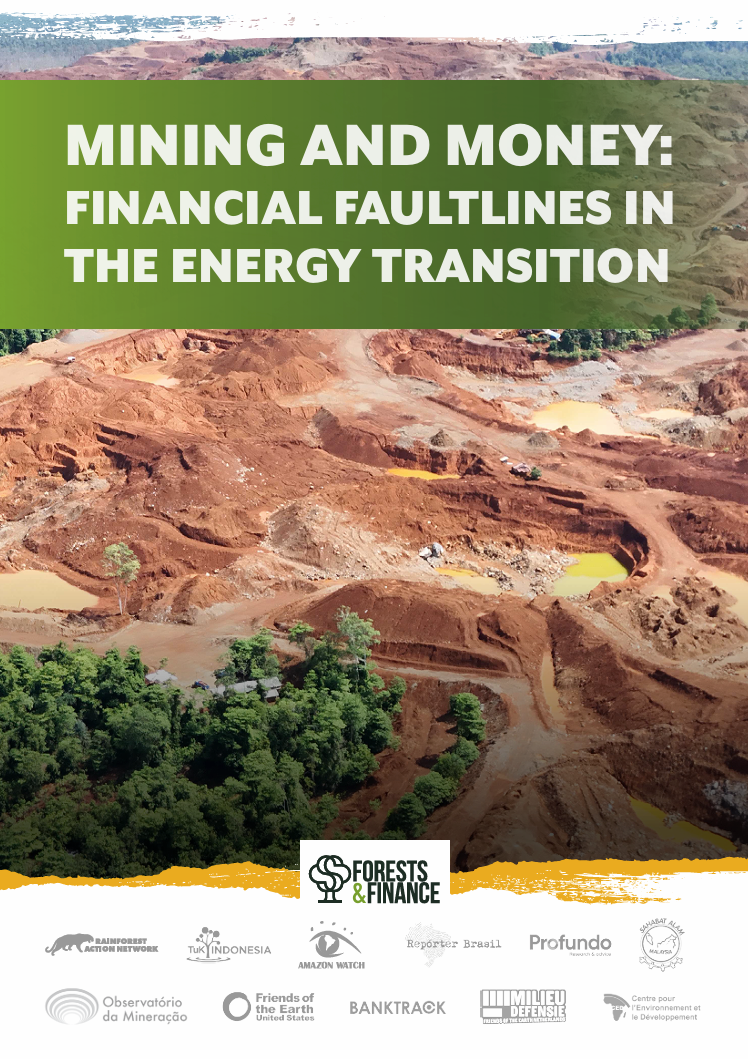
Mining and money: Financial fault lines in the energy transition
This report analyses global financing of transition mineral mining, showing concentrated capital flows, weak financial institution policies, and material environmental and human rights risks. It links bank and investor finance to mining harms across key regions and calls for stronger regulation and safeguards to enable a just energy transition.
From promise to performance: Reforming blended finance for scale
This report examines why blended finance has failed to scale in emerging markets. Drawing on expert interviews and analysis, it identifies structural barriers and proposes reforms to improve transparency, risk pricing, liquidity, project pipelines and additionality, aiming to better mobilise private capital.
Nature-related risk and financial implications for investors
This investor briefing examines how nature-related physical, transition and system-level risks translate into financial risks for investors. It outlines macroeconomic and company-level impacts, and describes how institutional investors can integrate nature considerations into investment strategies, stewardship and policy engagement.
Advancing gender equality and women’s empowerment: Target setting guidance for banks
This guidance outlines how banks can set and implement measurable targets to advance gender equality and women’s empowerment across leadership, portfolios, financial inclusion and ecosystems, aligned with the Principles for Responsible Banking and Women’s Empowerment Principles.
Sustainability disclosure landscape report for risk management: Insights from climate-focused case studies
This report reviews sustainability disclosure standards and regulatory uptake, focusing on climate-related risk management. Using case studies, it examines IFRS S1 and S2 implementation, materiality assessments and transition plans, highlighting disclosure gaps, data challenges and practical approaches to improve decision-useful climate risk reporting.
Global landscape of climate finance series
The Global Landscape of Climate Finance is a benchmark series by Climate Policy Initiative that tracks global climate finance flows, examining the sources, financial instruments, sectors, uses and geographic distribution of public and private investment supporting climate mitigation, adaptation and resilience.
Banking on climate chaos series
The Banking on Climate Chaos is a multi-year research series assessing how major global banks finance fossil fuel activities. It provides a consistent framework to review lending and underwriting linked to fossil fuels and expansion, supporting year-on-year comparison and broader analysis of banking practices.
Climate risk self-assessment survey series
This series presents APRA’s Climate Risk Self-Assessment Surveys, which review how APRA-regulated entities approach governance, risk management, metrics, targets and disclosure of climate-related financial risks. It provides a consistent, periodic view of industry practices and alignment with prudential guidance over time.
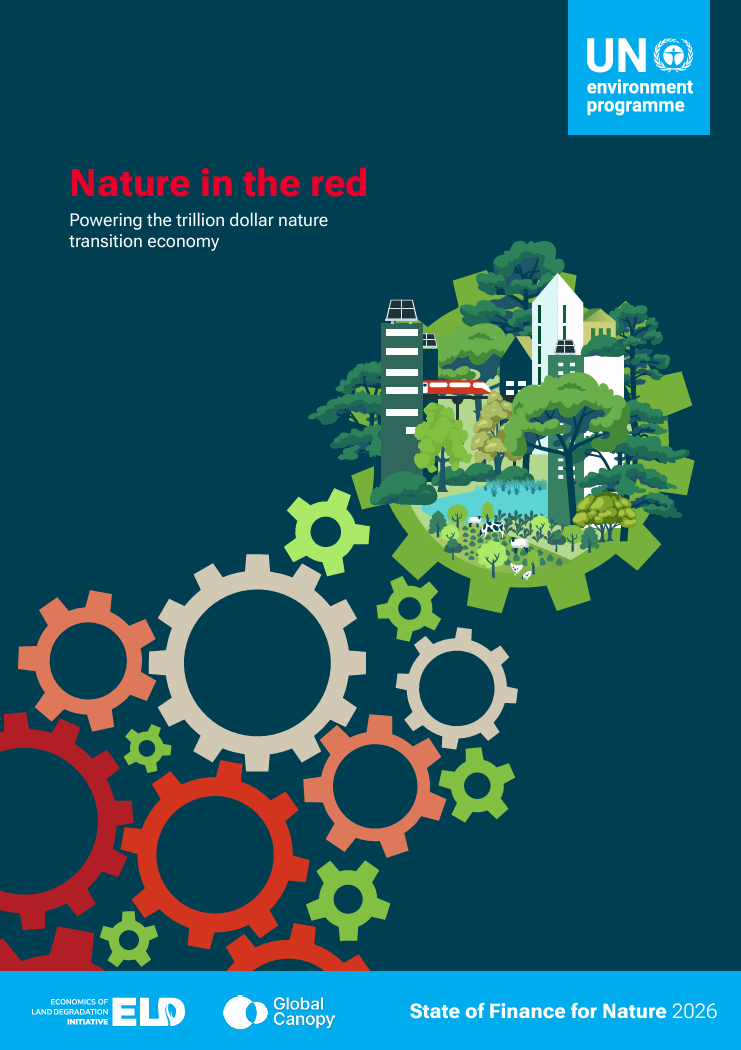
State of finance for nature 2026: Nature in the red: Powering the trillion dollar nature transition economy
UNEP’s State of Finance for Nature 2026 finds global finance remains heavily skewed towards nature-negative activities. In 2023, US$7.3 trillion harmed nature versus US$220 billion for nature-based solutions. Meeting Rio Convention targets requires more than doubling nature investment by 2030.
CGAP's Impact Path Finder
Impact Pathfinder is an interactive evidence platform developed by CGAP that maps how financial inclusion interventions contribute to development outcomes. It synthesises global research to inform investors, funders and policymakers on effective pathways, contextual factors and evidence gaps.
NatureAlign
NatureAlign is a decision-support tool by Nature Finance that helps financial institutions identify, assess and respond to nature-related risks and opportunities by aligning portfolios, strategies and governance with nature-positive outcomes.
Climate transition and global financial stability
This literature review assesses evidence on how delayed, failed or uneven climate transitions affect UK and global financial stability. It finds intensifying physical and transition risks, potential mispricing and spillovers, and significant uncertainty, highlighting EMDE transitions as central to managing systemic financial risk.


