
Library | SASB Sustainability Sector
Corporate & Retail Banking
Refine
440 results
REFINE
SHOW: 16


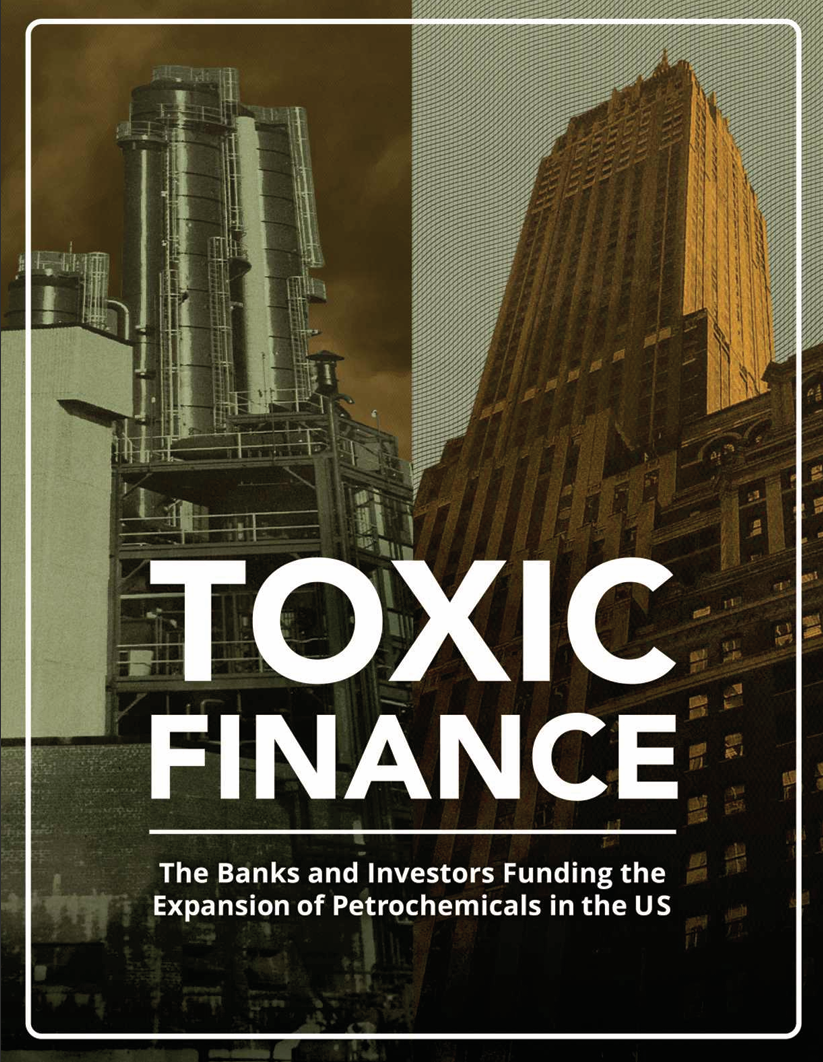
Toxic finance: The banks and investors funding the expansion of petrochemicals in the US
This report argues that banks and investors are enabling US petrochemical expansion despite rising market, legal, climate and public health risks, identifying major financiers and investors while warning that continued support may expose them to financial, reputational and regulatory harm.
Horizon scanning: Financial crime risks and regulation in the UK
This report outlines emerging UK financial crime risks for 2026, highlighting AI-enabled fraud, cyber-enabled crime, sanctions evasion, and organised networks. It examines evolving regulatory expectations, stricter enforcement, and expanded oversight, emphasising the need for proactive risk management, robust controls, and enhanced compliance frameworks.
Mind the gap: An insurance climate vulnerability assessment
APRA assesses Australia’s home insurance protection gap under climate scenarios, finding affordability pressures may increase uninsured households from one in seven to one in four by 2050. Rising weather risks and economic factors drive premiums, widening financial system risks, particularly in regional areas, with implications for households, insurers and banks.
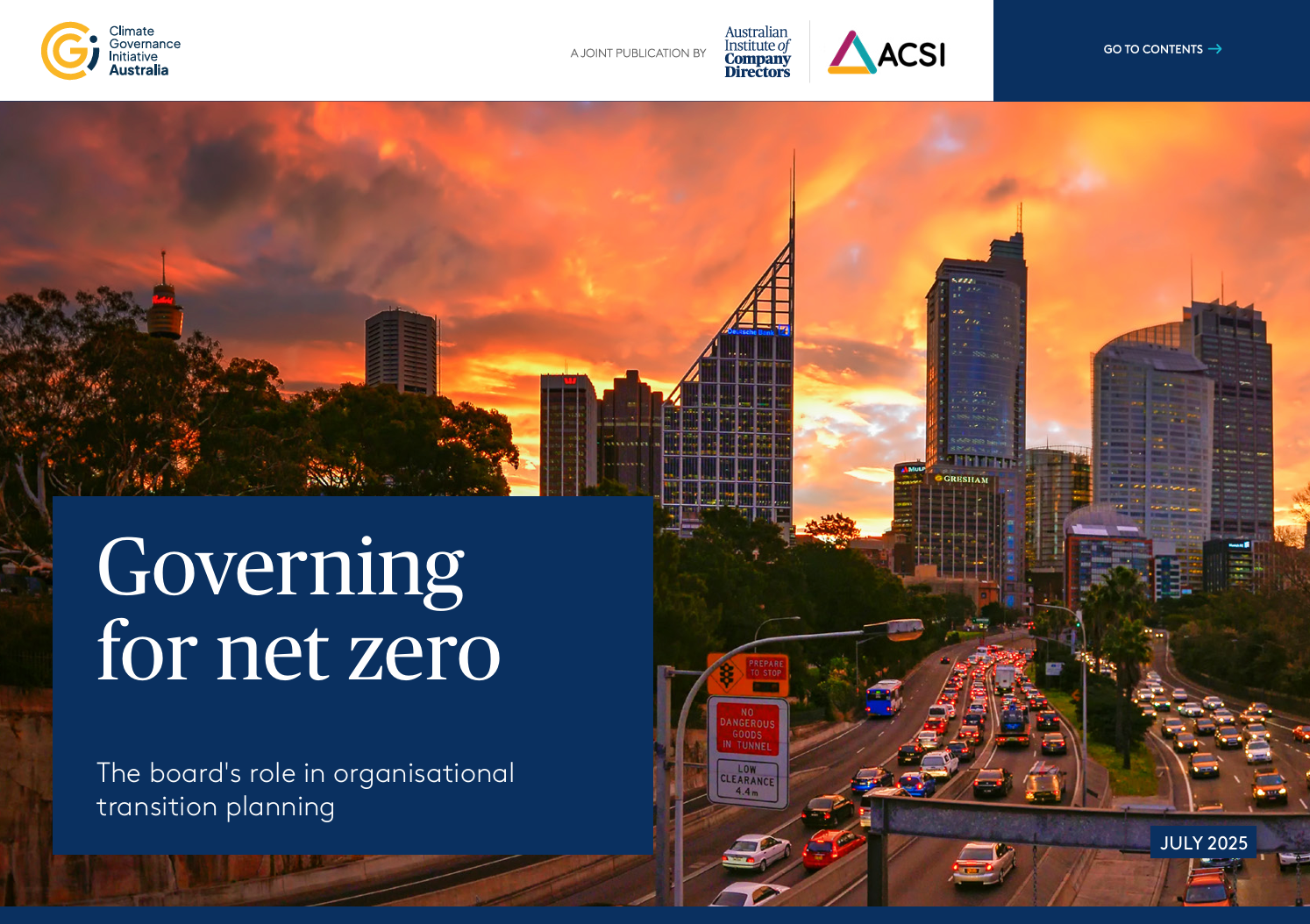
Governing for net zero: The board's role in organisational transition planning
This report guides Australian boards on integrating net zero transition planning into strategy, governance, disclosure and stakeholder engagement. It outlines directors’ legal duties, mandatory climate reporting requirements, and practical oversight questions to help organisations manage climate-related risks, opportunities and implementation.
Climate-nature scenario development for financial risk assessment
This report develops integrated climate-nature scenarios for financial risk assessment, showing that combined climate and nature policies provide a fuller view of agricultural, biodiversity and ecosystem-service risks than separate approaches, with implications for central banks, supervisors and future stress-testing frameworks.

European Central Bank (ECB)
European Central Bank (ECB) is the central bank of the eurozone, responsible for monetary policy, price stability and financial supervision. Based in Frankfurt, it sets interest rates, manages the euro and oversees banking systems. ECB provides data, research and policy insights relevant to economists, investors and finance professionals.

You Built This
This article argues that modern investment strategies fuel economic extraction while often underperforming simpler alternatives. It calls on investors to realign portfolios with productive, community-oriented investments that generate real economic and social value.
Australian financial institutions’ views on climate and clean energy opportunities in South and Southeast Asia
Assesses Australian financial institutions’ views on climate and clean energy investment in South and Southeast Asia, highlighting growth potential, limited current exposure, key risks, and barriers. It emphasises blended finance, policy support, and government intervention to mobilise private capital and scale regional investment.
The 12th national risk assessment: Property prices in Peril
First Street argues climate risk is reshaping US housing via higher insurance costs and climate-driven migration, with projected net residential property value losses of about US$1.2 trillion by 2055 and 84% of census tracts facing some negative valuation effects.
Regulating finance for biodiversity: An assessment for the global biodiversity framework
This report assesses how financial regulation in Indonesia, Brazil, China, the EU and the US aligns with Global Biodiversity Framework targets, finding biodiversity integration generally weak and recommending stronger disclosure, due diligence, taxonomies, sanctions and sector-specific rules to redirect finance away from forest-risk activities.
Breaking down silos: Navigating the intersection of environmental and social risks for investors
Examines how environmental and social risks interact to create compounding financial impacts for investors. Presents a systems-based framework and agrifood case study illustrating portfolio volatility, credit risk and supply disruptions. Recommends integrated risk assessment, value-chain finance, stewardship and blended finance to strengthen portfolio resilience.
A climate-aligned financial system: Leverage points for transformation
This study models the financial system’s role in climate transition using participatory system dynamics with Dutch financial actors. It identifies reinforcing feedbacks like learning, technological lock-in, finance culture and passive investment and proposes seventeen policy and institutional interventions to redirect capital towards sustainable assets and align finance with Paris Agreement goals.
Scaling up green investment in the global south: Strengthening domestic financial resource mobilisation and attracting patient international capital
This report examines why capital flows ‘uphill’ from emerging and developing economies and argues that scaling green investment requires stronger domestic financial resource mobilisation. It recommends developing local currency bond markets, empowering national development banks, reforming multilateral development banks, and establishing a climate finance facility to attract patient international capital.
From bonds to blended Finance: How a diverse range of financial instruments are financing climate adaptation and resilience
Analyses 162 cases (2015–2025) of 11 financial instruments financing climate adaptation. Finds blended finance most prevalent, with instruments mainly supporting ex-ante risk reduction. Adaptation finance is largely pooled and increasingly multicountry. Use varies by income level, highlighting growing innovation to mobilise capital for resilience.

Starting and transitioning into sustainable finance careers
This guide outlines pathways for starting or transitioning into sustainable finance careers. It explains ESG integration, sustainable and impact investing, sector roles, required skills, barriers and transition strategies, supported by Australian context, expert insights and case studies from Pollination and Aware Super.
Nature-based risk assessment: Integrating project-related finance
Guidance from UNEP FI and the Equator Principles on integrating project-related finance into nature-based risk assessments. It outlines frameworks, governance and disclosure expectations to help financial institutions identify, assess and manage biodiversity, water and pollution-related risks at project and portfolio levels.


