
Library | SASB Sustainability Sector
Industrials
Refine
55 results
REFINE
SHOW: 16


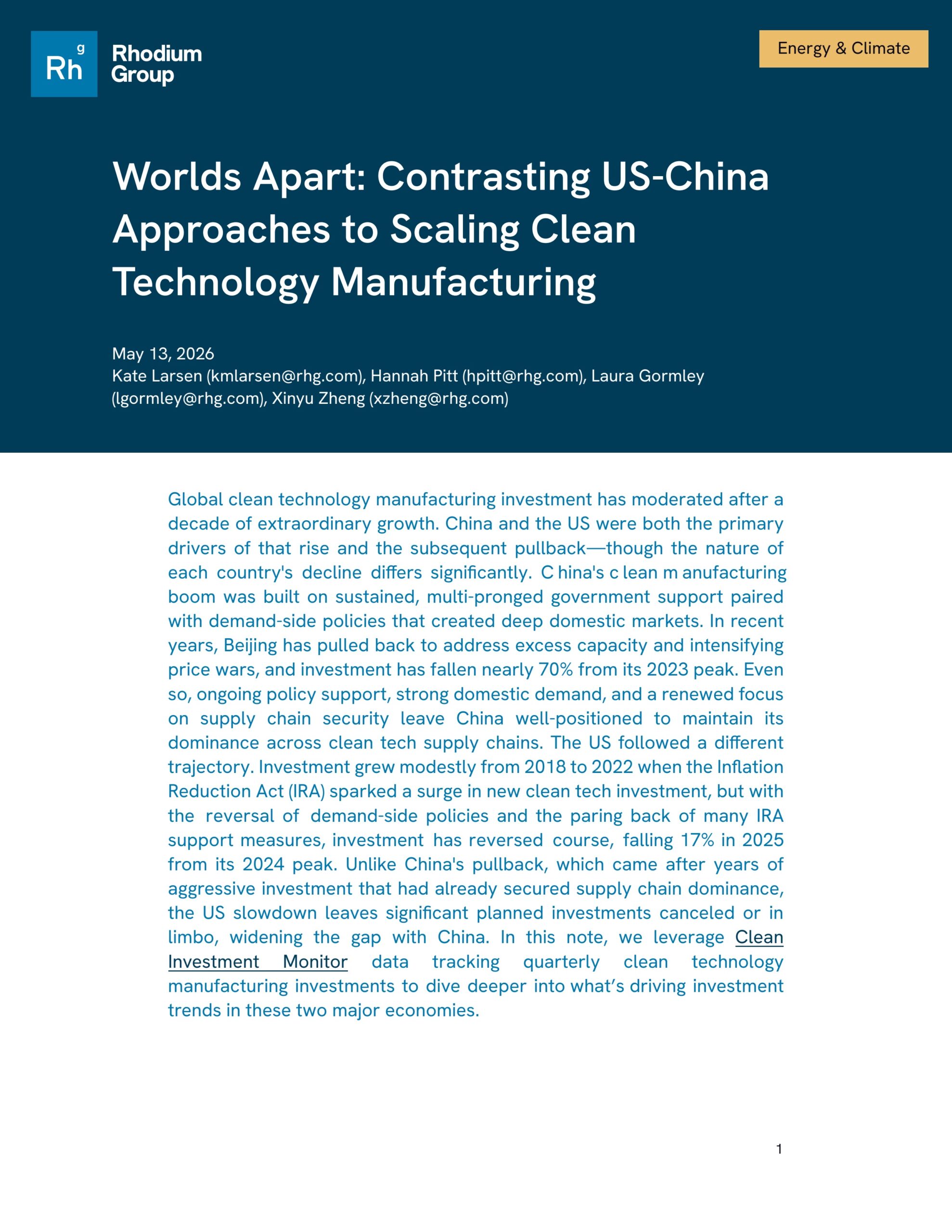
Worlds apart: Contrasting US-China approaches to scaling clean technology manufacturing
Global clean technology manufacturing investment has declined significantly, led by pullbacks in China and the United States. While China addresses overcapacity, US investment reversed following the One Big Beautiful Bill Act. This report explores the diverging drivers, policy shifts, and future competitive landscape for both nations.
Circular economy practice in India: Three case studies
This report examines India’s transition to a circular economy, highlighting policy frameworks like Extended Producer Responsibility and NITI Aayog’s strategic focus areas. Through case studies of Siemens, Tata Steel, and Volvo Construction Equipment, it demonstrates how circular principles drive resource efficiency, waste reduction, and business value.
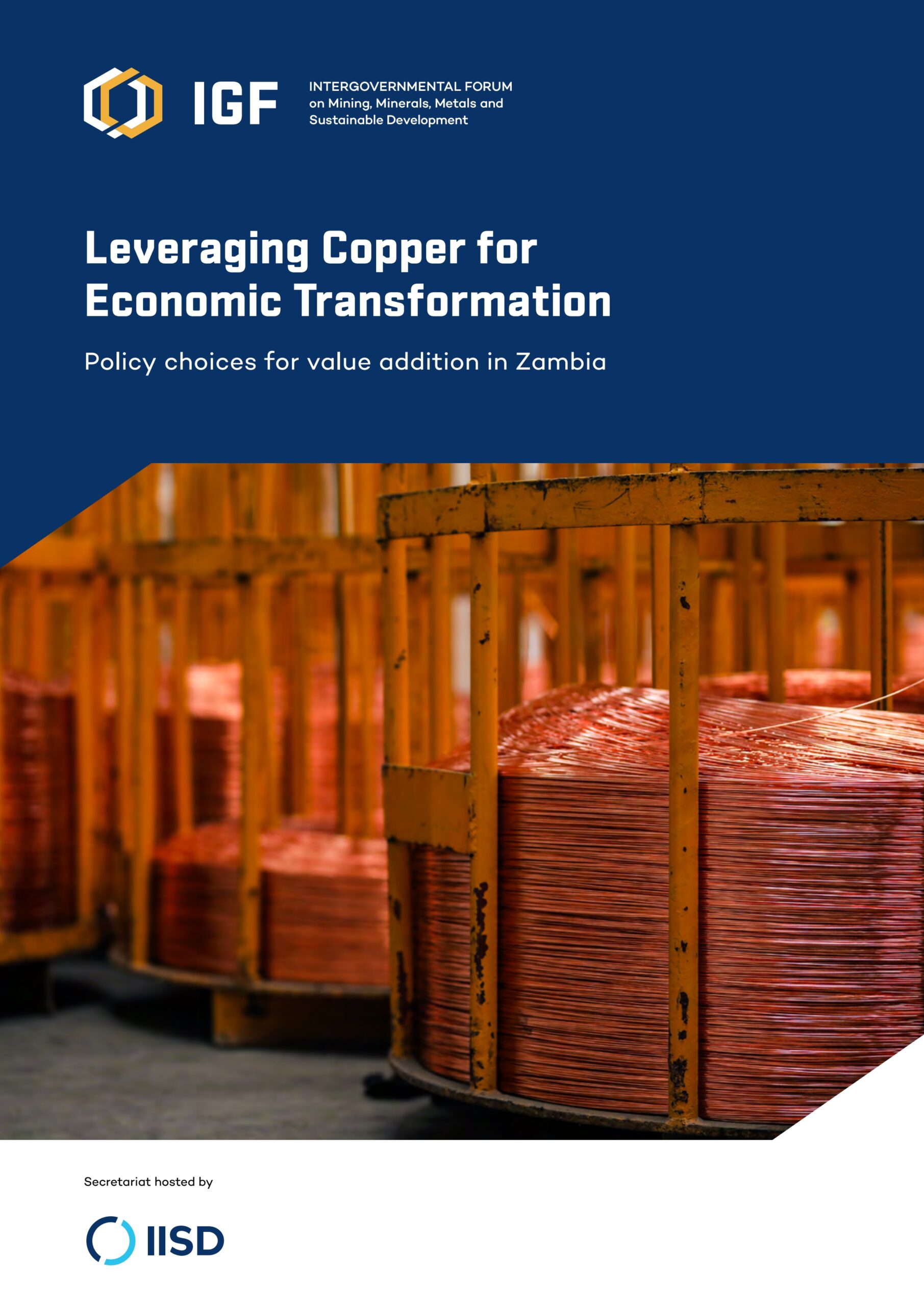
Leveraging copper for economic transformation: Policy choices for value addition in Zambia
This report examines strategies for Zambia to add value to its copper resources. It identifies expanding smelting and refining as immediate opportunities to increase annual exports by USD 3.7 billion by 2030. Success requires addressing binding constraints, primarily unreliable electricity, high finance costs, and trade logistics inefficiencies.
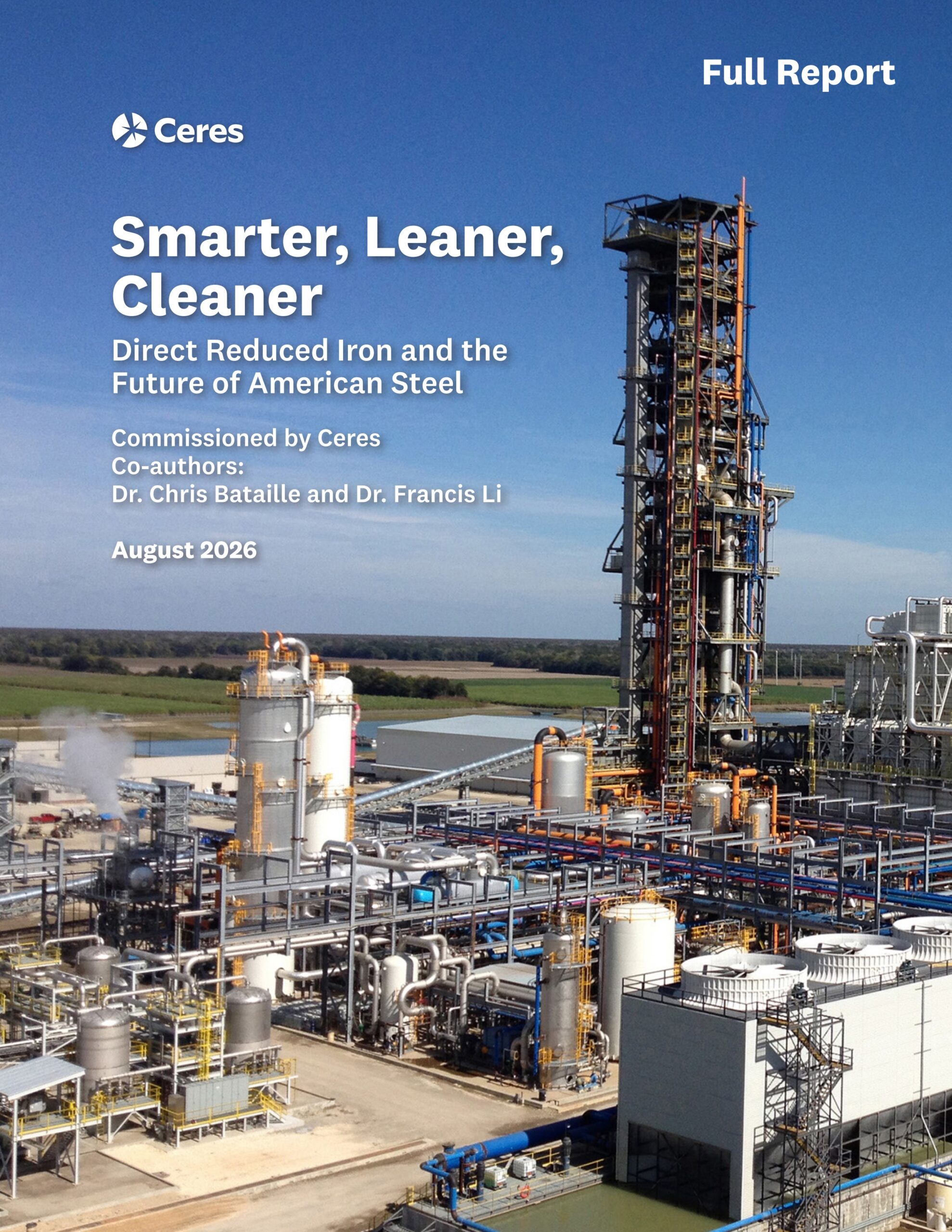
Smarter, leaner, cleaner: Direct reduced iron and the future of American steel
Direct Reduced Iron (DRI) is the most cost-effective new-build investment for the American steel sector. This analysis confirms that natural-gas-based DRI meets investment hurdles across all regions, offering a 15% real return and significant emissions reductions while providing flexibility for future hydrogen integration.
Industrial policies for multi-stage production: The battle for battery-powered vehicles
This research analyses industrial policies for the multi-stage electric vehicle supply chain. It evaluates consumer subsidies and local content requirements, finding that while protectionist measures expand domestic production, they can significantly increase costs and reduce overall adoption compared to unconditional subsidies that maximise scale economies.
Driving Australian climate innovation: Unlocking capital to support a clean industrial revolution
Commissioned by IGCC and authored by Pollination, this report reviews climate innovation policy in California, Denmark, the Netherlands, South Korea and Germany to identify gaps in Australia's policy landscape and recommend measures to drive transition industry investment, including strengthening the Safeguard Mechanism and establishing a national industrial strategy.
Investing in the arms race: The companies building nuclear weapons and their financiers
This report analyses 25 companies producing nuclear weapons and their financial backers. Highlighting over $1 trillion in total investments and financing from 301 institutions, it urges the financial sector to use its leverage to reject nuclear armament and make choices that benefit global security and humanity.
Forging a global clean steel economy: Leveraging trade to reduce the green premium
This report examines how decarbonising the global steel industry requires separating ironmaking from steelmaking. By leveraging international trade, countries can co-locate energy-intensive processes in resource-rich regions like Brazil, Australia, and India. This strategic approach reduces production costs and helps lower the green premium for clean steel.
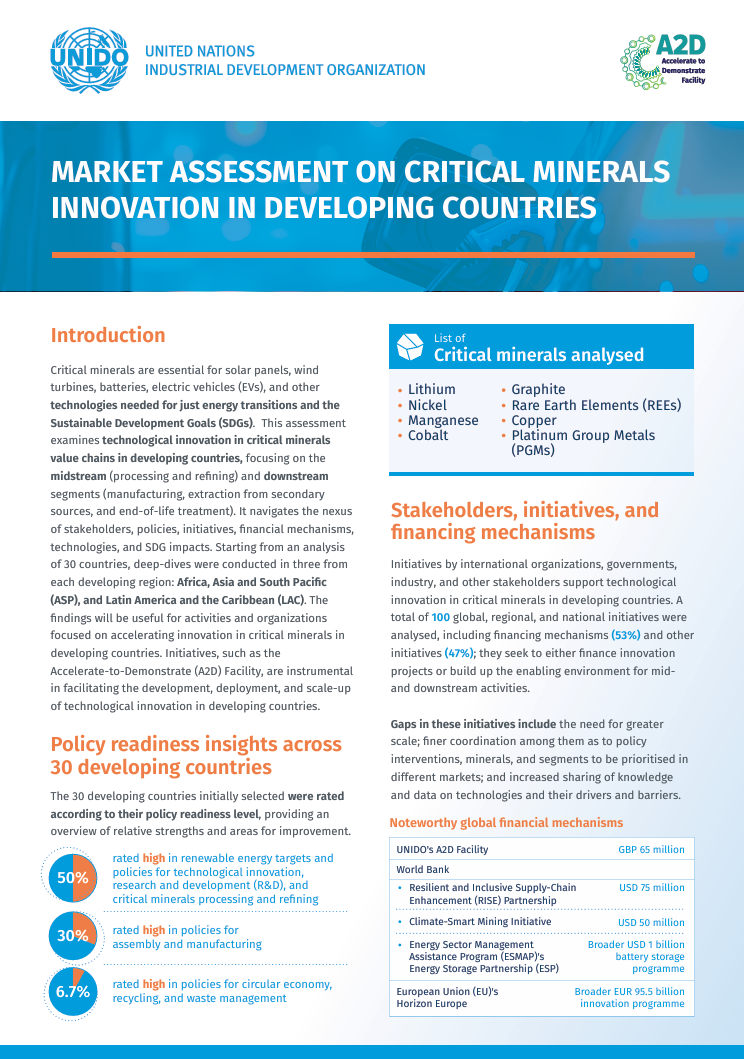
Market assessment on critical minerals innovation in developing countries
This report assesses critical minerals innovation in developing countries, focusing on midstream processing and downstream manufacturing, recycling and end-of-life treatment. It reviews 30 countries, highlights policy and financing gaps, and recommends stronger infrastructure, coordination, technology transfer and support for innovation ecosystems.
Net zero: A practical guide for cooling businesses
This guideline provides practical guidance for cooling manufacturers to achieve Net Zero by 2050, outlining emissions hotspots, regulatory drivers and decarbonisation levers across Scopes 1–3, with emphasis on efficiency, low-GWP refrigerants, value-chain collaboration and science-based targets.
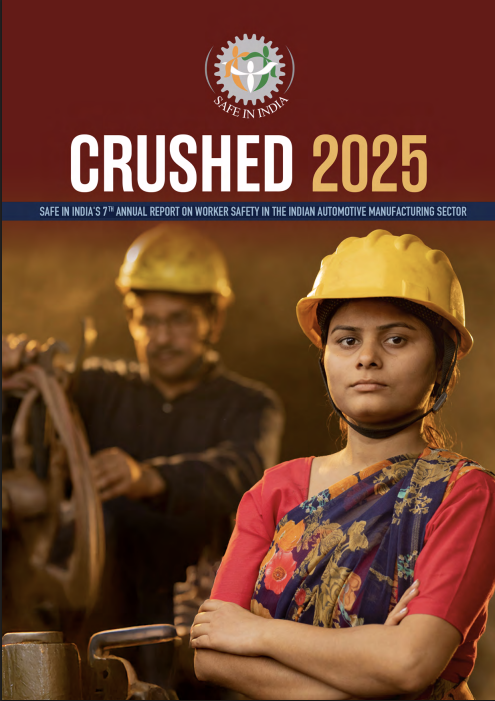
Crushed series
CRUSHED is a longitudinal research series by the Safe in India Foundation assessing worker safety in India’s automotive manufacturing and supplier ecosystem. Drawing on annual field evidence across multiple years, the series tracks workplace conditions, governance practices, and enforcement gaps to support consistent analysis over time.
Assessing the credibility of a company’s transition plan: framework and guidance
This report presents a harmonised framework to assess the credibility of corporate climate transition plans. It defines core plan elements, assessment principles, and a four-step process to evaluate ambition, feasibility, consistency, governance, and financial alignment with Paris-aligned decarbonisation pathways.
Responsible business conduct in the arms sector: Ensuring business practice in line with the UN guiding principles on business and human rights
The UN Working Group reviews arms sector regulation, finding persistent exports linked to humanitarian and human rights law violations. It identifies weak political will, opaque oversight and limited human rights due diligence, and urges stronger application of the UN Guiding Principles by states and companies.

ADS group: UK defence ESG charter
The UK Defence ESG Charter sets a voluntary, sector-wide framework for defence companies, covering climate transition, societal impact, and governance and ethics. It promotes decarbonisation, supply chain responsibility, skills development, ethical conduct, and collaboration, while allowing signatories to retain individual ESG strategies.
Mapping the international presence of the world's largest arms companies
SIPRI maps the global footprint of the 15 largest arms companies, identifying 400 majority-owned foreign entities. International presence aligns with geopolitical ties and major arms markets. US and European firms dominate; Chinese and Russian companies show limited overseas reach.
Agreement on international responsible investment in the insurance sector: ESG investment framework for the theme: Controversial weapons and the trade in weapons with high-risk countries
The framework guides insurers in managing ESG risks from controversial weapons and weapons trade with high-risk countries. It outlines international standards, investment screening criteria and due diligence processes, including risk assessment, voting, engagement and exclusion. It also provides guidance on monitoring, accountability and public reporting.


