
Library | Finance relevance
General / All finance professionals
Refine
915 results
REFINE
SHOW: 16


Paris Agreement Capital Transition Assessment
PACTA for Banks is a free, open-source climate scenario analysis toolkit that enables banks to assess how well their corporate lending portfolios align with climate scenarios, using sector and asset-level data to inform lending strategy and climate target-setting.
LSFI Data Platforms
The Luxembourg Sustainable Finance Initiative Tools page curates open-source data platforms supporting sustainable finance. It provides access to climate, biodiversity, social and transition-risk tools used for ESG integration, risk analysis, policy assessment and investment decision-making across financial institutions.
GHG Protocol Life Cycle Databases
The GHG Protocol Life Cycle Databases page lists third-party life cycle inventory and emissions datasets to support product life cycle and corporate value chain (Scope 3) greenhouse gas accounting. It links to multiple global and sector-specific LCI sources, with summaries of content, formats and accessibility.
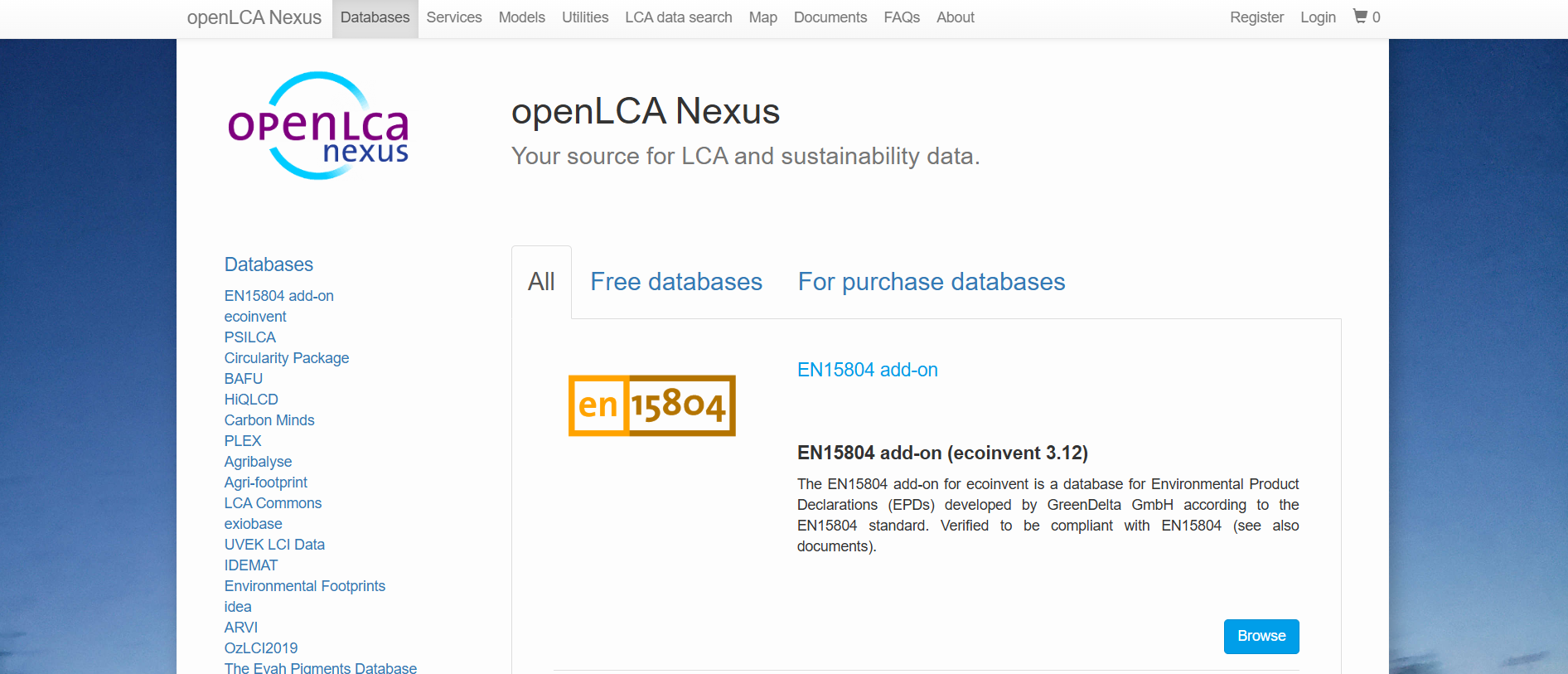
openLCA Nexus
openLCA Nexus is an online repository providing access to life cycle assessment databases for environmental and sustainability analysis. It hosts free and licensed datasets from multiple providers, covering energy, materials, agriculture, transport and waste, designed for use within the openLCA software environment.
Ecoinvent Association
Ecoinvent Association is a Swiss not-for-profit association providing one of the world’s most comprehensive Life Cycle Inventory (LCI) databases for environmental and sustainability assessments. Its transparent, high-quality environmental data supports life cycle assessment (LCA), carbon footprinting and supply chain impact analysis for researchers, companies and policymakers.
ADEME (French Agency for Ecological Transition)
ADEME (French Agency for Ecological Transition) is a French public agency supporting ecological and energy transition, climate action, renewable energy, circular economy, and sustainable development. It mobilises citizens, businesses and territories, funds research and innovation, and provides expertise, tools and guidance to reduce greenhouse gas emissions and protect natural resources.

GreenDelta
GreenDelta GmbH is an independent sustainability consulting, engineering and software development company specialising in life cycle assessment (LCA), sustainability data, research and tools. It develops internationally used sustainability software such as openLCA and delivers consulting, data services and project-based research to enterprises, institutes and policy clients.

MIT Sloan Sustainability Initiative
MIT Sloan Sustainability Initiative is an academic sustainability hub at MIT Sloan School of Management offering sustainability education, research and community engagement. It delivers sustainability courses, internships, events and research projects to develop sustainable business leadership and systems change, connecting students, faculty and partners globally.
Climate Interactive
Climate Interactive creates and shares scientifically grounded climate simulators and interactive tools that help users explore climate solutions, energy policy impacts and systems thinking. It supports workshops, role-playing games and training to inform effective, equitable climate action worldwide, with tools like En-ROADS and C-ROADS widely used by educators and policymakers.

Climate fiduciaries: part I – the climate prisoner’s dilemma
This article explores how climate change is reshaping fiduciary duty for pension funds, through court cases, legal analysis, and the concept of systemic risk. It introduces the “climate prisoner’s dilemma,” arguing that climate-aware investment may be shifting from discretionary to obligatory for long-term fiduciaries.
Orbae
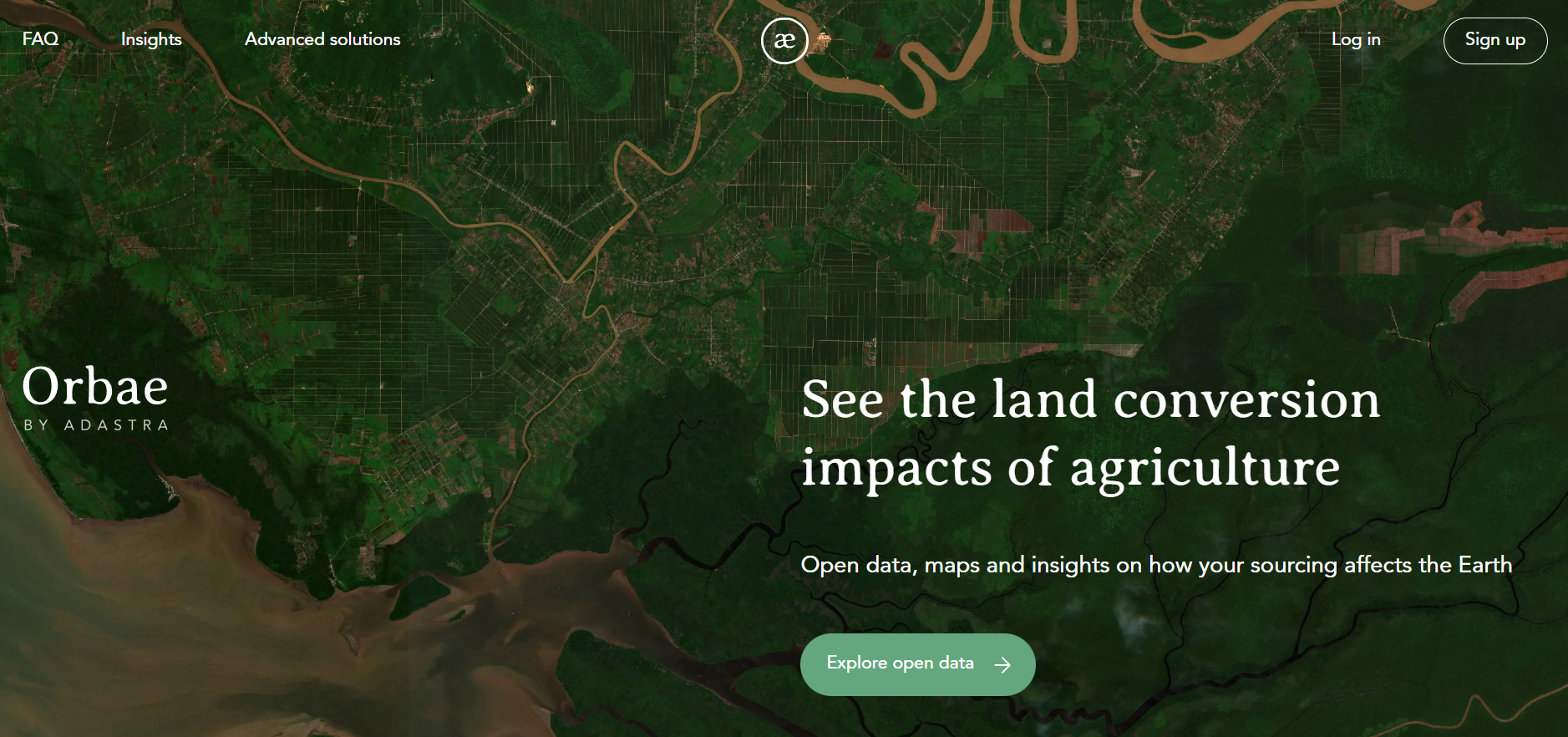
Orbae is an open-data platform by AdAstra Sustainability that quantifies greenhouse gas emissions from agricultural land-use change. It provides high-resolution, spatially explicit data to assess land conversion impacts across crops, regions and supply chains, supporting climate risk analysis, reporting and sustainable finance decision-making.
OS-Climate: Transition Analysis
OS-Climate Transition Analysis is an open-source scenario-modelling tool that simulates economic, energy and climate system interactions. It supports assessment of transition risks, technology pathways and investment trade-offs under alternative decarbonisation scenarios for financial and strategic analysis.

Nature Enters the Boardroom: Why Directors Are Paying Attention
Drawing on Australia’s first national study of board-level engagement with nature, this article shows how directors are treating nature as a material governance and financial issue. It highlights how boards are extending climate governance systems to manage nature-related risks, adopt frameworks like TNFD, and build resilience and long-term value despite policy uncertainty.
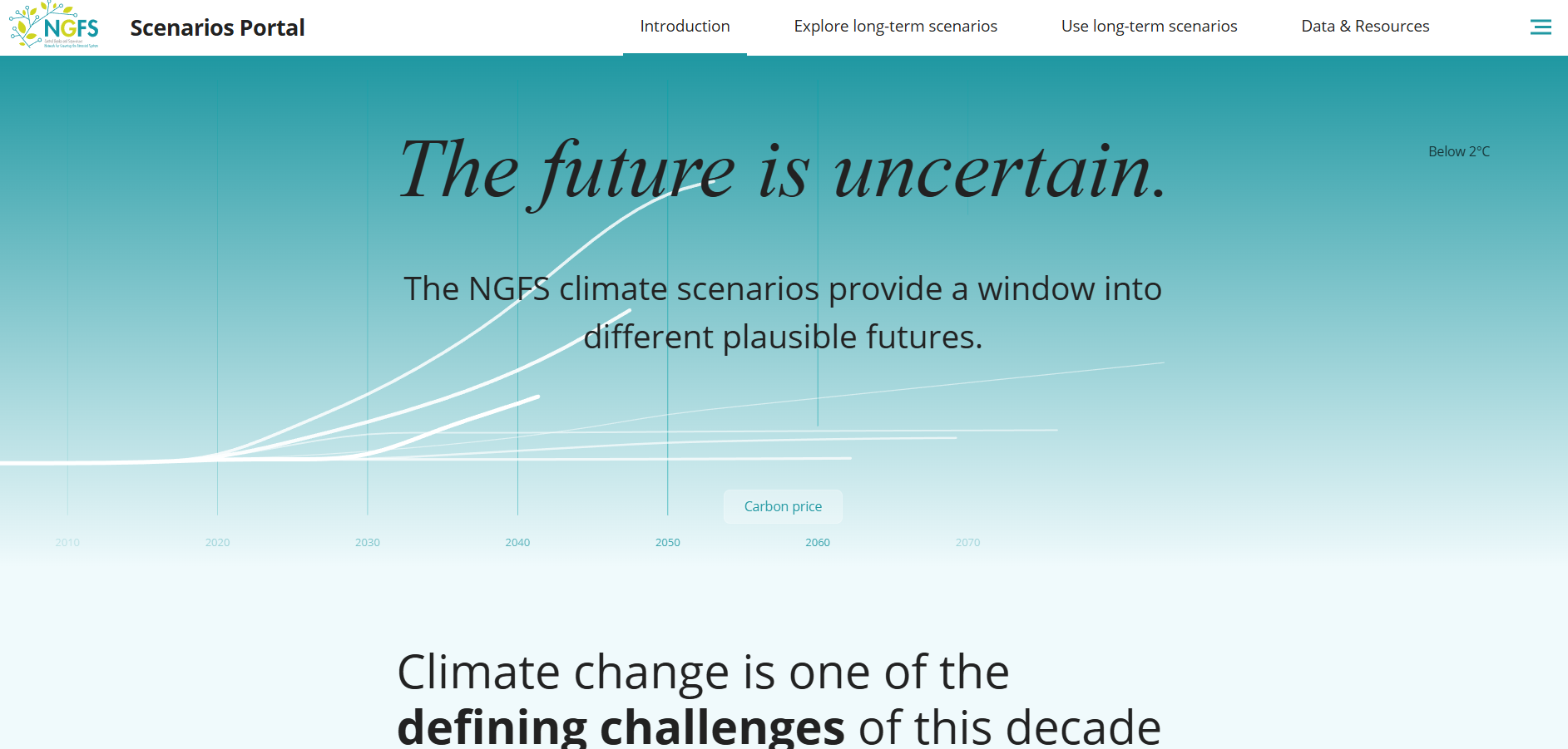
NGFS Scenarios Portal
The NGFS Scenarios Portal is a publicly available database developed by the Network for Greening the Financial System, providing harmonised climate and macroeconomic scenarios. It supports central banks and supervisors in assessing short- and long-term climate-related financial risks through consistent, transparent scenario analysis.
Luxembourg Sustainable Finance Initiative (LSFI)
Luxembourg Sustainable Finance Initiative (LSFI) is a not-for-profit sustainable finance coordinating body based in Luxembourg. It raises awareness, promotes and helps develop sustainable finance initiatives, and implements the Luxembourg Sustainable Finance Strategy to support financial sector transition and position Luxembourg as a global sustainable finance hub.
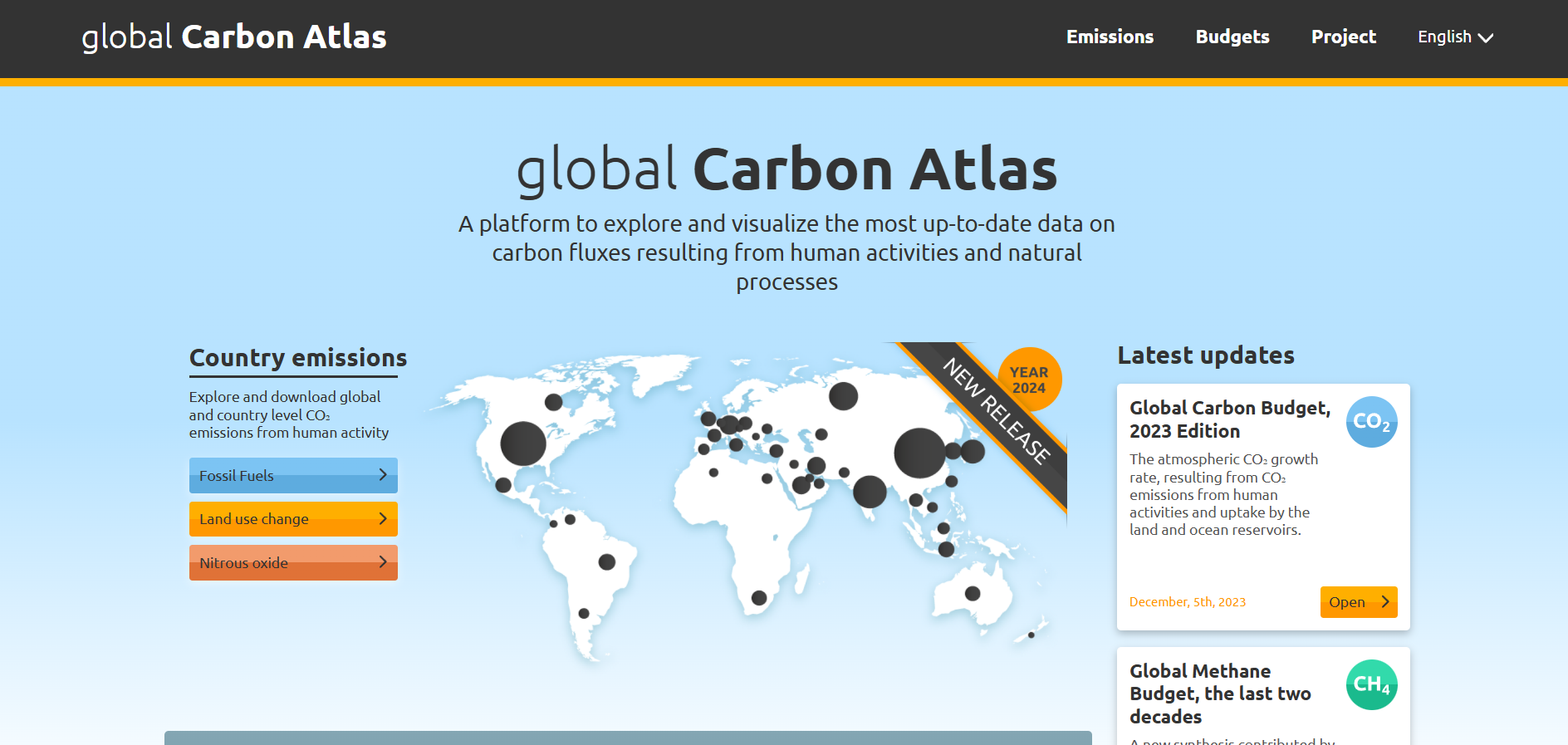
Global Carbon Atlas
GlobalCarbonAtlas.org is an online platform for exploring, visualising and downloading up-to-date global and regional carbon flux and emissions data from human activities and natural processes, supporting analysis of CO₂, methane and nitrous oxide trends across countries and sectors.


