
Library | Finance relevance
General / All finance professionals
Refine
1354 results
REFINE
SHOW: 16


Peoples' climate vote series
The Peoples’ Climate Vote is a global survey series capturing public perspectives on climate change, policy priorities and collective action. Led by international institutions, it provides a consistent framework to understand how people experience climate impacts and how they expect governments, businesses and global actors to respond.

State of the global climate series
The State of the Global Climate is an annual benchmark series produced by the World Meteorological Organization that synthesises authoritative observations across the climate system, including the atmosphere, oceans and cryosphere, to provide a consistent, comparable evidence base for global climate monitoring, policy analysis and long-term assessment.
State and trends of carbon pricing series
The State and Trends of Carbon Pricing series provides an annual, global overview of carbon pricing policies and carbon markets. It reviews the development and structure of carbon taxes, emissions trading systems, and crediting mechanisms to support policy, regulatory, and market analysis.
Measuring companies’ environmental and social impacts: An analysis of ESG ratings and SDG scores
This study compares ESG ratings with SDG scores across major providers. It finds little correlation. SDG scores align with investor exclusions and EU Taxonomy assessments, while ESG ratings largely measure financial risk exposure, not real-world environmental or social impacts.

Climate fiduciaries: part II – the duty of even-handedness
This article explores the fiduciary duty of even-handedness and its implications for climate-aware pension fund investing, focusing on emerging legal challenges in Australia and Canada. It argues that unmanaged climate risk may breach trustees’ obligations to act equitably across generations, particularly where younger members bear disproportionate long-term harm.

Systems-informed stewardship part I: Reshaping sustainable and impact finance through systems thinking
This article introduces systems thinking and explains how it is reshaping sustainable and impact finance by addressing interconnected systemic risks like climate change and inequality. It outlines four emerging applications; from systemic risk management to systems-informed stewardship, highlighting the implications for investors’ roles, tools, and decision-making.
Directors’ duties navigator: Climate risk and sustainability disclosures series
This series provides comparative guidance on directors’ duties relating to climate and nature-related risks, sustainability disclosures and corporate governance across jurisdictions. It outlines evolving legal and regulatory requirements, liability considerations and practical approaches to integrating sustainability-related risks and opportunities into corporate decision-making.
Global biodiversity loss, ecosystem collapse and national security: A national security assessment
This UK national security assessment finds global biodiversity loss and ecosystem collapse pose high risks to food security, economic stability and geopolitics. Degradation is widespread, with potential ecosystem collapse from 2030–2050, intensifying migration, conflict, supply chain disruption and strategic competition without decisive intervention.
The i-frame and the s-frame: How focusing on individual-level solutions has led behavioral public policy astray
The report argues that behavioural public policy has over-emphasised individual-level (“i-frame”) solutions, often aligning with corporate interests and weakening systemic reform. It contends that structural (“s-frame”) interventions, alongside institutional changes in research and policy design, are necessary to address entrenched social and economic problems effectively.

Global climate highlights series
This benchmark series provides a recurring, standardised overview of global climate conditions, produced using consistent observational and reanalysis datasets. It tracks changes across key climate indicators to support comparability over time and inform assessment of longer-term climate trends within a recognised reference framework.
City-scale climate hazards at 1.5°C, 2.0°C, and 3.0°C of global warming
City-Scale Climate Hazard Indicators under Warming Scenarios is a global dataset by the World Resources Institute providing projected heat and precipitation hazard indicators for 996 large cities under 1.5°C, 2.0°C and 3.0°C warming scenarios, supporting climate risk and urban planning analysis.
State of finance for nature 2026: Nature in the red: Powering the trillion dollar nature transition economy
UNEP’s State of Finance for Nature 2026 finds global finance remains heavily skewed towards nature-negative activities. In 2023, US$7.3 trillion harmed nature versus US$220 billion for nature-based solutions. Meeting Rio Convention targets requires more than doubling nature investment by 2030.
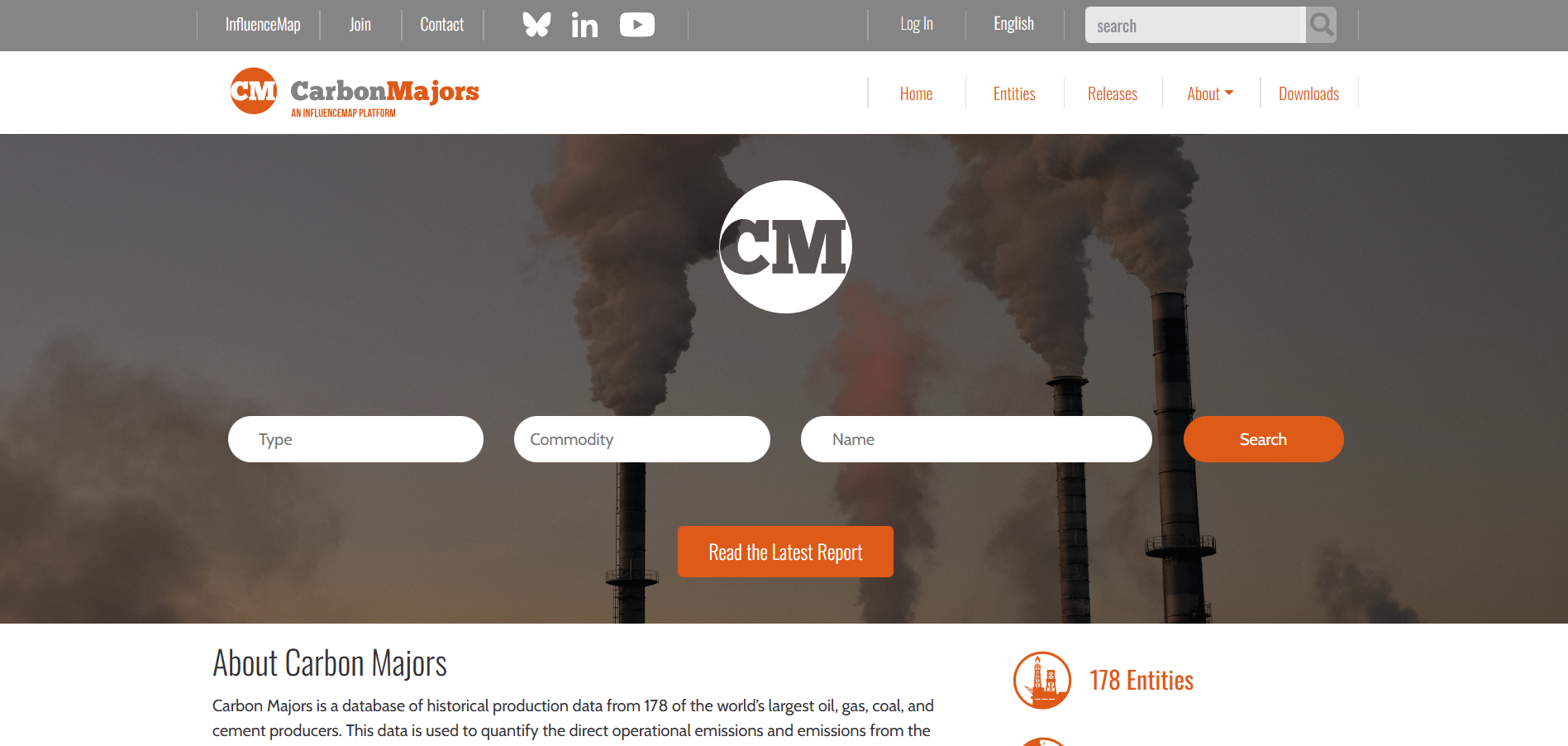
Carbon Majors
Carbon Majors is a public database that quantifies historical and current greenhouse gas emissions attributable to major fossil fuel producers. It provides company-level data, methodologies, and analysis to support climate risk assessment, policy research, and accountability across financial, regulatory, and academic contexts.
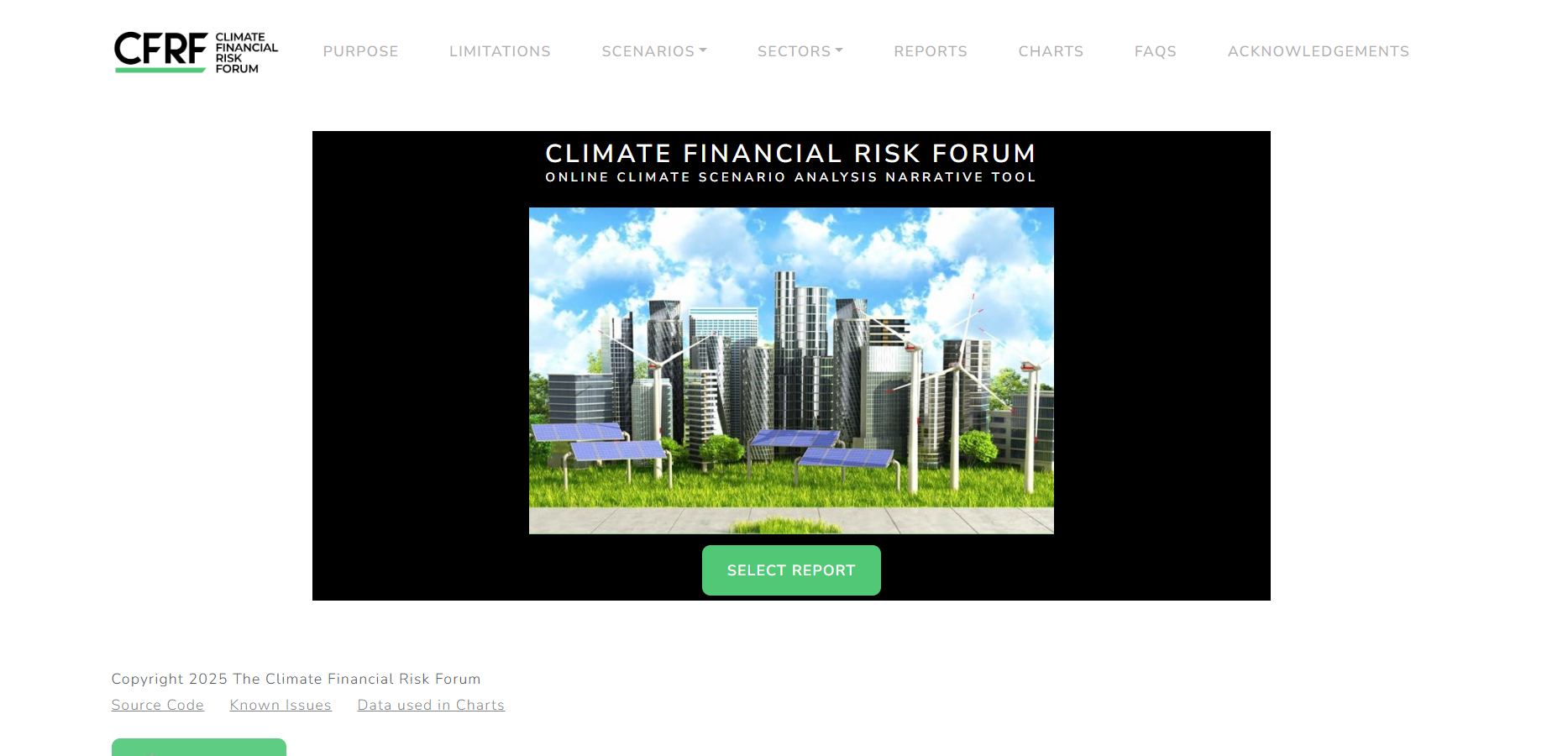
Online Climate Scenario Analysis Narrative Tool
An interactive climate financial risk tool developed by the UK Centre for Greening Finance and Investment to support scenario analysis. It enables users to explore climate transition and physical risk pathways for financial decision-making, stress testing, and research, with a focus on climate-related financial impacts.
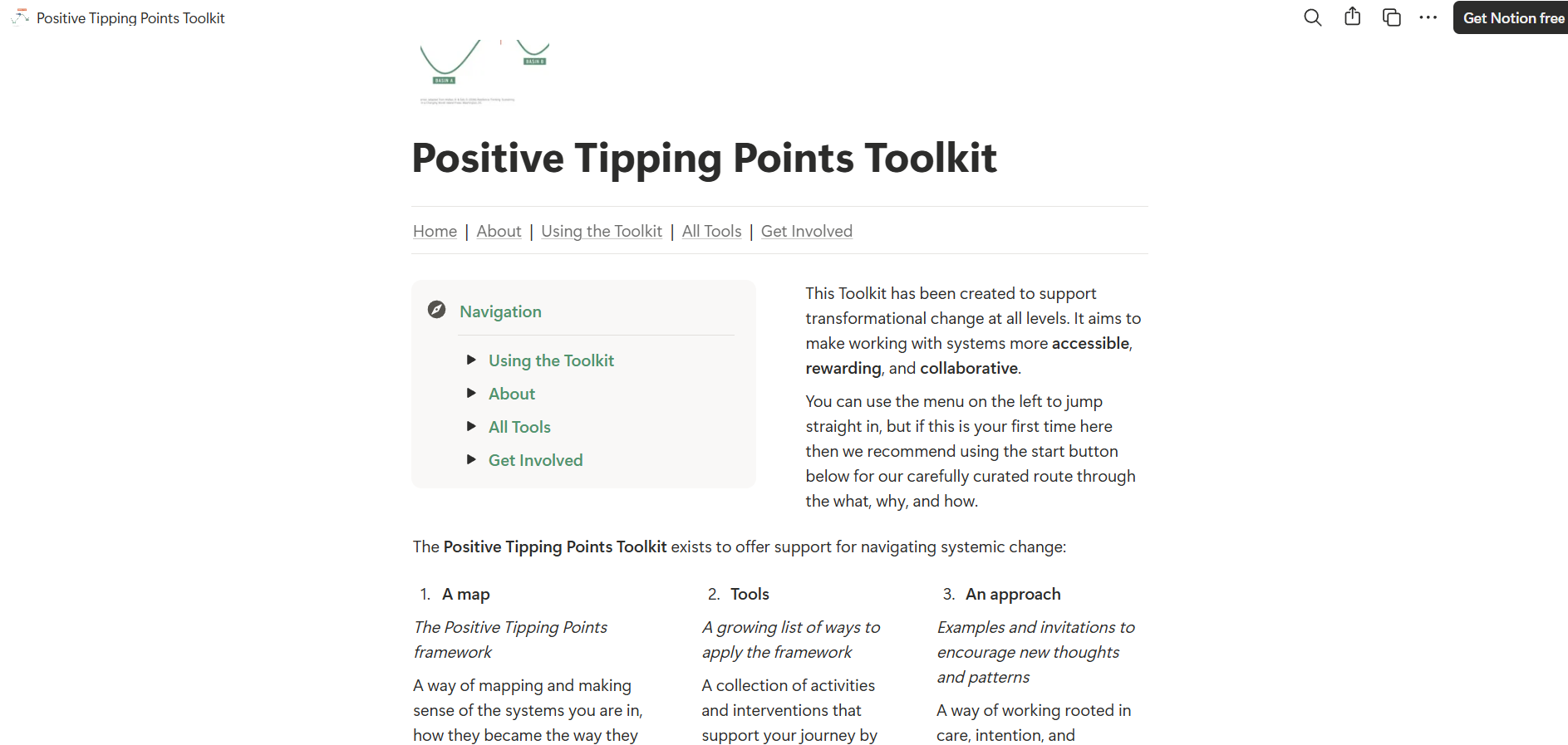
Positive Tipping Points Toolkit
The Positive Tipping Points Toolkit is an open-access, modular resource that supports analysis and application of positive tipping points in complex systems. It provides practical frameworks, examples and methods to identify leverage points and accelerate self-reinforcing change across social, environmental and economic contexts.
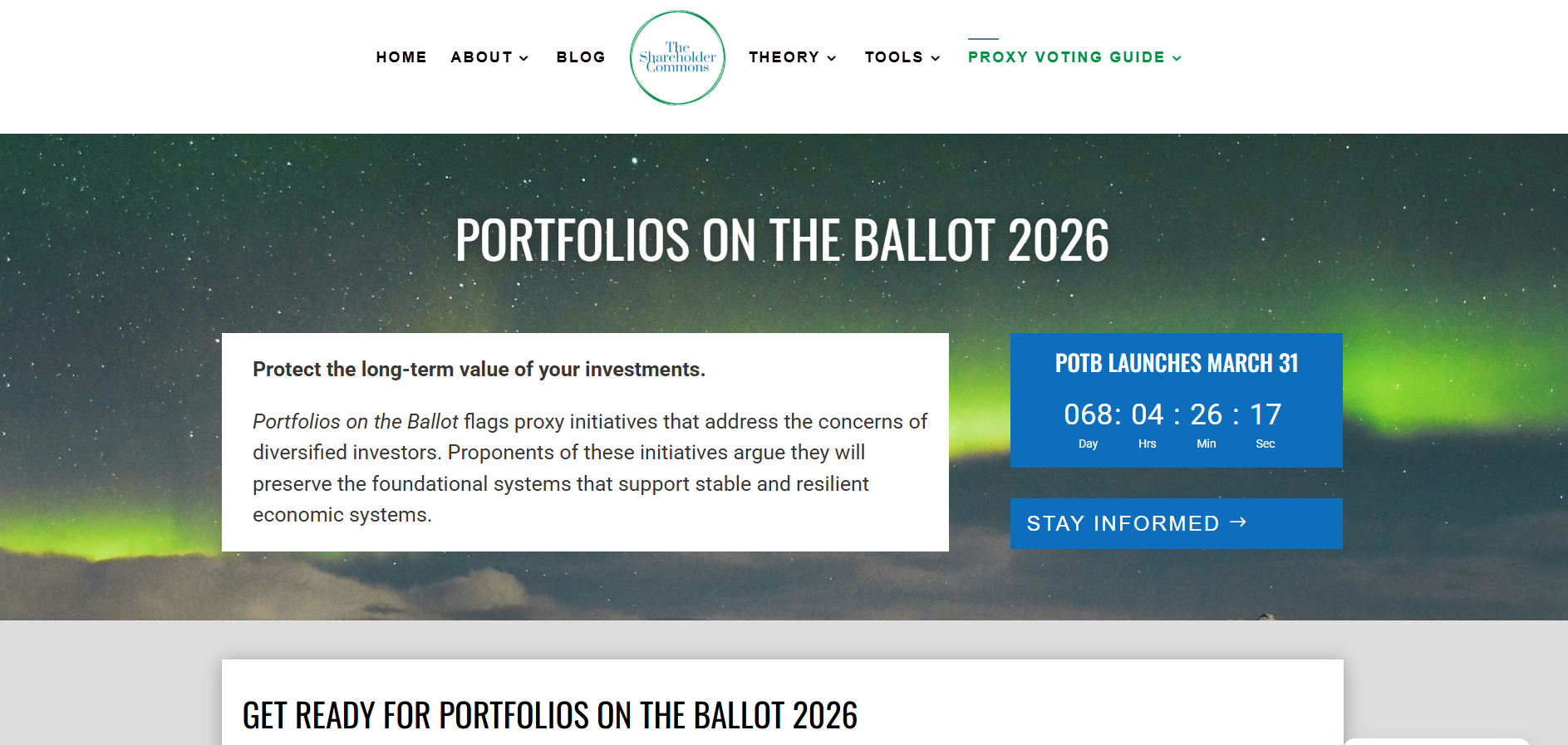
Portfolios on the ballot
Portfolios on the Ballot (POTB) is a tool by The Shareholder Commons that tracks shareholder proposals with potential system-wide economic impacts. It supports portfolio-level analysis of proxy votes, focusing on long-term market, social, and environmental risks relevant to diversified investors.


