
Library | Finance relevance
Impact investors
Refine
715 results
REFINE
SHOW: 16



Investor's guide to impact wealth management
The guide outlines how wealth managers integrate sustainability and impact across the client journey, highlighting variability in capabilities, the importance of clear investor objectives, access to private markets, and emerging practices in measurement, governance, and ecosystem building to support more effective impact-oriented wealth management.
Investing with integrity ii: How corruption undermines environmental and social outcomes
The report guides impact investors on how corruption undermines environmental and social outcomes. It outlines linked business integrity and E&S risks, due diligence focus areas, and the importance of coordinated screening, action planning and monitoring across land, labour and pollution to strengthen governance and safeguard development impact.
Mainstreaming impact investing report
The report examines the mainstreaming of impact investing, highlighting market growth, increasing institutional participation, evolving standards, and measurement challenges. It outlines barriers to scale and proposes actions to improve integration, transparency, and credibility across investment markets.
Investor influence in private markets: How investors activities can result in changes in outcomes for people and or the natural environment
This report examines how private market investors influence social and environmental outcomes through investment decisions and firm-level actions. It proposes a framework to assess pathways, outcomes and causality, supporting impact management beyond portfolio company effects.

Impact Frontiers
Impact Frontiers is a finance-focused NGO advancing impact investing practice.It helps asset owners, asset managers and advisors integrate social and environmental impact into investment decision-making through frameworks, research, case studies and peer learning programmes, supporting impact measurement, management and capital allocation across public and private markets.
Climate finance for low carbon transport: Developing effective transport financing mechanisms for Asia and the Pacific
This ESCAP policy brief examines climate finance options for scaling low-carbon transport in Asia–Pacific. It assesses funding gaps, barriers, and mechanisms—including subsidies, carbon pricing, green bonds, PPPs, and international finance—and recommends policy alignment, capacity building, investor matching, and diversified financing to accelerate investment.

Making money talk nicely: Biodiversity impact assessment for investors
This study compares eight biodiversity impact assessment tools used by investors. It finds low consistency in company rankings due to non-standardised methods, weak transparency and limited validation, concluding that reliance on single tools risks mispricing nature-related financial risk and calling for improved disclosures and spatially explicit approaches.
Corporate sustainability reporting
This conceptual paper examines corporate sustainability reporting, distinguishing investor-focused sustainability-related financial disclosure from broader impact reporting. It argues investor interests are imperfectly aligned with societal goals and concludes that complementary financial and impact reporting standards are needed to support accountability, capital allocation and sustainability transition.
Private capital, public good: Building shared prosperity to create a resilient and inclusive economy
The report outlines bipartisan US federal policy recommendations to mobilise private capital for shared prosperity. It focuses on strengthening economic competitiveness, scaling community investing, and improving impact transparency to support inclusive growth, underinvested communities, and long-term economic resilience.
Harmonised framework for impact reporting for social bonds handbook
The handbook provides a harmonised framework for issuers to report social bond impacts, outlining core reporting principles, target population disclosure, and preferred quantitative indicators. It introduces sector guidance—initially affordable housing—and offers templates to support consistent, transparent, and comparable impact reporting across social project categories.

The Other Half of the Transition: Why Livestock Deserves as Much Attention as Energy
This article highlights the major climate impact of livestock and explains why the absence of clear roadmaps, metrics, and financing strategies has left the sector far behind the energy transition. It proposes policy reforms, mitigation hierarchies, and justice-centered pathways to unlock effective and equitable change.
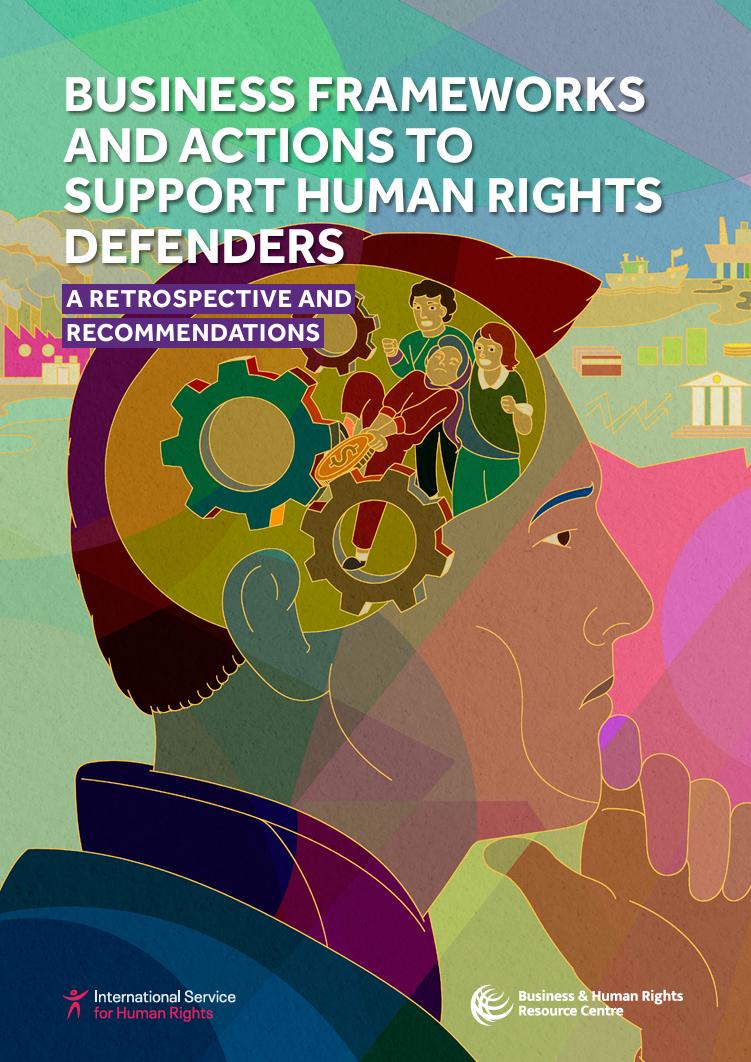
Business frameworks and actions to support human rights defenders: A retrospective and recommendations
The report reviews how businesses can better respect and support human rights defenders by strengthening policies, due diligence, and accountability. It outlines emerging frameworks, examples of company action, implementation challenges, and recommendations for companies, investors, multistakeholder initiatives, and States to safeguard civic freedoms and address risks linked to business activities.
Sustainable Finance Roundup November 2025: Transition Turning Points and Rising Accountability
This month’s sustainable-finance roundup highlights faster transition momentum, rising physical risks and a tightening focus on accountability. COP30 reinforced expectations for stronger 2035 targets, while national actions underscored diverging paths toward decarbonisation. Markets continued shifting toward clean energy and resilience, and new science made climate harms more visible. With regulatory scrutiny and litigation increasing, transition credibility and real-economy resilience are becoming core drivers of financial risk and investment decisions.
Social benchmark 2024 insights report
This benchmark series assesses the world’s most influential companies on their human rights, decent work and ethical conduct practices. It provides a comparative view of corporate social performance, supporting stakeholders to understand progress, identify gaps and inform actions that contribute to a more inclusive and sustainable global economy.
ESG and the sustainable economy handbook series
The ESG and the Sustainable Economy Handbook series is a multi-part research and guidance series that explains how environmental, social and governance (ESG) considerations intersect with legal, operational and investment practices across global markets, supporting finance professionals and corporate actors to understand and integrate ESG into business and investment decision-making.
A legal framework for impact: Sustainability impact in investor decision-making
The report analyses how legal frameworks across major jurisdictions shape investors’ ability to pursue sustainability impact. It clarifies when impact-focused approaches are permitted or required and outlines policy options to support them. It provides guidance for aligning investment decisions with sustainability goals while maintaining financial objectives.


