
Library | Finance relevance
Impact investors
Refine
595 results
REFINE
SHOW: 16


Enabling FPIC through voluntary standards: An ISEAL innovations fund project
This report explores ways to enable Free, Prior, and Informed Consent through voluntary standards. It reviews existing literature and provides a framework for companies and assurance providers to verify and monitor successful implementation of Free, Prior, and Informed Consent from the perspective of affected communities.

Managing nature risks and investing in the opportunities: Top tips for pension fund chairs and trustees
This report provides top tips to pension fund chairs and trustees on managing nature risks and investing in opportunities. With insights from industry professionals, it highlights the importance of nature for long-term market returns and discusses emerging regulation to guide action, while offering practical advice on how to identify risks and integrate nature into stewardship plans.

Intentionally designed endowment primer
This primer provides insight into aligning endowment investments with institutional missions while considering sustainability. The report includes strategic questions, background, examples, and relevant research. Intended for fiduciaries, this primer encourages institutional acceptance and deployment of Environmental, Social, and Governance (ESG) criteria to facilitate profitable sustainability while advancing social purpose.
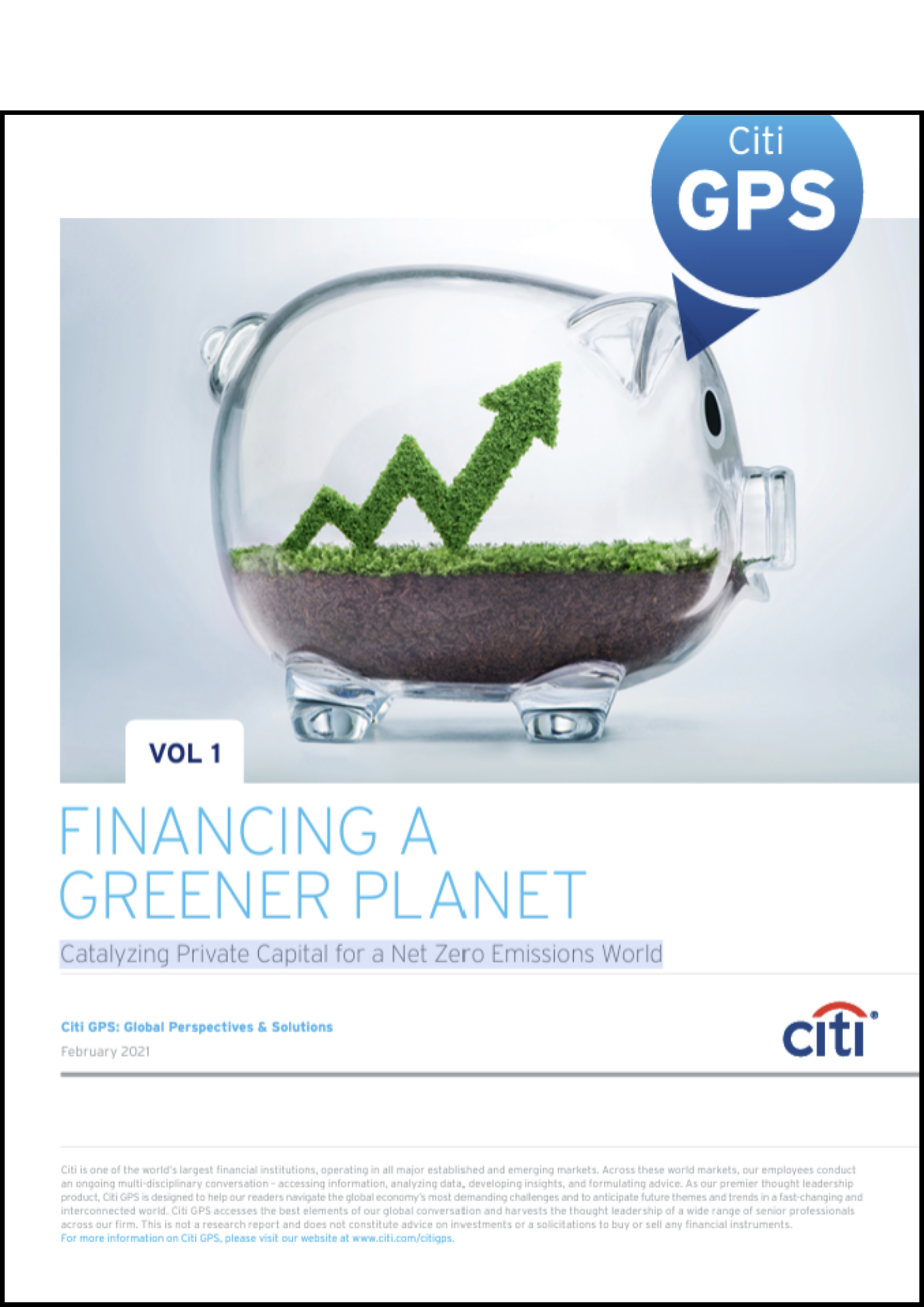
Financing a greener planet: Catalysing private capital for a net zero emissions world
This report provides an overview of the private capital markets and their potential to fund a greener planet. It explores the increasing interest in ESG investing and the significant role that investors can play in delivering a net-zero emissions world, specifically focusing on sustainable agriculture, clean energy, and transportation.

Biodiversity loss and land degradation: An overview of the financial materiality
This report provides key insights into the materiality of biodiversity loss and land degradation with a focus on financial risks while reviewing the literature available. The report highlights biodiversity's prominent role in the economy, the major threats to biodiversity, the tools available to measure biodiversity's impact and outlines a typology for nature-related financial risks.

Climate costs for Asia Pacific ports
The report estimates costs of US$31 billion to US$49 billion to protect Asia Pacific ports from the effects of climate change. Trade, especially seaborne, accounts for 58% of global GDP and Asian ports account for nine of the top ten in capacity. This report highlights the urgent need for ports infrastructure to consider the physical effects of climate change and to build to withstand those effects.

Disrupting privilege as power and control: Re-imagining business and the appreciation of Indigenous stewardship in management education curricula
This report explores privilege's systemic connection to mainstream management education and proposes how engaging with Indigenous stewardship can tackle this. Using a case study of stewardship's implementation in a Master of Commerce program, educators can contribute to literature on re-imagining business and create better future business leaders.

Dhawura Ngilan: A vision for Aboriginal and Torres Strait Islander heritage in Australia
Dhawura Ngilan (Remembering Country) is a vision statement outlining aspirations for the protection, preservation, and celebration of Aboriginal and Torres Strait Islander heritage in Australia. The report emphasises the importance of Indigenous communities' involvement in heritage management and calls for consistent policies and legislation across jurisdictions.

Are pharma companies addressing sexual and reproductive health access barriers for women and girls?
This report examines the role of pharmaceutical companies in addressing access barriers hindering women and girls’ sexual and reproductive health and rights (SRHR) globally. It assesses their research on new SRHR medicines and products, pricing strategies, company capacity building efforts, and inclusive business models.

Decarbonising cement: The role of institutional investors
This report outlines why cement production is carbon-intensive and provides pathways for decarbonisation. A 60% reduction in emissions by 2050 is required to limit temperature increases to 1.75°C. Institutional investors need to engage with cement companies and cut off funding for carbon-intensive infrastructure to mitigate climate-related risks.

Making change: What works?
This paper investigates to understand what makes social movements successful in creating change. The report concludes that having more and better evidence is crucial to encourage change, but evidence alone will not secure change. Instead, social movements must change the hearts and minds of the public and increase the power of those who stand to benefit from change.

Connecting the dots: Energy transition scenarios and credit quality
This report explores the implications of climate transition scenarios for the credit quality of nine companies in power utilities, cement, and steel. It shows the potential credit consequences of failing to mitigate risks and grasp opportunities associated with the low-carbon transition. The study highlights the value of granular scenario analysis for investors.

A roadmap for Australian investors: How to invest to achieve gender equity, racial equity, diversity and inclusion
This a guide to help investors achieve gender equity, racial equity, diversity, and inclusion. This report presents qualitative and quantitative analyses from surveys of key Australian impact investing actors, virtual interviews with identified key informants, and a focused narrative literature review of contemporary global gender lens investing practice.

Primer on climate change: Directors’ duties and disclosure obligations
This report provides an overview of contemporary evidence that climate change presents foreseeable, and in many cases material, financial and systemic risks that affect corporations and their investors. It discusses general climate obligations, directors' duties, disclosure obligations, and advice to directors, emphasising the importance of embedding climate change in financial risk management, disclosure, and supervisory practices.

Chapter Zero New Zealand Board Toolkit
This toolkit is published to provide tools, support, and encouragement to prioritise climate change on boards and within organisations. The resource outlines 5 steps to ensure boards are well-equipped to address climate change, with relevant industry sector case studies.

On purpose: Towards a unified theory of responsible investment
This paper presents a framework for evaluating responsible investment (RI) approaches that re-align investment practice with purpose. It unifies the field, generates a coherent framework for designing quality RI offerings, and supports meaningful comparison of diverse RI offerings. It is essential reading for investors interested in RI.


