
Library | Finance relevance
Impact investors
Refine
595 results
REFINE
SHOW: 16


The business guide to advancing climate justice
This 2024 guide, produced by Forum for the Future and B Lab, outlines how businesses can embed climate justice into strategy and operations. It defines principles for equitable community partnerships, offers practical frameworks across internal systems and supply chains, and emphasises trust-building, accountability, and regenerative, long-term collaboration.
Gender benchmark investor guidance
This publication is part of the Gender Benchmark series by the World Benchmarking Alliance. It serves as a practical tool for investors to assess and engage companies on their performance in advancing gender equality and women’s empowerment across value chains, supporting stewardship and responsible investment practices.

Corporate human rights benchmark investor guidance
This World Benchmarking Alliance report guides investors on using the Corporate Human Rights Benchmark to assess company performance in high-risk sectors. It outlines key findings, investor engagement questions, and sector-specific risks to promote accountability, human rights due diligence, and responsible investment aligned with sustainable development goals.

Sustainable Finance Roundup October 2025: Carbon Markets, Targets, and the Cost of Resilience
This month’s sustainability roundup traces a rapidly evolving landscape in climate finance and accountability, spotlighting the weaknesses exposed by Hurricane Melissa’s disaster-risk finance system alongside new policy frameworks now reshaping sustainable investment. It highlights how vulnerable nations continue to bear the costs of climate impacts, how regulatory reforms such as Australia’s 2035 emissions target and global disclosure regimes are embedding accountability, and how renewed scrutiny of carbon markets is driving the search for credible, incentive-based pathways to real decarbonisation.

Empowering women, building sustainable assets: Strengthening the depth of gender lens investing across asset classes
The report analyses the growth and practices of gender lens investing (GLI) across asset classes. It highlights how institutional investors and impact funds integrate gender equality goals into investment strategies, identifies challenges such as limited data and standardisation, and provides guidance to deepen GLI’s contribution to achieving Sustainable Development Goal 5 on gender equality.
Global sustainable investment review 2018
This report summarises global sustainable investment trends from 2016 to 2018, noting a 34 per cent increase to USD 30.7 trillion. Japan saw the fastest growth, while Europe remained the largest market. The leading strategies were ESG integration, exclusionary screening, and shareholder engagement across major investment regions.

The Real Tragedy of the Horizon
Mark Carney’s “tragedy of the horizon” warned that markets would act too late on climate risks. A decade later, this article argues that framing climate change as a financial risk has misdirected efforts—what’s needed now is coordinated action to create investable markets, especially in emerging economies.
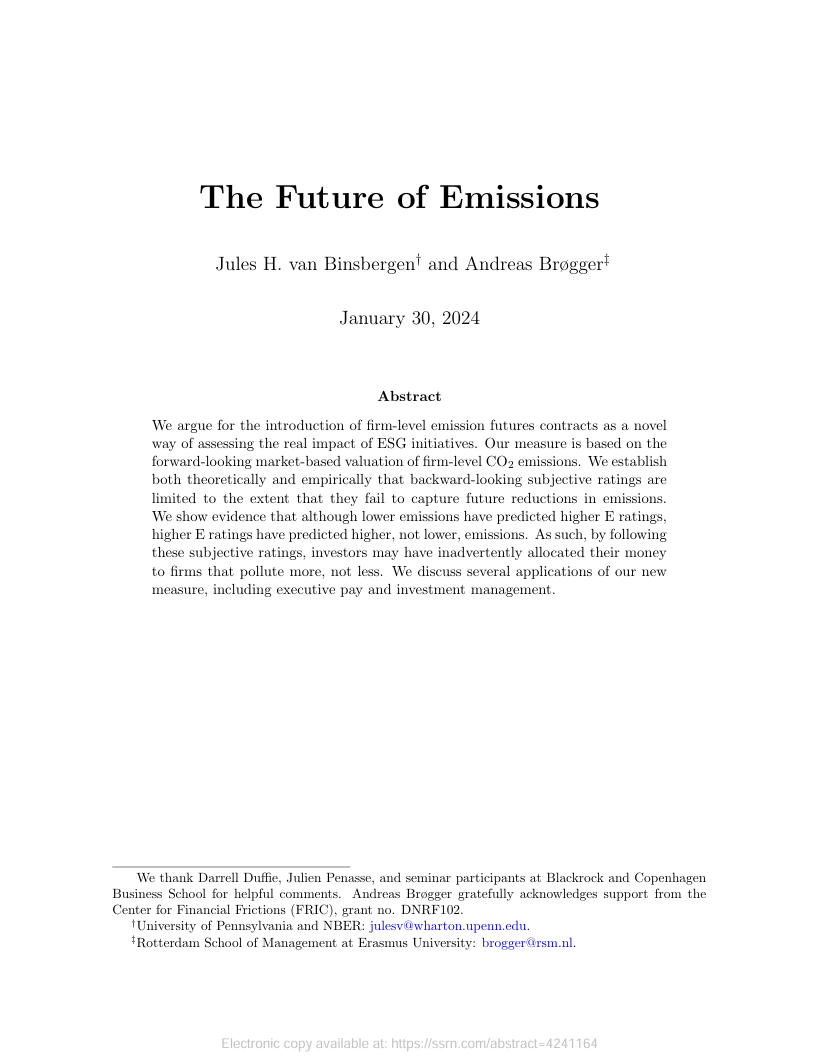
The future of emissions
This report proposes using firm-level emission futures contracts to better measure and incentivise real environmental impact from ESG investing. It finds that current backward-looking ESG ratings fail to predict emission reductions and may misallocate capital to higher-polluting firms. Market-based, forward-looking emission futures could improve measurement, incentives, and investment impact.
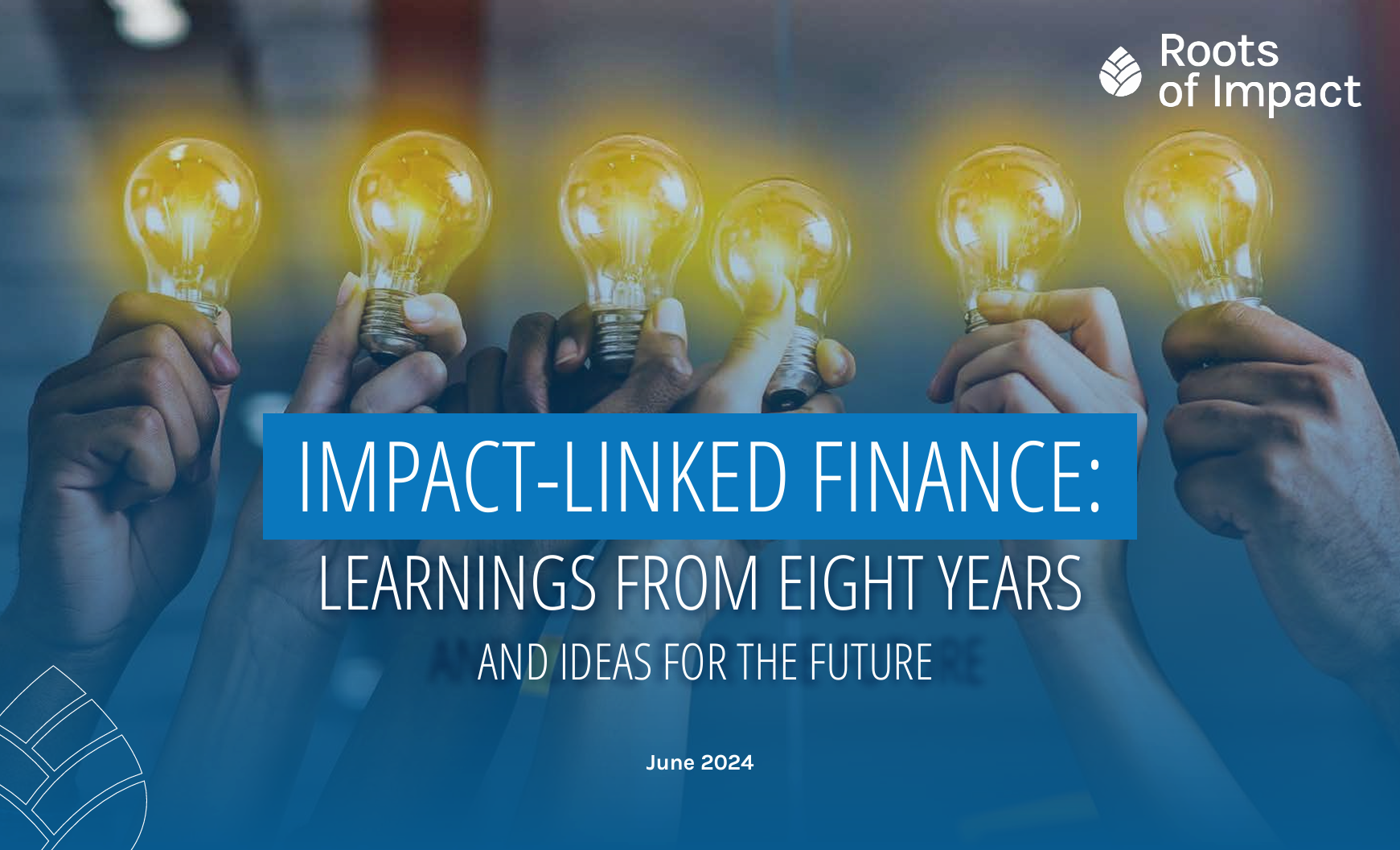
Impact-linked finance: Learning from eight years and ideas for the future
This report by Roots of Impact (2024) reviews eight years of experience implementing Impact-Linked Finance (ILF), a structuring approach that rewards measurable social or environmental outcomes by linking financial terms to impact performance. It outlines ILF’s evolution, design principles, effectiveness benchmarks, and opportunities to scale through collaboration and new impact-linked instruments.
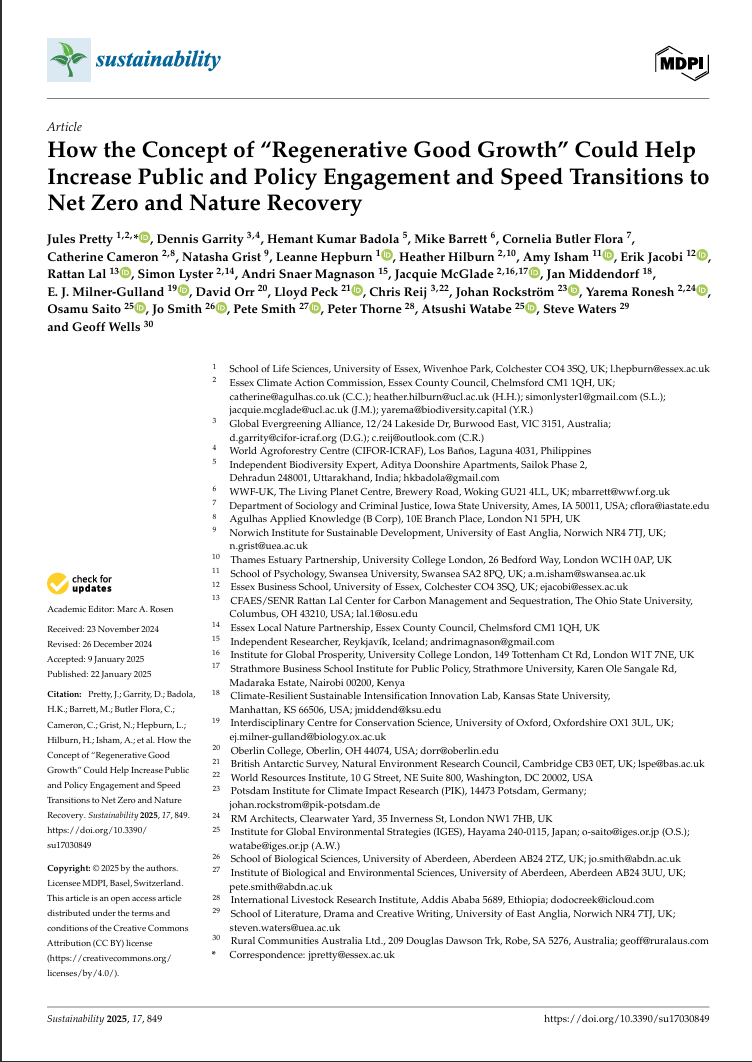
How the concept of “Regenerative Good Growth” could help increase public and policy engagement and speed transitions to Net Zero and nature recovery
The report introduces the concept of Regenerative Good Growth (RGG) as an alternative to extractive GDP-focused models. It argues that economic progress should regenerate five renewable capitals, natural, social, human, cultural, and sustainable physical, while ensuring fairness, engagement, and reduced environmental harm. RGG promotes inclusive, low-carbon, and nature-positive transitions through diverse public participation.

MDPI
MDPI (Multidisciplinary Digital Publishing Institute) is a Swiss-based publisher of open access, peer-reviewed journals, established in 1996. MDPI publishes over 470 academic journals across science, technology and medicine, with authors covering article processing charges to enable unrestricted global access.

London School of Economics and Political Science (LSE)
London School of Economics and Political Science (LSE) is a global research university specialising in economics, politics, law, social policy and data science. Based in London, LSE offers undergraduate, graduate and executive degrees, and leads in social science research, public policy impact and global academic partnerships.

Grantham Foundation
Grantham Foundation for the Protection of the Environment supports climate innovation, environmental research and impact investing. Through its grant and investment programmes (such as its venture arm, Neglected Climate Opportunities), it backs early-stage technologies in carbon capture, clean energy, soil health and ecosystem conservation globally.
NYU Stern Center for Sustainable Business
NYU Stern’s Center for Sustainable Business (CSB) conducts applied research, education and engagement to embed environmental, social and governance (ESG) practices into core business strategy. It helps leaders quantify sustainability’s financial value, offers executive certificates, and develops tools to assess materiality and carbon impact.

Morgan Stanley Wealth Management
Morgan Stanley Wealth Management provides financial advice, investment strategies, and portfolio management for individuals, families, and institutions. Its services include retirement planning, sustainable investing, and access to global market insights. Morgan Stanley combines advanced digital tools with expert guidance to help clients achieve long-term financial goals and preserve wealth across generations.
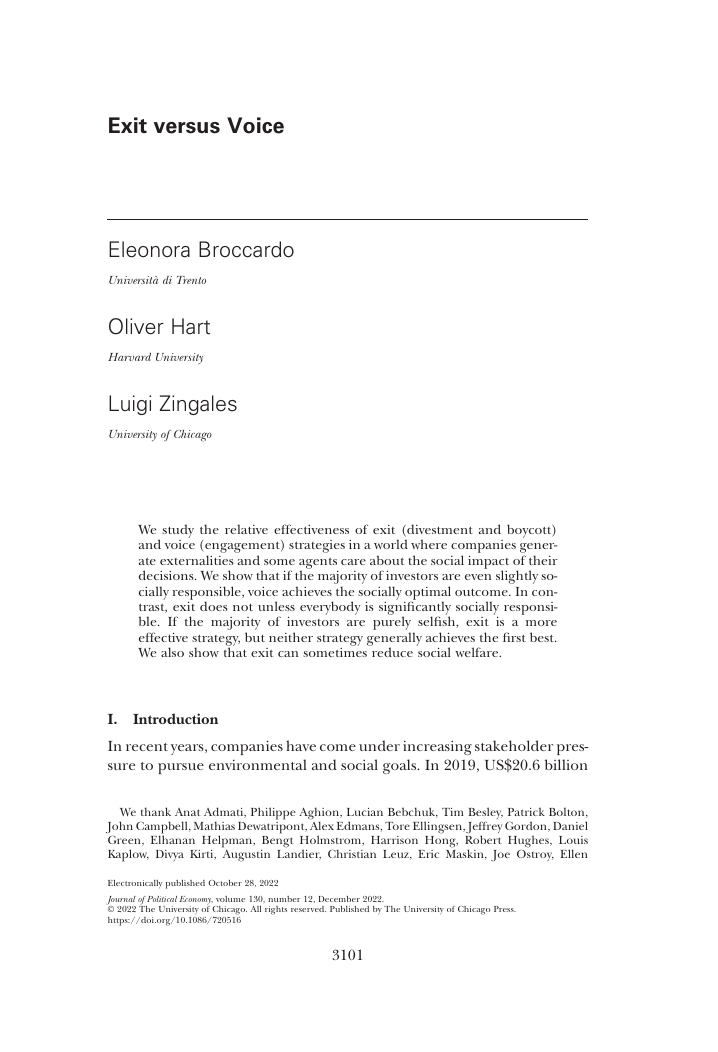
Exit versus voice
This report summarises research comparing the effectiveness of “exit” strategies, such as divestment and boycotts, with “voice” strategies, such as shareholder engagement, in influencing corporate behaviour. It concludes that when most investors are even slightly socially responsible, engagement leads to socially optimal outcomes, whereas exit rarely does and can reduce welfare.


