
Library | Finance relevance
Insurance and risk professionals
Refine
346 results
REFINE
SHOW: 16


Investor expectations of corporate transition plans: From a to zero
This report outlines key components for a credible corporate transition plan aligned with net-zero pledges under the Net Zero Investment Framework (NZIF). The guidance aims to help investors assess corporate emissions targets and progress towards decarbonisation. It is designed to be applicable across different sectors and geographies.

Experimental evidence for tipping points in social convention
This study shows the theoretical and empirical existence of a tipping point for changing social conventions. Minority groups can overturn established behaviour by reaching a critical mass, expected to vary depending on social setting. The findings offer insight for organizations with potential shifts in conventional behaviour.

Assessing pharma companies’ response to COVID-19 and the threat of future pandemics
This report analyses pharmaceutical companies’ response during the initial stage of the COVID-19 pandemic, their performance in terms of registration and applying equitable access strategies for COVID-19 vaccines, voluntary licensing agreements and technology transfers, and forward-looking assessment of their preparedness for future epidemics and pandemics.

Definitions for responsible investment approaches
This report provides definitions for different responsible investment approaches - Screening, ESG Integration, Thematic Investing, Stewardship, and Impact Investing. It aims to standardise terminology, enabling investors to communicate their responsible investment practices with clarity, consistency, and confidence.

Assessment of the six largest pesticide companies’ approaches to addressing biodiversity loss
This assessment evaluates the approaches of six leading pesticide companies toward addressing biodiversity loss. None of the companies has committed to phasing out highly hazardous pesticides, and progress in reporting and disclosure is limited. Investors are urged to heed recommendations and use the report to guide engagements.

Constructive corporate engagements: From a corporate perspective
This research focuses on constructive corporate engagement. This report analyses survey results from 100 senior company directors and interviews with ten executives to examine the drivers of successful engagements. Insights include the importance of collaborating with companies, focusing on material issues, and using standard metrics for success.

Collaborative investor engagement with policymakers: Changing the rules of the game?
This report explores why and how institutional investors engage with governments and the challenges they face in the process. The authors analyse 11 case studies and identify drivers such as managing investment risks and fulfilling fiduciary duties, as well as challenges like limited influence on governments. The findings contribute to the sustainable finance and public policy literature.

Delivering through diversity
This report shows that strong financial performance correlates with greater representation of women and ethnically/culturally diverse individuals in the leadership of large companies. Companies that invest in inclusion and diversity not only align with social justice but may also achieve competitive advantage and growth.

Climate horizons
This report explores how Australian companies and investors should manage and disclose climate-related risks and opportunities. It suggests scenario-based analysis is a key tool for this, which can be consistent with Australia's international climate commitments and the recommendations of the Financial Stability Board's Task Force on Climate-related Financial Disclosures (TCFD).

The material footprint of nations
This research paper explores consumption-based indicators of resource use, asserting that developed countries have increased the use of natural resources at a slower rate than economic growth, but this is untrue. Material Footprint (MF) uncovers the full material requirements of nations, offering insights into actual resource productivity.

The impact of climate change on the UK insurance sector: A climate change adaptation report by the Prudential Regulation Authority
The report warns insurance companies to prepare for the physical, transition and liability risks related to climate change. It provides a comprehensive review of how to manage future implications from climate change on financial stability and insurance.

Seriously stressed and stranded: The burden of non-performing assets in India's thermal power sector
India's thermal power sector holds $40-60bn of non-performing or stranded assets, taking away capital from critical sustainable investment. Low-cost renewable energy and a reliance on coal-fired generation is creating difficulties for the banking sector. The economics of low-cost renewables will bring significant financial implications for the country's thermal power reliance.
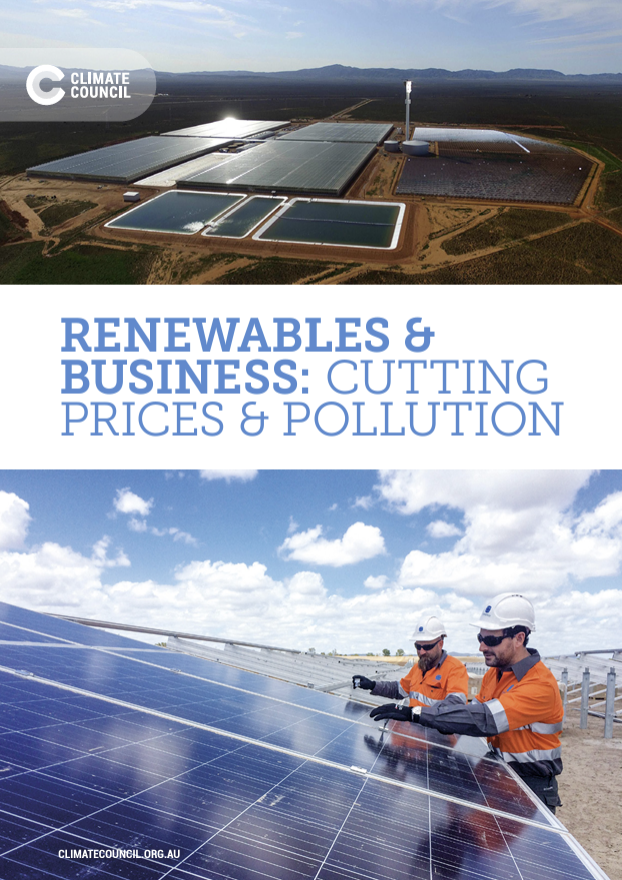
Renewables and business: Cutting prices and pollution
This report shows how investment in renewable energy can reduce exposure to volatile electricity prices and future price hikes. Over 46,000 businesses have already invested in large solar installations, and 40% of businesses are considering similar initiatives. Local and State Governments are also supporting business investment in clean, affordable and reliable renewable energy.

Global compact local networks: Accelerating national SDG implementation
The report emphasizes the role of responsible business in advancing the Sustainable Development Goals (SDGs) and highlights the importance of local networks in mobilizing a global movement of companies committed to advancing the SDGs through capacity-building, awareness-raising, and collaboration.

Insurance regulation for sustainable development: Protecting human rights against climate risks and natural hazards
This report argues that insurance regulation has a critical role to play in protecting human rights against climate risk and natural hazards. Among its recommendations, the report calls for the proper pricing of climate risks, broader coverage from insurance, and the alignment of investments with the Sustainable Development Goals (SDGs).

Transition risks in the automotive sector
This report analyses the potential valuation of BMW, Daimler, and Volkswagen under two different climate change scenarios and pathways. The study reveals insights for equity analysis and company engagement with sensitivity to regional and technological factors. Authors present a warning not to see findings as investment recommendations or forecast.


