
Library | Finance relevance
Investment managers / asset managers
Refine
1139 results
REFINE
SHOW: 16


Private capital, public good: Building shared prosperity to create a resilient and inclusive economy
The report outlines bipartisan US federal policy recommendations to mobilise private capital for shared prosperity. It focuses on strengthening economic competitiveness, scaling community investing, and improving impact transparency to support inclusive growth, underinvested communities, and long-term economic resilience.
Creating value from big data in the investment management process: A workflow analysis
The report analyses how investment professionals use AI and big data, noting moderate but rising adoption, multihoming across tools, and key challenges including skills gaps, data quality, and model opacity. It highlights organisational priorities such as upskilling and workflow automation to enhance efficiency and decision making.
Harmonised framework for impact reporting for social bonds handbook
The handbook provides a harmonised framework for issuers to report social bond impacts, outlining core reporting principles, target population disclosure, and preferred quantitative indicators. It introduces sector guidance—initially affordable housing—and offers templates to support consistent, transparent, and comparable impact reporting across social project categories.
Assessment of the biodiversity impacts and dependencies of globally listed companies
The report assesses biodiversity impacts and ecosystem service dependencies of 2,369 globally listed companies using multiple footprinting tools. It finds impacts highly concentrated among few firms, driven mainly by climate change, pollution and land use, with food, energy and chemicals sectors prioritised for investor engagement.
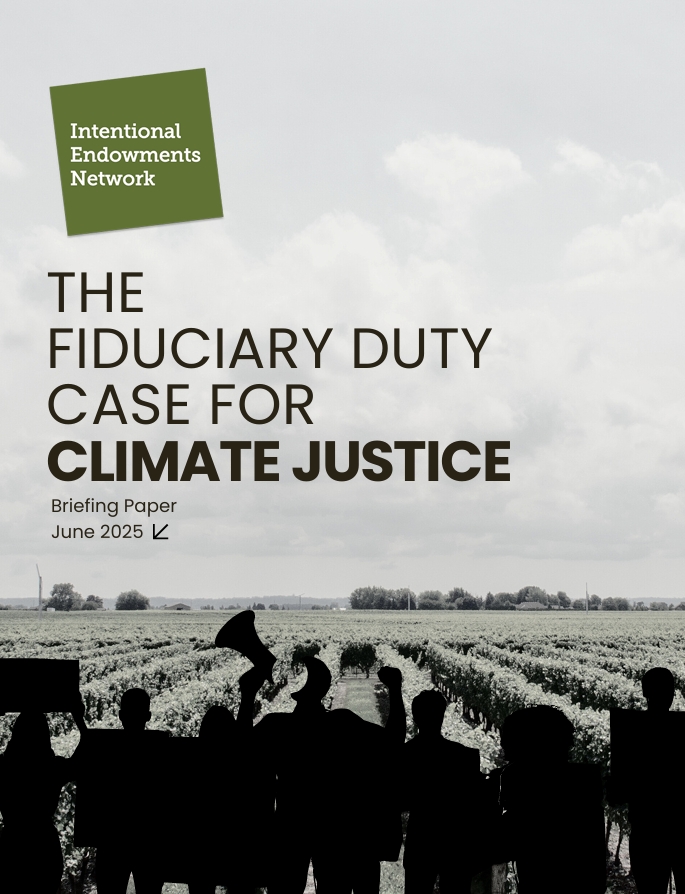
Briefing paper: The fiduciary duty case for climate justice
The report argues that climate justice is integral to fiduciary duty, as climate and inequality risks threaten long-term value. It outlines definitions, system-level investment frameworks, and practical tools that help investors manage systemic risks and support a just low-carbon transition.
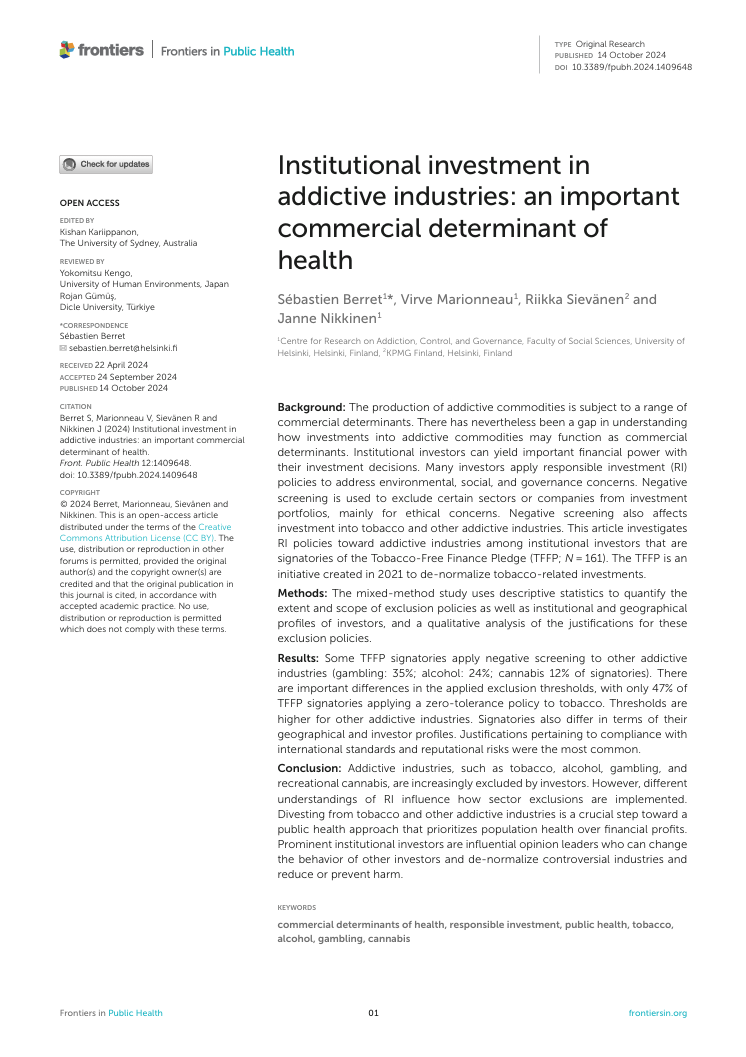
Institutional investment in addictive industries: An important commercial determinant of health
The study examines how Tobacco-Free Finance Pledge signatories apply exclusion policies to addictive industries. Investors show diverse thresholds, with European institutions more likely to exclude alcohol, gambling, and cannabis. Reputational and compliance considerations dominate justifications, highlighting investment decisions as significant commercial determinants of health.

The Other Half of the Transition: Why Livestock Deserves as Much Attention as Energy
This article highlights the major climate impact of livestock and explains why the absence of clear roadmaps, metrics, and financing strategies has left the sector far behind the energy transition. It proposes policy reforms, mitigation hierarchies, and justice-centered pathways to unlock effective and equitable change.
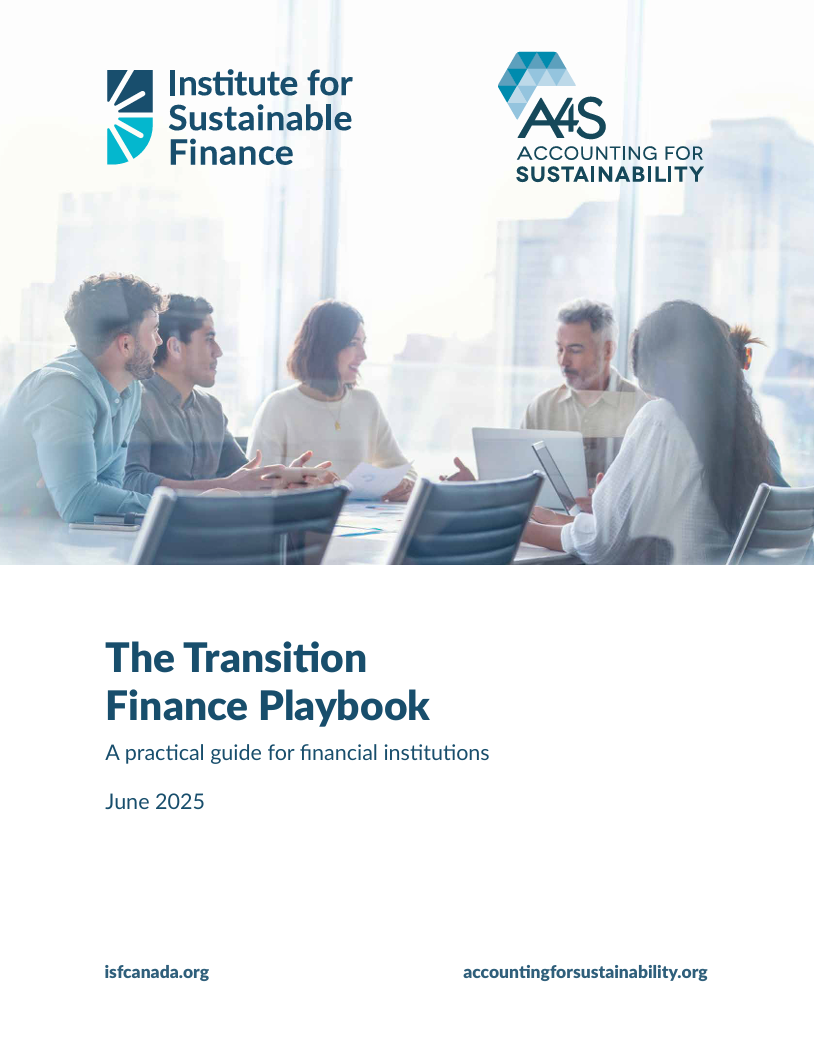
The transition finance playbook: A practical guide for financial institutions
A practical guide outlining how financial institutions can scale transition finance through governance, eligibility criteria, portfolio segmentation, due-diligence enhancements and engagement. It highlights Canadian market context, barriers, and actionable “top tips” to support credible decarbonisation, stewardship and collaboration across the financial system.
Institute for Sustainable Finance (ISF)
Institute for Sustainable Finance (ISF) at Smith School of Business, Queen’s University, is Canada’s first multi-disciplinary hub aligning finance with environmental sustainability. It conducts research, publishes policy guidance, and runs education and collaboration programmes to help policymakers, investors, and firms integrate climate risk, nature, and ESG considerations into capital allocation and regulation.
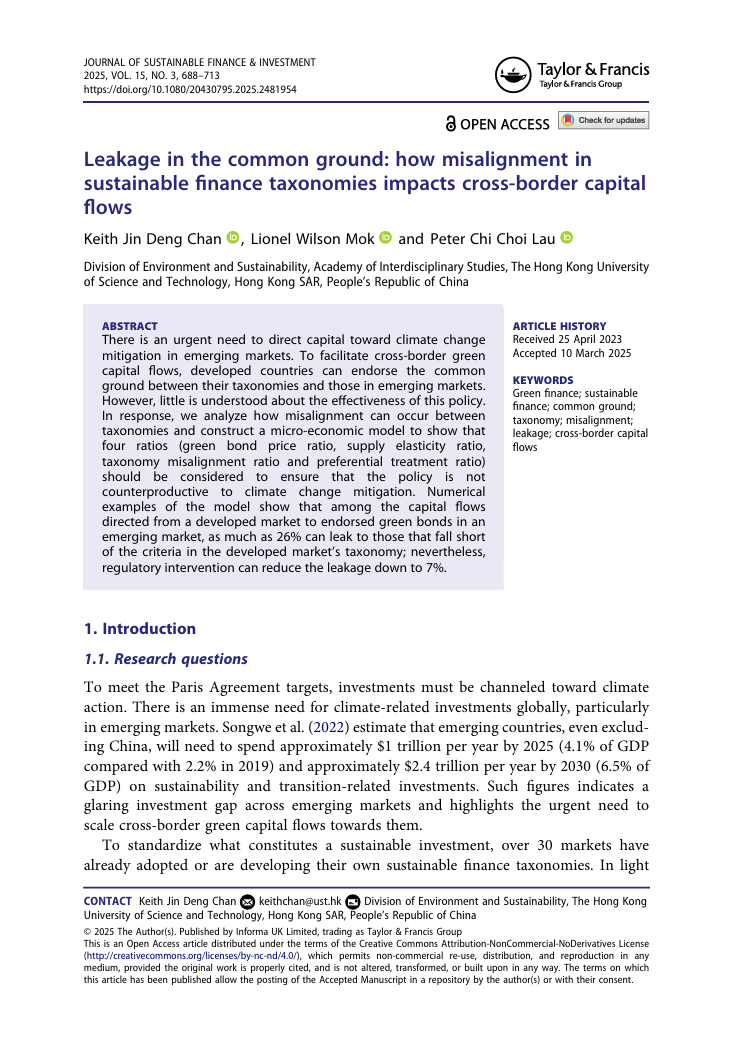
Leakage in the common ground: How misalignment in sustainable finance taxonomies impacts cross-border capital flows
The paper models how misaligned sustainable finance taxonomies can cause cross-border capital leakage, reducing alignment with developed-market standards. It identifies four ratios determining whether endorsing common ground improves outcomes and shows leakage can be significant without regulatory measures to differentiate and prioritise higher-quality green bonds.

From discovery to delivery: Finding an investment edge in biopharma services
This report summarises growth opportunities for private equity in biopharma supply chain services, a $77 billion profit pool, despite recent deal declines. Key areas include innovative large modalities like ADCs, niche inputs, sterile fill-finish, and GLP-1 delivery devices.
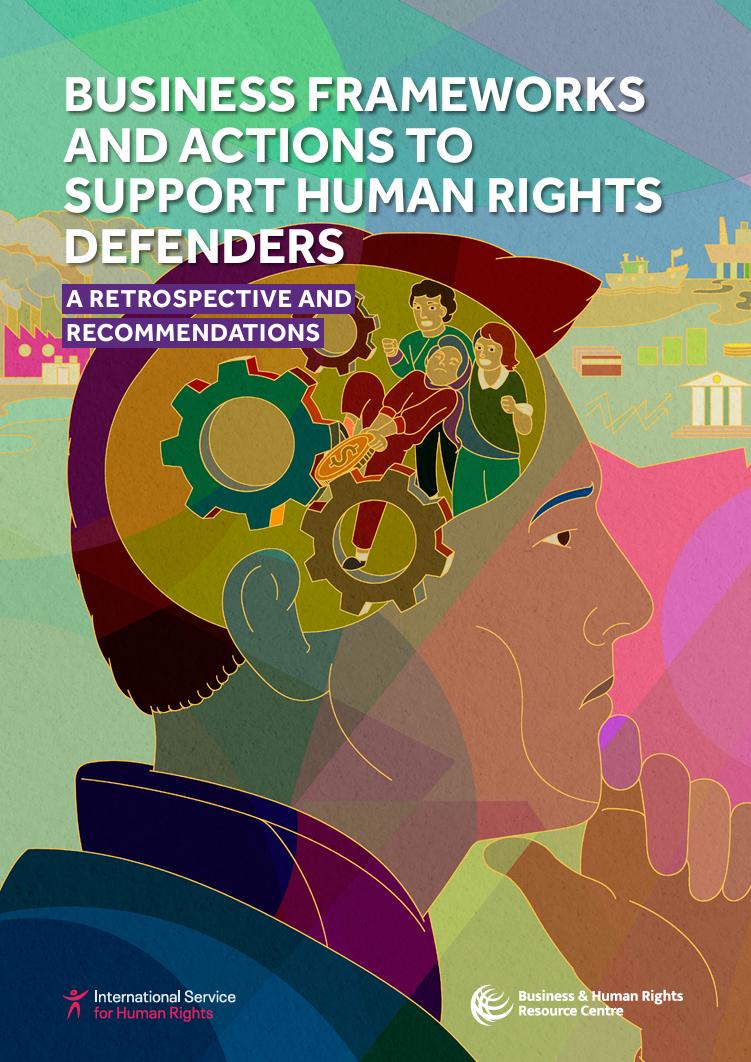
Business frameworks and actions to support human rights defenders: A retrospective and recommendations
The report reviews how businesses can better respect and support human rights defenders by strengthening policies, due diligence, and accountability. It outlines emerging frameworks, examples of company action, implementation challenges, and recommendations for companies, investors, multistakeholder initiatives, and States to safeguard civic freedoms and address risks linked to business activities.
Essential guide to valuations and climate change
This guide provides a framework for incorporating climate-related risks and opportunities into business valuations. It outlines a five-step process, highlights data and disclosure challenges, and illustrates application through case studies. The aim is to support more consistent, transparent and informed valuation practice as climate impacts become increasingly material.
Sustainable Finance Roundup November 2025: Transition Turning Points and Rising Accountability
This month’s sustainable-finance roundup highlights faster transition momentum, rising physical risks and a tightening focus on accountability. COP30 reinforced expectations for stronger 2035 targets, while national actions underscored diverging paths toward decarbonisation. Markets continued shifting toward clean energy and resilience, and new science made climate harms more visible. With regulatory scrutiny and litigation increasing, transition credibility and real-economy resilience are becoming core drivers of financial risk and investment decisions.
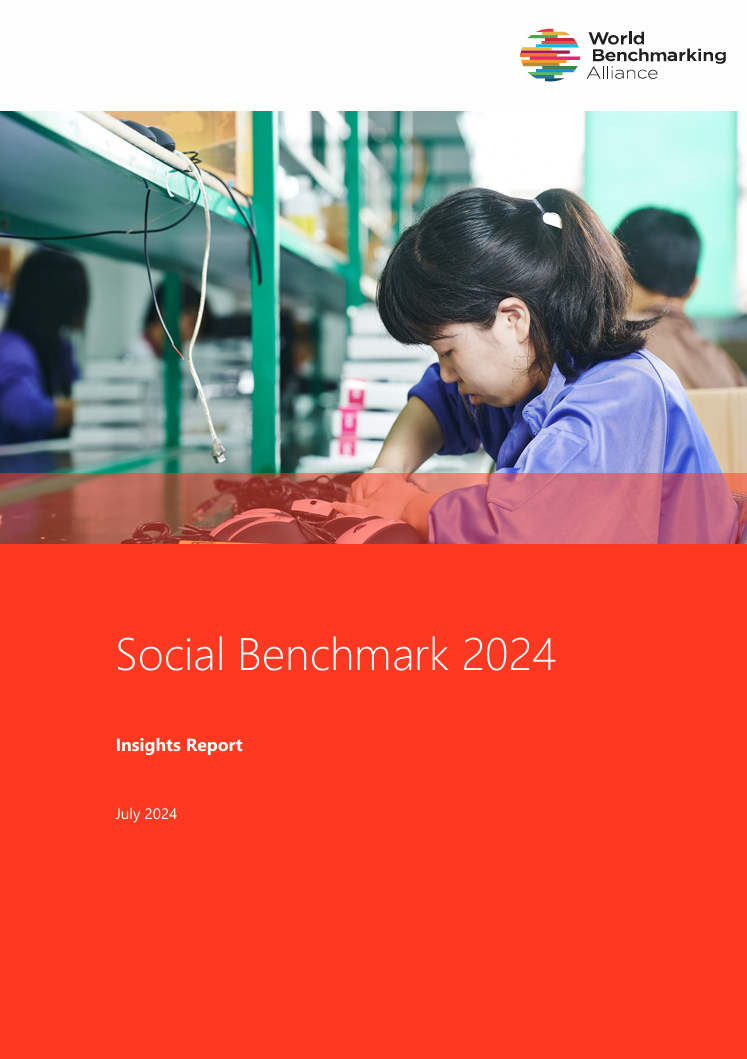
Social benchmark 2024 insights report
This benchmark series assesses the world’s most influential companies on their human rights, decent work and ethical conduct practices. It provides a comparative view of corporate social performance, supporting stakeholders to understand progress, identify gaps and inform actions that contribute to a more inclusive and sustainable global economy.
ESG and the sustainable economy handbook series
The ESG and the Sustainable Economy Handbook series is a multi-part research and guidance series that explains how environmental, social and governance (ESG) considerations intersect with legal, operational and investment practices across global markets, supporting finance professionals and corporate actors to understand and integrate ESG into business and investment decision-making.


