
Library | Finance relevance
Investment managers / asset managers
Refine
1143 results
REFINE
SHOW: 16


Environmental sciences, sustainable development and circular economy: Alternative concepts for trans-disciplinary research
This report discusses the challenges and opportunities of trans-disciplinary research in environmental sciences. It explores three alternative environmental concepts: "environmental sciences", "sustainable development", and the increasingly popular "circular economy". The article clarifies their meaning and inter-relationship, helping trans-disciplinary researchers to understand the opportunities and challenges of each.

Assessing pharma companies’ response to COVID-19 and the threat of future pandemics
This report analyses pharmaceutical companies’ response during the initial stage of the COVID-19 pandemic, their performance in terms of registration and applying equitable access strategies for COVID-19 vaccines, voluntary licensing agreements and technology transfers, and forward-looking assessment of their preparedness for future epidemics and pandemics.

Definitions for responsible investment approaches
This report provides definitions for different responsible investment approaches - Screening, ESG Integration, Thematic Investing, Stewardship, and Impact Investing. It aims to standardise terminology, enabling investors to communicate their responsible investment practices with clarity, consistency, and confidence.

Mobilizing money and movements: Creative finance for food systems transformations
This report explores creative financing strategies for transforming food systems. Through six case studies, it showcases levers of change for transformational investing, including blended finance, shared ownership, and diverse investment types. The report emphasizes community engagement and local food production to build sustainable and resilient food systems.

The Ramsey discounting formula for a hidden-state stochastic growth process
The paper highlights how the choice of an appropriate discount rate is a critical issue in economics, and arguably more so for projects involving long time horizons. In particular, environmental projects and activities whose effects will be felt in the future pose significant challenges. The paper models such challenges as an evolving hidden-state stochastic process.

Climate horizons
This report explores how Australian companies and investors should manage and disclose climate-related risks and opportunities. It suggests scenario-based analysis is a key tool for this, which can be consistent with Australia's international climate commitments and the recommendations of the Financial Stability Board's Task Force on Climate-related Financial Disclosures (TCFD).

The material footprint of nations
This research paper explores consumption-based indicators of resource use, asserting that developed countries have increased the use of natural resources at a slower rate than economic growth, but this is untrue. Material Footprint (MF) uncovers the full material requirements of nations, offering insights into actual resource productivity.

The impact of climate change on the UK insurance sector: A climate change adaptation report by the Prudential Regulation Authority
The report warns insurance companies to prepare for the physical, transition and liability risks related to climate change. It provides a comprehensive review of how to manage future implications from climate change on financial stability and insurance.

Seriously stressed and stranded: The burden of non-performing assets in India's thermal power sector
India's thermal power sector holds $40-60bn of non-performing or stranded assets, taking away capital from critical sustainable investment. Low-cost renewable energy and a reliance on coal-fired generation is creating difficulties for the banking sector. The economics of low-cost renewables will bring significant financial implications for the country's thermal power reliance.
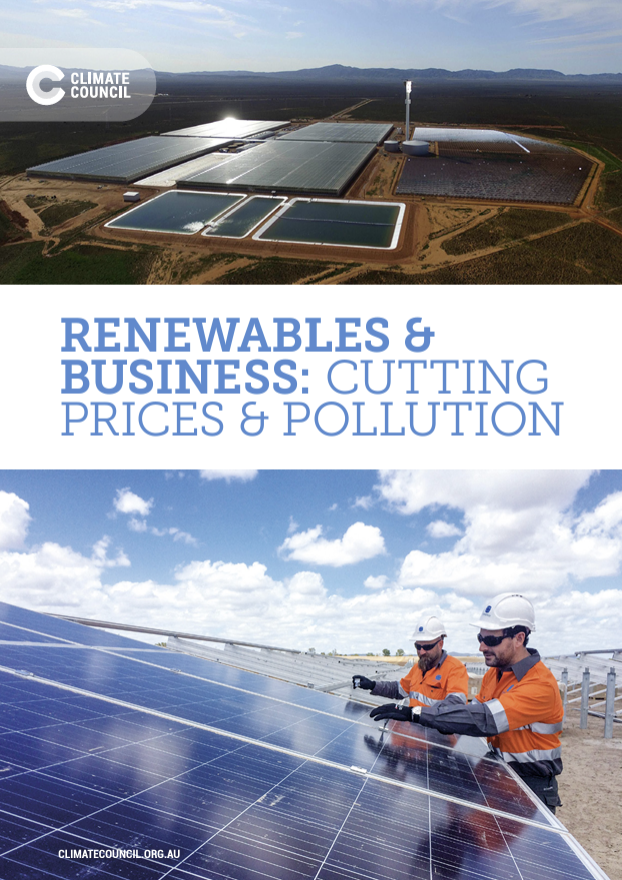
Renewables and business: Cutting prices and pollution
This report shows how investment in renewable energy can reduce exposure to volatile electricity prices and future price hikes. Over 46,000 businesses have already invested in large solar installations, and 40% of businesses are considering similar initiatives. Local and State Governments are also supporting business investment in clean, affordable and reliable renewable energy.

Innovation and resilience: A global snapshot of social enterprise responses to Covid-19
This report offers a global overview of social enterprise responses to the Covid-19 pandemic. It identifies innovation and agility as critical factors for survival. However, it notes that women-led and youth-led social enterprises face higher closure rates, greater reductions in activity, and more limited access to government support.

Growth-positive zero-emission pathways to 2050
This paper presents pathways to achieving growth positive zero-emission targets by 2050. The report concludes that significant action is required globally to achieve the low-carbon transition required to limit temperature increases to 1.5 °C, including the refashioning of multiple fundamental socio-economic systems and the international co-operation of decision-makers.

Global compact local networks: Accelerating national SDG implementation
The report emphasizes the role of responsible business in advancing the Sustainable Development Goals (SDGs) and highlights the importance of local networks in mobilizing a global movement of companies committed to advancing the SDGs through capacity-building, awareness-raising, and collaboration.

Environmental risk analysis by financial institutions: A review of global practice
This report examines how financial institutions tackle environmental risk, with an emphasis on credit and market risks. The study highlights examples of successful risk mitigation and draws attention to gaps in practice, particularly around modelling approaches and short-term decision-making.

Delivering through diversity
This report shows that strong financial performance correlates with greater representation of women and ethnically/culturally diverse individuals in the leadership of large companies. Companies that invest in inclusion and diversity not only align with social justice but may also achieve competitive advantage and growth.

Looking for something that isn’t there: A case study of an early attempt at ESG integration in investment decision making
This report explores the challenges of incorporating Environmental, Social, and Governance (ESG) issues into investment analysis and decision-making. Through a case study of an early attempt at ESG integration in an equity investment team, the authors highlight fundamental discontinuities between financial and ESG accounting inscriptions, and question the adequacy of current regulatory efforts.


