
Library | Finance relevance
Investment managers / asset managers
Refine
1394 results
REFINE
SHOW: 16


AlphaGlass: Interpretable characteristic-based portfolio choice
AlphaGlass is an interpretable machine-learning framework for characteristic-based portfolio construction that directly optimises the Sharpe ratio. Applied to U.S. equities from 2000 to 2021, it achieves a monthly out-of-sample Sharpe ratio of 0.47, outperforming random forests, neural networks, and EBM benchmarks, while providing transparent attribution to firm characteristics.
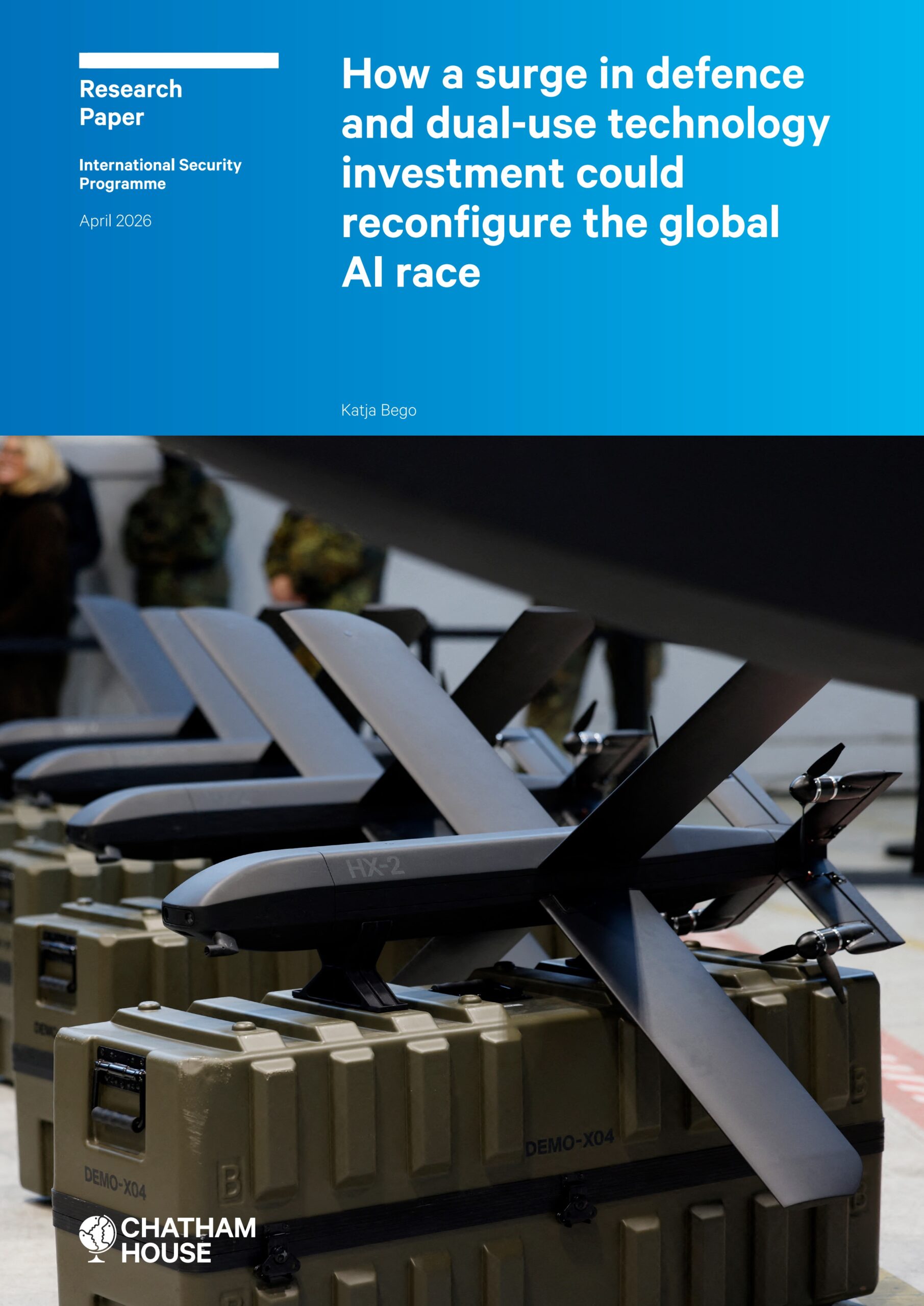
How a surge in defence and dual-use technology investment could reconfigure the global AI race
This Chatham House paper examines four trends — rising defence and dual-use investment, the growth of 'patriotic tech', the push for sovereign AI, and concerns over an AI valuation bubble — that could multipolarise the global AI race, and offers recommendations for private sector preparedness.
DAX-AEX Futureproof Index Report
The DAX-AEX Futureproof Index Report is a benchmark series that ranks DAX and AEX-listed companies using an Integrated Value framework combining financial, social, and ecological value. It produces a Futureproofing Ratio to assess long-term corporate value creation and transition risk across sectors and economies.
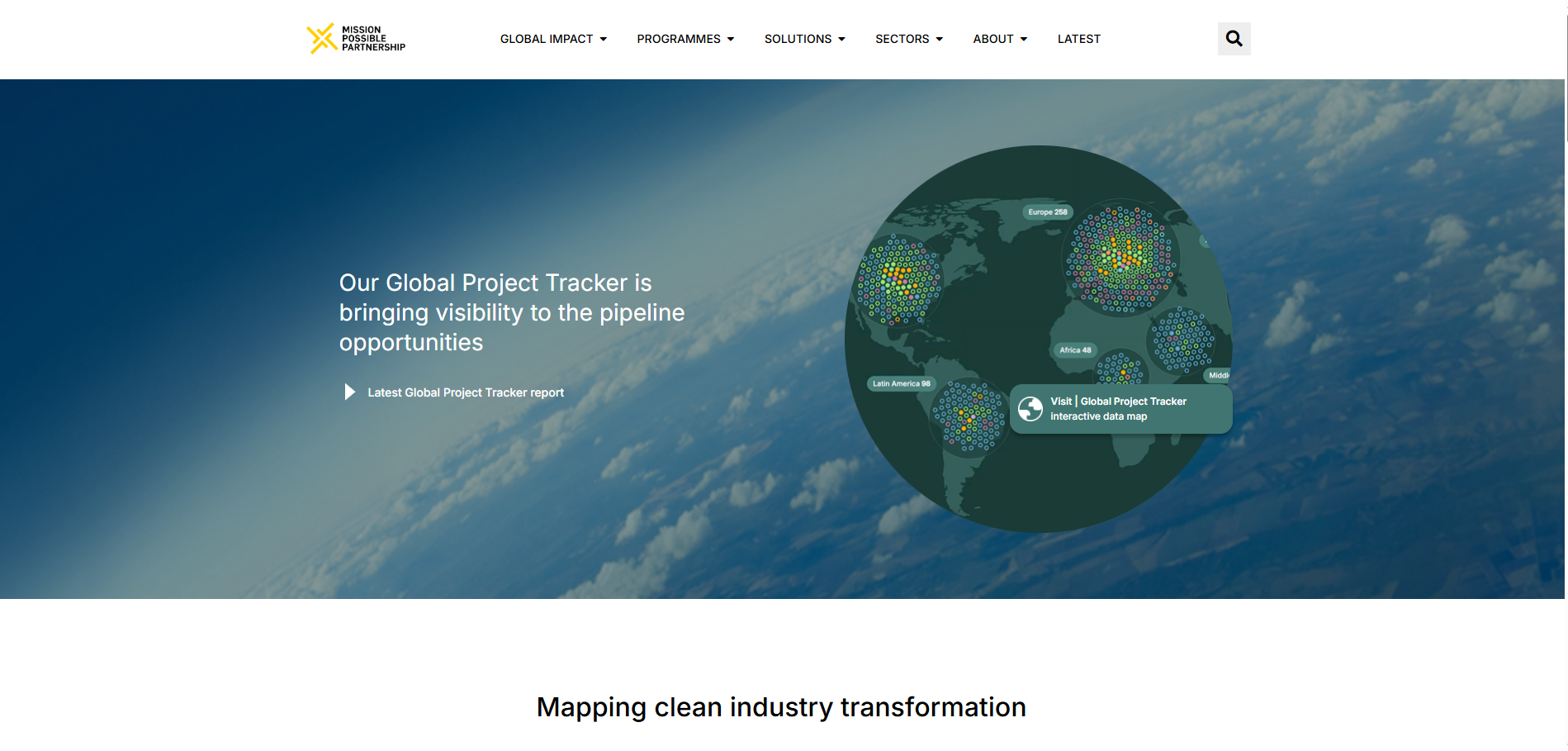
Global Project Tracker
MPP's Global Project Tracker maps the global pipeline of commercial-scale, net-zero-aligned clean industrial plants across materials, chemicals and fuels sectors.

Retreat or respect? Diverging corporate paths on human rights in a time of turbulence
This BHRC report examines how top US companies are responding to mounting pressure on human rights standards. It identifies three corporate pathways: active deregulatory lobbying by Big Oil and Big Tech, quiet retreat from human rights commitments, and continued adherence. Survey data from April 2026 reveals significant reductions in human rights staffing and budgets.
Business breakthrough barometer 2026: The annual pulse check from business on the pace of the climate transition
The Business Breakthrough Barometer 2026 surveys over 500 companies on the climate transition, finding 92% expect sustainability to deliver competitive advantage. While investment momentum holds, 68% of leaders see rising risks of a disorderly transition, urging predictable policy strengthening from governments to unlock private capital.
Social performance measurement: Practical insights and tips for financial institutions
This report by Shift distils insights from practitioner clinics for financial institutions on social performance measurement. It identifies key challenges and misperceptions, and provides eight practical tips for building more effective human rights due diligence measurement approaches, covering HRDD maturity assessment, theory of change, and quantification at scale.
Beyond the parcel: Unlocking risk assessment of complex infrastructure assets
This First Street report applies climate risk modelling to five infrastructure asset types — airports, residential developments, rail networks, transmission lines, and toll roads — demonstrating how localised physical hazards translate into material revenue losses and operational downtime, and why traditional parcel-based risk tools are inadequate for complex infrastructure.
Applying planetary boundaries: Effective risk management and value creation
This report examines how the Planetary Boundaries Framework translates nine critical global processes into material risks and value creation opportunities for investors and corporates. Seven of nine boundaries have already been breached. Tools, frameworks, and an investor engagement plan are outlined to support Earth-system-aligned capital allocation and long-term value creation.
Weapons, dual use tech and financial institutions
This Shift briefing examines how financial institutions should approach human rights due diligence in relation to weapons and dual-use technologies. It identifies four key challenges, six anchors grounded in international humanitarian law, and six practical approaches to support responsible defence-related lending and investment decisions.
Community engagement, nature and financial materiality: An evidence review on the financial effects of engagement with indigenous peoples and local communities on nature-related issues
This Shift report reviews the financial effects of corporate engagement with Indigenous Peoples and local communities on nature-related issues. Drawing on over 1,200 cases and approximately 40 publications, it finds that engagement quality is financially material, with poor engagement linked to significant operational, legal, and reputational costs.
Time to get real: Current and future best practice for investor engagement on climate policy
This report examines how institutional investors engage on climate policy and sets out guidance for best practice. Drawing on interviews with 70+ individuals and a survey of investors representing approximately USD 33 trillion in AUM, it calls for a shift from disclosure-focused engagement towards real economy policies, and identifies three field-building priorities.
An expanding mandate: A systems-level framework for asset management
This report from the Thinking Ahead Institute and CAIA Association argues for expanding the investment mandate to incorporate systems-level thinking. Drawing on a survey of 176 asset managers and roundtables with 120 senior executives, it presents an inside-out, outside-in framework for navigating polycrisis and long-term systemic risks.
Ranking digital rights: The 2025 big tech edition
The 2025 RDR Index Big Tech Edition ranks 14 major technology companies on governance, freedom of expression, and privacy. Microsoft leads overall with 50%, followed by Alphabet at 49% and Meta at 47%. Scores are also assessed across eight thematic lenses, including algorithmic transparency, security, and targeted advertising.
From measurement to decision: How impact valuation is changing the way leaders decide
This paper by Valuing Impact examines how 19 organisations are moving beyond sustainability measurement to use impact valuation as a decision-making tool. Covering strategy, investment, steering, operations and stakeholder engagement, it presents case studies and six practical lessons for embedding impact data alongside financial information in real business decisions.
Urban heat risk management: Resource package
This resource package provides practical guidance for local and national governments on managing urban heat risks through governance, planning, nature-based solutions and emergency preparedness. Drawing on global evidence and city case studies, it outlines strategies to strengthen urban resilience to increasing extreme heat.


