
Library | Asset Class
Infrastructure
Investments in essential physical systems and facilities (transport, energy, water, communications) that support economic and social activity.
Refine
393 results
REFINE
SHOW: 16


Field guide to impact investing: For Australian charitable trusts and foundations
This is a comprehensive resource to help organisations make sustainable impact investing decisions. Covering everything from impact measurement to legal structuring, this guide contains expert insights and is designed to be an essential tool for the industry.

Financing environmental and energy transitions for regions and cities: Creating local solutions for global challenges
This report presents recommendations for bridging the gap between financial institutions' lack of structures for local initiatives and subnational governments' lack of knowledge to take that role. It proposes adapting finance data to include integrated value.

Accelerating impact-linked finance
The report defines impact-linked finance and proposes a roadmap to accelerate and scale it. It summarises constraints to its implementation and provides examples of solutions.
The global GHG accounting and reporting standard for the financial industry series
Standardised methodologies for financial institutions to measure and disclose financed GHG emissions across ten asset classes under scope 3 category 15.

Towards financing large-scale holistic landscape restoration in Europe: Recommendations for EU policy actors to attain inspirational, social, natural and financial returns
The report provides financing recommendations for large-scale holistic landscape restoration in Europe, addressing climate change, biodiversity loss, and food and water insecurity. It emphasises the effectiveness of landscape finance in promoting healthy ecosystems, offering practical frameworks for policymakers to accelerate impactful activities and align natural and community needs for comprehensive restoration.

UN Environment Programme's adaptation gap report series
The Adaptation Gap Report series provides yearly updates on global progress in climate change adaptation. It assesses the status of adaptation planning, implementation, and finance, highlighting the increasing gap between the need for adaptation and the actions taken.

Reimagining country investing: A guide to capturing opportunities, managing risks and integrating sustainable-investment objectives
The paper offers insights for global investors on the benefits of constructing a diversified portfolio with country and regional-market allocation. The paper analyses variables such as GDP growth, innovation, thematic and geographic-revenue exposure and macroeconomic risks, while highlighting the role of sustainable finance in the process.

The implications of AI across sectors and against 6 key ESG considerations
AI offers great positive impacts and risks. This report helps to understand the risks associated with developing and using AI tech. Scoping exercise identifies opportunities and threats across sectors. Six core ESG considerations including trust and security, data privacy, and sentience are evaluated for potential impact.

Ethically aligned design: A vision for prioritising human well-being with autonomous and intelligent systems
This report is a call-to-action for technologists to align creation of autonomous and intelligent systems to defined values and ethical principles prioritising human well-being. Emphasising the importance of embedding values and morals into these systems, it discusses a range of topics, including job automation, personal data protection, A/IS education, law, and more.
Earth system justice needed to identify and live within Earth system boundaries
This article considers how to integrate principles of justice within Earth’s system boundaries, specifically for climate, the biosphere, water and nutrient cycles, and aerosols. Using the Earth system justice approach, it discusses living within planetary limits whilst minimising significant harm to all people and ensuring equitable access to resources.

Mobilising climate investment in emerging markets: Opportunities for Australian pension and superannuation funds
This report delves into the potential of pension funds in driving climate solutions in developing economies. Highlighting barriers like geopolitical risks and policy uncertainties, the report underscores collaboration, ESG standards, and internal expertise as pivotal for sustainable investments in these regions.
An equitable energy allowance for all: Pathways for a below 2◦ C-compliant global buildings sector
The article asserts that building energy codes must be derived from global climate change targets. Thus, an innovate global Building Stock Energy Model is developed to determine the required energy efficiency levels for building stocks of 138 countries in alignment with the Paris Agreement’s below 2°C climate change scenario.
A comprehensive overview of global biodiversity finance
This report aims to provide a comprehensive overview and an aggregate estimate of global biodiversity finance. It aims to provide an outline of government support that is potentially harmful to biodiversity and offers recommendations for improving the assessment, tracking, and reporting of biodiversity finance.

Integrity matters: Net zero commitments by businesses, financial institutions, cities and regions
As the global community faces a climate crisis, the report recommends setting standards and criteria for achieving net zero emissions, addressing concerns about greenwashing, and calling for a just transition for developing countries. The report advocates for a collaborative 'ambition loop' to accelerate global efforts toward a sustainable future.

Recommendations of the Taskforce on Nature-related Financial Disclosures
This report aims to provide a unified approach to the disclosure of natural dependencies, impacts and risks for financial institutions and corporates. As the issue of natural loss and climate change continues to grow, a harmonised way of tackling these risks needs to be agreed to safeguard against material impacts.
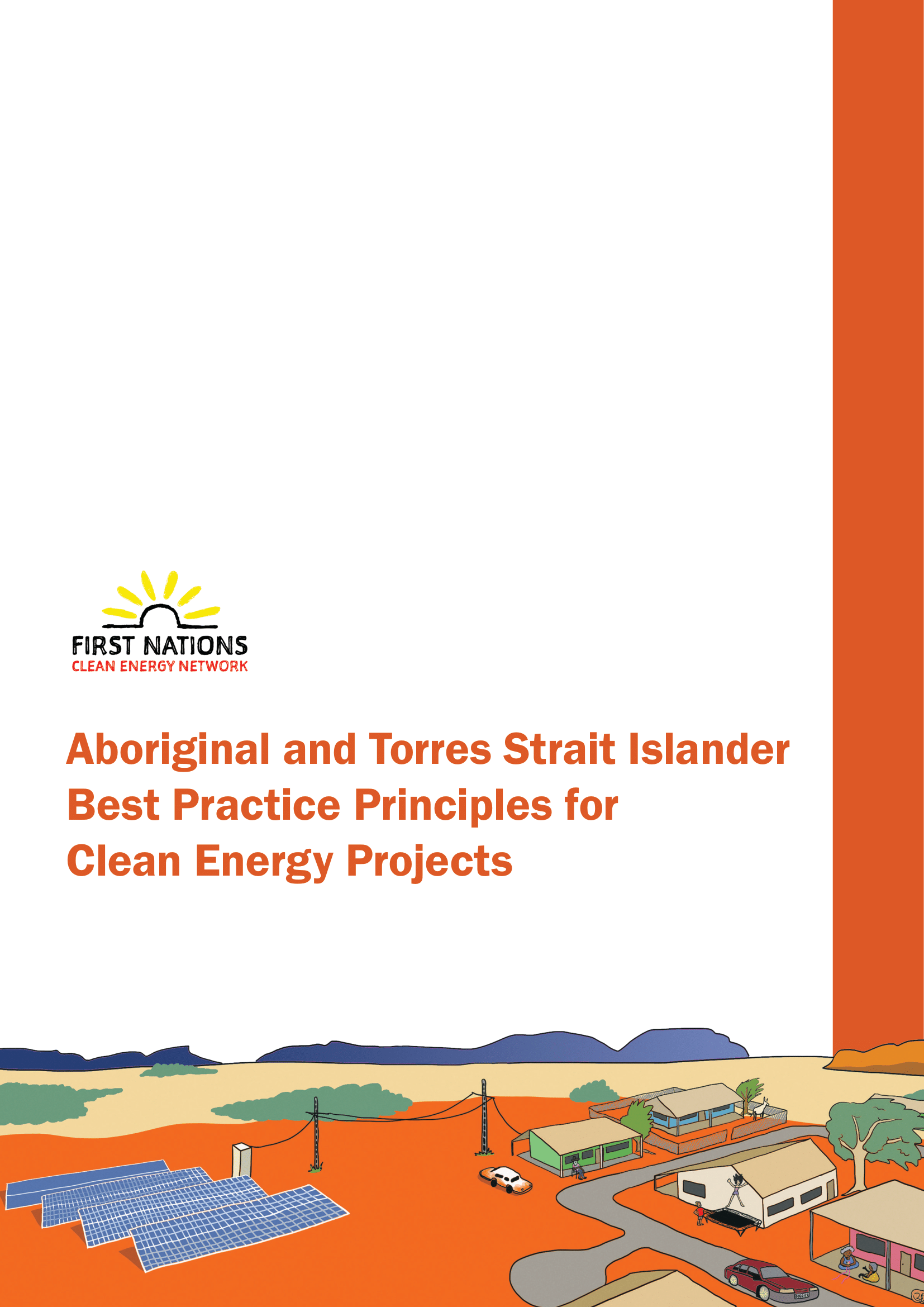
Aboriginal and Torres Strait Islander best practice principles for clean energy projects
Ten principles placing Australia's First Nations people and communities at the centre of clean energy projects. The Principles ensure that projects provide economic and social benefits, include cultural and environmental considerations, and provide employment opportunities. The Principles are for all stakeholders involved in clean energy projects, including investors and government.


