
Library | Asset Class
Multi-Asset / General
Investment strategies that allocate across multiple asset classes (e.g., equities, bonds, real estate, alternatives) for diversification.
Refine
864 results
REFINE
SHOW: 16


Guarantees: From misdiagnosis to strategic deployment: Evidence from expert practitioner interviews
This research examines why climate-aligned guarantees often fail to mobilise private capital effectively. It identifies structural misalignments within multilateral development banks and suggests that strategic deployment requires a move towards portfolio-based approaches, local-currency financing, and better risk layering to address specific investment constraints in emerging markets.

Closing the gender health gap: The investment case and capturing Australia's window of opportunity
This report identifies the gender health gap as a systemic market failure and significant investment opportunity. Closing this gap could boost the global economy by US$1 trillion annually by 2040. In Australia, the opportunity is valued at US$24.8 billion per year, offering a time-limited ten-year window for investors.
The Paris Agreement ten years later: Navigating climate uncertainty and tipping points
This research evaluates the Paris Agreement ten years on, highlighting critical implementation and ambition gaps. It identifies a triple-track crisis involving geophysical inertia, cognitive barriers, and policy lags. The report proposes a precautionary paradigm using technological and financial levers to navigate climate uncertainty and prevent irreversible tipping points.
Artificial intelligence and the future of finance: A framework for structural change
This report examines how artificial intelligence is transforming capital markets by shifting the industry from informational scarcity to analytical abundance. It introduces a structural framework involving capability, adoption, substitution, and recomposition, exploring alternative future states and the evolving nature of fiduciary accountability, market stability, and professional expertise.
How certain can we be about NGFS Climate Scenarios?
This research analyses uncertainty in Network for Greening the Financial System (NGFS) climate scenarios across four vintages and 254 variables. It finds that revisions to initial conditions and model recalibration often exceed scenario and model uncertainty, requiring cautious interpretation in financial risk assessments.
Power to the personnel? The impacts of managerial discretion vs. worker democracy in employee recognition
This research evaluates the impacts of worker agency versus managerial discretion in employee recognition via an RCT in India. While worker democracy increased attendance by 11%, managerial discretion improved productivity by 6%. However, managerial control reduced work-related interactions, and worker voting encouraged collusion through reward sharing in exchange for votes.
Firm pay, amenities, and inequality
This research assesses firm-specific amenity valuations using discrete choice experiments linked to German administrative records. It finds that amenities widen between-firm inequality by 20% in variance terms. Furthermore, gender differences in valuations contribute to female sorting into lower-wage firms, as women prioritise non-wage attributes more highly.
Firm data on AI
This research provides international data on firm-level artificial intelligence adoption across the US, UK, Germany, and Australia. While current impacts on employment and productivity are small, senior executives predict a 1.4 per cent productivity boost and a 0.7 per cent reduction in employment over the next three years.
Industrial policies for multi-stage production: The battle for battery-powered vehicles
This research analyses industrial policies for the multi-stage electric vehicle supply chain. It evaluates consumer subsidies and local content requirements, finding that while protectionist measures expand domestic production, they can significantly increase costs and reduce overall adoption compared to unconditional subsidies that maximise scale economies.
AI managed household portfolios: A preliminary report
This research investigates AI-managed household portfolios, finding that large language models recommend undiversified portfolios concentrated in high-momentum, large-cap technology stocks. While returns may exceed market benchmarks, they do not provide abnormal returns when adjusted for risk characteristics. Recommendations are primarily driven by media attention rather than investment skill.
Seeing the goal, missing the truth: Human accountability for AI bias
Research demonstrates that Large Language Models exhibit purpose-conditioned bias when informed of downstream tasks. Goal-aware prompting leads to in-sample overfitting and inflated performance before knowledge cutoffs. Results indicate that disclosing objectives compromises neutrality, necessitating the separation of measurement and evaluation in AI-assisted workflows to ensure statistical validity.
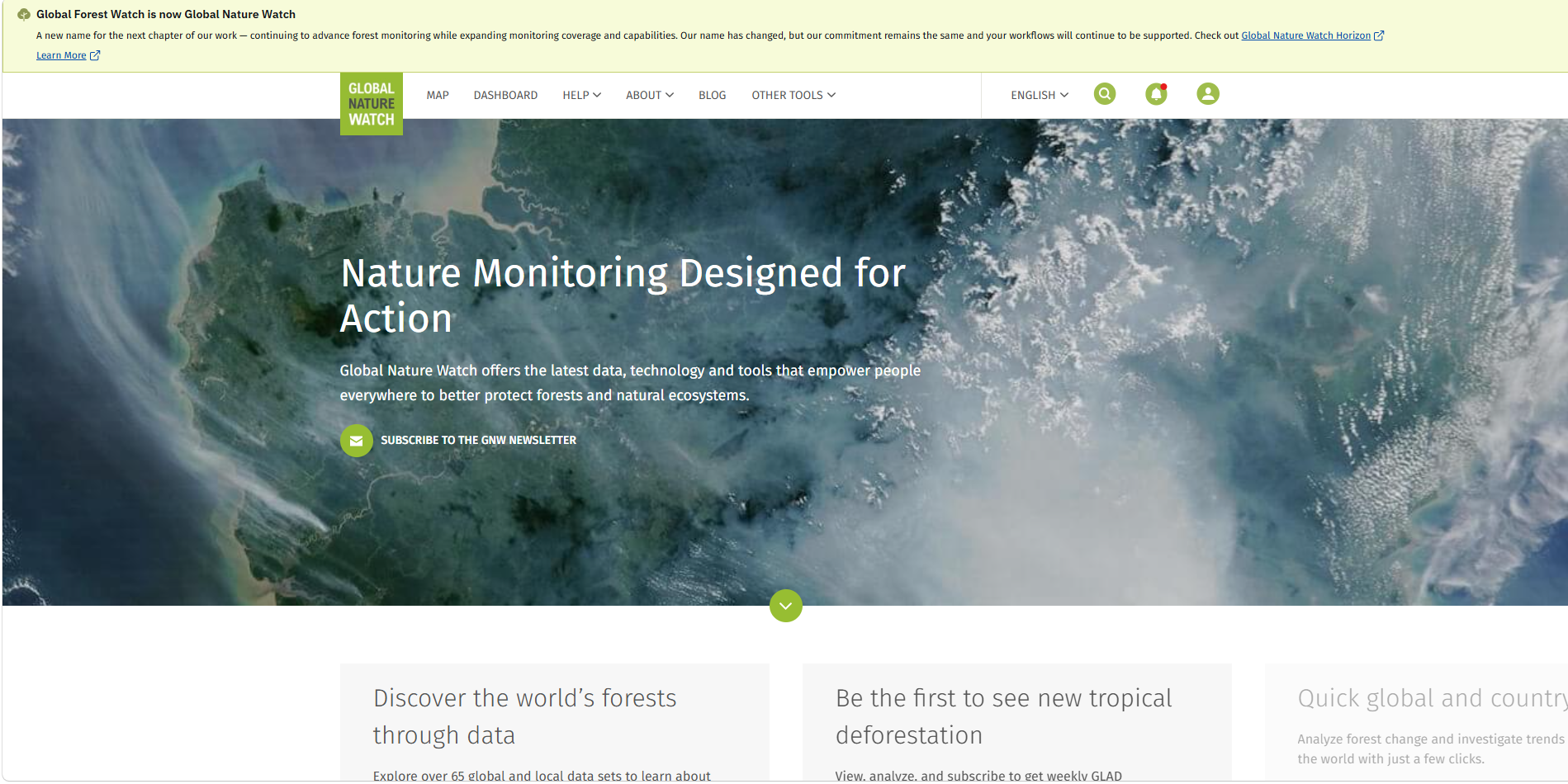
Global Nature Watch
Global Nature Watch is an AI-powered Earth monitoring platform developed by the World Resources Institute and Google. It provides near-real-time data on land-use changes across various ecosystems to support nature-based risk assessment and environmental reporting.
Business-led blended finance: A practical playbook
This report examines business-led blended finance, which grew to US$24 billion in 2024. It provides a practical playbook for companies to move from passive recipients to active deal architects, addressing the US$4 trillion SDG financing gap through risk management toolkits, sector analyses, and eight global case studies.
Climate-related disclosures: Insights from our reviews 2026
This Financial Markets Authority report reviews 62 climate statements from the second reporting period in Aotearoa New Zealand. It identifies improvements in reporting structures but highlights gaps in physical risk analysis and assurance compliance. Future monitoring will focus on education to improve data substantiation and risk disclosure quality.
Why shareholder-driven corporate social responsibility failed
This report analyses why shareholder-led corporate social responsibility failed in the early 2020s. It argues that political forces blocking government regulation also dismantle private CSR initiatives. Using the BlackRock-Texas conflict as evidence, it concludes that direct political action is the only viable path for systemic change.
Stakeholder governance and corporate purpose in certified B Corps: Minimizing conflict and fostering collaboration
This research examines how Australian and New Zealand B Corporations implement stakeholder governance through corporate purpose. Based on 20 interviews, it identifies six roles for purpose in decision-making and signalling. The findings suggest that purpose-led models help attract supportive stakeholders and foster collaboration beyond mere conflict resolution.


